
The Performing Arts Almanac
Heritage Wing · Stage and Sound
The Performing Arts Almanac
Japan's stage arts were made for particular rooms and particular audiences: a shrine, a riverbed, a merchant's hall, an emperor's court. This almanac walks through them, one chapter to each art, and ends with how to see them yourself.
The arts gathered here differ in almost every respect. Noh is slow and spare, kabuki is loud and bright, bunraku puts three men behind a doll, and rakugo asks one man to do without everything but a fan. What they share is a long inheritance, and a habit of keeping what works.
Each chapter is written from sources that were read for it, among them UNESCO, the Japan Arts Council and museum records, and says so when accounts disagree. The pictures are public-domain or openly licensed, credited under each one. Around the chapters stand a first-timer's guide, a guide to the theatres, and a glossary.
Design wall
Eight objects from the museum record, each leading to the chapter in which it is discussed.

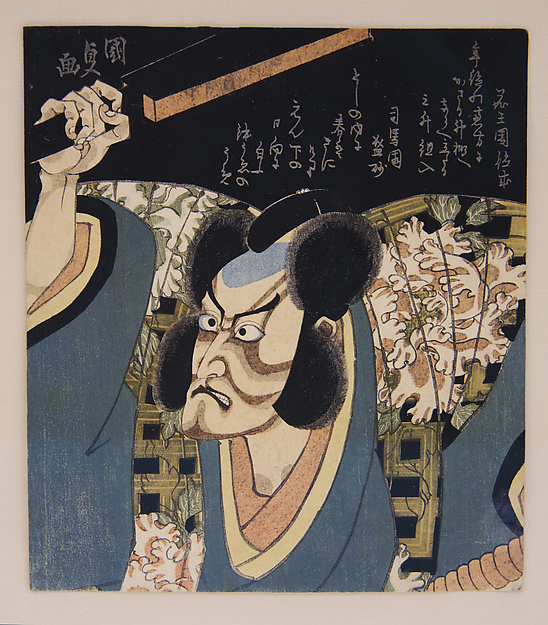


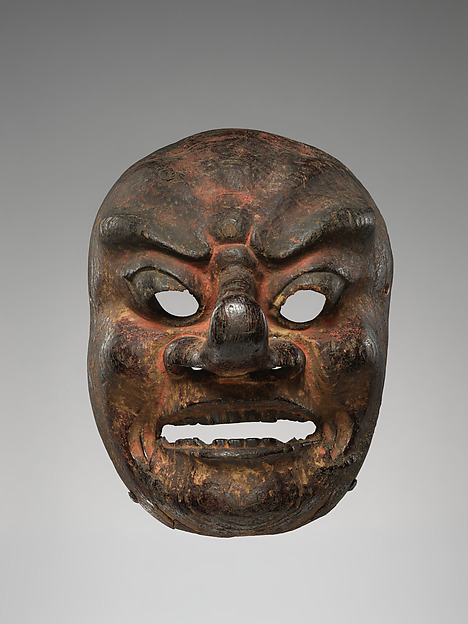
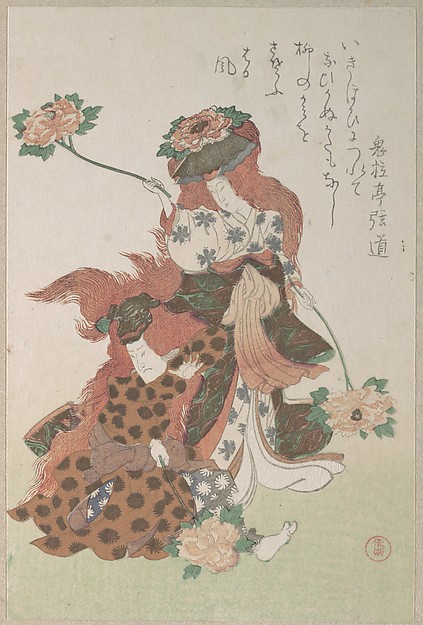
Quick start
If you read only five pages, read these, in this order.
- Noh Theatre. The bridgeway, the mask and the silence.
- Kabuki. Why the name means strange, and how the stage was built for surprise.
- Bunraku. Three puppeteers, one gesture.
- How to Attend Japanese Theatre. Booking, arrival, intervals and manners.
- Performing Arts Glossary. The words of the stage, with the Japanese.
Family tree
Three branches: the arts of the stage, the arts of sound, and the audience's side of the curtain. Each tile opens a chapter.
The stage
Theatre in which a performer, a puppet or a storyteller holds the room.
The sound
Court music, drums and the instruments of the theatre.
The audience
Where to go and what to do when you arrive.
Schools and houses
Who carries each art, as the chapters record it.
| Art | Schools, houses or troupes | Chapter |
|---|---|---|
| Noh (principal role) | Kanze, Hosho, Komparu, Kongo, Kita | Read |
| Noh (waki role) | Takayasu, Fukuou, Hosho | Read |
| Kyogen | Okura, Izumi | Read |
| Kabuki | The Ichikawa Danjuro line and other acting families | Read |
| Bunraku | The Bunraku Kyokai, the performers' association | Read |
| Rakugo | The Edo and Tokyo style, and the Kamigata style of Osaka and Kyoto | Read |
| Gagaku | Hereditary guilds of Osaka, Nara and Kyoto, now the Imperial Household Music Department | Read |
| Takarazuka | Flower, Moon, Snow, Star and Cosmos troupes | Read |
Theme hubs
The same material grouped by subject rather than by art.
Masks and painted faces
Where the face is the character.
Voices and instruments
What each theatre plays and sings to.
Stages and buildings
The room explains the art.
Founders and storytellers
The people the arts remember.
Cloth and costume
Stage dress, briefly here and at length in the textile pages.
The stage in prints
The woodblock artists drew the theatre.
A to Z
Every chapter and term in one alphabet, each opening the passage that explains it.
- Aragoto
- Biwa
- Bugaku
- Bunraku
- Chikamatsu Monzaemon
- Gagaku
- Hanamichi
- Hannya
- Hashigakari
- Ichikawa Danjuro
- Izumo no Okuni
- Jo-ha-kyu
- Kabuki
- Kabuki-za
- Kanamaru-za
- Kaomise
- Ko-omote
- Kodan
- Kodo
- Koto
- Kumadori
- Kyogen
- Mie
- Minami-za
- Nagauta
- National Bunraku Theatre
- National Noh Theatre
- Nihon buyo
- Noh
- Noh masks
- Ochi
- Okina
- Onnagata
- Rakugo
- San'yutei Encho
- Shakuhachi
- Shamisen
- Shite
- Sho
- Taiko
- Takarazuka
- Tsuzumi
- Waki
- Yose
- Yugen
- Zeami
Timeline
The subject in sequence, with the passages that tell each part. Dates are printed only where the sources give them.
-
The eighth century: sangaku arrives
An entertainment of acrobats, songs and sketches comes from China; Noh and kyogen descend from it. -
701: the Gagaku-ryo
A bureau of court music gives gagaku its name. -
The fourteenth century: Noh
Kan'ami and Zeami, under the patronage of the shogun. -
About 1603: Okuni on the riverbed
The beginning of kabuki, according to the standard account. -
1629: women banned from the stage
The onnagata tradition begins. -
1684: the Takemoto puppet theatre
Chikamatsu and Gidayu in Osaka. -
1835: the Kanamaru-za
The oldest kabuki theatre still standing. -
1889: the Kabuki-za
Opened in Ginza. -
1913: the Takarazuka Revue
Founded by a railway president. -
1951: kumi-daiko
Daihachi Oguchi's ensemble drumming. -
1983 and 1984: the national theatres
The National Noh Theatre in Tokyo, the National Bunraku Theatre in Osaka. -
2008 and 2009: UNESCO
Nogaku, bunraku and kabuki in 2008, gagaku in 2009.
Technical note
- Japanese words follow Hepburn romanisation without macrons in running text, in the established English forms.
- Names are given in the Japanese order, family name first, except where a source gives them the other way.
- A date is printed only when sources agree. Where they differ, as with the invention of the revolving stage, the chapter says so.
- Performance schedules and ticket prices are dated and change; the chapters give the date they were read, and link to the official source.
- Pictures are public-domain or openly licensed, credited beneath each one, or drawn by the house and labelled as diagrams.
Preface and gaps
This almanac gathers fourteen chapters and a glossary into one path. It is a living work, and further chapters are to come.
What it does not yet do: it does not cover folk performance such as kagura, manzai, Okinawan kumiodori or the modern spoken theatre. Stage costume has been touched on briefly; fuller chapters are being prepared in the Traditional Clothing almanac, and will be linked here when they open.
Pieces from the house
Noh masks, a kabuki actor on silk and fans of the dance, drawn from the pieces we hold. Availability changes; each page says what is current.
 Meiji Noh mask of Ikaku Sen'ninHand-carved lacquered wood
 Trio of small ko-omote Noh masksOmiya Sadamori lineage, with signed tomobako
 Louis Vuitton x Ichikawa Ebizo makeup trunkRed kabuki crest, 2004
 Reversible Sharaku kabuki actor sukajanBlack quilted satin
 Sensu fan wagara remake blousonEmbroidered kimono textile
 Kimono and obi brocade remake blousonCranes and sensu fans
Neighbouring worlds
| World | Why it connects |
|---|---|
| The Warrior and Floating World Almanac | Noh's warrior plays and the samurai they remember. |
| Ukiyo-e | The actor prints that recorded the stage. |
| The Buddhism and Zen Almanac | The monk's flute, temple drums and the celestial musicians. |
| The Japanese Tea Ceremony Almanac | Another art of quiet attention, and a fellow user of jo-ha-kyu. |
| Kimono Textile Heritage | The cloth of the robe and the sleeve. |
| Yoshiwara, Oiran and Geisha | The world of the courtesan roles and the shamisen. |
| Benzaiten | The goddess of music, with her biwa. |
| The Sukajan Museum | Where actors on silk meet the souvenir jacket. |
| The Japanese Toys Almanac | The puppet and the mask in miniature: dolls, karakuri figures and festival-float figures in the ningyo chapter, and the daruma and kokeshi beside them. |
Answered plainly
Where should I begin?
With the chapter on the art that interests you most, and with the first-timer's guide if you plan to attend. The glossary answers any word you meet.
Do the chapters list performance dates?
Only as examples, with the date they were read. Programmes change, so each chapter links to the official source.
Are the pictures free to reuse?
They are public-domain or openly licensed, and each carries its own credit. Check the licence named under a picture before reusing it.
Is stage costume covered?
Briefly, inside the Noh and kabuki chapters. Fuller chapters are being prepared in the Traditional Clothing almanac.
Can you help me find a mask, a fan or a print?
Yes. Make a private request and the concierge desk will search Japan on your behalf.
Sources and image credits
- Noh, Wikipedia
- Kabuki, Wikipedia
- Bunraku, Wikipedia
- Gagaku, Wikipedia
- Taiko, Wikipedia
- Rakugo, Wikipedia
- Takarazuka Revue, Wikipedia
- Japan Arts Council, visitor FAQs
- GLT, Guide to discovering Kabuki and enjoying its performance
- Metropolitan Museum of Art Open Access (images)
Image credits, in order of appearance:
- Japan, Noh mask, 1336–1573. The Metropolitan Museum of Art, Rogers Fund, 1917, accession 17.175.58. Public domain (Met Open Access, CC0). Museum record
- Utagawa Kunisada, Ichikawa Danjūrō VII as Arajishi Otokonosuke, 1829. The Metropolitan Museum of Art, Gift of Dorothy Tapper Goldman, 2013, accession 2013.1126.1. Public domain (Met Open Access, CC0). Museum record
- Japan, Bunraku Puppet Head for Young Male Role, 19th century. The Metropolitan Museum of Art, Gift of Donald Keene, 1987, accession 1987.256. Public domain (Met Open Access, CC0). Museum record
- Kodenji Hayashi, O-daiko, ca. 1873. The Metropolitan Museum of Art, The Crosby Brown Collection of Musical Instruments, 1889, accession 89.4.1236a–d. Public domain (Met Open Access, CC0). Museum record
- Takechi Matsukawa, Shamisen, 1891. The Metropolitan Museum of Art, Gift of the Estate of Mary Flagler Cary, 1969, accession 69.271.2a, b. Public domain (Met Open Access, CC0). Museum record
- Metalwork by Goto Teijo, 9th generation Goto master, Japan, Koto (箏), early 17th century. The Metropolitan Museum of Art, Purchase, Amati Gifts, 2007, accession 2007.194a–f. Public domain (Met Open Access, CC0). Museum record
- Japan, Bugaku Mask (Sanju), 12th century. The Metropolitan Museum of Art, The Harry G. C. Packard Collection of Asian Art, Gift of Harry G. C. Packard, and Purchase, Fletcher, Rogers, Harris Brisbane Dick, and Louis V. Bell Funds, Joseph Pulitzer Bequest, and The Annenberg Fund Inc. Gift, 1975, accession 1975.268.162. Public domain (Met Open Access, CC0). Museum record
- Kubo Shunman, Two Dancers Performing a “Shakkyōmono” Kabuki Dance, from Spring Rain Surimono Album (Harusame surimono-jō), vol. 3, ca. 1805–10. The Metropolitan Museum of Art, H. O. Havemeyer Collection, Bequest of Mrs. H. O. Havemeyer, 1929, accession JP2291. Public domain (Met Open Access, CC0). Museum record
Last reviewed 28 October 2026.
Looking for a mask, a fan, a print of an actor or a piece of stage ephemera? The concierge desk searches Japan on your behalf and replies within one to three business days.
Private concierge
Looking for something in particular?
Describe the piece or the project you have in mind. A senior advisor in Tokyo reads every case file personally and replies within two business days, with fees set out in writing before any work begins.