Japonista
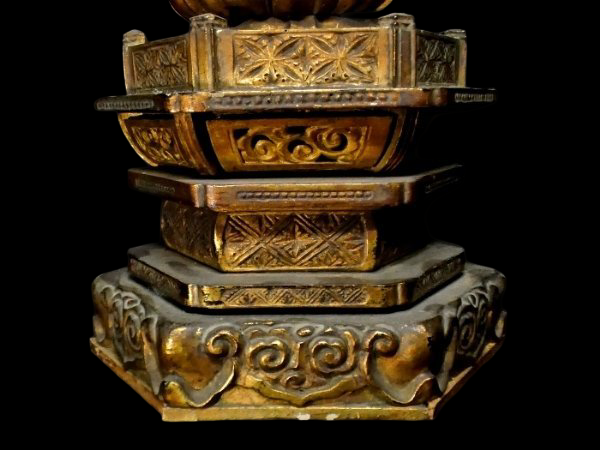
Tríada de Amida Sanzon de madera dorada del período Edo con Kannon y Seishi Bosatsu como asistentes, c. 58 cm
Tríada de Amida Sanzon de madera dorada del período Edo con Kannon y Seishi Bosatsu como asistentes, c. 58 cm
Freight piece: please confirm delivery before purchase
This piece travels in a crate or by freight rather than standard mail, and may need careful dismantling before it can be packed. The shipping shown at checkout is an estimate. Japonista reserves the right to determine the final handling, crating and freight cost when your order is received, according to the piece, the destination and carrier conditions at that time.
We advise requesting a delivery quote before checkout. If the final cost is higher than the amount paid, we send the difference for your approval before dispatch. Your piece is held for you until it is settled.
Request a delivery quoteNo se pudo cargar la disponibilidad de recogida
All sales are final. Please read our refund policy before purchase.
Have a reasonable price in mind? Submit your best offer and our concierge will review it personally.
A complete Amida Sanzon, with the Buddha of Infinite Light flanked by Kannon and Seishi, carved in wood and finished in gilt and lacquer. Triads are often separated over time; this one keeps its three figures, its proportional hierarchy and a single carving language, conceived as one theological image rather than three statues.
The Piece
This work presents a complete Amida Nyorai Triad (Amida Sanzon), one of the most doctrinally important and visually authoritative groupings in Japanese Buddhism. Far beyond a decorative object, an Amida triad is a fully articulated cosmological structure: salvation doctrine rendered in wood, lacquer and gold, and presented here as a unified altar ensemble.
At the center stands Amida Nyorai, the Buddha of Infinite Light and Infinite Life, presiding over the Western Pure Land. Amida is no distant figure reserved for monks or ascetics; his vow promises salvation to all beings who entrust themselves to his compassion. That inclusive theology made Amida worship the spiritual backbone of Japanese Buddhism from the late Heian period onward, reaching its mature, institutional form during the Edo period.
Flanking Amida are his two canonical attendants. Kannon Bosatsu, embodiment of infinite compassion, is the active force that hears the cries of suffering beings and guides them toward liberation. Seishi Bosatsu, embodiment of wisdom and spiritual clarity, strengthens resolve and illuminates the correct path. Together the three form a complete salvific system, vow, compassion and wisdom operating as one.
Triad sculptures were never conceived as minor devotional objects. They were commissioned for temple halls, memorial sanctuaries and elite patronage, where they served as the spiritual and visual center of ritual space. With a total height of approximately 58 cm including halo and base, the present example belongs to that temple-scale category, large enough to anchor a room yet compatible with a private chapel or refined household altar.
Carved in wood and finished with gilt surfaces and traditional lacquer techniques, the triad follows Edo-period sculptural conventions rooted in much earlier temple traditions. The principal is framed by an architectural halo and mandorla and raised on a lotus pedestal, and the surfaces read as accumulated presence rather than new lacquer gloss. For collectors building a spiritual core collection, it offers a complete iconographic anchor around which hanging scrolls, incense implements and sutra texts can meaningfully gather.
Details
- Type: Buddhist sculpture triad (Amida Sanzon)
- Era: Edo period (estimated); stylistic cues consistent with late Edo to early Meiji temple sculpture
- Material: Carved wood with gilt and lacquer
- Configuration: Central Amida Nyorai with two attendant bodhisattvas, Kannon and Seishi; halo and lotus pedestals
- Measurements: Height approx. 58 cm including halo and base (one passage of the earlier text gives approx. 68 cm for the assembled triad, with the central figure around 36 cm)
Condition
- Age-related wear, patina and surface variation are present and expected for a devotional triad of this age.
- Surface wear and historical repairs are consistent with prolonged ritual life; no invasive restoration is evident in the photographs.
- Please review the imagery closely for structural joins and join stability, halo elements and base integrity.
Reading the Triad
Across Japanese temple sculpture, a triad is the canonical format in which a principal deity is visually and ritually supported by two attendants. It is not three separate statues but one coherent statement: a central axis of salvation and two flanking forces that translate that salvation into lived experience, like an altar's complete sentence.
In Pure Land thought, Amida and his retinue descend to welcome the dying believer, the welcoming descent. The central Buddha is the promise; the attendants are the presence. The icon is meant to be met frontally, at human eye level, as reassurance rather than spectacle.
- Amida Buddha (Amitabha): central Buddha of Pure Land, revered for the vow to receive beings into the Western Paradise.
- Kannon (Avalokiteshvara): bodhisattva of compassion, who comforts, protects and guides the believer.
- Seishi (Mahasthamaprapta): bodhisattva associated with wisdom and right mindfulness, supporting the believer's orientation toward Amida's vow.
Museum-Grade Criteria
Museum-grade here is not a synonym for expensive. It describes a convergence of completeness, iconographic correctness, coherent workmanship, scale appropriate to ritual use and a surface history that indicates age and handling rather than modern decorative finishing.
- Complete set integrity: the principal and both attendants survive together, retaining the original visual logic.
- Coherent carving language: consistent modeling, proportional hierarchy and line across all three figures, signaling a group conceived together.
- Architectural halo and lotus pedestals that frame the principal as an axis rather than a figurine.
- Temple-scale presence suited to a private chapel, gallery or institution.
- Patina consistent with age, read as evidence of time and quiet devotional handling.
Authenticity & Care
No inscription or temple documentation accompanies the triad; the late Edo to early Meiji dating is a conservative, best-effort estimate based on construction logic, proportional discipline and surface aging, and the work clearly predates modern tourist or revival production. Every piece is examined and documented in Japan before dispatch and is offered with the Japonista authenticity guarantee.
Delivery from Japan
Packed by hand in Japan and shipped insured and tracked by EMS or an equivalent express service. Import duties and taxes, where applicable, are payable on arrival. Returns follow our published policy.
Considered offers are welcome through Send an Offer, and each one is reviewed personally. Pieces over $1,000 may be reserved over several payments with Layaway Privilege™.
Continue browsing: Buddhist Statues & Sacred Art · Butsudan & Altars
Related pieces: Edo standing Kannon with carved mandorla · Thousand-armed Senju Kannon wood statue · Red coral Kannon miniature carving
Temple to Home
Monumental statues, zushi shrines and altars travel crated and insured through our Museum-Grade Logistics Suite™. Seeking a particular deity or school? The Hunting Salon™ searches Japan for it. Arrange crating and freight →
Collectors also search: amida triad statue · amida sanzon wood sculpture · edo period amida nyorai · gilt wood buddha triad · kannon seishi attendants · japanese pure land buddhist sculpture · antique amida buddha statue