Japonista
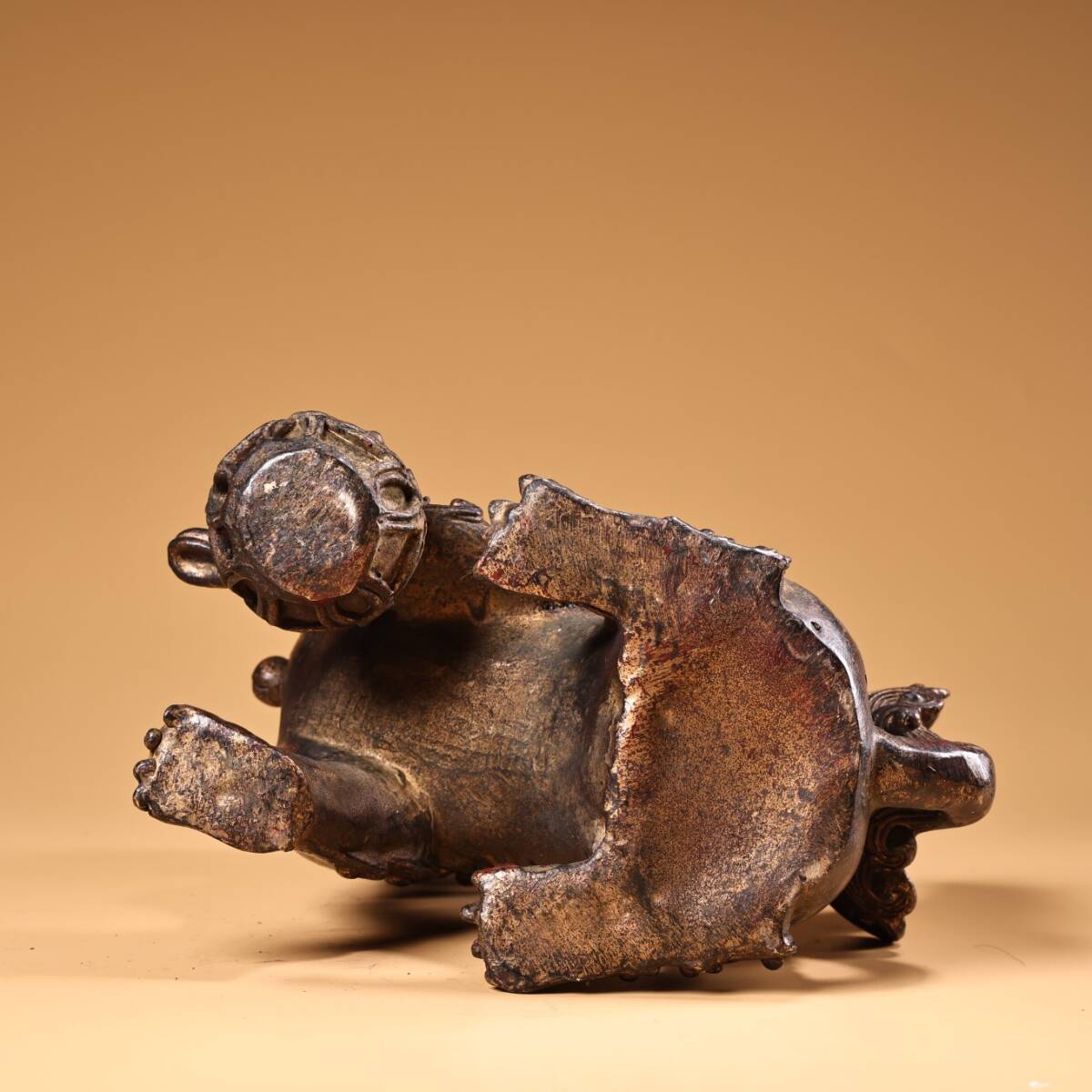
Pareja antigua de komainu guardianes de bronce con bolas enjoyadas, perros-león shishi, atribuida a finales del período Edo–Taishō, 20 cm
Pareja antigua de komainu guardianes de bronce con bolas enjoyadas, perros-león shishi, atribuida a finales del período Edo–Taishō, 20 cm
Freight piece: please confirm delivery before purchase
This piece travels in a crate or by freight rather than standard mail, and may need careful dismantling before it can be packed. The shipping shown at checkout is an estimate. Japonista reserves the right to determine the final handling, crating and freight cost when your order is received, according to the piece, the destination and carrier conditions at that time.
We advise requesting a delivery quote before checkout. If the final cost is higher than the amount paid, we send the difference for your approval before dispatch. Your piece is held for you until it is settled.
Request a delivery quoteNo se pudo cargar la disponibilidad de recogida
All sales are final. Please read our refund policy before purchase.
Have a reasonable price in mind? Submit your best offer and our concierge will review it personally.
Cast with deliberate heft and carrying a dark, warm patina, this compact pair of bronze komainu keeps watch as shrine guardians have for centuries. Each lion-dog rests a forward paw on a jewel ball, joining protective symbolism and the complete pair narrative in a single acquisition.
The Piece
Two compact guardians, one voice. This antique bronze komainu pair is cast with deliberate weight, each figure approximately 20 cm tall and set in an alert crouch. The bodies are modeled with swirling mane and curled tail forms that echo the protective wind-scroll motifs often carved into shrine fittings and votive sculpture.
Komainu stand at the threshold. In Shinto precincts they mark the boundary between ordinary space and consecrated ground; in mixed temple-shrine contexts they also serve as general guardians of the sacred approach. They are gatekeepers rather than decorative lions, spirit sentries installed to repel misfortune, deter malign influence and declare that what lies beyond is protected. A pair conventionally follows a dual formula, one mouth open (a-gyo) and one closed (un-gyo), a metaphor for the beginning and end of all sounds and the completeness of protection.
Each figure is set with a jewel ball (tama) beneath the forward paw, a particularly collectible silhouette. In broader East Asian visual language the jewel signifies potency and auspicious power; here it becomes a talisman of sovereignty and guardianship. The modeling is energetic but disciplined: heads oversized against the torsos for a dramatic guardian presence, pronounced brows, mouths cut deep enough to catch light and sharpen the confrontational stare, and scroll textures that amplify the impression of fur and sacred turbulence.
Bronze guardians of this scale frequently served as altar-adjacent protectors, shrine interior guardians or display pieces in a dedicated spiritual corner, rather than as monumental outdoor komainu. The patina reads dark and warm, with areas of brighter coppery exposure and micro-wear along the highest points, exactly where handling and decades of placement would naturally polish the metal.
A matched bronze pair with the jewel-ball motif offers visual impact, shrine association and a complete pair narrative at once, for collectors of shrine objects, Japanese metalwork and guardian iconography. It anchors a threshold display beautifully alongside incense, an offering tray or a single seasonal branch.
Details
- Era: Attributed to a likely late Edo–Meiji–Taisho range
- Origin: Japan
- Material: Bronze
- Color: Dark, warm patina with coppery highlights
- Measurements: Height 20 cm (each) · Width 20 cm (each)
- Weight: 4,700 g (total, pair)
- Included: The pair of figures; no accessories
- Motif: Jewel ball (tama) beneath the forward paw
Condition
- Age-related wear consistent with a heavy bronze object of this size.
- Surface rubbing, minor scuffs and small marks.
- Brighter coppery exposure and micro-wear along the highest points.
- Offered without accessories.
- Please review the images for the exact surface character.
Authenticity & Care
An early period is attributed, though the precise era awaits in-hand examination of casting seams, core-pin evidence, interior tool marks and alloy; the compact proportions, dramatic facial treatment and jewel-ball motif sit stylistically in a likely late Edo–Meiji–Taisho range. Period and alloy are not laboratory-verified. Every piece is examined and documented in Japan before dispatch and is offered with the Japonista authenticity guarantee.
Delivery from Japan
Packed by hand in Japan and shipped insured and tracked by EMS or an equivalent express service. Import duties and taxes, where applicable, are payable on arrival. Returns follow our published policy.
Considered offers are welcome through Send an Offer, and each one is reviewed personally.
Continue browsing: Butsudan & Altars · Okimono
Related pieces: Nichiren triad altar with seated Nichiren figure · Five-piece gogusoku Buddhist altar set · Vermilion lacquer keisudai offering stand
Temple to Home
Monumental statues, zushi shrines and altars travel crated and insured through our Museum-Grade Logistics Suite™. Seeking a particular deity or school? The Hunting Salon™ searches Japan for it. Arrange crating and freight →
Collectors also search: bronze komainu pair · antique komainu statues · japanese shrine guardian lions · shishi lion dog pair bronze · komainu with jewel ball · a-un guardian pair · japanese bronze guardian figures