Japonista
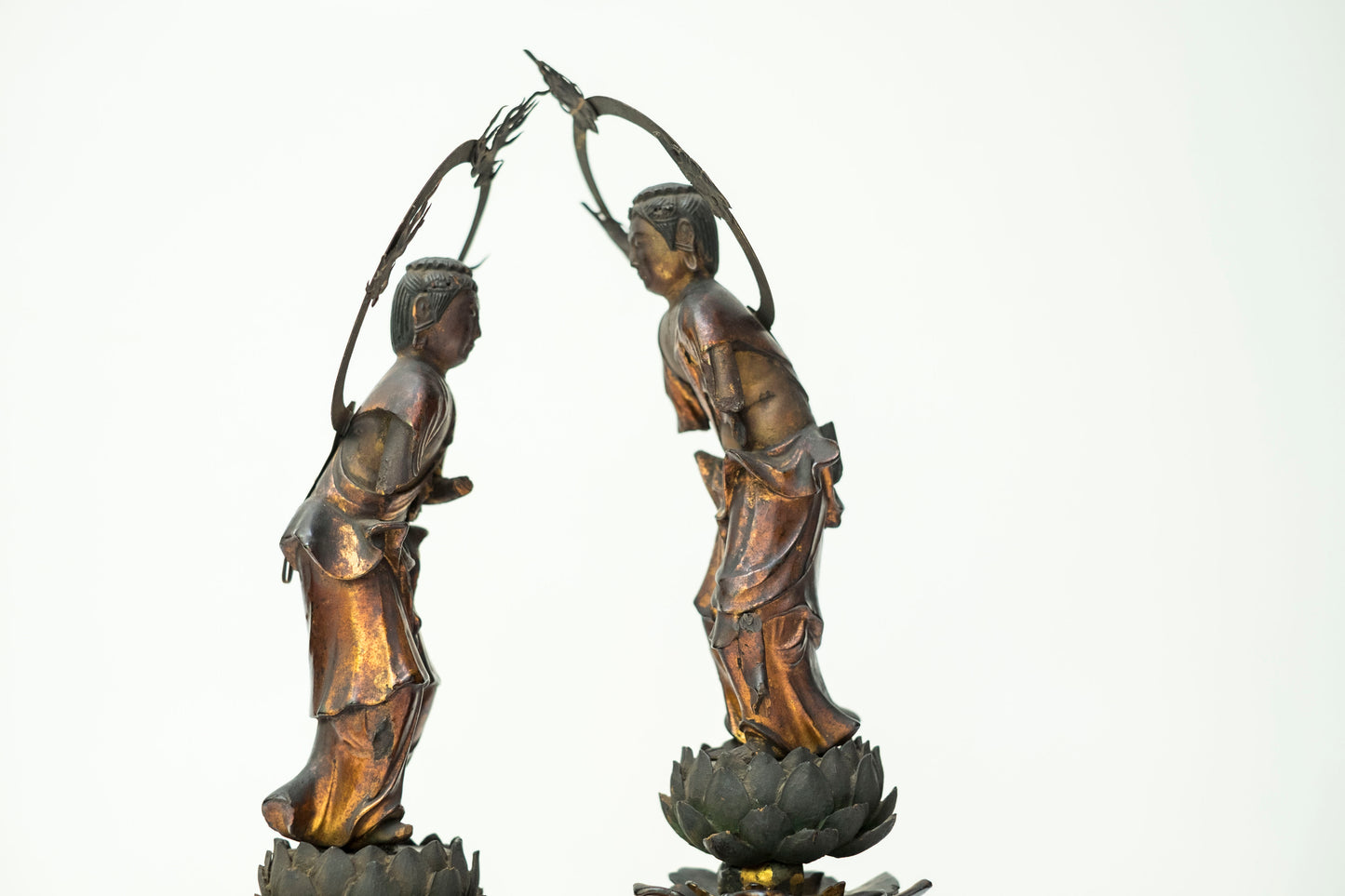
Edo–Meiji Gilt Wood Amida Nyorai Triad with Kannon and Seishi in Temple-Style Zushi Shrine, 68 cm
Edo–Meiji Gilt Wood Amida Nyorai Triad with Kannon and Seishi in Temple-Style Zushi Shrine, 68 cm
This piece has found its collector.
The Hunting Salon™ can search Japan's private collections for another like it. Ask us to find one or browse similar pieces.
Couldn't load pickup availability
Have a reasonable price in mind? Submit your best offer and our concierge will review it personally.
Pure Land faith pictures Amida descending with Kannon and Seishi to welcome the faithful, and this gilt triad holds that vision within its own temple-style zushi. Made as late Edo gave way to early Meiji, the 68 cm shrine keeps classical iconography with calm discipline and exceeds most household altars in scale.
The Piece
This imposing Buddhist zushi shrine presents a fully realized Amida Nyorai Triad, carved in wood and richly gilt, and housed within a large-scale temple-style cabinet. Measuring approximately 68 cm in height, the shrine belongs to the transitional period spanning the late Edo to early Meiji era, when devotional craftsmanship retained classical Buddhist iconography while responding to evolving modes of domestic and temple worship. Its scale, finish and compositional authority indicate a work made for sustained veneration within a dedicated altar setting rather than for travel or modest household devotion.
At the center stands Amida Nyorai, the Buddha of Infinite Light, whose serene expression and symmetrical posture embody the doctrinal calm of Pure Land belief. Flanked by the attendant bodhisattvas Kannon and Seishi, the composition forms a balanced devotional hierarchy, each figure rendered with careful proportional restraint. Gilt surfaces unify the figures, catching and diffusing light in the manner of ritual illumination and reinforcing the symbolism of radiance associated with Amida worship.
Stylistically, the shrine reflects late traditional carving practice that persisted into the Meiji period, before the decline of Buddhist patronage that followed state-driven secularization reforms. The carving favors disciplined clarity and legible iconography over flamboyance, in keeping with temple-grade works intended for doctrinal continuity rather than popular or touristic appeal.
The gilt surfaces, now softened by age, show the subdued patina expected of devotional objects exposed to decades of incense smoke and ritual handling. In Buddhist material culture this accumulated character marks an object that has taken part in lived practice, and it often deepens rather than diminishes spiritual resonance.
Details
- Era: Late Edo to early Meiji period (circa mid-19th century)
- Material: Carved and gilt wood
- Configuration: Amida Nyorai flanked by Kannon and Seishi Bosatsu, housed in a temple-style zushi shrine
- Measurements: Shrine height approx. 68 cm; interior figure height including lotus base approx. 50 cm
Condition
- Excellent for age.
- No modern repairs or over-restoration detected.
- Gilt surfaces softened by age with a subdued patina from incense and ritual handling.
Iconography and Function
Amida Nyorai (Amitabha Buddha) is the principal Buddha of Pure Land Buddhism, presiding over the Western Paradise (Sukhavati). The triad configuration, Amida flanked by Kannon and Seishi, symbolizes the Raigo descent, the welcoming of the faithful at the moment of death.
This zushi presents a focused devotional object intended for daily contemplation and posthumous merit transfer rather than public temple ritual. Its scale exceeds most household shrines, positioning this sanzon set between private altar and small temple object as a museum-grade example of late Edo–Meiji Buddhist domestic devotion.
Authenticity & Care
Attributed to the late Edo to early Meiji period on the basis of architectural form, lotus pedestal geometry and the proportional restraint of the Amida figure, which follow late Edo Pure Land conventions; the preservation of the gilding suggests controlled indoor enshrinement rather than prolonged temple exposure. Every piece is examined and documented in Japan before dispatch and is offered with the Japonista authenticity guarantee.
Delivery from Japan
Packed by hand in Japan and shipped insured and tracked by EMS or an equivalent express service. Import duties and taxes, where applicable, are payable on arrival. Returns follow our published policy.
Considered offers are welcome through Send an Offer, and each one is reviewed personally. Pieces over $1,000 may be reserved over several payments with Layaway Privilege™.
Continue browsing: Buddhist Statues & Sacred Art
Related pieces: Early Edo standing Amida Nyorai · Monumental standing bronze Kannon Bosatsu · Gandhara grey schist seated lotus Bodhisattva
Temple to Home
Monumental statues, zushi shrines and altars travel crated and insured through our Museum-Grade Logistics Suite™. Seeking a particular deity or school? The Hunting Salon™ searches Japan for it. Arrange crating and freight →
Collectors also search: amida triad zushi shrine · gilt wood amida nyorai triad · edo meiji buddhist shrine · amida kannon seishi statues · antique japanese zushi · pure land altar triad