Japanese Religious Object Archive — Rated Heritage
Butsudan and domestic altars as living architecture—where devotion becomes structure, memory becomes order, and ritual space remains quietly precise. Built for collectors and cultural stewards who prefer definition over spectacle: components, typologies, use logic, and preservation ethics.
Explore: PSPT Hub · A1 Master Pillar · Concierge Services
Curator’s Note
Butsudan and domestic altars are not decorative furnishings. They are architectural containers of belief—scaled to the home, shaped by lineage, and governed by ritual continuity. This archive approaches Japanese religious articles as functional structures that mediate between the everyday and the sacred, preserving memory through disciplined form rather than spectacle.
What Is a Butsudan
A Butsudan is a household Buddhist altar designed to enshrine devotion within daily life. Traditionally constructed as a cabinet with doors, it creates a threshold between the visible world and an interior sacred space. When opened, the Butsudan becomes active—receiving offerings, prayers, and memorial rites. When closed, it returns to quiet presence, integrated into the home without spectacle.
Structural Components & Functions
Japanese altars are defined by clarity of structure and symbolic order rather than ornament excess. Common elements include:
-
Central Enshrinement Zone: reserved for the principal sacred figure or scroll.
-
Tiered Platforms: supporting candles, incense burners, and ritual vessels.
-
Interior Gilding or Lacquer: reflecting light inward to emphasize depth.
-
Doors & Threshold Framing: marking the transition from domestic to sacred.
-
Lower Compartments: often used for memorial tablets and ritual storage.
Core Typologies in This Category
-
Butsudan (Household Buddhist Altars): floor-standing and compact domestic forms; often lacquered with gold interiors.
-
Miniature & Travel Altars: portable or space-efficient devotional structures for modern living.
-
Ritual Implements: incense burners, candle stands, bells, offering vessels—defined by repeated handling and patina.
-
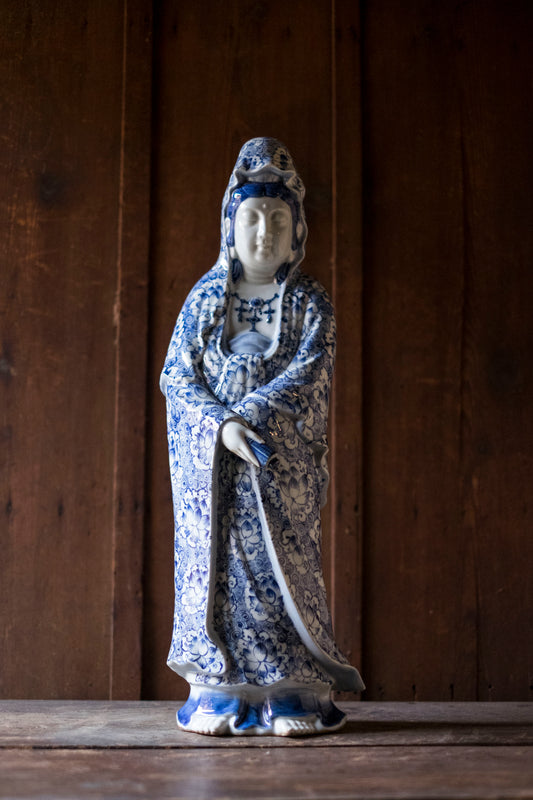
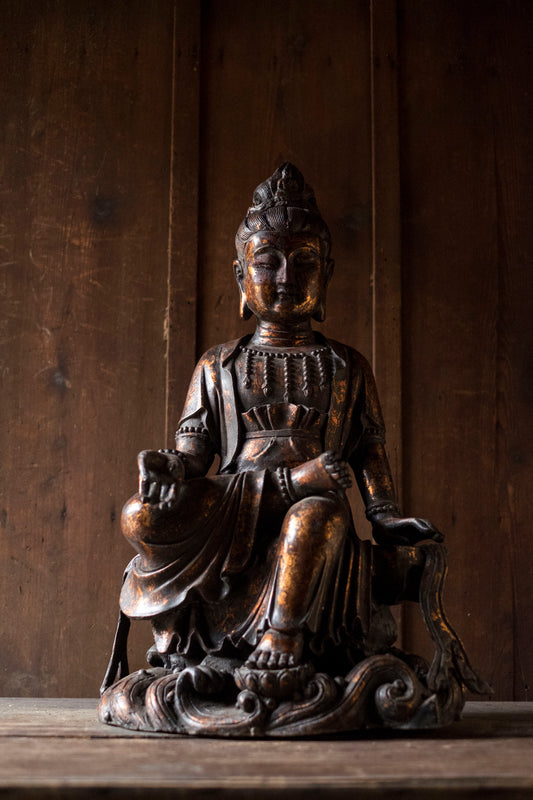
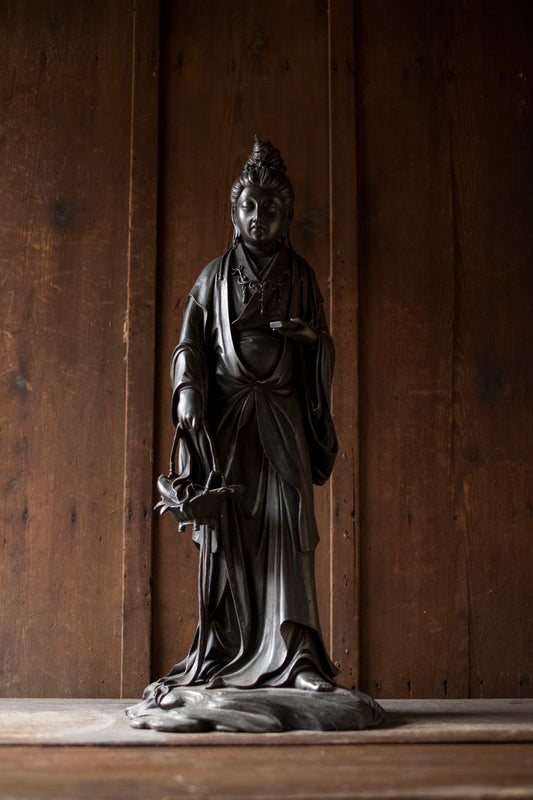
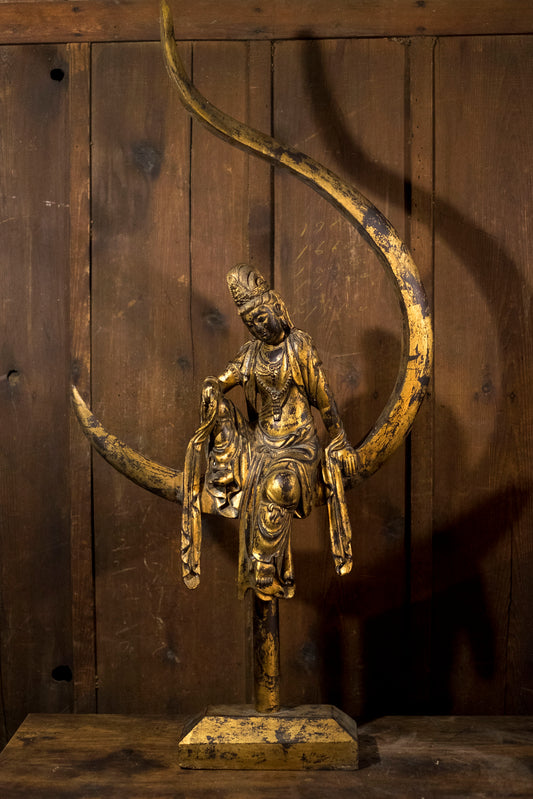
Sacred Display Objects: scrolls, plaques, memorial tablets, and symbolic figures designed for placement within altar architecture.
Use, Ritual, and Continuity
Unlike museum objects, religious articles are shaped by repetition. Surfaces soften where hands return daily. Interiors darken from incense smoke. These marks are not flaws but records of lived devotion. The value of a Butsudan lies not in perfection, but in continuity—its ability to quietly anchor ritual across generations.
Cultural & Collecting Perspective
From a collector’s standpoint, Japanese religious articles should be understood as use-preserved objects. Authentic examples show evidence of ritual life while retaining structural integrity. Craftsmanship, material honesty, and proportion outweigh surface brilliance. This archive emphasizes objects that retain their original purpose while crossing into historical documentation.
Integrating a Butsudan or altar into your space—without losing the object’s logic?
We can assist with contextual understanding, verification, scale guidance, and ritual compatibility considerations—especially when selecting between architectural floor units, compact forms, and supporting implements. For calm, specific support, visit Concierge Services to outline your goals, space constraints, and preferred level of tradition.
Frequently Asked Questions
What distinguishes a Butsudan from a decorative cabinet?
A Butsudan is constructed with ritual hierarchy and internal symbolism. Its layout, proportions, and interior treatment are designed specifically for devotional use rather than storage or display.
Can older religious articles show wear?
Yes. Surface patina, softened edges, and interior darkening are expected and often desirable, as they indicate sustained ritual use rather than neglect.
Are all altars the same size or format?
No. Altars range from full architectural floor units to compact household forms. Selection traditionally reflects living space, family structure, and practice style.
Is a Butsudan only for religious households?
Historically yes, but contemporary collectors and cultural stewards may preserve them as heritage objects, provided they are treated with respect and understanding.
butsudan, japanese altar, buddhist household altar, japanese religious objects, domestic altar japan, butsudan cabinet, ritual altar furniture, buddhist home shrine, japanese memorial altar, incense altar japan, religious furniture japan, household shrine japan, altar architecture japan, japanese devotional objects, buddhist ritual implements, traditional butsudan wood, lacquer altar japan, gold leaf altar interior, memorial tablets japan, ihai memorial tablet, buddhist memorial altar, household shrine cabinet, japanese home worship, incense burner buddhism, rin bell, offering vessels, altar candles, butsudan doors, altar threshold, devotional cabinet japan, japanese buddhist practice, jodo shinshu butsudan, nichiren altar, tendai home altar, shingon altar, buddhist altar furnishings, kamidana vs butsudan, household ritual implements, ancestral memorial practice, japan religious heritage objects, domestic sacred space, altar interior gilding, lacquer religious furniture, shrine cabinet japan, memorial rites home, incense smoke patina, ritual continuity, heritage preservation ethics, Japonista cultural archive