Daya
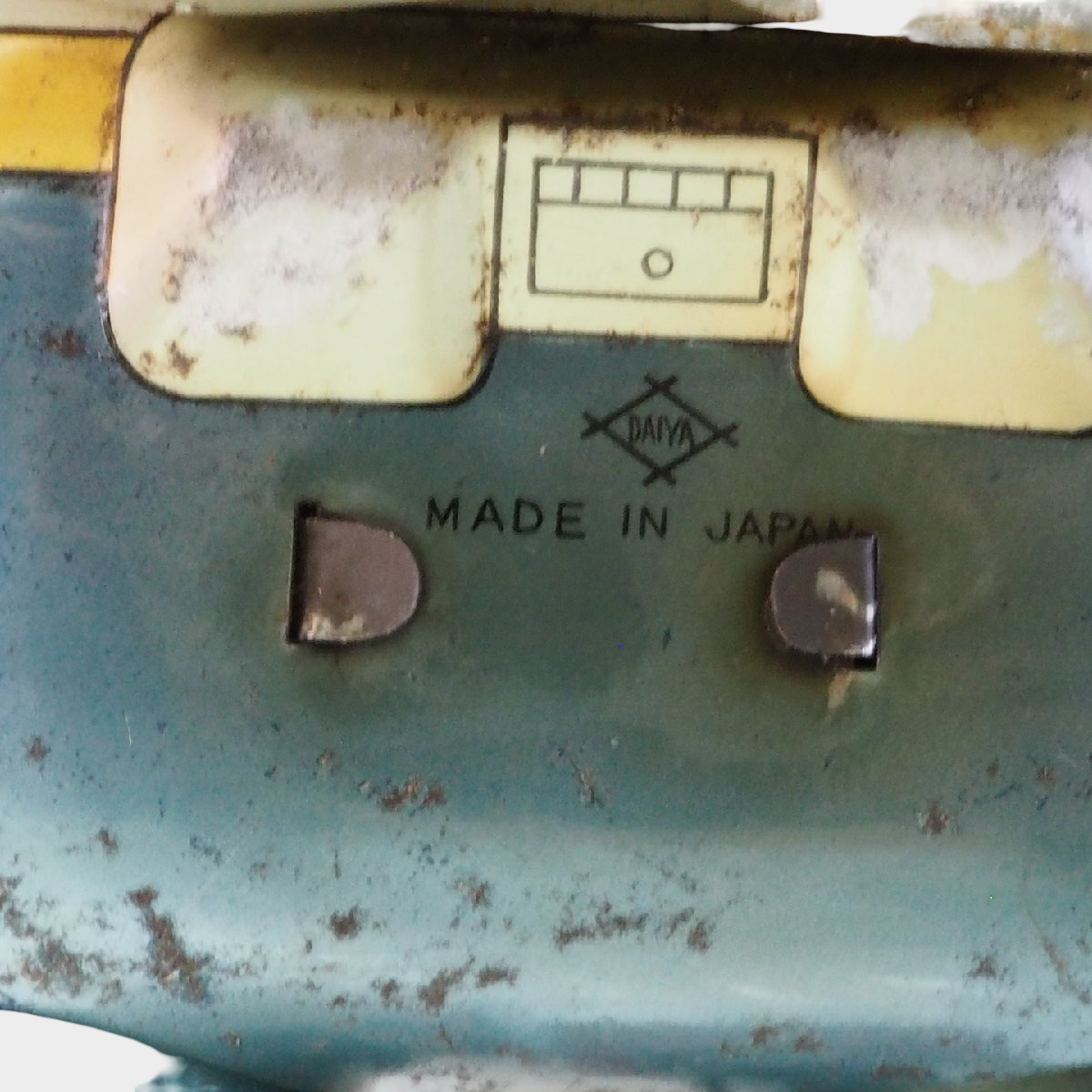
DAYA Large Astronaut Electric Tin Toy with Clear Dome Helmet, Battery-Operated Walking Robot, Japan 1960s
DAYA Large Astronaut Electric Tin Toy with Clear Dome Helmet, Battery-Operated Walking Robot, Japan 1960s
Couldn't load pickup availability
Have a reasonable price in mind? Submit your best offer and our concierge will review it personally.
Built on a scale meant to dominate a shop window, this DAYA astronaut is Japanese space-race tin at its most monumental. Heavy-gauge metal, a clear dome helmet and battery-driven walking action give it the gravity of industrial sculpture, and large DAYA figures rarely survive intact.
The Piece
This DAYA astronaut represents the apex of Japanese space-age tin production. Made during the height of the 1960s space race, the large-format electric figure embodies Japan's optimistic, futuristic imagination, where astronauts, robots and atomic science merged into a single heroic form.
Unlike smaller friction or clockwork figures, this example was engineered as a battery-powered electric walking robot, designed to command physical space. The oversized body, heavy tin gauge and prominent clear dome helmet place it in the store-display and premium domestic market tier rather than among mass-export playthings.
DAYA pieces are notoriously scarce at large sizes. Surviving examples often show heavy wear, replacement parts or missing mechanisms, and even in non-working condition collectors prize them for sculptural presence, original paint geometry and sheer scale.
Historically, the figure sits between Osaka Tin astronauts and later Bullmark science-fiction figures, but exceeds both in physical mass and visual authority. Where Osaka leaned whimsical and Bullmark leaned character-driven, DAYA leaned monumental. Compared with Osaka Tin astronauts it is heavier, larger and less cartoonish, built for presence rather than novelty; compared with Bullmark robots it carries less character IP and more pure futurism, and is rarer at large electric scale; compared with Yonezawa space toys, fewer were produced and it held a higher domestic prestige tier. This is a centerpiece rather than a starter piece, suited to advanced tin toy collectors, space-age design collectors, museum or gallery display and interior statement installations.
Details
- Maker: DAYA
- Era: 1960s
- Origin: Japan
- Material: Heavy-gauge tin; clear dome helmet
- Mechanism: Battery-powered electric walking action
- Format: Large-format; store-display and premium domestic market tier
Condition
Condition and working order are best judged from the photographs, which form part of the condition record.
Three Showa Space Philosophies
In postwar Japan, tin space robots reflected three distinct visions of the future, and together these makers form the foundation of Japanese space-robot history.
Daiya embodied the professional astronaut, a figure of authority and realism shaped by the global space race: serious, militaristic in design, large in scale and heavy in tin, its figures feel less like toys and more like equipment, designed with weight and purpose. Masudaya captured the dream of space, with rockets, spacemen, domes and vehicles in bright lithography and playful futurism that defined childhood imagination in the Showa era and still carries strong cross-generational appeal. Nomura, by contrast, emphasized the machine itself: heavy construction, simplified geometry and walking mechanisms conveyed industrial strength and engineering pride, robots built to endure rather than entertain, and the maker remains historically crucial and deeply respected among serious collectors.
Authenticity & Care
Every piece is examined and documented in Japan before dispatch and is offered with the Japonista authenticity guarantee.
Delivery from Japan
Packed by hand in Japan and shipped insured and tracked by EMS or an equivalent express service. Import duties and taxes, where applicable, are payable on arrival. Returns follow our published policy.
Considered offers are welcome through Send an Offer, and each one is reviewed personally. Pieces over $1,000 may be reserved over several payments with Layaway Privilege™.
Continue browsing: Anime Collectibles · Vintage Toys
Related pieces: Bullmark Kamen Rider No.2 tin robot figure · Asakusa Toy BIG X tin speedboat · Ultraman return-pose soft vinyl wind-up figure
Armory & Export
Armor, sword fittings and historical militaria travel with export paperwork, custom crating and insured freight through our Museum-Grade Logistics Suite™. Plan a museum-grade shipment →
Collectors also search: daya astronaut tin toy · 1960s japanese tin astronaut · battery operated tin robot · space age tin toy japan · large tin astronaut dome helmet · vintage walking robot toy · showa space robot