Japonista
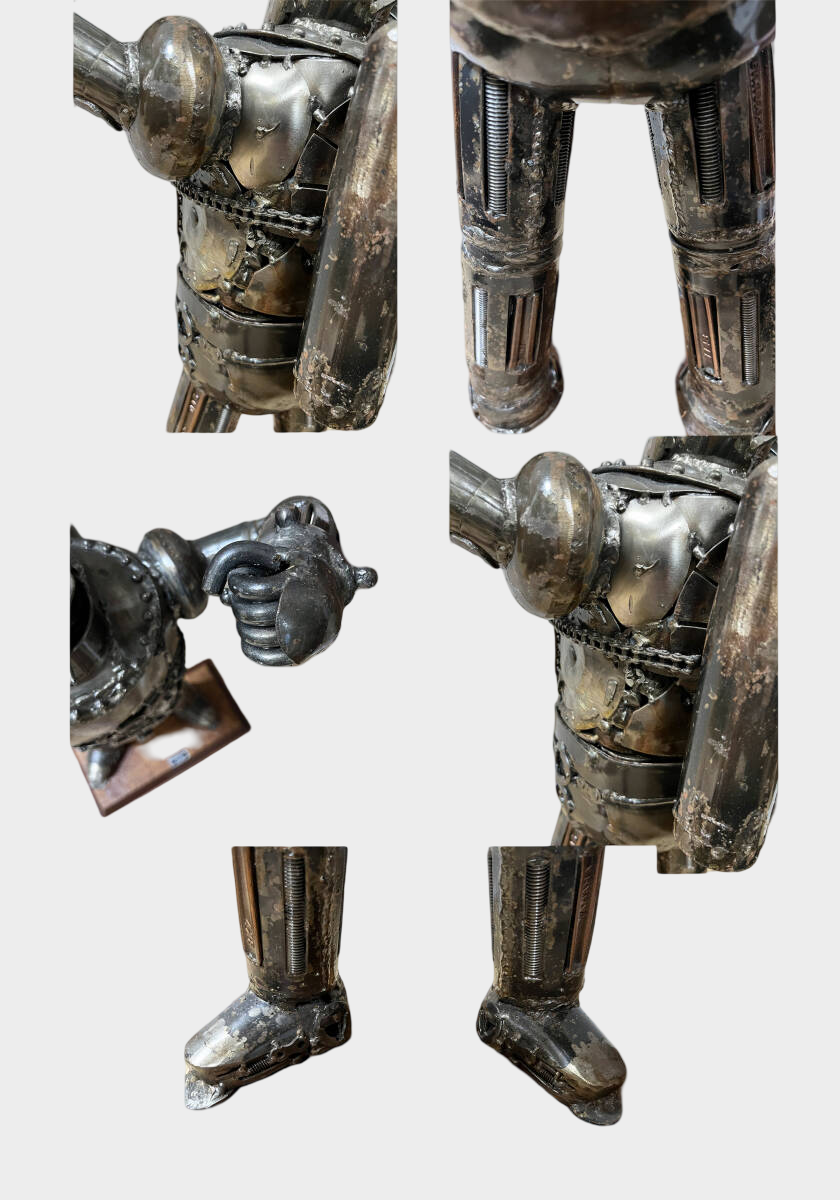
Escultura de hierro de desecho soldado de Tetsujin 28-go, obra de Hikari Production, edición limitada 17/50, aprox. 60 cm
Escultura de hierro de desecho soldado de Tetsujin 28-go, obra de Hikari Production, edición limitada 17/50, aprox. 60 cm
Freight piece: please confirm delivery before purchase
This piece travels in a crate or by freight rather than standard mail, and may need careful dismantling before it can be packed. The shipping shown at checkout is an estimate. Japonista reserves the right to determine the final handling, crating and freight cost when your order is received, according to the piece, the destination and carrier conditions at that time.
We advise requesting a delivery quote before checkout. If the final cost is higher than the amount paid, we send the difference for your approval before dispatch. Your piece is held for you until it is settled.
Request a delivery quoteNo se pudo cargar la disponibilidad de recogida
All sales are final. Please read our refund policy before purchase.
Have a reasonable price in mind? Submit your best offer and our concierge will review it personally.
Tetsujin 28-go, the first great robot of Japanese popular culture, rebuilt not in plastic fantasy but in the language of the industry that made postwar Japan. Welded from scrap iron, bolts, chains and gears and marked 17/50 on the base, the sculpture stands approximately 60 cm to its raised fist, between licensed character tribute and post-industrial art.
The Piece
This is neither a toy nor a statue in the classical sense but a material translation. Credited to Hikari Production, with Bandai as the licensed reference holder, the figure of Tetsujin 28-go (Gigantor) is welded from scrap iron and found metal, bolts, chains and gears, and left in raw metal with natural oxidation. Here scrap iron is not a stylistic choice but an argument: the character is re-materialized as machinery.
Tetsujin 28-go is foundational to Japanese robot culture, the proto-giant that predates Gundam, Mazinger and the entire mecha lineage, and he emerged at a time when technology was feared, respected and mythologized. Rendering him in metal that once served as tools, machinery and industrial residue collapses fiction and reality; the robot becomes what Japan was made of rather than what it dreamed of, reversing the usual nostalgia loop from plastic toy to metal fantasy and placing the work closer to post-industrial sculpture than to fan art.
The sculpture communicates through recognition under reduction. The raised fist reads as resolve rather than aggression; exposed fasteners make labor visible; asymmetrical mass reads as machine rather than idol; and negative space between the parts favors structure over surface. Found metal echoes postwar industrial Japan, and the welded bolts and chains emphasize labor, weight and permanence while the stance preserves the heroic silhouette without stylization.
The base marking 17/50 confirms limited intent, even though the total run remains undocumented; handmade limited metal works in Japanese collectible culture often escape formal cataloging, especially when produced as collaborative or commemorative objects rather than retail goods. The piece resonates with brutalist design, wabi-sabi industrial aesthetics and Japanese postwar material consciousness, and speaks to Shōwa-era collectors, architects and interior designers, industrial art collectors and anime historians seeking non-commercial artifacts.
Details
- Maker: Hikari Production (production credit)
- Character: Tetsujin 28-go / Gigantor; Bandai (licensed reference)
- Material: Welded scrap iron and found metal (bolts, chains, gears)
- Finish: Raw metal with natural oxidation
- Measurements: Approx. 60 cm to the raised fist
- Edition: Limited 17/50 (as marked on base)
- Construction: Heavy, solid construction; upper and lower body separable at the torso
- Category: Sculptural figure / industrial art object
Condition
- Displayed only and near-unused, with no play handling.
- Raw metal surface with natural oxidation as intended by the finish.
Display and Handling
Owing to its weight the sculpture requires floor or pedestal display and is not suited to shelving. Ambient or raking light best reveals the weld texture. Separation at the torso simplifies transport and staging, and the piece travels by freight.
Authenticity & Care
Edition number 17/50 is marked on the base; production credited to Hikari Production with Bandai as the licensed character reference. The total run is undocumented. Every piece is examined and documented in Japan before dispatch and is offered with the Japonista authenticity guarantee.
Delivery from Japan
Crated in Japan and shipped insured by air or sea freight. A freight quote is confirmed with you before dispatch through our Museum-Grade Logistics Suite™. Import duties and taxes, where applicable, are payable on arrival. Returns follow our published policy.
Considered offers are welcome through Send an Offer, and each one is reviewed personally. Pieces over $1,000 may be reserved over several payments with Layaway Privilege™.
Continue browsing: Vintage Toys
Related pieces: Takashi Murakami Mr. DOB Red/Blue vinyl sculpture · Murakami DOB-kun MoMA exclusive blue figure · Takashi Murakami × BOME KO2 1/5 garage kit
Cabinet of Curiosities
Okimono, netsuke and precious-metal miniatures surface rarely. Tell us the subject, material or carver you collect, and the Hunting Salon™ will search Japan for it. Begin a Hunting Salon™ request →
Collectors also search: tetsujin 28 scrap iron sculpture · tetsujin 28-go metal art · gigantor scrap metal statue · hikari production tetsujin 28 · welded scrap metal robot sculpture · limited edition tetsujin 28 figure · industrial anime art sculpture