Kutani Ware
Figura de Rakan (Luohan) de pie, policroma y dorada, estilo Kutani, cerámica japonesa del siglo XX, 62 cm
Figura de Rakan (Luohan) de pie, policroma y dorada, estilo Kutani, cerámica japonesa del siglo XX, 62 cm
Freight piece: please confirm delivery before purchase
This piece travels in a crate or by freight rather than standard mail, and may need careful dismantling before it can be packed. The shipping shown at checkout is an estimate. Japonista reserves the right to determine the final handling, crating and freight cost when your order is received, according to the piece, the destination and carrier conditions at that time.
We advise requesting a delivery quote before checkout. If the final cost is higher than the amount paid, we send the difference for your approval before dispatch. Your piece is held for you until it is settled.
Request a delivery quoteNo se pudo cargar la disponibilidad de recogida
All sales are final. Please read our refund policy before purchase.
Have a reasonable price in mind? Submit your best offer and our concierge will review it personally.
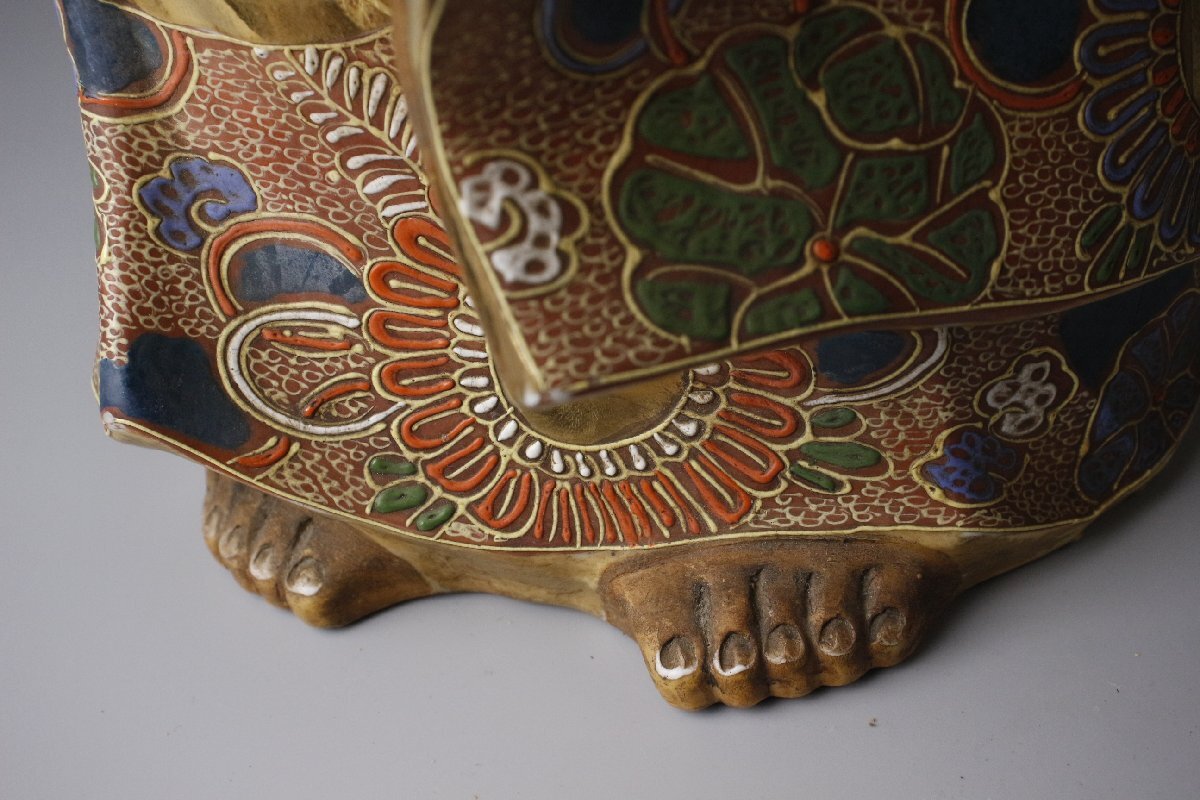
A Rakan, one of the awakened disciples who embody discipline and endurance, stands here at approximately 62 cm, his robe turned into a field of polychrome pattern and gold. Large enough to anchor a room as a shrine object does, the figure keeps its dignity through honest age wear.
The Piece
This large-format figure of a Rakan (Luohan) is rendered in the saturated, celebratory surface language collectors associate with late Kutani-style polychrome and gilded decoration. Rakan imagery carries particular gravity in Japanese devotional culture: these are not gods of luck or decorative mascots but disciples who represent the human possibility of awakening through training, restraint and fidelity to vows. In temple settings and domestic altars their role is protective and instructive, a witness to practice and a reminder that inner order is built day by day.
The robe becomes a field of rhythm and blessing, with layered motifs, controlled pattern density and bright enamel-like color zones set against gold accents. Kutani's bold chroma, dense ornament and confident gilding are difficult to control in figural work: color must sit cleanly on form, pattern must reinforce silhouette, and gold must mark hierarchy (edges, sanctified zones, emblem points) rather than shine indiscriminately. Here the robe reads as a composed design system, its saturated color and metallic emphasis carefully paced.
The modeling of face and hands decides whether such a figure feels theatrical or dignified, and this one leans toward dignity: the expression is focused rather than cartoonish, the stance steady, and the volume of the garment supports the figure's vertical presence. Iconography comes first and decoration follows. The abundant robe adds a second layer of meaning, prosperity understood not as the opposite of discipline but as what can arise from a life that is ordered and sustained.
Rakan figures have long been kept as quiet guardians of the threshold, anchors for meditation or study, and emblems of discipline, resilience and ethical clarity, temple-adjacent devotional objects translated into private collections. At 62 cm this example reads as a focal object in a shopfront, reception room, study or private gallery, and it appeals across Buddhist art, Kutani ceramics and Japanese folk religion alike.
Details
- Maker: Kutani-style workshop (unattributed)
- Era: 20th century (modern vintage), in traditional Kutani decorative vocabulary
- Origin: Japan
- Material: Ceramic body with polychrome enameling and gilt surface decoration
- Measurements: W 21 cm × H 62 cm × D 18 cm (approx.)
- Weight: Object approx. 8–14 kg (estimated, not weighed); packed approx. 25–30 kg, double-boxed (estimated)
- Subject: Rakan (Luohan), standing
- Shipping: Courier-compatible when professionally packed: figure immobilized with internal cushioning, surface-safe wraps to protect the gilding, reinforced outer carton
Condition
- Visible wear, scuffs, possible glaze losses, edge nicks and age-related marks; integrity appears intact as a display sculpture.
- Polychrome and gilded surfaces can chip under impact, so packing is treated as a conservation step.
Authenticity & Care
Attributed from visible stylistic and material characteristics consistent with Kutani-style polychrome figural production and Rakan iconography. With no workshop documentation or maker's inscription, dating and kiln attribution should be treated as probable rather than certain. Every piece is examined and documented in Japan before dispatch and is offered with the Japonista authenticity guarantee.
Delivery from Japan
Packed by hand in Japan and shipped insured and tracked by EMS or an equivalent express service. Import duties and taxes, where applicable, are payable on arrival. Returns follow our published policy.
Considered offers are welcome through Send an Offer, and each one is reviewed personally. Pieces over $1,000 may be reserved over several payments with Layaway Privilege™.
Continue browsing: Buddhist Statues & Sacred Art
Related pieces: Kutani blue and white Kannon figure · Matsuhisa Sohrin standing bronze Fudo Myo · Carved wood seated Amida Nyorai with halo
Temple to Home
Monumental statues, zushi shrines and altars travel crated and insured through our Museum-Grade Logistics Suite™. Seeking a particular deity or school? The Hunting Salon™ searches Japan for it. Arrange crating and freight →
Collectors also search: kutani rakan statue · japanese luohan figure · kutani buddhist figure · large japanese ceramic monk statue · polychrome rakan sculpture · kutani style figure · arhat statue japan