Japonista
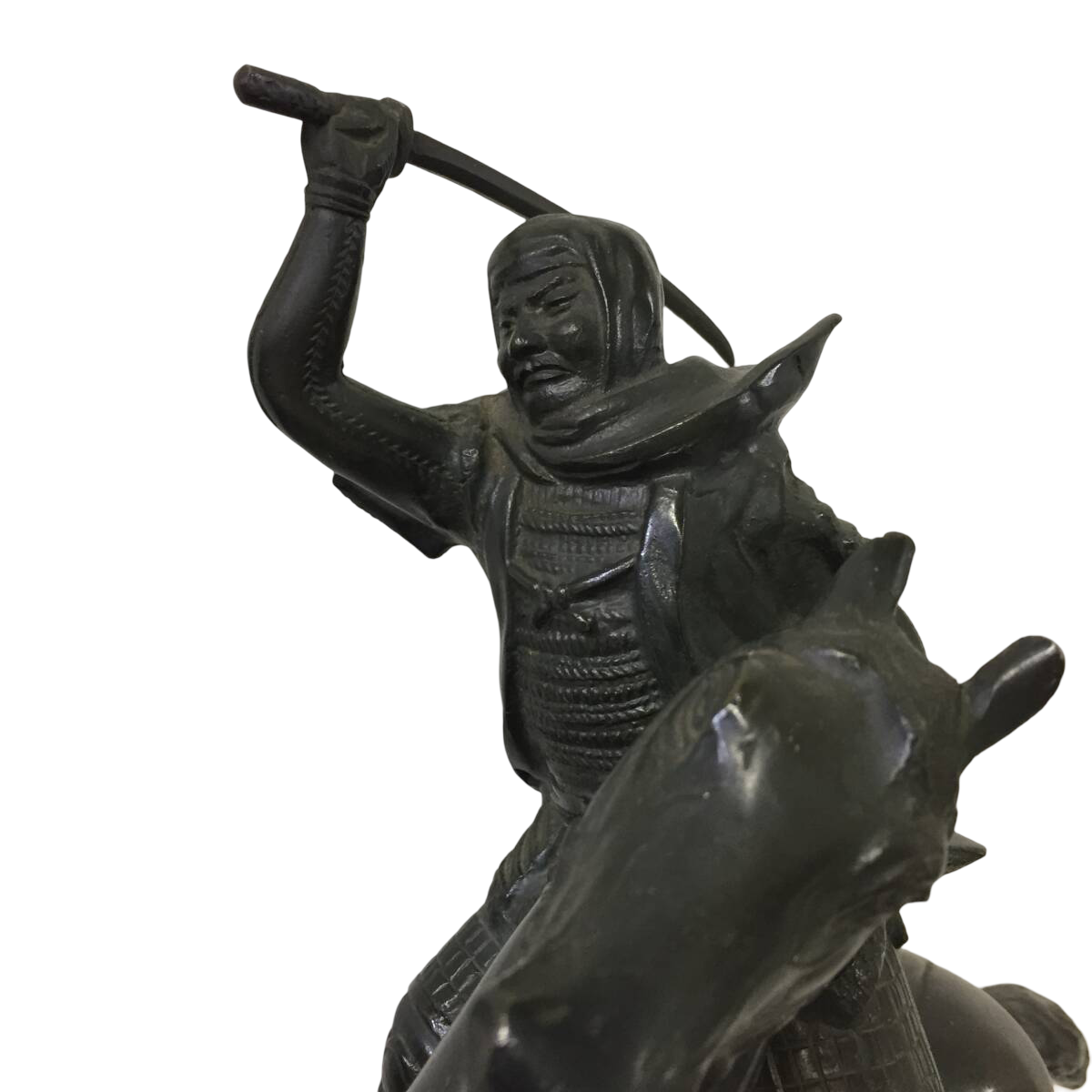
Tabla de batalla de bronce de Kawanakajima, combate a caballo entre Takeda Shingen y Uesugi Kenshin, Meiji–Taishō, 48 cm
Tabla de batalla de bronce de Kawanakajima, combate a caballo entre Takeda Shingen y Uesugi Kenshin, Meiji–Taishō, 48 cm
Freight piece: please confirm delivery before purchase
This piece travels in a crate or by freight rather than standard mail, and may need careful dismantling before it can be packed. The shipping shown at checkout is an estimate. Japonista reserves the right to determine the final handling, crating and freight cost when your order is received, according to the piece, the destination and carrier conditions at that time.
We advise requesting a delivery quote before checkout. If the final cost is higher than the amount paid, we send the difference for your approval before dispatch. Your piece is held for you until it is settled.
Request a delivery quoteNo se pudo cargar la disponibilidad de recogida
All sales are final. Please read our refund policy before purchase.
Have a reasonable price in mind? Submit your best offer and our concierge will review it personally.
An armored warrior on a rearing horse raises his blade against an opponent below, a single suspended instant drawn from the legend of Kawanakajima. Cast in bronze and weighing about 7.5 kilograms, the tableau distills the rivalry of Takeda Shingen and Uesugi Kenshin into moral theater.
The Piece
This bronze tableau presents a dramatic moment of mounted combat, rendered with theatrical clarity and muscular restraint: one armored warrior astride a rearing horse, blade raised mid-strike, confronting a fallen or kneeling opponent. The composition belongs to a long Japanese tradition depicting the legendary martial encounters of the Sengoku period, and aligns closely with imagery of the Battle of Kawanakajima, the storied clashes between Takeda Shingen and Uesugi Kenshin that came to symbolize the idealized samurai ethos.
Where Edo-period pictorial scrolls emphasized narrative continuity, sculptural battle scenes condense history into one decisive instant: the taut musculature of the horse, the forward surge of the mounted figure, the compressed tension of the warrior below. The result is not documentary realism but moral theater, a distillation of courage, resolve and martial destiny. The raised sword, forward-leaning posture and opposition between mounted and grounded figures echo the visual formulas of Meiji-period prints, commemorative medals and other sculpture; although no inscription names the scene, the composition draws unmistakably on the Shingen and Kenshin mythos rather than anonymous combat.
Such bronzes emerged with particular force in the late Meiji to Taishō periods, when Japan sought to reconcile rapid modernization with reverence for its warrior past. By then these scenes had become cultural memory objects, made for collectors, schools, exhibitions, offices and domestic interiors as embodiments of discipline, loyalty and historical continuity. Bronze was the preferred medium because it conferred permanence on legendary conflict, allowed dynamic multi-figure compositions and bridged fine art with commemoration. These are not battlefield relics but interpretive monuments, revealing how Japan remembered its past while entering modernity.
The sculpture is cast in bronze, likely by the lost-wax method common to Japanese workshops of the late nineteenth and early twentieth centuries. The modeling favors anatomical clarity over excessive detail, letting light articulate the contours of horse and armor, and the patina shows natural tonal variation consistent with age rather than artificial uniformity. Its substantial weight of approximately 7.5 kilograms reinforces the intended permanence: a deliberate sculptural statement rather than a casual decorative piece.
Details
- Subject: Mounted samurai combat after the Battle of Kawanakajima tradition (Takeda Shingen and Uesugi Kenshin)
- Era: Meiji to early Taishō period (attributed on style, subject and casting technique)
- Origin: Japan
- Material: Cast bronze, likely lost-wax
- Measurements: 48 cm
- Weight: Approx. 7.5 kg
- Inscription: None naming the figures
Condition
- Signs of age consistent with the period, including minor surface wear and patina variation.
- No major losses or structural issues apparent.
Reading the Kawanakajima Scene
Kawanakajima (1553–1564) was not a single engagement but a series of five confrontations in the mid-16th century between Takeda Shingen, lord of Kai Province, famed for cavalry warfare and the Fūrinkazan banner, and Uesugi Kenshin, lord of Echigo, revered as a warrior-monk and later mythologized as the God of War. The arrangement here mirrors Edo- and Meiji-period retellings of the most dramatic episode of the Fourth Battle (1561), in which Kenshin is said to have broken through the Takeda lines to strike directly at Shingen; whether literal or symbolic, it became one of the most reproduced martial narratives in Japanese art.
Traditional cues suggest a reading of the figures. The mounted samurai, raised above the field in forward momentum, aligns with conventional images of Takeda Shingen: command posture rather than reckless motion, composure and weight suggesting authority and strategy, the horse as a disciplined extension of leadership, in keeping with his later image as the embodiment of military governance, logistics and calculated force. The lower, assertive opponent corresponds to the archetype of Uesugi Kenshin: a dynamic forward lean, personal combat rather than command distance, and the tension of sudden breakthrough and moral ferocity, reflecting a legacy that merged Buddhist devotion with martial resolve and was much favored by Meiji sculptors.
- Strategy versus impulse
- Governance versus righteousness
- Earthly power versus divine mandate
Authenticity & Care
Dated to the Meiji to early Taishō period on the basis of style, subject matter and casting technique; no inscription identifies the figures or maker. Every piece is examined and documented in Japan before dispatch and is offered with the Japonista authenticity guarantee.
Delivery from Japan
Packed by hand in Japan and shipped insured and tracked by EMS or an equivalent express service. Import duties and taxes, where applicable, are payable on arrival. Returns follow our published policy.
Considered offers are welcome through Send an Offer, and each one is reviewed personally. Pieces over $1,000 may be reserved over several payments with Layaway Privilege™.
Continue browsing: Okimono · Samurai Arts
Related pieces: Katō Kiyomasa spear-bearing samurai metal sculpture · Japanese cast iron turtle okimono · Bizen ware kabuto okimono, 47 cm
Cabinet of Curiosities
Okimono, netsuke and precious-metal miniatures surface rarely. Tell us the subject, material or carver you collect, and the Hunting Salon™ will search Japan for it. Begin a Hunting Salon™ request →
Collectors also search: kawanakajima bronze sculpture · takeda shingen uesugi kenshin statue · japanese bronze samurai battle · mounted samurai bronze meiji · samurai on horse bronze tableau · meiji bronze warrior sculpture · sengoku samurai bronze statue