Japonista
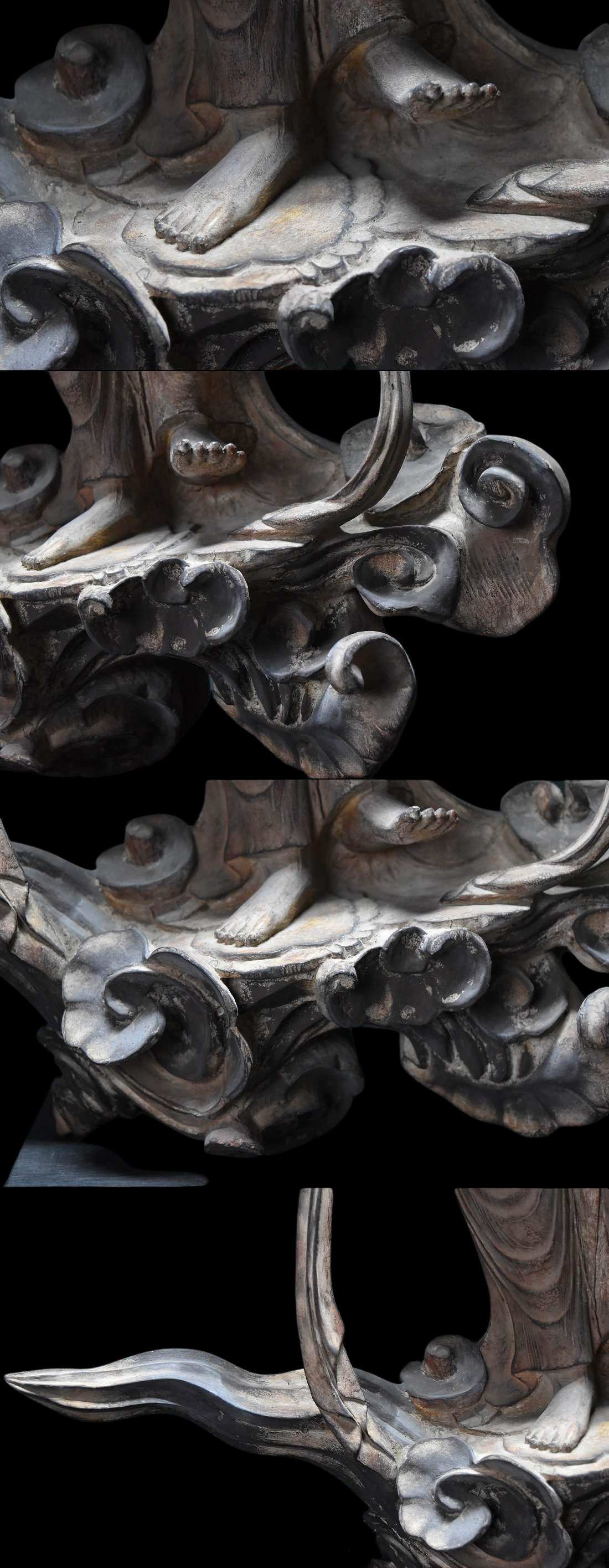
Figura asistente Unchū Kuyō Bosatsu sobre nubes, basada en Byōdō-in, figura celestial Hiten, resina fundida de posguerra, 73 cm
Figura asistente Unchū Kuyō Bosatsu sobre nubes, basada en Byōdō-in, figura celestial Hiten, resina fundida de posguerra, 73 cm
Freight piece: please confirm delivery before purchase
This piece travels in a crate or by freight rather than standard mail, and may need careful dismantling before it can be packed. The shipping shown at checkout is an estimate. Japonista reserves the right to determine the final handling, crating and freight cost when your order is received, according to the piece, the destination and carrier conditions at that time.
We advise requesting a delivery quote before checkout. If the final cost is higher than the amount paid, we send the difference for your approval before dispatch. Your piece is held for you until it is settled.
Request a delivery quoteNo se pudo cargar la disponibilidad de recogida
All sales are final. Please read our refund policy before purchase.
Have a reasonable price in mind? Submit your best offer and our concierge will review it personally.
A large cloudborne offering attendant after the celebrated Phoenix Hall type of Byodo-in, carrying the Hiten tradition of devotion expressed through motion, music and offering. This postwar cast-resin revival stands approx. 73 cm overall and brings Heian Pure Land grace into a modern contemplative setting.
The Piece
Among the most luminous categories of Japanese Buddhist imagery, the Hiten, also called Tennyo or “heavenly maiden”, belongs to the realm of praise rather than petition. She is neither savior nor judge, but devotion made visible: the celestial attendant whose very movement becomes offering. This large-format figure represents Unchu Kuyo Bosatsu, the Cloudborne Offering Bodhisattvas, a devotional category often conflated with Tennyo or apsaras yet doctrinally closer to the Hiten tradition of heavenly attendants who manifest through motion, music and offering rather than direct salvific action.
The sculptural vocabulary of billowing scarves, asymmetrical contrapposto and footing suspended upon clouds derives ultimately from Tang-dynasty celestial iconography, transmitted to Japan through Nara and early Heian Buddhist visual culture. In Japan these figures reached their most refined expression in court-sponsored temple programs such as the Phoenix Hall of Byodo-in, where airborne Pure Land attendants dance and play music as offering around Amida's court, cosmological witnesses to his Pure Land descent. The figure's Byodo-in and numbering cues support this specific attendant-type identification.
The iconographic genealogy begins in India with the apsaras, carried along the Silk Road and reconfigured in East Asia as feitian. In Heian Japan the heavenly maiden reached its most distilled form and became an atmosphere of doctrine, an embodied sign that the Buddha's realm is already perfected. In Pure Land settings, Hiten appear as dancers and musicians suspended upon cloud scrolls, garments streaming like calligraphy, announcing that in an awakened realm praise is not performed; it occurs naturally.
This example is a large-scale cast-resin reproduction produced in the postwar period, molded after a classical prototype and explicitly referencing the Byodo-in lineage. It is not an antique carving, nor a monumental temple commission, but a modern Japanese revival work made for collectors, study and domestic contemplation, and it holds a real place in the modern continuation of Buddhist material culture: devotional replication for domestic and institutional display. It shows disciplined fidelity to orthodox models in poise, drapery logic and restrained expression. Works of this kind were commonly commissioned for temple interiors lacking original statuary, for educational institutions and for private collectors seeking large visual impact.
Placed in a private setting, such a sculpture offers orientation rather than spectacle: a reminder that devotion can be practiced through refined attention as well as supplication, cultivating an inner Pure Land in which gratitude becomes the default condition. It suits collectors of Buddhist iconography seeking scale and presence, institutional or gallery display, educational and contemplative environments, and anyone drawn to the continuation of sacred forms into the modern era.
Details
- Era: Late Showa to early Heisei (postwar)
- Origin: Japan
- Material: Cast resin; molded reproduction after a classical prototype
- Color: Monochrome stone-like surface finish
- Measurements: Total height approx. 73 cm · Width approx. 53.5 cm · Depth approx. 19.7 cm · Figure height alone approx. 70 cm
- Included: Separate display pedestal
- Iconographic Type: Unchu Kuyo Bosatsu (Hiten / Tennyo type), after Byodo-in Phoenix Hall
Condition
Japonista grade AB · Very good, with light wear visible on close inspection.
- Good overall condition, with no major losses or structural damage observed.
- Minor surface wear consistent with age and display.
Iconographic Identification
Correct identification is essential. These figures exist to glorify the Buddhist cosmos, not to be petitioned directly.
- Not a primary bodhisattva (Bosatsu) such as Kannon or Seishi.
- Not a Karyōbinga, the mythical half-bird musician.
- Properly classified as Unchu Kuyo Bosatsu / Hiten, a celestial offering attendant.
- Key indicators: dynamic forward movement, a floating cloud base, flowing scarves (tenne), the absence of a lotus throne or teaching mudra, and an expression of grace rather than authority.
Hiten, Bosatsu, Karyobinga
Hiten (celestial maiden, Tennyo): praise and auspicious presence, sanctifying space through embodied devotion. Visual cues are a weightless stance, flowing scarves, a dance gesture or musical posture, and Pure Land association; doctrinally, an “atmospheric” icon signaling a perfected Buddha-field.
Bosatsu (bodhisattva): compassionate intervention, vowing to guide beings toward liberation. Visual cues are crown and jewels, calm authority, and identifying attributes such as lotus, vase, rosary or staff; doctrinally, salvific agency, compassion in action.
Karyobinga (kalavinka): the voice of paradise, mythical Pure Land birds famed for awakening song. Visual cues are a bird body with a human head, perched or floating, often paired in decorative programs; doctrinally, sonic teaching, sound that turns the listener toward the Dharma.
Side by side, Hiten express devotion through visual choreography, gesture, drapery and descent as gratitude, while Karyobinga express doctrine through birdsong as a vehicle for awakening. Together they describe a Pure Land where beauty functions as method and the senses become pathways toward clarity.
Authenticity & Care
A postwar cast-resin reproduction of late Showa to early Heisei date, molded after a classical Byodo-in prototype; presented as a modern revival work, not an antique carving. Every piece is examined and documented in Japan before dispatch and is offered with the Japonista authenticity guarantee.
Delivery from Japan
Packed by hand in Japan and shipped insured and tracked by EMS or an equivalent express service. Import duties and taxes, where applicable, are payable on arrival. Returns follow our published policy.
Considered offers are welcome through Send an Offer, and each one is reviewed personally. Pieces over $1,000 may be reserved over several payments with Layaway Privilege™.
Continue browsing: Buddhist Statues & Sacred Art · Okimono
Related pieces: Edo Monju Bosatsu on lion in zushi · Bronze Nio guardians Agyo and Ungyo · Suigetsu Kannon gilt wood with crescent surround
Temple to Home
Monumental statues, zushi shrines and altars travel crated and insured through our Museum-Grade Logistics Suite™. Seeking a particular deity or school? The Hunting Salon™ searches Japan for it. Arrange crating and freight →
Collectors also search: unchu kuyo bosatsu statue · byodo-in cloud bodhisattva · hiten tennyo statue · japanese celestial maiden sculpture · large japanese buddhist statue · phoenix hall bodhisattva figure · apsaras japanese sculpture