Japonista
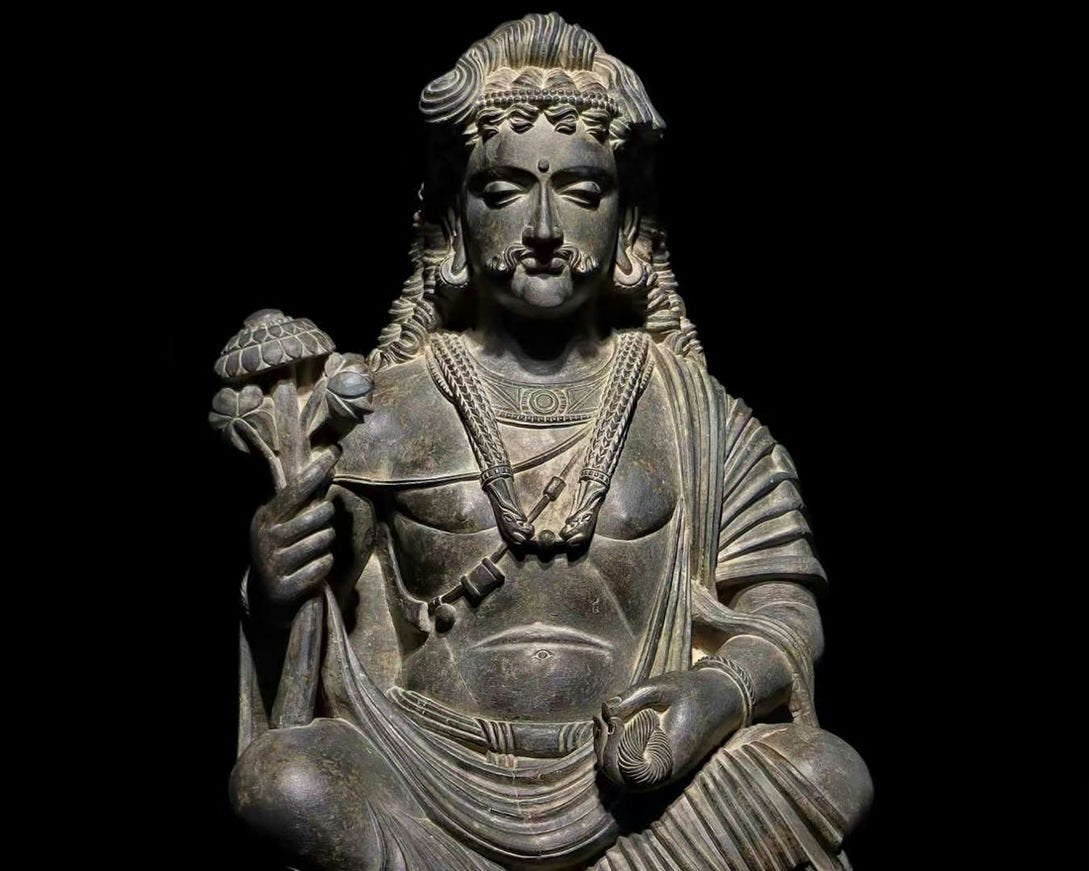
Bodhisattva de esquisto gris de Gandhara portador de loto, sentado sobre un trono tallado, era Kushán, siglos 2.º–3.º, 77 cm
Bodhisattva de esquisto gris de Gandhara portador de loto, sentado sobre un trono tallado, era Kushán, siglos 2.º–3.º, 77 cm
Freight piece: please confirm delivery before purchase
This piece travels in a crate or by freight rather than standard mail, and may need careful dismantling before it can be packed. The shipping shown at checkout is an estimate. Japonista reserves the right to determine the final handling, crating and freight cost when your order is received, according to the piece, the destination and carrier conditions at that time.
We advise requesting a delivery quote before checkout. If the final cost is higher than the amount paid, we send the difference for your approval before dispatch. Your piece is held for you until it is settled.
Request a delivery quoteNo se pudo cargar la disponibilidad de recogida
All sales are final. Please read our refund policy before purchase.
Have a reasonable price in mind? Submit your best offer and our concierge will review it personally.
Carved in cool grey schist and standing 77 cm high, this seated Bodhisattva belongs to the Gandhara sphere, where Buddhist devotion, classical naturalism and Central Asian courtly taste met. It presents compassion as nobility made tangible: calm, human and unwavering, a museum-scale anchor for any collection of early Buddhist art.
The Piece
The figure's power begins in the face. The eyelids descend with controlled, meditative weight, the nose is carved with restraint and the mouth is quiet but decisive. The moustache, so characteristic of the Gandharan idiom, adds a worldly gravity, and the head, framed by voluminous hair and a carefully modeled crown band, reads as both sovereign and servant: one who has chosen awakening while still moving within the world.
The right hand presents a lotus stem, the emblem of purity that rises from muddy water unstained, which in Gandhara served as visual shorthand for clarity achieved in difficult conditions. The left hand cradles an attribute-form that reinforces the figure's role as guide and protector; its exact identification varies across regional ateliers. The gesture overall is not dramatic but offering.
The robe descends in rhythmic bands carved with a steady chisel, cloth treated as architecture so that the Bodhisattva reads as a pillar of stability. Across the chest, layered ornaments and corded elements describe a courtly body without indulgence. Beneath the figure the throne resolves into crisp geometric carving, checker-like modules and repeating bands recalling both textile patterning and architectural friezes, a visual statement that awakening is built, structured and supported.
Gandhara, broadly associated with regions of present-day Pakistan and Afghanistan, formed its Buddhist art at a crossroads of cultures, known for naturalistic anatomy, deep drapery folds and a distinctive noble calm. Collected in Japan, this work widens the frame from Buddhism in Japan to Buddhism before national styles, a historical anchor showing how Buddhist iconography becomes local without losing its universal grammar. Readable from a distance and rewarding up close, it suits a collection of Buddhism across Asia, an institution seeking a major teaching object, or an interior that needs one work to carry the room.
Details
- Subject: Bodhisattva, lotus-bearing, seated (Gandhara tradition)
- Era: Kushan-era / Gandhara horizon (commonly 2nd–3rd century)
- Origin: Central/South Asia, Gandhara cultural sphere; later collected in Japan
- Material: Grey schist
- Measurements: Height 77 cm; Width 39 cm; Depth approx. 22 cm (estimated)
- Shipping: Cargo or freight only; exceeds standard parcel services (EMS, DHL, FedEx, UPS). Custom crating; delivery typically 6 to 10 weeks; freight quoted per destination
Condition
- Condition consistent with age and stone medium.
- The front carving retains sharp modeling and a strong silhouette.
- The reverse shows weathering and surface abrasion typical of ancient stone, with textural loss that does not compromise the frontal reading.
- Any micro-chips, edge softness or surface pits are part of the work's archaeological biography rather than damage in the modern sense.
Attribution Notes
Specific naming, for example whether the figure aligns more closely with a Maitreya type or a compassion archetype, should be treated as probable rather than definitive without in-hand examination, comparative references and material study. In later traditions lotus attributes can be associated with compassionate archetypes, though identification varies by region and atelier.
Authenticity & Care
Best cataloged as a lotus-bearing Bodhisattva in grey schist within the Kushan-era horizon; Gandhara dating and deity identification vary by workshop and scholarly convention. Every piece is examined and documented in Japan before dispatch and is offered with the Japonista authenticity guarantee.
Delivery from Japan
Crated in Japan and shipped insured by air or sea freight. A freight quote is confirmed with you before dispatch through our Museum-Grade Logistics Suite™. Import duties and taxes, where applicable, are payable on arrival. Returns follow our published policy.
Considered offers are welcome through Send an Offer, and each one is reviewed personally. Pieces over $1,000 may be reserved over several payments with Layaway Privilege™.
Continue browsing: Buddhist Statues & Sacred Art
Related pieces: Edo–Meiji gilt Amida triad zushi · Early Edo standing Amida Nyorai · Edo wooden Karura winged guardian
Temple to Home
Monumental statues, zushi shrines and altars travel crated and insured through our Museum-Grade Logistics Suite™. Seeking a particular deity or school? The Hunting Salon™ searches Japan for it. Arrange crating and freight →
Collectors also search: gandhara bodhisattva sculpture · grey schist buddhist statue · kushan era sculpture · gandhara stone carving · lotus bearing bodhisattva · ancient seated bodhisattva · gandhara throne base carving