Japonista
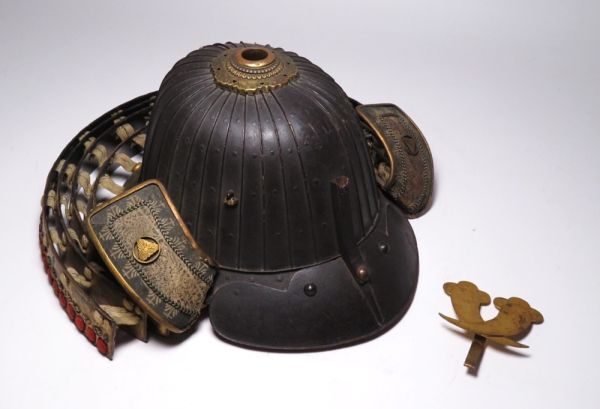
Kabuto samurái del período Edo firmado Bizen Muneji, cuenco de placas de hierro, cresta maedate dorada y protector de cuello shikoro
Kabuto samurái del período Edo firmado Bizen Muneji, cuenco de placas de hierro, cresta maedate dorada y protector de cuello shikoro
Freight piece: please confirm delivery before purchase
This piece travels in a crate or by freight rather than standard mail, and may need careful dismantling before it can be packed. The shipping shown at checkout is an estimate. Japonista reserves the right to determine the final handling, crating and freight cost when your order is received, according to the piece, the destination and carrier conditions at that time.
We advise requesting a delivery quote before checkout. If the final cost is higher than the amount paid, we send the difference for your approval before dispatch. Your piece is held for you until it is settled.
Request a delivery quoteNo se pudo cargar la disponibilidad de recogida
All sales are final. Please read our refund policy before purchase.
Have a reasonable price in mind? Submit your best offer and our concierge will review it personally.
A signed kabuto moves from anonymous armor into authored artifact. This Edo period helmet, its iron plate bowl crowned by a gilt maedate and finished with a cohesive shikoro, bears the legible signature Bizen Muneji saku, placing it within the Bizen armorer tradition and the documented world of Edo period workmanship.
The Piece
The bowl is composed of articulated forged iron plates joined with disciplined regularity, maintaining structural integrity while emphasizing visual rhythm and a weight balanced for wear or display. Unlike Sengoku battlefield kabuto with their aggressive silhouettes, this example shows the restraint and proportional harmony favored in Edo ceremonial contexts. The shikoro neck guard remains cohesive and correctly scaled, suggesting the helmet has not been heavily altered or recomposed.
The gilt maedate is the dominant visual and symbolic element. In Edo culture the maedate served as heraldic identifier, philosophical statement and visual anchor in procession. Its rounded, symmetrical form here aligns with an aesthetic of order, balance and legibility rather than ferocity, and the gold signified legitimacy and sanctioned authority. Set against subdued blackened iron, it expresses a Tokugawa principle of controlled power made visible through restraint: an assertion of status within an ordered society, not a battlefield intimidation device.
The signature, Bizen Muneji saku, situates the helmet within the Bizen armorer tradition, a regional lineage associated with disciplined ironwork, structural clarity and conservative yet authoritative ornament. In the semi-regulated guild structures of the Edo period, a signed work (zaimei) was a declaration of responsibility and quality: it implied confidence in the workmanship, an expectation of scrutiny by peers or patrons, and production for a client of status or institutional use. Bizen-tradition armorers often supplied domain armories, retainers of mid-to-high rank, and ceremonial sets intended for processions, residences or shrine dedication.
Because it remains readable as a document, recording not only what it is but who made it, the helmet serves both registers of collecting: as a reference piece for a cabinet built around signed armor and Edo production, or for thematic exhibitions on samurai identity and material culture, and as a balanced, authoritative centerpiece for an interior.
Details
- Maker: Signed Bizen Muneji saku (Bizen armorer tradition)
- Era: Edo period (approx. 1603–1868), deduced range
- Origin: Japan
- Material: Forged iron plates; gilded metal maedate; textile cords
- Color: Blackened iron, aged gilt gold
- Components: Iron plate bowl; gilt maedate crest; shikoro neck guard
- Measurements: Overall height approx. 16.3 cm (including crest)
- Classification: Antique
- Included: Display stand not included
Condition
- Very Good: authentic age wear, strong presentation and a legible signature.
- Iron surfaces show age-consistent wear and patination: minor abrasions, softened edges and tonal variation that reads as time rather than damage.
- The gilt element shows expected handling marks consistent with historical display and storage.
- Not over-restored; the surfaces have not been brightened.
Authenticity & Care
Signed Bizen Muneji saku; the placement and execution of the signature are consistent with Edo practice, with no visible sign of modern engraving, and the bowl, shikoro and maedate read as a unified object with coherent patina. Attribution is made in good faith from the signature and visible construction; absolute confirmation of school lineage and period benefits from in-hand inspection of plate joining, rivet work, interior construction and any concealed marks. Every piece is examined and documented in Japan before dispatch and is offered with the Japonista authenticity guarantee.
Delivery from Japan
Packed by hand in Japan and shipped insured and tracked by EMS or an equivalent express service. Import duties and taxes, where applicable, are payable on arrival. Returns follow our published policy.
Considered offers are welcome through Send an Offer, and each one is reviewed personally. Pieces over $1,000 may be reserved over several payments with Layaway Privilege™.
Continue browsing: Samurai Arts · Militaria
Related pieces: Black-lacquer iron kabuto with janome crest · Late Edo suji-bachi kabuto with copper flames · Modern full-size yoroi gusoku with chest
Armory & Export
Armor, sword fittings and historical militaria travel with export paperwork, custom crating and insured freight through our Museum-Grade Logistics Suite™. Plan a museum-grade shipment →
Collectors also search: signed samurai kabuto · bizen muneji kabuto · bizen armorer helmet · edo period kabuto signed · antique kabuto with maedate · zaimei kabuto for sale · iron samurai helmet shikoro