Japonista
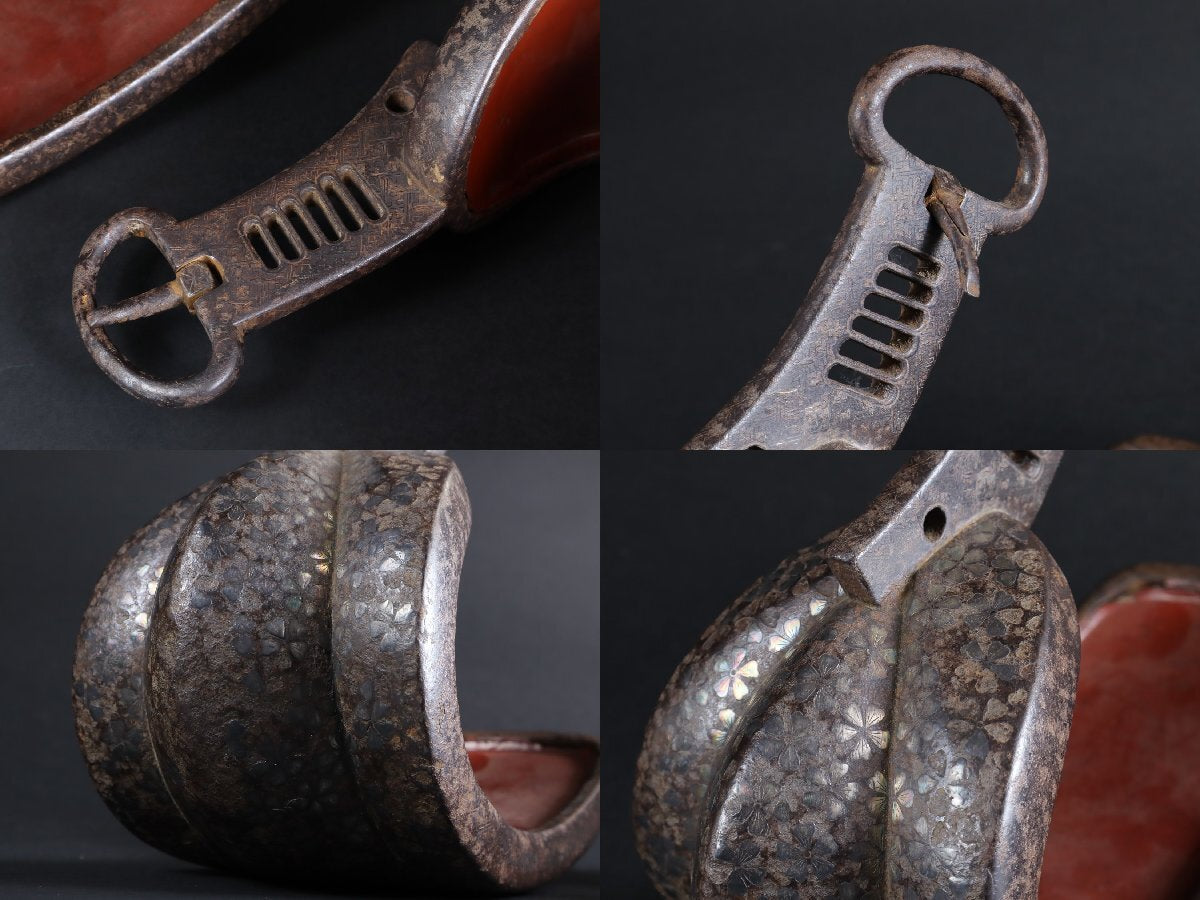
Par de estribos abumi de hierro del período Edo con incrustaciones de plata e interiores lacados en rojo, equipo ecuestre de samurái
Par de estribos abumi de hierro del período Edo con incrustaciones de plata e interiores lacados en rojo, equipo ecuestre de samurái
Freight piece: please confirm delivery before purchase
This piece travels in a crate or by freight rather than standard mail, and may need careful dismantling before it can be packed. The shipping shown at checkout is an estimate. Japonista reserves the right to determine the final handling, crating and freight cost when your order is received, according to the piece, the destination and carrier conditions at that time.
We advise requesting a delivery quote before checkout. If the final cost is higher than the amount paid, we send the difference for your approval before dispatch. Your piece is held for you until it is settled.
Request a delivery quoteNo se pudo cargar la disponibilidad de recogida
All sales are final. Please read our refund policy before purchase.
Have a reasonable price in mind? Submit your best offer and our concierge will review it personally.
A heavy matched pair of iron abumi in which battlefield pragmatism and restrained ornament coexist. Silver inlay runs across the dark iron skin and traces of red lacquer survive inside, giving the samurai as rider, not only as swordsman, a quietly authoritative presence in a collection.
The Piece
This pair of iron abumi represents a mature, utilitarian expression of Edo-period samurai equestrian equipment, where battlefield pragmatism and restrained aesthetic refinement coexist. Forged from heavy iron plate and shaped into the characteristic deep cradle form, the stirrups were designed to stabilize the rider during mounted combat, archery and rapid maneuvering while wearing full armor.
Abumi are the stirrups of Japanese equestrian practice, most famously in samurai contexts where the horse was not merely transport but a platform of status, strategy and ceremony. Unlike many Western stirrups, Japanese abumi often take deep, shoe-like forms: engineered to stabilize the foot while riding in armor, and equally engineered to be seen, signaling rank, taste and lineage through surface ornament. A stirrup is a silent biography; it carries the memory of the rider's posture, encodes the body's relationship to the horse and reveals what a culture believed a warrior should look like in motion.
What elevates this pair beyond purely utilitarian horse gear is the silver inlay dispersed across the exterior surfaces. Rather than flamboyant heraldry, the decoration appears as repeating botanical and geometric motifs, subtly embedded into the iron skin, and is distributed as surface logic: medallions, scrolls and dense fields that imply a coherent design grammar, as if the abumi once belonged to a larger harmonized set of fittings (saddle hardware, stirrups and bridle ornaments). The approach reflects Edo sensibilities, dignity through restraint and authority expressed through material quality rather than excess. The iron ground gives the object its weight and historical correctness as functional horse gear, while the precious-metal zogan supplies controlled brilliance that turns equipment into cultural artifact.
The interiors retain traces of red lacquer, a choice both functional and symbolic: lacquer protected the iron from moisture introduced by footwear and weather, while the red pigment echoed auspicious associations of vitality and protection. Over time, wear, oxidation and surface loss have softened these elements, producing an honest patina consistent with prolonged use and age.
The pair sits at the crossroads of samurai aesthetics, Japanese metalwork traditions, equestrian ritual culture and object-based history, where wear is evidence rather than damage. It is offered as genuine samurai martial equipment rather than a decorative revival piece, and as intact matched abumi pairs become increasingly scarce, such examples are valued in samurai armor collections, in the study of Japanese equestrian history, as museum or academic reference and as Tokugawa-period material culture.
Details
- Object: Abumi (stirrups), matched pair
- Era: Attributed to the Edo period
- Origin: Japan
- Material: Forged iron plate; silver inlay (zogan); red lacquer interiors
- Motifs: Repeating botanical and geometric motifs; medallions, scrolls and dense inlaid fields
- Measurements: Height approx. 27 cm · Width approx. 13.5 cm · Depth approx. 29 cm
- Weight: Approx. 4.5 kg (pair)
Condition
- Historical artifact bearing the physical record of use, not a restored display object; its wear is integral to its historical value and authenticity.
- Surface wear and oxidation consistent with age.
- Inlay may show losses, dulling or interruption in areas, as is typical for zogan over time.
- Tread surfaces are likely to show contact wear, an authentic use-wear pattern.
- Red lacquer survives only as traces in the interiors, softened by wear, oxidation and surface loss.
Attribution Reasoning
Why the pair is attributed to the Edo period:
- The abumi form and ornamental approach align with Edo collecting and display culture, when fittings and horse gear were refined as status objects and later kept as heirlooms.
- An iron ground with precious-metal zogan is a classic Japanese contrast strategy: dark field, controlled shine, linework readable at a distance.
- The overall build suggests an object made to endure handling and transport, consistent with fittings traditions rather than fragile decorative casting.
Handling and Display
This is a heavy, large-scale pair; treat it as an armor-grade object, not a light decorative curio.
- Avoid aggressive polishing, which can flatten the patina and damage inlay edges.
- Use soft gloves and support from the base, not by the strap bars.
- Keep in stable humidity and avoid rapid temperature swings.
- Display the pair with the openings turned slightly outward to emphasize symmetry.
- A low-profile dark plinth with angled light catches the zogan without glare; a small label explaining abumi function adds museum-style clarity.
Collector Fit
Abumi fill a chapter many collections lack even when they hold helmets, cuirasses or sword fittings.
- Samurai armor and bugu collectors seeking a horse-culture anchor piece
- Tosogu collectors expanding into broader warrior material culture
- Japanese decorative arts collectors who want functional form with museum-grade surface logic
- Interior collectors building a gallery vignette where one major object can carry a room
Authenticity & Care
The pair is attributed to the Edo period in good faith, from the form, the iron ground with precious-metal zogan and the robust construction; it rests on visible evidence and avoids speculation beyond it. Every piece is examined and documented in Japan before dispatch and is offered with the Japonista authenticity guarantee.
Delivery from Japan
Packed by hand in Japan and shipped insured and tracked by EMS or an equivalent express service. Import duties and taxes, where applicable, are payable on arrival. Returns follow our published policy.
Considered offers are welcome through Send an Offer, and each one is reviewed personally. Pieces over $1,000 may be reserved over several payments with Layaway Privilege™.
Continue browsing: Samurai Arts
Related pieces: Edo lacquered abumi pair with hawk motif · Edo abumi pair with silver sakura inlay · Edo iron abumi pair with silver phoenix
Armory & Export
Armor, sword fittings and historical militaria travel with export paperwork, custom crating and insured freight through our Museum-Grade Logistics Suite™. Plan a museum-grade shipment →
Collectors also search: edo period abumi · samurai stirrups pair · antique japanese stirrups · iron abumi silver inlay · samurai horse gear · japanese zogan stirrups · antique abumi for sale