Bullmark
Juguete de hojalata de Godzilla caminante de Bullmark, a pilas, acero litografiado, kaiju de la era Shōwa de los años 1970
Juguete de hojalata de Godzilla caminante de Bullmark, a pilas, acero litografiado, kaiju de la era Shōwa de los años 1970
No se pudo cargar la disponibilidad de recogida
All sales are final. Please read our refund policy before purchase.
Have a reasonable price in mind? Submit your best offer and our concierge will review it personally.
Made in the last years before rising costs ended Japan's complex tin mechanical toys, Bullmark's Walking Godzilla turns the monster's cinematic gait into a deliberate stepping motion. Battery-operated kaiju were made in smaller numbers than friction or pull-string models, and few survive the fatigue, corrosion and fragility of tin.
The Piece
Produced during the early 1970s at the height of Japan's post-war mechanical toy boom, this Walking Godzilla is a defining artifact of late-Showa kaiju toy production. It is fabricated in tin-plate steel with bold lithographed surface detailing and powered by an internal battery-operated walking mechanism, from the final era in which Japanese makers built complex tin mechanical toys.
The model exemplifies Bullmark's design philosophy. Enlarged feet and a forward-leaning stance stabilize the internal motor, thickened limbs serve mechanical strength, and prominent, exaggerated dorsal plates with a compact torso amplify visual impact, while expressive facial modeling gives the monster character. When activated, the mechanism produces a deliberate forward stepping motion that echoes Godzilla's on-screen movement.
Bullmark, which operated under the Masudaya lineage from approximately 1969 to 1977, holds a singular place in kaiju toy history. Where earlier makers such as Marusan pioneered the soft vinyl kaiju format, Bullmark extended the genre into mechanical and hybrid constructions that emphasized animation, physical presence and character interpretation. Its Godzillas are recognizable by exaggerated proportions, thickened limbs and expressive faces, choices driven by mechanical necessity and a wish to convey vitality rather than strict cinematic accuracy.
Today Bullmark Godzilla toys are regarded as cultural artifacts that document Japan's rapid industrial recovery, the global spread of kaiju cinema and the visual language of Showa toy manufacturing. Valued for sculptural presence, mechanical complexity and cultural weight, surviving examples with intact lithography and solid structure are increasingly scarce and sought by advanced collectors worldwide.
Details
- Maker: Bullmark (Masudaya Toy lineage)
- Character: Godzilla
- Era: Showa era, early–mid 1970s
- Origin: Japan
- Material: Tin-plate steel with lithographed decoration
- Mechanism: Internal battery-operated walking action
- Measurements: Estimated: height approx. 28–32 cm · width approx. 12–14 cm · depth approx. 18–20 cm
Condition
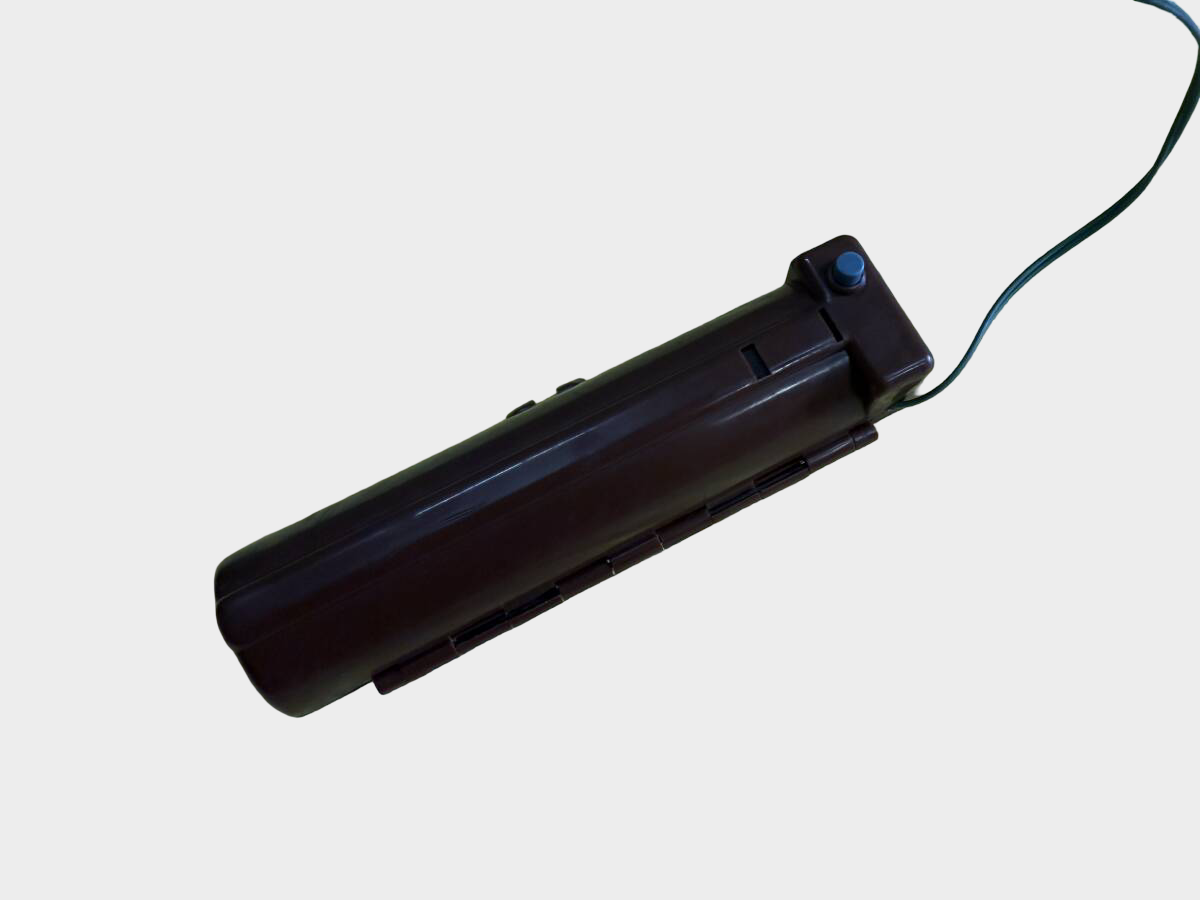
- No written condition report accompanies this example; the photographs serve as the condition record.
- Measurements are estimates rather than taken dimensions.
Godzilla Across Eras
Godzilla, Gojira in Japanese, is Japan's most enduring modern myth: born in 1954 from collective trauma and created by Toho as allegory, a creature awakened and mutated by nuclear testing that carries the scars of atomic fire. Ishirō Honda's first Gojira (1954) is somber and mournful, its attack scenes echoing burning cities and overwhelmed hospitals still fresh in memory; Godzilla is not evil but consequence.
Where Astro Boy imagines technology guided by compassion and Tetsujin 28-go asks who controls a wartime weapon, Godzilla removes the controller entirely; where Ultraman contains chaos through organized defense, Godzilla is chaos. His design carries meaning: scarred skin evokes radiation burns, slow heavy movement conveys inevitability and atomic breath makes invisible terror visible. He remains a shared language for discussing disaster and a barometer of national mood.
- Showa era (1954–1975): from terror to guardian, defending against aliens and monsters as post-war Japan regained confidence
- Heisei era (1984–1995): renewed weight and seriousness, exploring nuclear anxiety, nationalism and the burden of power
- Reiwa era (2016– ): metaphor with precision, from Shin Godzilla's bureaucratic paralysis to Godzilla Minus One's survivor's guilt
What a Kaiju Is
Kaiju (怪獣) literally means "strange beast" or "mysterious creature": the giant monsters of Japanese film, television and popular culture. They function less as villains than as symbols, forces of nature and moral metaphors, each one a being that represents something humanity cannot fully control, whether nuclear power, war trauma, natural disaster, pollution, technological hubris or fear of the unknown.
The form emerged in post-war Japan, after Hiroshima and Nagasaki, United States nuclear testing in the Pacific and rapid industrialization. Godzilla (Gojira) came first, a living metaphor for nuclear devastation, and kaiju became a language for disaster. Unlike Western monsters, which are usually individual villains defeated once, kaiju are collective threats that return, neutral and consequential rather than evil, and their stories tend to end in uneasy balance, sacrifice or containment rather than victory. In Ultraman, kaiju are weekly, manageable fears; in Godzilla, the kaiju is the trauma itself.
- Nature-born kaiju: earth spirits, ancient creatures, natural balance gone wrong
- Science-created kaiju: nuclear mutation and experiments gone wrong, as with Godzilla and many Showa-era monsters
- Alien kaiju: invasions and external threats, common in late Showa films
- Mechanical kaiju: artificial answers to fear, as with Mechagodzilla
Authenticity & Care
Bullmark battery-operated Walking Godzilla in lithographed tin-plate steel, attributed by construction and design characteristics. Every piece is examined and documented in Japan before dispatch and is offered with the Japonista authenticity guarantee.
Delivery from Japan
Packed by hand in Japan and shipped insured and tracked by EMS or an equivalent express service. Import duties and taxes, where applicable, are payable on arrival. Returns follow our published policy.
Considered offers are welcome through Send an Offer, and each one is reviewed personally. Pieces over $1,000 may be reserved over several payments with Layaway Privilege™.
Continue browsing: Vintage Toys · Anime Collectibles
Related pieces: Bullmark Mirrorman deadstock tin wind-up figure · Early 1970s Bullmark Mirrorman tin robot · Bullmark Mirrorman tin robot with mask
Toy Box Requests
Hunting a particular robot, kaiju, figure or model? The Hunting Salon™ searches Japan’s collector shops and private collections, and the Deputy Vault™ secures a piece you have already found. Begin a Hunting Salon™ request →
Collectors also search: bullmark godzilla tin toy · bullmark walking godzilla · vintage godzilla battery toy · godzilla tin toy 1970s · showa godzilla toy japan · battery operated kaiju tin toy · vintage bullmark godzilla