
Geta, Zōri and Tabi: The Footwear of the Kimono
Accessories · What is worn on the foot
Geta, Zōri and Tabi: The Footwear of the Kimono
下駒・草履・足袋
Three words cover the traditional footwear of Japan: the clog, the sandal and the sock with a separate big toe. Together they explain why the foot of a kimono wearer is both bare and decorous.
Fact sheet
The foot in one glance
- Geta. A wooden board with two teeth, raised to keep kimono clear of dirt.
- Zori. A slip-on version of the tie-on waraji, in straw, rush or brocade.
- Tabi. Divided at the toe so a thong can pass between.
- Okobo. The tall geta of maiko, and pokkuri for young girls.
- Hanao. The thong: white for formal zori, black informal, red traditional.
A clog, a sandal and a sock
Wikipedia defines geta as traditional Japanese footwear, a sandal with a flat wooden base held on by a fabric thong and raised by up to three, commonly two, ‘teeth’. The entry says that the original purpose was practical, to keep the feet and kimono clear of dirt, water and snow, not fashion. The standard geta has a wooden board, the dai, with a thong, the hanao, between the big and second toes, and two teeth, the ha, underneath. The teeth are usually of light paulownia wood, kiri, and the shape of the board carries a gendered code: oval shapes are considered more feminine and rectangular shapes more masculine.
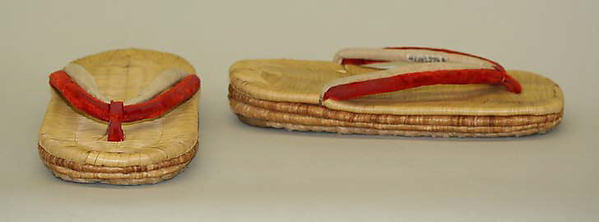
Zori, 1800–1941, Straw. The Metropolitan Museum of Art, Gift of Mrs. Van S. Merle-Smith, 1941, accession C.I.41.110.274a, b.
Look closer: Look at the material. The Met catalogues this pair simply as straw, from the long era in which zori were professional goods, and gives no further detail.
Image: The Metropolitan Museum of Art, Open Access (CC0)
The entry on zōri describes a lighter relation. Zōri are thonged sandals, today usually of synthetic materials, though rice straw, cloth, lacquered wood and leather are also used. They developed as a slip-on version of the tie-on waraji sandal. Edo-period zōri making, the entry says, became a professional trade, with more elaborate types in finer materials; cheaper zōri were of rice straw, while costlier ones received extra soles of hemp rope, wisteria stems or wooden strips, and the men’s setta used leather soles.
Tabi complete the trio. Wikipedia describes them as traditional Japanese socks worn with thonged footwear, and relates that they were originally leather shoes made from animal hide, the earlier word tanbi meaning ‘single hide’. The split-toe design emerged toward the late Heian period so that the toe could accommodate the sandal’s thong. Traditional tabi open at the back and close with fasteners called kohaze, and white is the commonest colour, symbolising purity and worn in formal settings such as the tea ceremony.
From Liangzhu clogs to oiran parades
The Wikipedia entry on geta reaches back much further than Japan. The earliest known pair, it says, was excavated near Ningbo in Zhejiang, China, dated to the Liangzhu culture, 3400 to 2250 BCE, with five or six holes rather than the modern three. Wooden clogs are recorded in China from the Spring and Autumn period through the Qin and Han dynasties, and the entry concludes that geta likely originated in southern China and were later exported to Japan. Japanese geta from the latter part of the Heian period were found in Aomori in 2004.
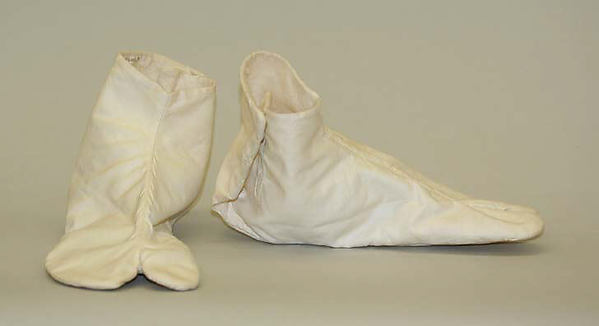
Tabi, 20th century, Cotton. The Metropolitan Museum of Art, Gift of Mrs. Hazel L. Muller, 1953, accession C.I.53.66.2a, b.
Look closer: Look at the shape of the toe. The Met catalogues the pair as cotton, of the twentieth century, among its foot and leg wear.
Image: The Metropolitan Museum of Art, Open Access (CC0)
In the Edo period the clog acquired its theatrical forms. According to the entry, oiran, the high-ranking courtesans of the feudal period, wore tall, lacquered koma-geta, also called mitsu-ashi, ‘three legs’, in parades, and went without tabi even in winter, while geisha and maiko wore tabi. Seafood and fish merchants used tengu geta, with very long teeth, to keep their feet above scraps on the shop floor. The tall okobo of maiko, it says, resemble the Venetian chopines of the Renaissance, and pokkuri or koppori are okobo for very young girls, carved from one piece of wood with no teeth and a small bell in the sole, usually red and worn with tabi for occasions such as the Shichi-Go-San festival.
The tabi entry adds a social note. Most people in Japan historically wore tabi, it says, though upper-class courtesans and the Fukagawa geisha did not, because the bare foot was considered erotic. In the Edo period, leather tabi were precursors of the modern jika-tabi, and the brothers Tokujō and Shōjō Ishibashi, founders of Bridgestone, are credited with inventing the rubber-soled jika-tabi in 1922. The costume that these shoes belonged to is described in Geisha, Maiko and Oiran: The Costume of the Quarter, and the children’s festival in Shichi-Go-San and the Clothes of Childhood Rites.
Pictures preserve the outline. The Met’s collection includes a small surimono of about 1816 by Ryūryūkyō Shinsai, titled Umbrellas and Geta, which the museum catalogues as part of an album of privately printed woodblock prints. It also holds a woodblock-printed book by Kitao Shigemasa, Picture Book of the Warriors’ Sandals, whose preface is dated 1787, a reminder that the tie-on sandal of the soldier was a subject worth a book. The museum’s records say no more about the content than the titles.
Straps, soles and who wears what
The zōri entry supplies a tidy guide to reading a sandal. It lists the materials: rice straw, the classic and most common form; rush, igusa, for woven tops, the same material as tatami mats; bamboo sheath, takegawa, historically the typical setta material; leather for soles on setta and some men’s straps; and rubber and synthetics, the elastomer zōri called gomu-zōri and the waterproof amezoko. Igusa zōri, it adds, are casual working wear and not worn with kimono, whereas traditional zōri are worn with kimono, vinyl or plastic zōri suit semi-formal kimono, and brocade zōri, usually worn by women, suit the most formal occasions such as weddings and funerals.
The strap tells its own story. The entry says white hanao go with formal zōri, black hanao are considered informal, and red is also traditional. Zōri are almost always worn with tabi, and the soles differ by sex: women’s zōri often have raised soles, while men’s almost always have flat ones. The entry on geta adds that zōri are slightly more formal than geta and are normally worn with tabi, while geta are usually worn with yukata and without socks. The summer ensemble is described in Yukata: The Summer Cotton Robe.
Geta have their own tests. The teeth are usually light paulownia, the thong cotton, vinyl or leather, with the internal cord traditionally of hemp. Some soles have metal plates to lengthen their life, and tooth bottoms may have harder wood or rubber. Geta are sometimes worn in rain, the entry notes, because their height and impermeability keep water and dirt from splashing up the legs, unlike zōri. The sound of the teeth, a clacking known as karankoron, is said to be missed by older Japanese.
For tabi the points to check are the fasteners, the fabric and the colour. The entry notes that stretch tabi without clasps are available, that coloured tabi appear in kabuki costume and casual fashion, and that men sometimes wear blue or black tabi for travel. The Met’s tabi are two pairs of the twentieth century, one cotton and one silk, a distinction worth noticing when reading a description.
| Item | Key feature | With what |
|---|---|---|
| Geta | Wooden board, two teeth, thong between the toes | Yukata, without socks |
| Okobo | Tall geta for maiko; pokkuri for young girls | Tabi and fine kimono |
| Koma-geta | Tall lacquered geta of oiran, ‘three legs’ | Bare feet, even in winter |
| Zori | Flat thonged sandal; straw, rush, brocade | Kimono, with tabi |
| Setta | Men’s zori with leather sole | Kimono, with tabi |
| Tabi | Split toe, kohaze clasps; white for formal use | Zori; sometimes geta |
| Jika-tabi | Rubber-soled outdoor tabi, 1922 | Work |
Straw, sound and the modern foot
Footwear is rarely preserved, because it was made to wear out. The Wikipedia entry on zōri cites a 1919 to 1920 guide from the Victoria and Albert Museum that described zōri as rice-straw sandals normally without a separate sole and waraji as cheap, short-lived straw sandals. It records that after the Second World War returning soldiers brought zōri home, which helped to popularise flip-flops in the United States, Australia and New Zealand. A pair of straw zōri surviving from the nineteenth century, such as the Met’s straw example dated 1800 to 1941, is therefore a lucky survival.
The modern form has diverged. The geta entry says that Western-influenced geta are rounder, with ergonomic boards and thick heels like Western clogs, no separate teeth and side thongs like flip-flops, and that removable toe covers are available for cold, snow and rain. Tabi have gone further: the entry says that Maison Margiela released boots with a separated big toe from the late 1980s or early 1990s. The point for a reader is that the old shapes have been absorbed into fashion at the same time as they have retreated from daily wear.
A last note concerns the small object. The Met holds a nineteenth-century netsuke carved as a toad on a sandal, which it catalogues without further comment, one of many cases where footwear enters the world of the hanging object. The sagemono are described in Netsuke, Inrō and Sagemono: The Hanging Objects.
In the house, footwear appears in the broader costume of the quarter and the festival, while the Kimono and Textile Heritage collection holds the garments for which these shoes were made. The concierge desk can advise on a particular pair.
Silk, sandal and sketch
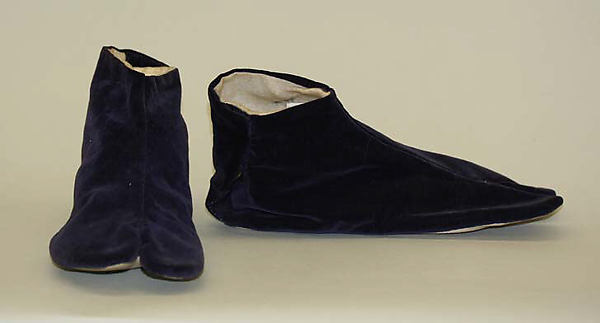
Tabi, 20th century, Silk. The Metropolitan Museum of Art, Gift of Miss Alice de La Mar, 1939, accession C.I.39.120.20a, b.
Look closer: Compare this pair with the cotton tabi above. The Met gives the medium as silk, the fabric of formal dress.
Image: The Metropolitan Museum of Art, Open Access (CC0)

Kitao Shigemasa 北尾重政, Picture Book of the Warriors' Sandals (Ehon musha waraji) 絵本武者鞋, Preface dated 1787 (Tenmei 7), Woodblock printed book; ink and color on paper. The Metropolitan Museum of Art, Purchase, Mary and James G. Wallach Foundation Gift, 2013, accession 2013.808.
Look closer: Notice the date. The preface is dated to the seventh year of Tenmei, 1787, and the Met notes the book is meant to be viewed from right to left.
Image: The Metropolitan Museum of Art, Open Access (CC0)

Netsuke of Toad on a Sandal, 19th century, Wood. The Metropolitan Museum of Art, Edward C. Moore Collection, Bequest of Edward C. Moore, 1891, accession 91.1.990.
Look closer: Find the toad. The Met’s title places a toad on a sandal, a small carved image on a toggle of the kind worn at the sash.
Image: The Metropolitan Museum of Art, Open Access (CC0)
Beside the kimono
The shelf holds a woven bag for kimono and yukata, a doll in a kimono, a furisode silk remake and a bridal robe. Each is described as what it is, with its age and condition set out plainly on its own page.
 Handmade kago basket bag with ukiyo-e design, for kimono and yukataView the piece
 Ichimatsu doll in black floral kimono, painted hair, inset eyesView the piece
 Furisode silk remake shirt, gosho-guruma and shibori bandsView the piece
 Bridal uchikake, phoenix embroidery on vermilion and goldView the piece
Kimono and textile heritage
Antique silk, cotton and the accessories worn with them are gathered in one collection, and the concierge desk can look for a particular pair or maker on request.
Answered plainly
What are geta?
Wooden sandals with a flat board and, usually, two teeth, held on by a thong between the big and second toes. They keep the foot and the kimono clear of dirt and water.
What is the difference between geta and zori?
Geta are wooden and raised; zori are flat thonged sandals, slightly more formal and normally worn with tabi.
Why do tabi have a split toe?
So the toe can accommodate the thong of a sandal. The design emerged toward the late Heian period.
What is a hanao?
The thong. White goes with formal zori, black is considered informal, and red is also traditional.
What are jika-tabi?
Heavier, often rubber-soled tabi worn as outdoor footwear, credited to the Ishibashi brothers in 1922.
Did everyone wear tabi?
Most people did, historically, though high-ranking courtesans and Fukagawa geisha did not, because the bare foot was considered erotic.
Where next
Sources and image credits
- Geta (footwear), Wikipedia
- Zōri, Wikipedia
- Tabi, Wikipedia
- Tabi, Metropolitan Museum of Art, C.I.53.66.2
- Zori, Metropolitan Museum of Art, C.I.41.110.274
- Picture Book of the Warriors’ Sandals, Metropolitan Museum of Art, 2013.808
- Object record: Tabi, The Metropolitan Museum of Art
- Object record: Netsuke of Toad on a Sandal, The Metropolitan Museum of Art
Last reviewed 28 October 2026. Pictures, where shown, are public-domain or open-access and credited beneath each one.
Looking for a pair of geta, zori or tabi you have seen described here? The concierge desk replies within one to three business days.
Private concierge
Looking for something in particular?
Describe the piece or the project you have in mind. A senior advisor in Tokyo reads every case file personally and replies within two business days, with fees set out in writing before any work begins.