Horikawa
Horikawa Smoking Engine Tin Space Robot with Piston Chest Window and Original Box, Showa Period
Horikawa Smoking Engine Tin Space Robot with Piston Chest Window and Original Box, Showa Period
This piece has found its collector.
The Hunting Salon™ can search Japan's private collections for another like it. Ask us to find one or browse similar pieces.
Couldn't load pickup availability
Have a reasonable price in mind? Submit your best offer and our concierge will review it personally.
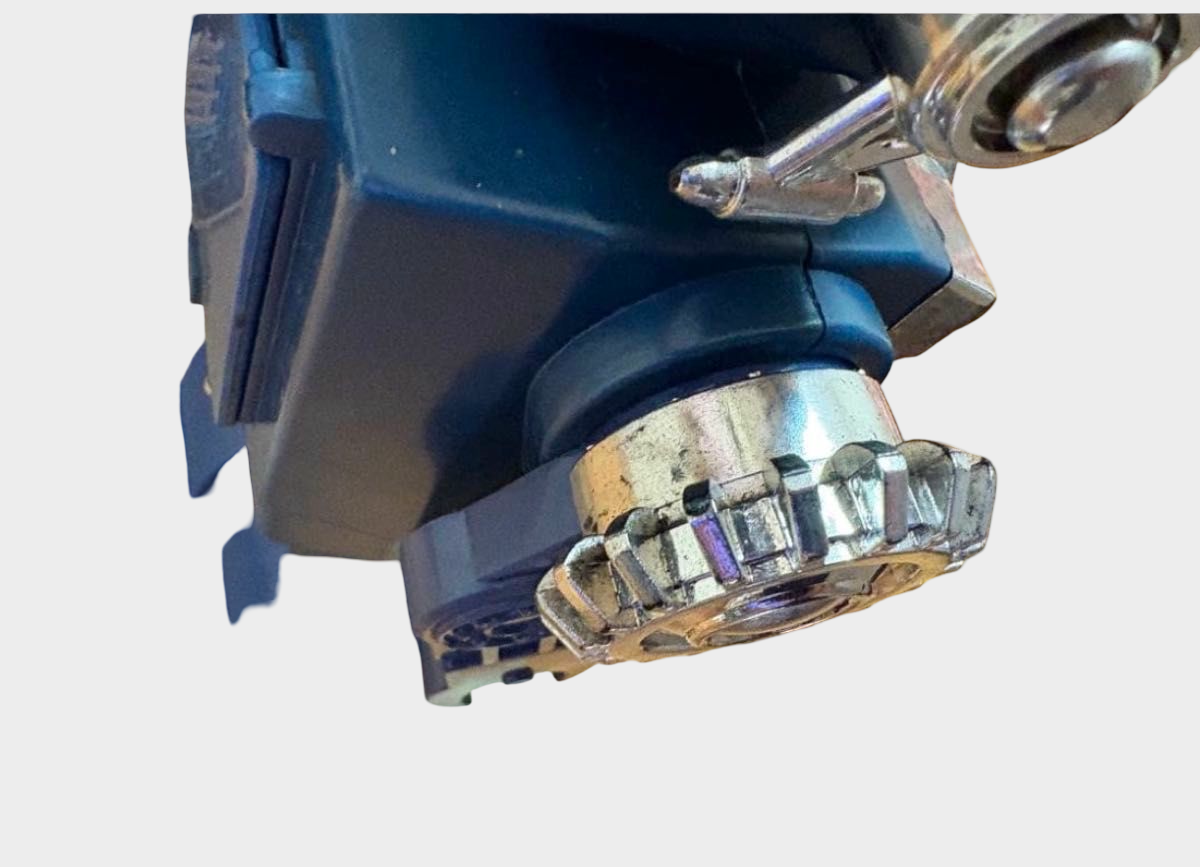
In Horikawa's Smoking Engine type the machinery becomes the spectacle: pistons glimpsed through a clear chest and a smoke gimmick that cast the robot as a small emblem of Japan's industrial rebirth. This example keeps its original illustrated box and is offered as a display piece, its function untested.
The Piece
This Smoking Engine Robot is a classic output of Horikawa Toy, one of the defining makers of postwar Japanese tin robots, whose work bridged industrial fantasy, space-age optimism and mechanical spectacle. Unlike purely walking robots, the Smoking Engine type belongs to a distinct sub-class of Showa robots that treated internal mechanics as visual theater. The transparent chest window reveals piston-like components, and the iconic smoke-emission gimmick turns the robot into a miniature allegory of Japan's industrial rebirth: not merely a toy, but a symbol of progress rendered in tin.
The graphic language is unmistakably Horikawa: a squared head with industrial grille eyes, bold primary color blocking, printed control panels evoking spacecraft dashboards, and a box illustration that dramatizes the robot as a heroic machine of the future. Horikawa boxes were often discarded early because of their fragility, so a surviving example anchors the robot in its original commercial and cultural context. Even with age wear, the box acts as a historical document, a period advertisement preserved in cardboard.
Its untested function is entirely acceptable within serious robot collecting, where such objects are valued primarily as display artifacts and mechanical uncertainty does little to diminish their cultural or aesthetic importance when condition and completeness remain strong. The piece belongs in Showa tin robot collections, Horikawa maker studies, smoking and mechanical-spectacle robot groupings and mid-century Japanese industrial design displays, and pairs naturally with the Machine Robot, Monster Robot, Super Space Giant and other Horikawa figures in a coherent narrative of postwar mechanical imagination.
Details
- Maker: Horikawa Toy (Japan)
- Model: Smoking Engine Robot
- Era: Showa period
- Origin: Japan
- Material: Tinplate
- Included: Original illustrated box
- Features: Transparent chest window with piston-like components; smoke-emission gimmick; squared head with grille eyes
Condition
- Honest aging with no catastrophic damage observed; structurally intact, visually coherent and treated as display grade.
- Surface wear consistent with age and storage, not abuse.
- Function untested.
- Original illustrated box present, with age wear.
Horikawa in Context
Horikawa occupies a distinct intellectual lane among Showa robot makers. Where contemporaries emphasized strength, weapons or heroic narrative, Horikawa built ideas in metal, asking not what a robot does but what a robot is. Its signature traits are box-shaped torsos, screen-like chest panels, minimal limb articulation and simplified, almost architectural forms, so that its machines read less as characters than as devices made to observe, process or communicate: proto-television objects, early cybernetic thought experiments and physical metaphors for information systems, closer to industrial design artifacts than conventional toys.
The screen-chest robot, whose torso resembles a television or monitor, is the house's most iconic contribution. In the 1950s and 1960s television was new and transformative, and robots stood for both modernity and anxiety; combining the two produced a cultural object rather than a plaything, a robot imagined as a viewing machine that watches or transmits rather than fights. Collectors now call these robots eerily modern, proto-digital and strangely artistic. They form the quiet middle chapter between early humanoid optimism such as Astro Boy, later action-driven super robots and modern screen-centric culture, when robots stopped being fairy tales and started becoming interfaces.
Condition is read differently for Horikawa. Surface wear often adds authenticity, oxidation reinforces industrial character, non-working status is commonly accepted, and original paint and structure matter more than motion; collectors value untouched Showa presence over restoration, and display-grade, original-surface, as-found examples continue to draw strong international interest. Once overlooked in Japan as simple or odd beside flashier competitors, Horikawa is read abroad as early media theory in tin, a precursor to cyberpunk aesthetics and an artifact of postwar futurism, sought by museum and design-focused collectors. Where Masudaya excites the eye and Yonezawa satisfies the hand, Horikawa engages the mind: it suits collectors who prize design over play, collect with an art-historical lens and value originality and surface integrity.
- Horikawa: conceptual, experimental maker of abstract, modular, idea-first robots; screen-chest and TV robots with box torsos; industrial minimalism and bold geometry; the thinking machine or media robot; simple walking, blinking and screen effects; domestic sale with limited export in the 1960s; often worn, oxidized and display-grade today; high conceptual rarity; low restoration tolerance, as value favors originality.
- Masudaya: spectacle- and motion-driven innovator; dramatic silhouettes and space fantasy with domes, rockets and astronauts; colorful, cinematic futurism; the space explorer or hero vehicle; complex actions, sparks and motion; strong US export during the space craze; mixed survival with many play-worn examples; high nostalgia and visual impact; medium restoration tolerance.
- Yonezawa: engineering-led mass exporter; functional, mechanical realism with gear panels, vents and military cues; utilitarian, export-friendly science fiction; the robot soldier or machine assistant; reliable walking and spinning actions; heavy US and EU export focus; higher survival with more intact units; high availability and recognizability; medium to high restoration tolerance.
Authenticity & Care
Original Horikawa tin robot with its original illustrated box; no modern reproduction indicators observed. Every piece is examined and documented in Japan before dispatch and is offered with the Japonista authenticity guarantee.
Delivery from Japan
Packed by hand in Japan and shipped insured and tracked by EMS or an equivalent express service. Import duties and taxes, where applicable, are payable on arrival. Returns follow our published policy.
Considered offers are welcome through Send an Offer, and each one is reviewed personally.
Continue browsing: Vintage Toys
Related pieces: Horikawa Jumbo Mars King battery robot · Horikawa Gear Robot with original box · Horikawa Gear Robot red-eye Japanese variant
Toy Box Requests
Hunting a particular robot, kaiju, figure or model? The Hunting Salon™ searches Japan’s collector shops and private collections, and the Deputy Vault™ secures a piece you have already found. Begin a Hunting Salon™ request →
Collectors also search: horikawa smoking engine robot · smoking robot tin toy japan · horikawa piston robot · vintage japanese tin robot with box · showa space robot · smoke action tin robot