
“Understanding Zushi: Form, Function, and Faith”
Subtitle:
Temple Icons · Household Devotion · Ascetic Practice
🧭 Zushi Visual Taxonomy
Temple · Lay Devotion · Ascetic Practice
Zushi are not a single category of object. They are ritual architectures, and their form, scale, iconography, and finish change depending on who used them and why.
Zushi are not merely containers for Buddhist figures. They are architectural shrines—designed according to the spiritual needs, social class, and devotional context of their owners. Understanding which kind of zushi you are viewing is essential to understanding its meaning, rarity, and value.
Below is the locked three-branch taxonomy you can now standardize across Japonista.
Section A — 🏯 Temple Zushi
Institutional · Canonical · Monumental
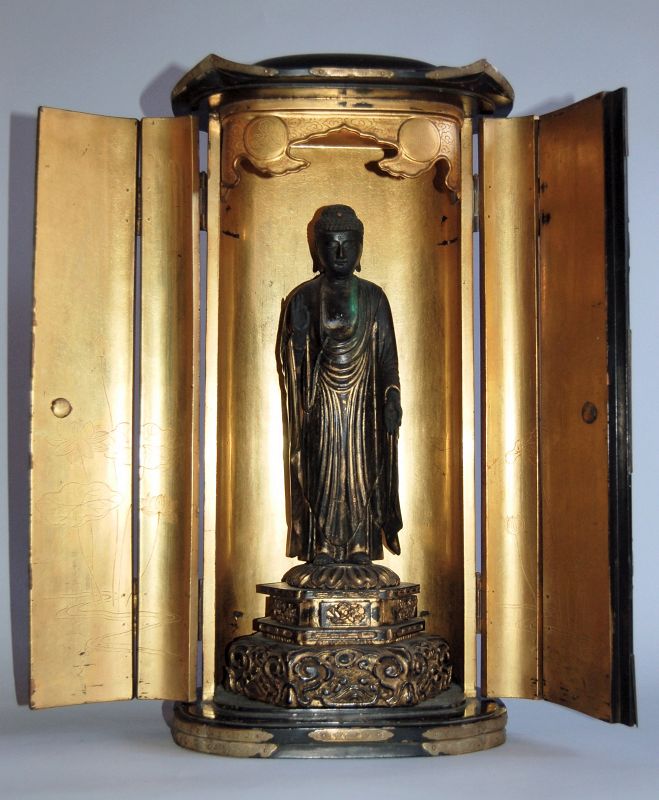


Visual Characteristics
-
Large scale, often over 50–70 cm
-
Heavy lacquered wood, gold leaf (kinpaku), or gilt bronze fittings
-
Architecturally complex:
-
Multi-tier bases
-
Lotus pedestals
-
Flame or mandorla backplates
-
-
Doors often plain outside, radiant inside
Figures Typically Enshrined
-
Buddhas (Amida, Yakushi, Dainichi)
-
Formal triads
-
Temple-lineage icons
Cultural Role
These were not portable in daily life.
They functioned as:
-
Inner sanctum icons
-
Memorial or lineage shrines
-
Formal ritual focal points
Key Visual Signals
-
Monumental scale (often 50–70cm+)
-
Heavy lacquer, gold leaf, gilt bronze
-
Complex pedestals, mandorlas, lotus bases
-
Exterior restraint / interior radiance
Typical Placement: Main halls, inner sanctums, lineage shrines
Collector Profile: Institutional collectors, advanced Buddhist art buyers
Value Driver: Period, scale, iconographic correctness, preservation
Interpretive Note:
Temple zushi were never intended to travel. They assert doctrinal authority, permanence, and lineage continuity.
Section B — 🏠 Lay Devotional Zushi


Role: Personal faith & protection
Typical Placement: Homes, shops, travel kits
Interpretive Note:
These are objects of lived religion—touched daily, prayed to quietly, and passed through generations.
Visual Characteristics
-
Small to mid-scale (15–40 cm)
-
Simpler carpentry
-
Painted or lightly lacquered surfaces
-
Wear consistent with daily handling
Figures Typically Enshrined
-
Kannon
-
Jizō
-
Amuletic Buddhas
-
Local or folk-protective icons
Cultural Role
These lived in:
-
Homes
-
Shops
-
Travel kits
-
Small personal altars
Used for:
-
Daily prayer
-
Protection
-
Memorial remembrance
Category: Lay Devotional Zushi
Collector Profile: Private collectors, interior-focused buyers
Value Driver: Intimacy, authenticity, folk character
Section C — 🧘 Ascetic / Practitioner Zushi
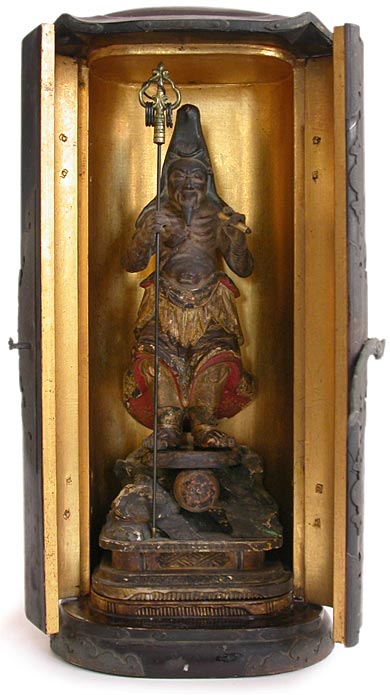
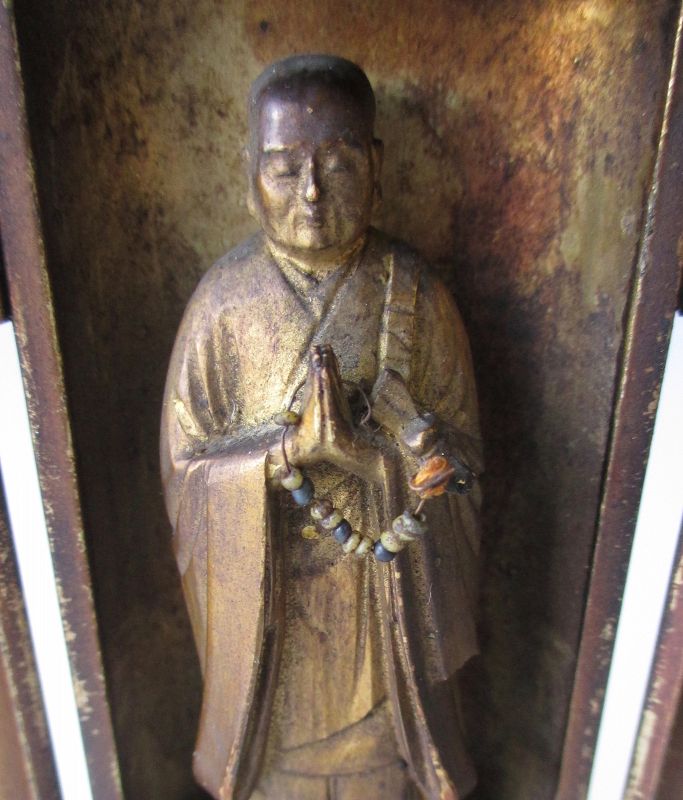
Role: Spiritual discipline & pilgrimage
Typical Placement: Carried, stored close, used privately
Interpretive Note:
Ascetic zushi are the rarest category—personal shrines of lived practice rather than formal doctrine.
Visual Characteristics
-
Compact, often deep rather than wide
-
Thick-walled construction for durability
-
Plain or restrained exterior
-
Interiors carefully finished but not ostentatious
Figures Typically Enshrined
-
Ascetic monks (gyōja / hijiri)
-
Mountain practitioners
-
Esoteric or non-canonical figures
-
Occasionally self-representational portraits
Cultural Role
These were working religious objects, carried or kept close during:
-
Pilgrimage
-
Mountain practice
-
Long-term austerities
They are the bridge between:
-
Folk Buddhism
-
Esoteric practice
-
Personal spiritual discipline
Category: Ascetic Zushi
Collector Profile: Advanced, research-driven collectors
Value Driver: Rarity, narrative depth, lived wear
🧠 Comparative Snapshot (Quick Reference)
| Aspect | Temple | Lay | Ascetic |
|---|---|---|---|
| Scale | Large | Small–Mid | Small |
| Finish | Lavish | Modest | Restrained |
| Use | Institutional | Domestic | Personal |
| Mobility | Fixed | Semi-mobile | Portable |
| Narrative Weight | Canonical | Emotional | Experiential |
2️⃣ TAXONOMY BADGES
Use these locked labels across listings, collections, and filters:
🏯 Temple Zushi
Badge Copy:
Temple Zushi — Institutional Shrine
Used within Buddhist temples for formal ritual and lineage preservation.
🏠 Lay Devotional Zushi
Badge Copy:
Lay Zushi — Household Devotion
Personal or family shrine for daily prayer and protection.
🧘 Ascetic Zushi
Badge Copy:
Ascetic Zushi — Practitioner Shrine
Portable shrine used by monks, pilgrims, or religious practitioners.
Implementation Rules
-
Badge appears once, near title
-
Badge determines:
-
Narrative tone
-
Pricing expectations
-
Collector profile
-
Cross-link destination
-
3️⃣ DECISION GUIDE
“Which Zushi Is Right for You?”
If you are drawn to…
Monumentality, doctrine, museum presence
→ Temple Zushi
Intimacy, warmth, daily presence
→ Lay Devotional Zushi
Spiritual depth, rarity, lived practice
→ Ascetic Zushi
Quick Matrix
| You Value | Choose |
|---|---|
| Canonical authority | Temple |
| Emotional connection | Lay |
| Narrative rarity | Ascetic |
| Interior centerpiece | Temple |
| Personal altar | Lay |
| Research depth | Ascetic |
Submit Your Case File
Every bespoke partnership begins with clarity. Tell us what you seek, what inspired you, and the boundaries of your project.
What Happens After You Submit
Your Case File is reviewed personally by a senior advisor. We examine your objectives, logistics requirements, cultural considerations, and practical constraints. You will receive a tailored proposal outlining recommended services, timelines, and all applicable fees.
- Bespoke service design tailored to your specific needs
- Museum-grade logistics for art, antiques, fashion, and collectibles
- Transparent partnership with no hidden or surprise costs
“All fees, deposits, and retainers will be clearly presented for approval before any work begins.”
Thank you for entrusting us with your vision. We look forward to representing you with precision and discretion.