Rare Vintage, Antiques and Art Collector / Curator / Personal Shopper From Japan
WW2 WWII A-2 Flight Jacket Star Sportswear 866th Bomb Squadron B-24 Pacific Theater Painted Back Vintage USAAF
WW2 WWII A-2 Flight Jacket Star Sportswear 866th Bomb Squadron B-24 Pacific Theater Painted Back Vintage USAAF
Couldn't load pickup availability
Have a reasonable price in mind? Submit your best offer and our concierge will review it personally.
USAAF A-2 Flight Jacket
Star Sportswear, 866th Bomb Squadron, Pacific Theater
Painted Back Example, circa 1940s
A rare and exceptionally well-preserved A-2 flight jacket associated with the 866th Bomb Squadron and distinguished by its period painted back and surviving leather squadron insignia. Produced by Star Sportswear as a civilian-market variant closely aligned with wartime military specifications, the jacket occupies an especially desirable category within advanced A-2 collecting: the privately acquired combat-used garment that stands just outside standardized contract production.
Constructed in substantial brown leather and fitted with a functioning TALON zipper, the jacket retains notable structural integrity. Of particular interest are the traces of prior chest insignia removals, which suggest an earlier stage in the garment’s service life before its present squadron identity was established. Such layered histories are uncommon and materially enrich the object, placing it beyond the realm of simple preservation.
The back paint, together with the leather 866th Bomb Squadron patch, gives the jacket both visual force and historical coherence. Rather than functioning as isolated decorative features, these elements reinforce the garment’s operational and social identity within Pacific-theater bomber culture.
Examples combining strong original condition, squadron-level specificity, period artwork, and non-standard but authentic private-purchase manufacture are increasingly scarce. This jacket stands as a compelling survivor of wartime aviation history, balancing aesthetic power with documentary richness.
Object
WWII USAAF A-2 Flight Jacket
Manufacturer
Star Sportswear
Production Type
Civilian-market / private-purchase A-2 closely related to wartime contract manufacture
Theater Attribution
Pacific Theater
Unit Attribution
866th Bomb Squadron
Aircraft Context
B-24 operations against Imperial Japanese targets in the Pacific
Material
Heavyweight brown leather, likely steerhide, with unusually strong preservation and retained suppleness
Hardware
TALON zipper
Construction Note
Civilian Star Sportswear variant distinguished from government issue primarily by underarm vent construction detail
Artwork and Insignia
Original back paint
866th Bomb Squadron leather patch
Evidence of prior chest patch removals on both sides, indicating earlier service history before 866th affiliation
Size
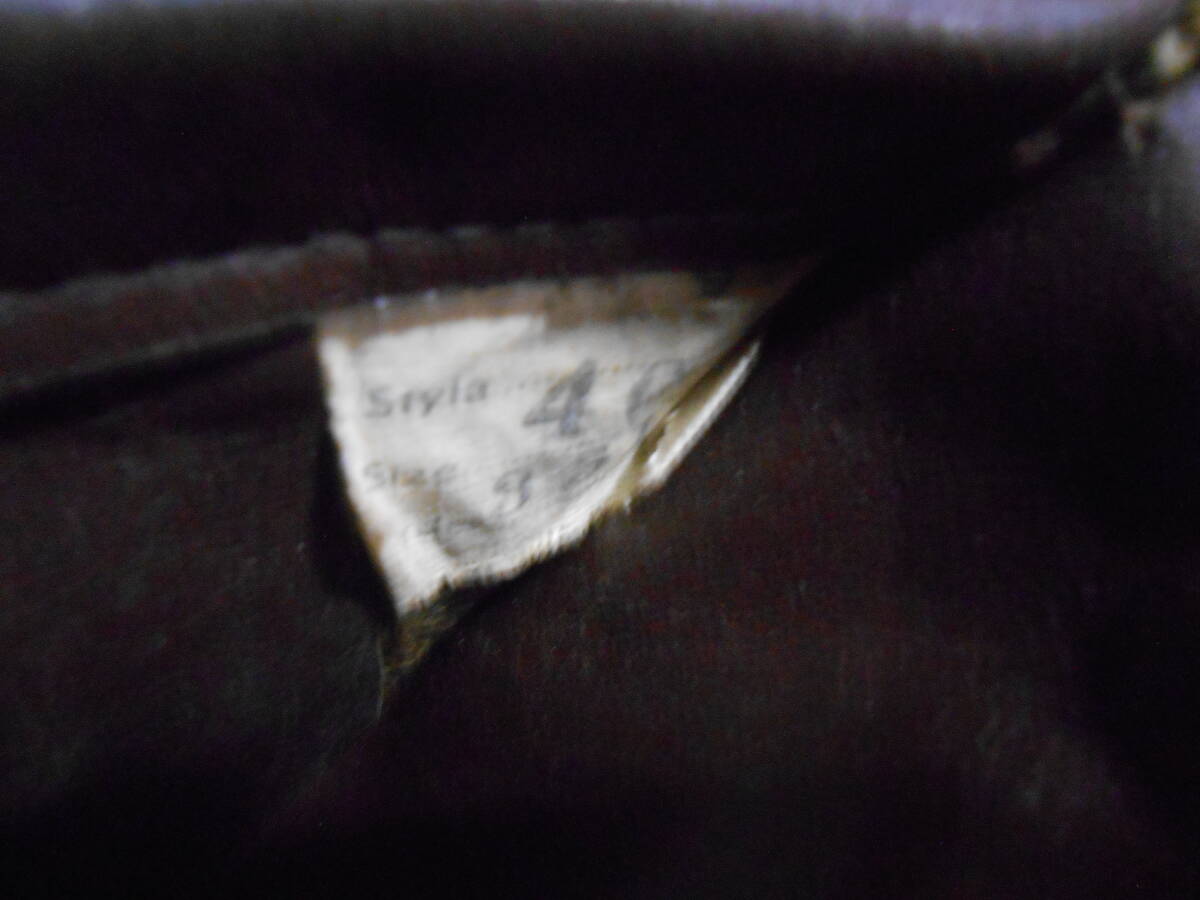
Tagged 40, but reportedly wears slightly smaller
Measured Fit
Shoulder: 47 cm
Chest: 53 cm
Sleeve: 61 cm from shoulder / 47 cm from pit
Length: 60 cm
Condition Summary
Exceptional preservation for a wartime A-2
Leather strong and flexible
Zipper functional
Patch strong
Back art present and readable
Patch ghosting visible but not destructive
Collector-grade survivor condition
A Jacket From the Margin of Regulation
This is not merely a wartime A-2. It belongs to a narrower and more revealing class of objects: privately acquired, theater-used garments that sit just outside the clean bureaucratic lines of contract-issue military clothing. That distinction matters because it places the jacket closer to lived experience than to textbook standardization.
Government issue garments speak in the language of procurement.
Private-purchase garments speak in the language of choice.
That choice is rarely superficial. A pilot did not merely select leather. He selected weight, drape, construction, presence, and, perhaps most importantly, the degree to which the garment could become his rather than the state’s. This A-2 bears exactly that transformation.
Star Sportswear and the Value of Near-Issue Divergence
Star Sportswear occupies a particularly fertile area in A-2 collecting. It is a name close enough to official wartime production to carry credibility, yet distinct enough in civilian versions to invite deeper connoisseurship. These are the jackets that force the collector to look harder.
The underarm vent deviation is not a trivial technical note. It is part of the jacket’s identity. It places the piece at the boundary between contract orthodoxy and commercial adaptation, and those boundary objects are often far more revealing than standard examples. They tell us where military necessity ended and individual agency began.
That is exactly why this jacket matters. It is not simply scarce. It is instructive.
The 866th Bomb Squadron as Operational Context
The 866th Bomb Squadron is not decorative narrative attached after the fact. It is operational gravity. A jacket tied to a B-24 squadron in the Pacific carries a different psychic charge than one associated with stateside use or generic wartime attribution.
Heavy bombardment work in the Pacific imposed a specific form of strain: distance, climate, attrition, repetition. Unlike the more frequently romanticized fighter-pilot image, the bomber world was communal, procedural, and often grimly mechanical. Crew identity mattered because survival depended on collective function rather than solitary virtuosity.
That makes squadron-marked garments from bomber units especially resonant. They are less theatrical and more social. Their markings represent belonging inside a machine larger than the self.
Patch Ghosts and the Evidence of Time
One of the most important details in the listing is not the present patch. It is the absence of former ones.
The removed chest patches on both sides are not defects. They are evidence that the jacket had a life before the 866th Bomb Squadron association now visible. That temporal layering is exactly the kind of feature that separates a merely attractive piece from a historically textured one.
Many collectors pursue visual completeness.
Serious collectors pursue chronological complexity.
Patch ghosts imply reassignment, prior service, altered identity, or personal transition. In other words, they introduce biography. The jacket ceased to be a fixed object and became a changing one. That alone makes it richer than a static, single-stage example.
Back Paint as Assertion Rather Than Ornament
The back paint matters for more than aesthetics. In wartime aviation garments, painted backs perform several simultaneous functions:
They individualize issued or standardized clothing.
They translate unit identity into visual form.
They create morale through image.
They assert ownership over a body that the war otherwise reduces to role and function.
The paint here is described as “素敵,” but that is too soft a term for what matters. The true value lies in coherence. A good painted A-2 is not just visually strong. It is narratively aligned with the rest of the object.
Here, the back art, the squadron patch, the Pacific attribution, the Star Sportswear construction, and the patch ghosts all pull in the same direction. That is rare. Most jackets have one or two strong points. This one appears to have an ecosystem.
Condition and the Collector’s Dilemma
The listing stresses that the jacket remains in unusually high condition, and that claim, if borne out in hand, is of major consequence. WWII A-2s are often forced into a false choice between integrity and aesthetics. The structurally honest ones may be too fragile to enjoy. The visually appealing ones may have been altered, over-conditioned, or rebuilt into theatrical relics.
This example appears to sit in the ideal middle ground:
Original enough to command respect
Stable enough to handle
Attractive enough to display
Complex enough to study
That is the sweet spot of advanced collecting. Not untouched, not restored into silence, but preserved in a way that still allows the jacket to speak.
MATERIAL FORENSICS
Leather Behavior
The description of thick but supple leather is critical. Many wartime A-2s survive in one of two compromised states: either board-stiff from neglect and dehydration, or over-softened by aggressive conditioning. A jacket that remains thick, responsive, and structurally calm suggests excellent storage history and reduced trauma.
Heavy steerhide, if correct, would also reinforce the jacket’s private-purchase seriousness. It implies a wearer who did not prioritize regulation elegance over durability.
Zipper Integrity
The TALON zipper is a major anchor point. On private-purchase A-2s, period-appropriate hardware is essential because it ties the garment materially back to the war era even when labels, manufacturing routes, or exact production contexts remain less standardized than contract examples.
Smooth function is more than convenience. It suggests that the jacket was not left to fail in place.
Knits and Survival Aesthetics
The absence of severe knit failure is important. Knits are usually the first part of an A-2 to collapse. If they remain visually acceptable, it strengthens the seller’s condition claim substantially. Even when partially replaced, knit stability can preserve the wearability and silhouette of the piece. In this case, the listing suggests survival rather than intervention-heavy rescue, which is preferable.
Patch and Paint Synchronization
The most important forensic question is whether the patch wear, the leather oxidation, and the back paint aging speak the same language. If the patch edge wear is consistent with the surrounding panel and the paint has sunk into the surface rather than sitting atop it with later gloss, the jacket moves sharply upward in seriousness.
A great wartime painted A-2 is not confirmed by one feature.
It is confirmed by agreement between features.
COLLECTOR RELEVANCE
Tier: Advanced Collector / Museum-Adjacent
This is not a beginner’s A-2.
It is not an “entry point” jacket.
It is a piece for collectors who already understand contract models and are now looking for garments with more complicated historical personalities.
Ideal buyer profile:
Someone who already owns standard contract A-2s
Someone seeking a theater-specific, squadron-specific, visually coherent example
Someone who values historical layering over checklist neatness
This is a jacket that improves a collection by deepening it, not merely by enlarging it.
CONFIDENCE & VERIFICATION NOTES
Essential due diligence should focus on:
Patch edge aging vs surrounding leather tone
Paint age consistency and cracking behavior
Stitch hole chronology around removed chest insignia
Star Sportswear construction references vs known civilian examples
Leather grain and finish consistency across body panels
If those elements align, the jacket moves from “strong vintage piece” into “serious wartime collector object.”
Authenticity & Stewardship
Evaluated under the Japonista Aviation & Military Garment Authentication Framework™
Each work is examined through a structured, multi-layered assessment:
• Model classification and military typology verification (A-2, B-3, MA-1, G-1, L-2, etc.)
• Material evaluation across leather, shearling, nylon, wool, and mixed components
• Hardware inspection including zippers, snaps, and period-correct fastenings
• Graphic and nose art analysis, including paint method, iconography, and historical alignment
• Condition and structural integrity review, including wear patterns consistent with age and use
Where applicable, contract labels, manufacturer markings, and period construction details are reviewed to confirm authenticity and era alignment.
Guaranteed 100% Authentic.
All garments are curated and backed by the Japonista Lifetime Authenticity Warranty™, with emphasis on both material truth and historical accuracy.
A Note on Flight Jackets, Service & Visual Identity
Military flight jackets were engineered as functional equipment—designed for temperature regulation, durability, and survival in demanding conditions. Over time, they evolved into carriers of identity, memory, and personal expression.
Nose art and painted jackets—originally applied to aircraft and later to garments—represent a distinct form of visual folklore. Pin-up figures, squadron insignia, mascots, and symbolic imagery transformed standard-issue equipment into individualized statements of presence and morale.
At Japonista, these jackets are approached as wearable military artifacts. Surface wear, leather creasing, paint aging, and textile fatigue are evaluated as evidence of lived history rather than imperfection.
We preserve these works with restraint—allowing their material narrative to remain visible and intact.
Our role is to connect these garments with collectors who recognize their dual nature as both functional objects and historical documents.
Inquiries, Availability, and Private Consideration
Many flight jackets are singular in character due to condition, paintwork, contract variation, or production era. Certain pieces are held firmly due to rarity, historical resonance, or preservation status.
All inquiries are handled discreetly, and we welcome thoughtful discussion regarding provenance, contract details, nose art interpretation, and long-term wear or display considerations.
Collectors building focused archives—by model type, era, or graphic style—may consult with us for deeper guidance.
Concierge Support & Collector Guidance
Japonista Concierge™ provides tailored assistance for collectors seeking deeper engagement with aviation garments:
• Model and contract identification (A-2 variants, G-1 lineage, MA-1 evolution)
• Leather and textile preservation guidance
• Paint conservation and display considerations
• Wearability versus archival preservation assessment
• Strategic acquisition planning for aviation-focused collections
For select rare or historically significant works, private reservation or structured acquisition arrangements may be available on a case-by-case basis.
Before Proceeding
We encourage collectors to review our shop policies and house guidelines, available through the links in our website footer. These outline shipping protocols, handling considerations, and condition standards specific to vintage leather, painted garments, and military-issued clothing.
Understanding these guidelines supports responsible stewardship of each piece.
A Closing Note
Flight jackets occupy a distinct place within material history. They are objects of function shaped by environment, and over time, transformed into records of identity, service, and expression.
Nose art—whether applied to aircraft or garments—extends this narrative, capturing moments of humor, defiance, and individuality within structured military life.
At Japonista, we steward these works as aviation artifacts in wearable form—ensuring they continue their journey with collectors who understand both their construction and their story.
If you have questions or wish to explore related items, please feel free to contact Japonista Concierge™ at any time.