Rare Vintage, Antiques and Art Collector / Curator / Personal Shopper From Japan
WW2 Aero A2 Flight Jacket B26 Marauder Bombardier Painted 9th Air Force Vintage USAAF Leather Jacket Rare
WW2 Aero A2 Flight Jacket B26 Marauder Bombardier Painted 9th Air Force Vintage USAAF Leather Jacket Rare
Couldn't load pickup availability
Have a reasonable price in mind? Submit your best offer and our concierge will review it personally.
USAAF A-2 Flight Jacket
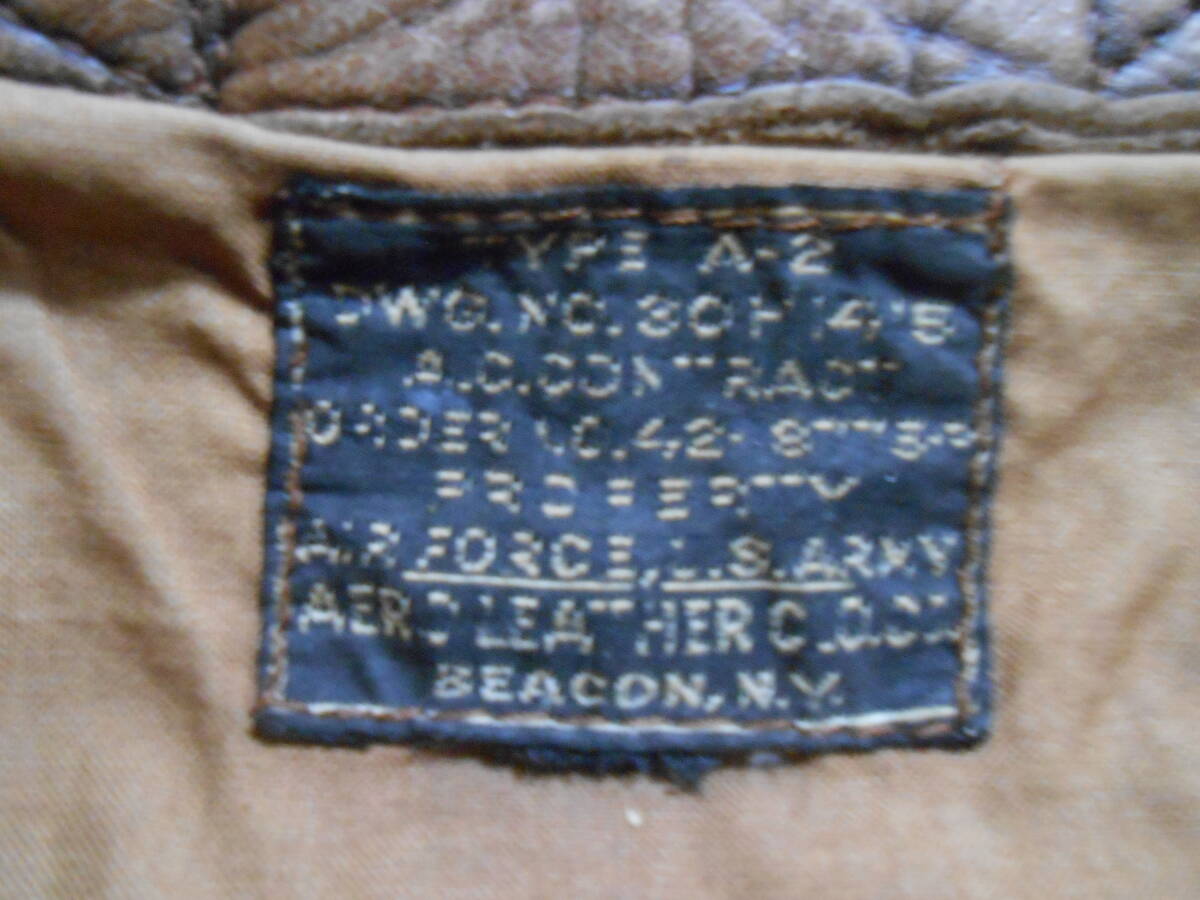
Aero Leather Clothing Co.
B-26 Marauder / 9th Army Air Force Painted Example, circa 1940s
A compelling wartime A-2 flight jacket by Aero Leather Clothing Co., distinguished by an unusually rich program of period-applied painted insignia across both front and reverse. The garment presents a coherent and layered visual biography of its wearer, including a B-26 Marauder reference on the chest, bombardier wings, a painted 9th Army Air Force insignia to the sleeve, and traces of a broader mission-oriented composition to the reverse.
Particularly notable is the faded yet still legible back-painted field, which appears to have once incorporated the wearer’s aircraft, a mission count indicated as “38,” and associated operational references. Such partial survival carries considerable historical and emotional weight, preserving not only image but use. The jacket’s front, by contrast, remains more clearly readable, creating a striking dialogue between preserved identity and weathered memory.
Constructed in horsehide and retaining its original TALON zipper, the jacket remains structurally strong. The original waist knit survives, while the sleeve knits appear to have been period-replaced, a detail consistent with continued service life rather than later cosmetic intervention.
Examples that combine maker quality, aircraft specificity, command insignia, and an integrated painted narrative of this complexity are increasingly scarce. This is a wartime aviation garment of real interpretive depth, occupying a compelling position between military artifact and personal document.
A Jacket That Rewards Reading Rather Than Looking
Many painted A-2 jackets announce themselves immediately. A bright pin-up, a large squadron emblem, a cleanly preserved back scene. This one operates differently. It is a jacket that must be read.
Its value is not confined to a single image. It is distributed across surfaces, across fading, across fragments. The front carries the clearer statements: aircraft identity, bombardier insignia, name, command mark. The back carries something more fragile and, therefore, more compelling: the remains of a larger visual world, now partially dissolved into the leather itself.
This is the kind of object that separates the buyer who wants spectacle from the collector who wants evidence.
The Front as Biography
The front of this jacket is unusually rich. Each painted component contributes to a profile of the wearer without requiring full provenance paperwork.
The B-26 Marauder reference is crucial. The Marauder occupies a specific place in American wartime aviation culture: admired, feared, and gradually redeemed through operational performance. A jacket tied to B-26 identity carries a different emotional register from fighter-pilot iconography. It speaks less of solitary myth and more of crew-based precision, coordinated violence, and survival inside highly procedural warfare.
The bombardier wings matter equally. This is not random decoration. They specify role. They say that the wearer’s relationship to the mission was not general but technical. He was not simply part of the aircraft. He was part of its targeting logic.
The 9th Army Air Force insignia adds geographical gravity. That command is deeply tied to North Africa and Europe, and with it comes a distinct atmosphere of operational history: medium bombers, tactical support, transitional theaters, and relentless mission tempo.
Together these front elements create something rare: a jacket whose painted language reads less like morale art and more like professional identity.
The Faded Back as a Different Kind of Archive
Collectors often overvalue clarity and undervalue residue. In reality, residue can be more historically persuasive than perfect preservation.
The back is described as heavily faded, but not empty. That distinction matters enormously. The traces of aircraft, the tail number “38,” and what may once have been painted place names do not fail the jacket. They deepen it. What remains visible suggests that the reverse once functioned as a mission memory board: aircraft association, sortie count, destination markers, and probably unit pride transformed into private iconography.
A clean back paint can be impressive.
A worn back paint can be moving.
Why? Because fading implies time in a more intimate way. It means the jacket was not only made and painted, but worn, flexed, exposed, folded, and preserved through real life. The image did not survive despite that life. It survived through it.
In advanced collecting, that distinction is everything.
Mission Count and the Arithmetic of Survival
If the “38” on the tail is indeed a mission count, the jacket enters an especially resonant category. Mission numbers on painted garments are among the most powerful compressions of wartime experience because they turn life-risk into simple arithmetic. Thirty-eight is not just a number. It means thirty-eight departures, thirty-eight returns hoped for, thirty-eight encounters with weather, flak, navigation pressure, machinery, and human error.
One reason these jackets remain so compelling is that they transform abstract military history into countable existence. The number is a scar without blood. It is proof without paperwork.
Even when partial, it has force.
Aero Leather and the Authority of the Shell
Aero-made A-2s already command respect before paint is considered. Their pattern logic, leather character, and wartime seriousness give them a strong base position in the hierarchy of A-2 collecting. That matters here because the paint is not carrying a weak jacket. It is amplifying a strong one.
The leather is described as wrinkled yet supple, which is precisely the sort of maturity serious collectors want. Flat, dead leather suggests over-restoration or lifeless storage. Honest wrinkling combined with retained flexibility suggests a garment that has survived without being cosmetically silenced.
In that sense, the jacket still behaves like leather, not like relic skin.
Red Rib Significance
The original waist knit, described as the so-called red rib, is not a minor collector footnote. Original knits anchor silhouette, and color-cast knits can materially affect the emotional feel of a jacket. When original waist structure survives, the body retains its proper tension and drop. Period-replaced sleeve knits, meanwhile, are not inherently negative. In service garments, they often indicate use strong enough to demand preservation rather than abandonment.
That is the difference between a dead garment and a living one.
MATERIAL FORENSICS
Leather
The hide appears to maintain exactly the sort of aged flexibility one hopes for in a war-era Aero. Key inspection priorities should include:
- panel-to-panel grain consistency
- paint penetration into topcoat and grain valleys
- shoulder seam stress lines
- dryness around collar base and pocket edges
If the leather remains supple without sticky over-conditioning or artificial shine, it substantially strengthens the jacket’s seriousness.
Paint Integrity
This jacket lives or dies on the age agreement between its multiple painted zones.
What matters:
- do front and back paints age in similar ways
- do the bomber wings, aircraft, and insignia show period-compatible wear
- does the back fade look like time and flex, rather than solvent loss or later abrasion
- do pigments sit in the leather like old work, not atop it like new confidence
If the front remains clearer while the back is more worn, that is not suspicious in itself. It is physically logical: backs take pressure from chairs, vehicle seats, storage surfaces, and repeated contact.
Lining and Hardware
The lining’s reported stability is significant, especially in a jacket with this much external identity. Internal survival often determines whether the object remains wearable and structurally dependable.
The TALON zipper, still functional, is a major collector comfort point. It means the jacket has not had to surrender one of its most important original systems in order to remain alive.
Tag Loss
The missing size tag is unfortunate, but not disqualifying. In fact, the survival of paint, leather, and hardware matters more than the paper precision of the size label at this level. Measurements and body logic will guide the serious buyer more reliably than a fragile wartime tag ever could.
COLLECTOR RELEVANCE
Tier: Advanced Collector / Narrative-Driven A-2
This is not an entry-level painted jacket.
It is a piece for collectors who understand that incomplete clarity can be more valuable than complete simplicity.
Ideal buyer profile:
- already knows Aero contract significance
- values role-specific aviation identity
- understands B-26 culture and 9th AAF history
- appreciates worn-back paint as historical residue, not as loss
This is a jacket that asks for reading, not merely admiration.
CONFIDENCE & VERIFICATION NOTES
Recommended inspection focus:
- front/back paint agreement under magnification
- bomber wing and insignia aging vs leather oxidation
- TALON zipper tape age consistency
- waist knit originality and sleeve knit replacement chronology
- any remaining hidden stitch ghosts beneath faded back paint zones
Authenticity & Stewardship
Evaluated under the Japonista Aviation & Military Garment Authentication Framework™
Each work is examined through a structured, multi-layered assessment:
• Model classification and military typology verification (A-2, B-3, MA-1, G-1, L-2, etc.)
• Material evaluation across leather, shearling, nylon, wool, and mixed components
• Hardware inspection including zippers, snaps, and period-correct fastenings
• Graphic and nose art analysis, including paint method, iconography, and historical alignment
• Condition and structural integrity review, including wear patterns consistent with age and use
Where applicable, contract labels, manufacturer markings, and period construction details are reviewed to confirm authenticity and era alignment.
Guaranteed 100% Authentic.
All garments are curated and backed by the Japonista Lifetime Authenticity Warranty™, with emphasis on both material truth and historical accuracy.
A Note on Flight Jackets, Service & Visual Identity
Military flight jackets were engineered as functional equipment—designed for temperature regulation, durability, and survival in demanding conditions. Over time, they evolved into carriers of identity, memory, and personal expression.
Nose art and painted jackets—originally applied to aircraft and later to garments—represent a distinct form of visual folklore. Pin-up figures, squadron insignia, mascots, and symbolic imagery transformed standard-issue equipment into individualized statements of presence and morale.
At Japonista, these jackets are approached as wearable military artifacts. Surface wear, leather creasing, paint aging, and textile fatigue are evaluated as evidence of lived history rather than imperfection.
We preserve these works with restraint—allowing their material narrative to remain visible and intact.
Our role is to connect these garments with collectors who recognize their dual nature as both functional objects and historical documents.
Inquiries, Availability, and Private Consideration
Many flight jackets are singular in character due to condition, paintwork, contract variation, or production era. Certain pieces are held firmly due to rarity, historical resonance, or preservation status.
All inquiries are handled discreetly, and we welcome thoughtful discussion regarding provenance, contract details, nose art interpretation, and long-term wear or display considerations.
Collectors building focused archives—by model type, era, or graphic style—may consult with us for deeper guidance.
Concierge Support & Collector Guidance
Japonista Concierge™ provides tailored assistance for collectors seeking deeper engagement with aviation garments:
• Model and contract identification (A-2 variants, G-1 lineage, MA-1 evolution)
• Leather and textile preservation guidance
• Paint conservation and display considerations
• Wearability versus archival preservation assessment
• Strategic acquisition planning for aviation-focused collections
For select rare or historically significant works, private reservation or structured acquisition arrangements may be available on a case-by-case basis.
Before Proceeding
We encourage collectors to review our shop policies and house guidelines, available through the links in our website footer. These outline shipping protocols, handling considerations, and condition standards specific to vintage leather, painted garments, and military-issued clothing.
Understanding these guidelines supports responsible stewardship of each piece.
A Closing Note
Flight jackets occupy a distinct place within material history. They are objects of function shaped by environment, and over time, transformed into records of identity, service, and expression.
Nose art—whether applied to aircraft or garments—extends this narrative, capturing moments of humor, defiance, and individuality within structured military life.
At Japonista, we steward these works as aviation artifacts in wearable form—ensuring they continue their journey with collectors who understand both their construction and their story.
If you have questions or wish to explore related items, please feel free to contact Japonista Concierge™ at any time.