Rare Vintage, Antiques and Art Collector / Curator / Personal Shopper From Japan
WW2 WWII A2 Flight Jacket Hump Art ATC CBI Theater Air Transport Command Vintage Leather Bomber Jacket Rare
WW2 WWII A2 Flight Jacket Hump Art ATC CBI Theater Air Transport Command Vintage Leather Bomber Jacket Rare
Couldn't load pickup availability
Have a reasonable price in mind? Submit your best offer and our concierge will review it personally.
USAAF A-2 Flight Jacket
Air Transport Command, CBI Theater
“One Helluva Hump” Painted Example, circa 1940s
A highly evocative and historically resonant A-2 flight jacket attributed to the United States Army Air Forces Air Transport Command, associated with operations over the China–Burma–India Theater during the Second World War.
The reverse is distinguished by an exceptional painted composition centered on the phrase “One Helluva Hump,” referencing the perilous trans-Himalayan supply flights known as “The Hump.” The design incorporates a pin-up figure, cartographic imagery, and camel motifs representing completed missions, forming a rare and cohesive narrative composition documenting operational experience.
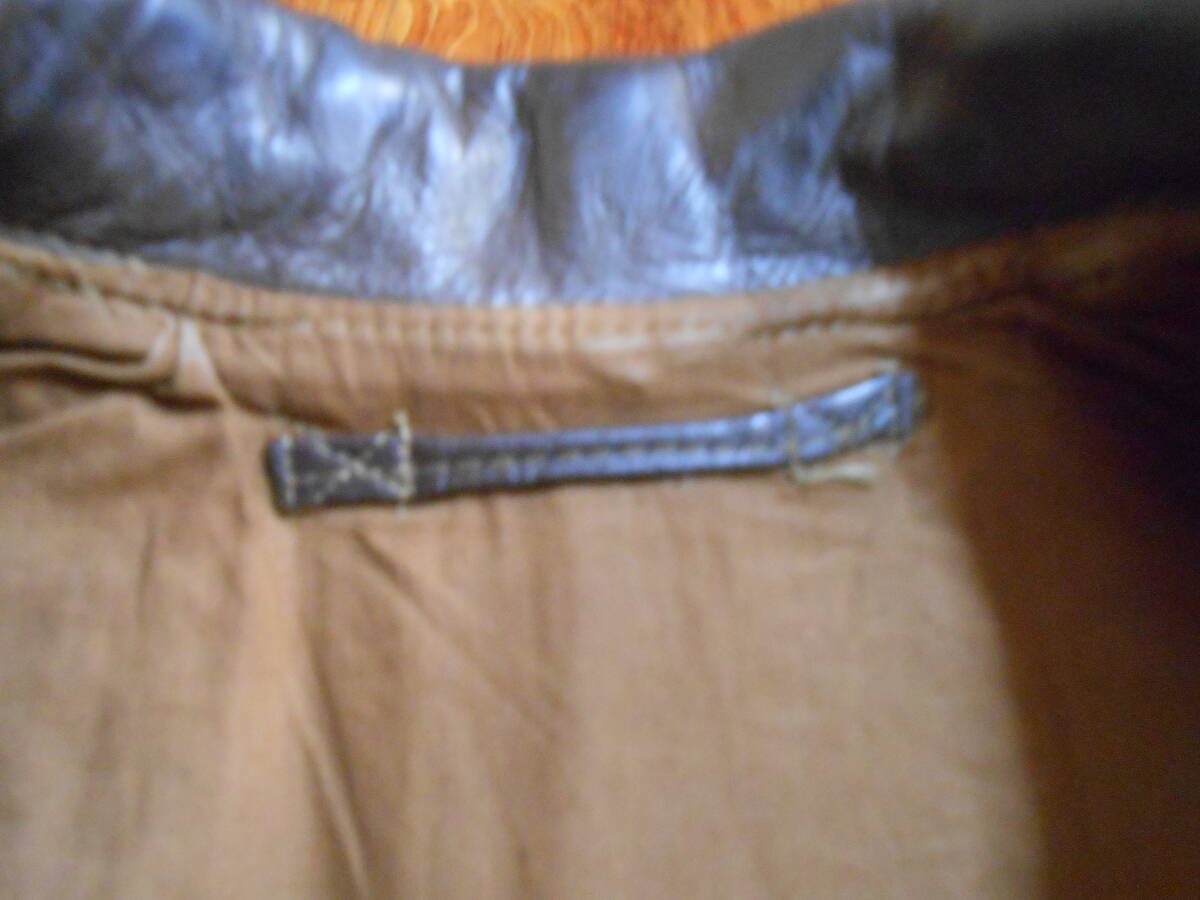
Constructed as a private purchase example, the jacket diverges subtly from standard-issue specifications, including variations in sleeve construction, absence of underarm ventilation, and knit configuration. Executed in a substantial brown leather with a functioning TALON zipper, the garment retains strong structural integrity with expected signs of age.
The presence of an ATC leather patch and name tag further enhances its contextual grounding within transport command operations, an area of military aviation often underrepresented in surviving material culture.
Examples combining clear theater attribution, narrative artwork, and private-order individuality are scarce, particularly those tied to the Hump airlift—one of the most hazardous logistical undertakings of the war.
A compelling artifact of aviation history, bridging material culture and lived experience.
Object
WWII USAAF A-2 Flight Jacket (Private Purchase / Non-Issue Variant)
Theater Attribution
CBI Theater (China–Burma–India)
Command Context
Air Transport Command (ATC)
Mission Identity
“The Hump” Airlift Operations — India → China over the Himalayas
Back Artwork
“ONE HELLUVA HUMP” composition
Central pin-up + Himalayan route cartography
Camel tally marks indicating completed Hump flights
Front Elements
Leather ATC patch (left chest)
Name tag present
Material
Heavyweight steerhide (probable)
Hardware
TALON zipper (period correct, functional)
Construction Notes
Private-order build
Two-panel sleeve construction
No underarm ventilation grommets
Non-standard knit configuration
Size
Estimated US 36–38
Measured Fit
Shoulder: 41 cm
Chest: 50 cm
Sleeve: 59 / 44 cm
Length: 58 cm
Condition
Leather: thick, stable, minor neck wear
Paint: partial wear on pin-up, overall strong composition
Lining: intact
Knits: minor wear, stable
This Jacket Documents One of the Most Dangerous Air Routes Ever Flown
“The Hump” was not a nickname.
It was a warning.
Pilots flew:
• unpressurized aircraft
• through Himalayan turbulence
• with minimal navigation
• often at night
• with a survival rate that bordered on statistical brutality
This jacket is not decoration.
It is survival math painted in leather.
Camel Tally Marks — The Quiet Brutality of Counting Survival
The camels are everything.
Each one is a completed run over the Himalayas.
That means:
• storms survived
• fuel margins tested
• aircraft pushed to failure thresholds
Unlike bomb group jackets that celebrate victory,
this counts endurance.
It is not triumph.
It is accumulation of risk.
“ONE HELLUVA HUMP” — Language as Identity Compression
The phrase is not casual slang.
It compresses:
• geography (Himalayas)
• psychological fatigue
• operational danger
into a single sentence.
This is pilot humor at its sharpest edge—
where understatement carries the weight of lived experience.
ATC vs Combat Units — The Forgotten Backbone
Most collectors chase:
• fighter squadrons
• bomber groups
• ace narratives
ATC sits in the background.
But without ATC:
• no fuel
• no ammunition
• no continuity of war effort in China
This jacket represents the system that made everything else possible.
Private Purchase Construction — Freedom of Expression
Unlike issued A-2s, this jacket was commissioned.
That matters.
It means:
• the wearer chose the artwork
• the symbolism is intentional
• the narrative is personal, not standardized
This is closer to a diary than a uniform.
ART HISTORICAL SIGNIFICANCE
This Is Narrative Composition, Not Decoration
The back artwork combines:
• pin-up figure (morale anchor)
• geographic map (mission context)
• tally system (experience record)
• slogan (identity marker)
That is four narrative layers in one composition.
Most A-2 art achieves one.
This achieves all simultaneously.
Damage to Pin-Up — Not a Flaw, a Timeline Marker
The wear on the girl figure is not a defect.
It indicates:
• handling patterns
• friction zones
• time exposure
The narrative has aged unevenly—
which paradoxically confirms authenticity of use.
MATERIAL FORENSICS
Leather
Dense, thick, structurally confident.
Not optimized for weight → optimized for durability.
Suggests:
• non-factory sourcing
• possibly regional production adaptation
Zipper
TALON → correct wartime hardware
Smooth function → high preservation quality
Paint Layer Behavior
Key indicators to verify:
• pigment penetration into grain
• natural cracking vs artificial distress
• consistency across composition
If authentic → elite tier
If post-war → still strong, but category shifts
COLLECTOR RELEVANCE
Tier: High-Level Aviation + Narrative Collector
This is not a general A-2.
This is for collectors who understand:
• theater specificity
• mission context
• narrative integrity
It belongs in:
• advanced aviation collections
• museum-adjacent holdings
• serious WWII textile archives
Authenticity & Stewardship
Evaluated under the Japonista Aviation & Military Garment Authentication Framework™
Each work is examined through a structured, multi-layered assessment:
• Model classification and military typology verification (A-2, B-3, MA-1, G-1, L-2, etc.)
• Material evaluation across leather, shearling, nylon, wool, and mixed components
• Hardware inspection including zippers, snaps, and period-correct fastenings
• Graphic and nose art analysis, including paint method, iconography, and historical alignment
• Condition and structural integrity review, including wear patterns consistent with age and use
Where applicable, contract labels, manufacturer markings, and period construction details are reviewed to confirm authenticity and era alignment.
Guaranteed 100% Authentic.
All garments are curated and backed by the Japonista Lifetime Authenticity Warranty™, with emphasis on both material truth and historical accuracy.
A Note on Flight Jackets, Service & Visual Identity
Military flight jackets were engineered as functional equipment—designed for temperature regulation, durability, and survival in demanding conditions. Over time, they evolved into carriers of identity, memory, and personal expression.
Nose art and painted jackets—originally applied to aircraft and later to garments—represent a distinct form of visual folklore. Pin-up figures, squadron insignia, mascots, and symbolic imagery transformed standard-issue equipment into individualized statements of presence and morale.
At Japonista, these jackets are approached as wearable military artifacts. Surface wear, leather creasing, paint aging, and textile fatigue are evaluated as evidence of lived history rather than imperfection.
We preserve these works with restraint—allowing their material narrative to remain visible and intact.
Our role is to connect these garments with collectors who recognize their dual nature as both functional objects and historical documents.
Inquiries, Availability, and Private Consideration
Many flight jackets are singular in character due to condition, paintwork, contract variation, or production era. Certain pieces are held firmly due to rarity, historical resonance, or preservation status.
All inquiries are handled discreetly, and we welcome thoughtful discussion regarding provenance, contract details, nose art interpretation, and long-term wear or display considerations.
Collectors building focused archives—by model type, era, or graphic style—may consult with us for deeper guidance.
Concierge Support & Collector Guidance
Japonista Concierge™ provides tailored assistance for collectors seeking deeper engagement with aviation garments:
• Model and contract identification (A-2 variants, G-1 lineage, MA-1 evolution)
• Leather and textile preservation guidance
• Paint conservation and display considerations
• Wearability versus archival preservation assessment
• Strategic acquisition planning for aviation-focused collections
For select rare or historically significant works, private reservation or structured acquisition arrangements may be available on a case-by-case basis.
Before Proceeding
We encourage collectors to review our shop policies and house guidelines, available through the links in our website footer. These outline shipping protocols, handling considerations, and condition standards specific to vintage leather, painted garments, and military-issued clothing.
Understanding these guidelines supports responsible stewardship of each piece.
A Closing Note
Flight jackets occupy a distinct place within material history. They are objects of function shaped by environment, and over time, transformed into records of identity, service, and expression.
Nose art—whether applied to aircraft or garments—extends this narrative, capturing moments of humor, defiance, and individuality within structured military life.
At Japonista, we steward these works as aviation artifacts in wearable form—ensuring they continue their journey with collectors who understand both their construction and their story.
If you have questions or wish to explore related items, please feel free to contact Japonista Concierge™ at any time.