Rare Vintage, Antiques and Art Collector / Curator / Personal Shopper From Japan
Toys McCoy G-1 Flight Jacket Felix Wild Gadget USS Intrepid CV-11 Size 36 Naval Art
Toys McCoy G-1 Flight Jacket Felix Wild Gadget USS Intrepid CV-11 Size 36 Naval Art
Couldn't load pickup availability
Have a reasonable price in mind? Submit your best offer and our concierge will review it personally.
A TOYS McCOY G-1 FLIGHT JACKET, “FELIX WILD GADGET,” SIZE 36
Japanese heritage naval-aviation tribute jacket with named USS Intrepid reference, preserved mouton collar, and strong illustrated reverse
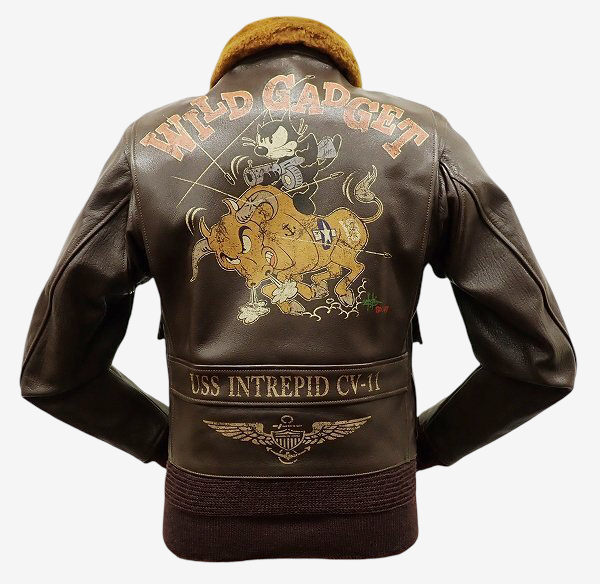
A leather flight jacket by Toys McCoy based on the U.S. Navy G-1 pattern, featuring a mouton collar, slanted patch pockets, and ribbed waistband and cuffs, and decorated with a sequence of naval-aviation tribute graphics centered on Felix the Cat. The reverse is dominated by a large “WILD GADGET” composition naming USS Intrepid CV-11, while the front carries complementary squadron-style insignia and text. The jacket remains in strong preserved condition with only light signs of use and minor internal-pocket staining. As with the best modern heritage interpretations, the present example succeeds not by imitating age, but by translating the humor, symbolism, and visual confidence of military aviation culture into a highly wearable collector object.
Object
Toys McCoy G-1 Flight Jacket “FELIX WILD GADGET”
Brand / Maker
Toys McCoy MFG. Co.
Production Era
Modern Japanese heritage production
Category
High-grade G-1 reproduction / illustrated naval aviation tribute jacket
Contract / Spec Reference
BU AER – U.S. NAVY
G-1 FLIGHT JACKET
SPEC. 55J14 (AER)
Contract No. N-3838-96142
Toys McCoy MFG. Co.
Size 36
Serial / Production Marker
Serial visible: 10136510
Manufactured by Toys McCoy Product
Material
Brown leather shell with pebbled G-1 type grain
Mouton collar
Rib knit waistband and cuffs
Illustrated / printed or transfer-style military cartoon graphics integrated over shell surface
Style Basis
U.S. Navy G-1 / 55J14 lineage interpretation:
- mouton collar
- slanted patch pockets
- zip front
- knit hem and cuffs
- short naval flight silhouette
- “U.S.N.” collar stencil reference
Theme / Graphic Context
Front:
- Felix the Cat / “FELIX THE CAT VF-8” graphic language
- “Wild Gadget” insignia motif
- carrier aviation / naval squadron vocabulary
Back:
- large “WILD GADGET” title
- Felix riding a bomb / cartoon-action composition
- “USS INTREPID CV-11” naming
- naval wings motif beneath
Color
Brown
Size
36
Measured Fit
Shoulder: approx. 43 cm
Sleeve: approx. 65 cm
Chest: approx. 48 cm
Length: approx. 60 cm
Condition Summary
Condition rank A
Worn only a few times
Interior pocket slake / lining area has staining
Overall shell, graphics, collar, and body line remain highly preserved
Presentation remains crisp and collector-strong
Object Classification
Not a wartime original
Not a generic repro
A high-end Japanese naval-aviation tribute jacket that turns squadron-cartoon memory into collectible leather form
COLLECTOR RELEVANCE
Tier: High-Grade Graphic Heritage G-1 / Wearable Collector Category
This piece is for:
- Toys McCoy collectors
- naval-aviation tribute jacket buyers
- heritage-jacket collectors who enjoy strong back graphics
- buyers who want military-memory aesthetics without the fragility of originals
- wearable collectors who still want visual drama
This piece is not for:
- strict wartime-original purists
- minimalist buyers seeking stealth outerwear
- anyone who sees cartoon military graphics as unserious rather than historically rooted visual language
This is for the collector who understands that some of the best tribute jackets do not imitate history bluntly. They translate its symbolic energy into something you can actually live with.
CONFIDENCE & VERIFICATION NOTES
Strong positives
- Toys McCoy label and serial present
- G-1 structure convincing and coherent
- back graphic exceptionally strong
- mouton collar preserved
- condition band attractive
- carrier naming increases thematic weight
CURATORIAL ANALYSIS
A Reproduction That Understands Restraint Better Than Most Originals Understand Spectacle
This is the kind of jacket that could easily have gone wrong. Cartoon naval tribute imagery, named carrier references, mouton collar, painted-back energy, and overt military vocabulary all create obvious risk. In weaker hands, the result would be costume. In Toys McCoy’s hands, it becomes something better: a controlled act of historical stylization.
That is the first thing to understand.
The jacket is not trying to pass as original. It is trying to do something more precise:
to extract the romance, humor, and squadron-theater spirit of naval aviation and place it onto a G-1 structure that remains believable as clothing rather than collapsing into fan merchandise.
That balance is hard, and it is why the piece succeeds.
Why Toys McCoy Can Get Away With This
Most makers can reproduce a silhouette. Very few can reproduce a mood. Toys McCoy’s advantage is that it understands American military memory not just as pattern and spec, but as visual culture. That means the jacket is not merely built correctly. It is emotionally calibrated correctly.
The mouton collar, the chest layout, the pocket scale, and the body length all keep the garment in real G-1 territory. That grounding allows the graphics to become expressive without destroying credibility. In other words, the structure earns the right to carry the fantasy.
That is the difference between heritage design and costume design.
Felix the Cat and the Long Shadow of Naval Aviation Humor
Felix is not random here. He belongs to the long visual tradition of military cartoon mascots that gave dangerous environments a language of wit, bravado, and symbolic control. On real wartime jackets, nose art, squadron patches, and mascot graphics created a secondary emotional system beside the formal one.
This jacket translates that logic beautifully.
The front keeps things relatively controlled:
- one insignia-like chest graphic
- one textual / line-illustration field
- enough space preserved for the jacket to remain readable
The back then expands into full narrative declaration, which is exactly what it should do. The “WILD GADGET” title and bomb-riding Felix create a complete theatrical field, but the leather body still frames it properly.
The result is not childish.
It is deliberately mythic.
USS Intrepid CV-11 as Anchor
The carrier name matters because it grounds the design in something more concrete than general Americana. “USS INTREPID CV-11” prevents the back from becoming abstract cartoon nostalgia and instead ties the object to a known naval vessel and a real military naming culture.
That matters because specific naming is what gives tribute objects weight.
Without it, they float.
With it, they lock.
The jacket stops being “vintage military vibe” and becomes a contained naval memory object.
The Back Is the Sale, But the Front Is the Intelligence
Many graphic jackets sell the back and neglect the front. This one is smarter. The front is disciplined enough that the jacket still works zipped, unzipped, on-body, and in daily wear. The back is the emotional crescendo, but the front does the harder job of keeping the piece wearable.
That is exactly how this category should be handled.
The buyer gets:
- an impressive display back
- but also a jacket that still behaves correctly when encountered from the front
This duality is a major strength and part of why the piece remains commercially healthy.
The Collar Stencil and the Game of Semi-Spec Authenticity
The “U.S.N.” collar treatment is important. It does not make the jacket authentic in military-historical terms, but it does push the object deeper into the correct visual grammar. Toys McCoy knows that details like this matter. Not because they trick the informed buyer, but because they complete the internal logic of the piece.
That internal logic is what separates top-tier reproductions from simply expensive jackets.
Condition and Why It Matters Here More Than on Originals
On original wartime painted naval jackets, heavy wear can be part of the romance. On a modern tribute piece, preservation matters more. Buyers here are not paying for attritional history. They are paying for:
- clean leather
- readable graphics
- strong collar
- crisp silhouette
- minimal compromise
That means the strong preserved condition is a genuine asset, not just a generic positive. A rank-A example with only light use and an internal-pocket stain is sitting in the right zone for a piece like this. The object can still be collected, displayed, and worn without feeling exhausted.
That is important because the entire category relies on controlled finish.
Why This Price Band Makes Sense
The seller is not pricing it like a one-of-one archive grail. Good. That would be too much. But the current number is also far below what one would need to pay to get a real period G-1 with comparably exciting named graphics and preserved wearability. That is the window where pieces like this perform best.
It offers:
- strong brand
- strong theme
- strong condition
- usable size
- visual impact
- lower risk than originals
- lower fragility than originals
- lower price than originals
That combination is exactly why high-end repro markets continue to matter.
MATERIAL FORENSICS
Shell
The leather shell remains one of the biggest stabilizing forces here. It carries the correct pebbled G-1-type texture and enough firmness to keep the silhouette from looking soft or costume-like. The shell supports the graphics rather than becoming overpowered by them.
Points that matter:
- leather still reads clean and controlled
- body line remains sharp
- no obvious collapse at pocket plane or hem
- surface preservation supports collector confidence
Graphics
The graphics are the emotional heart of the jacket and appear well preserved. That matters more here than it would on a plain repro. Once the back composition starts to fail, the premium logic weakens. Here, the back remains crisp enough to carry the entire identity of the piece.
That keeps the object alive.
Collar
The mouton collar is visually rich and still strong. On G-1 derived jackets, the collar determines much of the perceived seriousness. A weak collar can cheapen even a strong shell. Here, it remains a major positive.
Interior
The interior staining at the pocket slake should be treated proportionally. It is real, but it does not interfere with the object’s main value drivers. This is a good example of a flaw that matters without becoming central.
Authenticity & Stewardship
Evaluated under the Japonista Aviation & Military Garment Authentication Framework™
Each work is examined through a structured, multi-layered assessment:
• Model classification and military typology verification (A-2, B-3, MA-1, G-1, L-2, etc.)
• Material evaluation across leather, shearling, nylon, wool, and mixed components
• Hardware inspection including zippers, snaps, and period-correct fastenings
• Graphic and nose art analysis, including paint method, iconography, and historical alignment
• Condition and structural integrity review, including wear patterns consistent with age and use
Where applicable, contract labels, manufacturer markings, and period construction details are reviewed to confirm authenticity and era alignment.
Guaranteed 100% Authentic.
All garments are curated and backed by the Japonista Lifetime Authenticity Warranty™, with emphasis on both material truth and historical accuracy.
A Note on Flight Jackets, Service & Visual Identity
Military flight jackets were engineered as functional equipment—designed for temperature regulation, durability, and survival in demanding conditions. Over time, they evolved into carriers of identity, memory, and personal expression.
Nose art and painted jackets—originally applied to aircraft and later to garments—represent a distinct form of visual folklore. Pin-up figures, squadron insignia, mascots, and symbolic imagery transformed standard-issue equipment into individualized statements of presence and morale.
At Japonista, these jackets are approached as wearable military artifacts. Surface wear, leather creasing, paint aging, and textile fatigue are evaluated as evidence of lived history rather than imperfection.
We preserve these works with restraint—allowing their material narrative to remain visible and intact.
Our role is to connect these garments with collectors who recognize their dual nature as both functional objects and historical documents.
Inquiries, Availability, and Private Consideration
Many flight jackets are singular in character due to condition, paintwork, contract variation, or production era. Certain pieces are held firmly due to rarity, historical resonance, or preservation status.
All inquiries are handled discreetly, and we welcome thoughtful discussion regarding provenance, contract details, nose art interpretation, and long-term wear or display considerations.
Collectors building focused archives—by model type, era, or graphic style—may consult with us for deeper guidance.
Concierge Support & Collector Guidance
Japonista Concierge™ provides tailored assistance for collectors seeking deeper engagement with aviation garments:
• Model and contract identification (A-2 variants, G-1 lineage, MA-1 evolution)
• Leather and textile preservation guidance
• Paint conservation and display considerations
• Wearability versus archival preservation assessment
• Strategic acquisition planning for aviation-focused collections
For select rare or historically significant works, private reservation or structured acquisition arrangements may be available on a case-by-case basis.
Before Proceeding
We encourage collectors to review our shop policies and house guidelines, available through the links in our website footer. These outline shipping protocols, handling considerations, and condition standards specific to vintage leather, painted garments, and military-issued clothing.
Understanding these guidelines supports responsible stewardship of each piece.
A Closing Note
Flight jackets occupy a distinct place within material history. They are objects of function shaped by environment, and over time, transformed into records of identity, service, and expression.
Nose art—whether applied to aircraft or garments—extends this narrative, capturing moments of humor, defiance, and individuality within structured military life.
At Japonista, we steward these works as aviation artifacts in wearable form—ensuring they continue their journey with collectors who understand both their construction and their story.
If you have questions or wish to explore related items, please feel free to contact Japonista Concierge™ at any time.