Japonista
Giltwood Zushi Shrine with Wooden Kannon Bosatsu on Lotus, Painted Doors, Late 19th–Early 20th Century
Giltwood Zushi Shrine with Wooden Kannon Bosatsu on Lotus, Painted Doors, Late 19th–Early 20th Century
Couldn't load pickup availability
All sales are final. Please read our refund policy before purchase.
Have a reasonable price in mind? Submit your best offer and our concierge will review it personally.
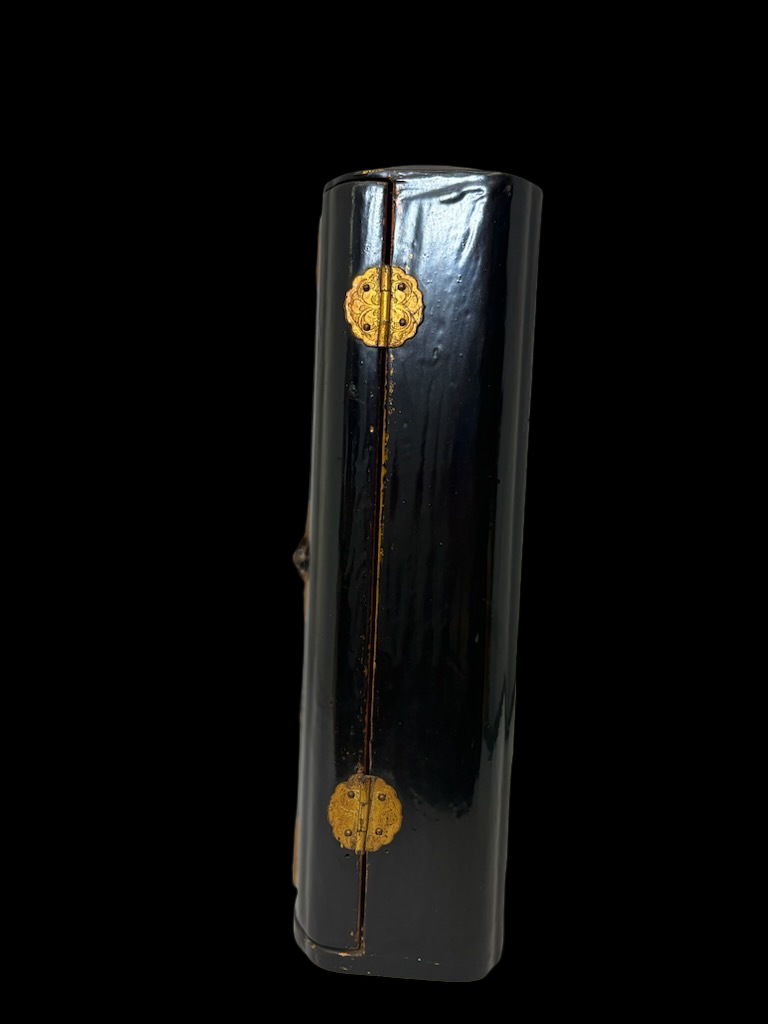
Closed, it is a quiet lacquered housing; opened like a triptych, it reveals a standing wooden Kannon Bosatsu before a gilded niche, with painted devotional figures on the doors. This dark-outside, gold-within contrast is the visual language of household devotion, where sanctity is concealed, protected and then revealed.
The Piece
This zushi (portable altar) opens like a triptych to reveal a standing wooden image of Kannon Bosatsu set before a gilded interior niche. Closed, the exterior reads as a quiet lacquered housing; opened, the doors present painted devotional figures and the interior turns luminous, framing the sculpture like a small sanctuary.
The figure is carved in wood and stands on a lotus base, a standard iconographic anchor for bodhisattva images. The carving is domestic in scale rather than temple-monumental, with balanced proportions, softened modeling and drapery in broad, composed folds rather than deeply undercut theatrical lines. The patterned, gilded niche behind the figure forms an ornamental halo-field that acts as a mandorla by architecture rather than as a separate backing plate, a design choice typical of compact shrines made to complete the world around a small figure.
The side doors carry painted attendants, showing that the shrine was conceived as a full devotional environment rather than a sculpture later placed in a box. Closed, the doors also create a protective microclimate around the image, reducing dust and incidental contact, one reason zushi often survive in comparatively good structural condition after decades of use.
Kannon Bosatsu (Avalokiteshvara) is the bodhisattva of compassion, an embodiment of mercy, listening and rescue. In Japanese household practice, Kannon shrines are associated with protection of the home, gentle guidance through hardship and the cultivation of compassionate intention. At approximately 26 cm, the shrine sits in the household category: large enough to feel devotional and present, small enough to live within a modern interior without losing its identity as a private altar.
Details
- Era: Late 19th to early 20th century (conservative frame; late Edo to early Meiji styling plausible)
- Origin: Japan
- Material: Lacquered wood housing with gilt interior niche and decorative relief ornament; lacquered wood doors with hand-painted devotional figures; carved wood Kannon on lotus base
- Gilding: Believed to be gold-toned leaf, foil or a gilt finish
- Measurements: Shrine height approx. 26 cm · Kannon image approx. 20.5 cm
- Iconography: Standing Kannon Bosatsu on lotus base; painted attendants on the doors
Condition
- Age and general use wear, as expected of an older household object.
- Surface scuffs, small abrasions, patina and potentially minor lacquer losses.
- Hinge alignment, door closure and interior edges should be evaluated from the photographs.
Authenticity & Care
Without documentation, the period attribution is treated conservatively (late 19th to early 20th century); the gilding is believed to be gold-toned leaf, foil or a gilt finish. Every piece is examined and documented in Japan before dispatch and is offered with the Japonista authenticity guarantee.
Delivery from Japan
Packed by hand in Japan and shipped insured and tracked by EMS or an equivalent express service. Import duties and taxes, where applicable, are payable on arrival. Returns follow our published policy.
Considered offers are welcome through Send an Offer, and each one is reviewed personally. Pieces over $1,000 may be reserved over several payments with Layaway Privilege™.
Continue browsing: Butsudan & Altars · Buddhist Statues & Sacred Art
Related pieces: Bronze Nio Agyo and Ungyo statue pair · Takamura Koun bronze Nio guardians pair · Carved wood seated Kannon with gyokugan eyes
Temple to Home
Monumental statues, zushi shrines and altars travel crated and insured through our Museum-Grade Logistics Suite™. Seeking a particular deity or school? The Hunting Salon™ searches Japan for it. Arrange crating and freight →
Collectors also search: kannon zushi shrine · antique wooden kannon statue · japanese portable altar kannon · gilt zushi with painted doors · kannon bosatsu on lotus · household buddhist shrine japan