Rare Vintage, Antiques and Art Collector / Curator / Personal Shopper From Japan
Nomura Toy Tetsujin 28-go Battery Operated Tin Robot w/ Wired Remote | 1960s Japanese Mechanical Icon
Couldn't load pickup availability
Have a reasonable price in mind? Submit your best offer and our concierge will review it personally.
Showa-era Japanese battery-operated flying robot Tetsujin 28 by Nomura, executed in large-format tin with integrated remote-control flight mechanism, articulated arms, vivid blue lithography, and rare aerial-action engineering—an elite postwar robot artifact built for spectacle and scale.
Nomura Toy — Tetsujin 28-go — Battery Operated Tin Robot with Wired Remote (Restoration-Capable)
OBJECT IDENTITY
-
Character: Tetsujin 28
-
Maker: Nomura (Japan)
-
Format: Battery-operated flying robot with remote-control lead
-
Material: Lithographed tin body, molded head and hands, metal internal chassis
-
Era: Showa period
-
Action concept (original): Powered motion with suspended flight via control lead
-
Status: Non-operational control lead (repair candidate), complete display composition retained
MAKER CONTEXT — NOMURA
Nomura is foundational to Showa robot history, recognized for:
-
early adoption of battery power over wind-up
-
experimental action formats beyond walking (rolling, spinning, flying)
-
bold, legible lithography optimized for distance viewing
Flying robots represent Nomura’s most ambitious engineering tier and were produced in far smaller numbers than walkers.
DESIGN & ENGINEERING
-
Body: Broad chest and cylindrical torso communicate mass and authority even while “airborne.”
-
Arms: Forward-thrust fists amplify the illusion of flight and force.
-
Head: Expressive molded face anchors the character identity against the mechanical body.
-
Finish: Blue-dominant palette with contrasting bands and highlights enhances motion readability.
-
Control system: Battery housing integrated into the body with a tethered controller—complex, fragile, and therefore scarce today.
MECHANICAL STATUS
-
Control lead shows discontinuity; power does not currently engage
-
Internal lighting previously functioned before lead failure (repairable scenario)
-
No disassembly performed; originality preserved
EDITORIAL
This Nomura Toy Tetsujin 28-go battery-operated tin robot sits in the highest tier of Showa-era mechanical collecting—not because it is merely “old,” but because it occupies the rare intersection of first-generation robot mythology and first-generation consumer electromechanics. It is the kind of object that documents a turning point: the moment Japanese popular culture stopped being only drawn and broadcast and began to be manufactured as motion, light, and physical command.
Visually, the piece communicates force before it communicates nostalgia. The forward-flight pose—arms extended, fists projecting into the viewer’s space—turns the robot into a kinetic diagram of intention. It doesn’t “stand”; it launches. That posture matters historically: early robot iconography was not yet standardized into later mecha design rules. Instead, it carried the raw optimism and blunt heroism of early postwar storytelling—technology as protector, technology as tool, technology as power that becomes morally complicated the moment it is controlled.
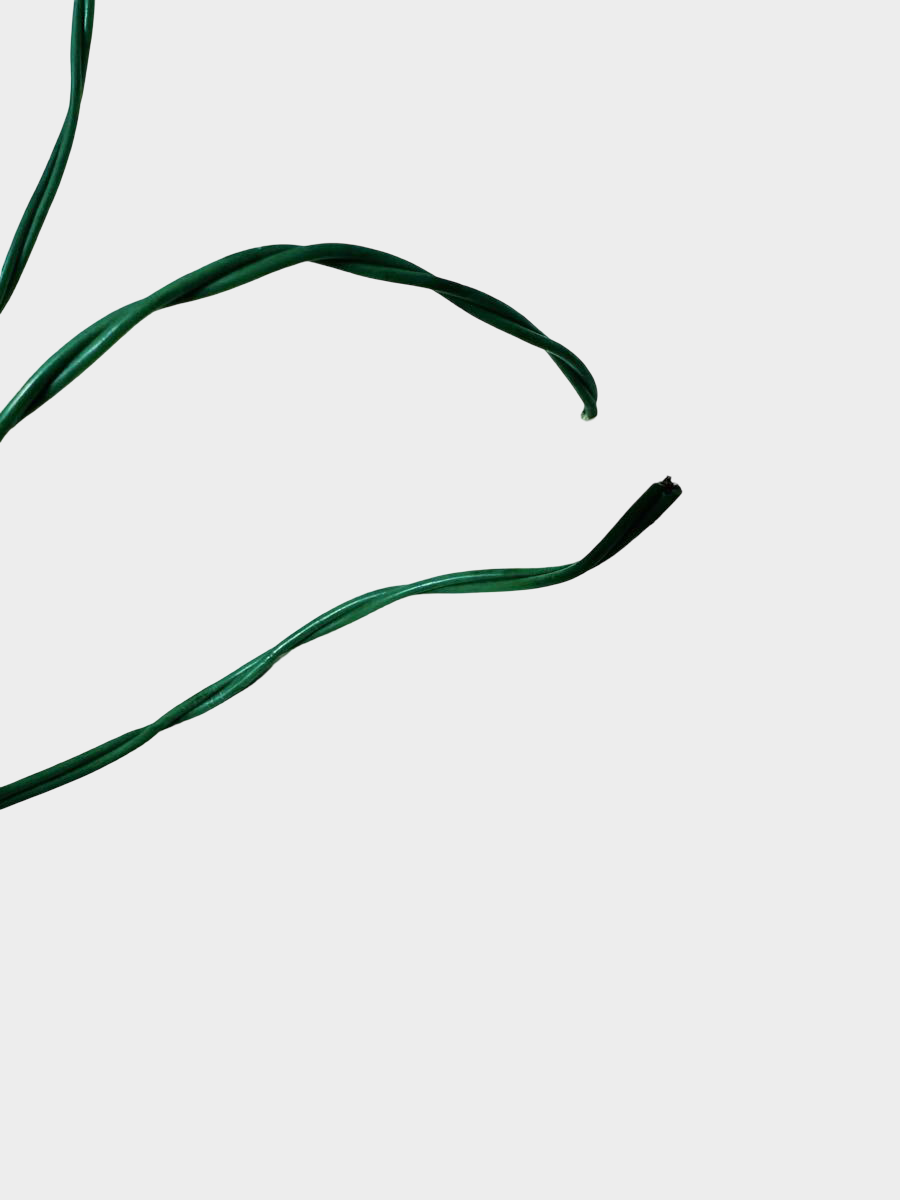
This example is a wired remote-control, battery-operated mechanical, originally designed to activate movement and a back light, controlled through the wired system. The remote cable currently shows two break points, but the crucial signal in the condition story is this: the functions reportedly worked before the wiring failure. In collector terms, that changes the entire category. It means you are not buying a dead object; you are buying a historically complete system with a known failure point—one that competent repair can realistically address. Restoration-grade does not mean “broken”; it means “recoverable,” and in vintage electromechanical toys, recoverability is a premium.
Materially, this is the Showa tinplate era at its most convincing: lithographed metal, high-saturation color fields, and panel graphics designed for legibility under motion and indoor light. Honest wear—patina, micro-scratches, and handling marks—reads as period integrity rather than damage, especially when compared to the dead-flat surfaces of later reproductions or repaints. This is the kind of surface that signals “survivor object”: it has lived, it has been held, it has been stored, it has not been cosmetically re-authored.
And then there’s the central reason this specific character matters: Tetsujin 28-go is the origin point. Before the mecha boom hardened into familiar conventions, Tetsujin established the core philosophical tension—remote-controlled force. The robot is not a personality; it is a consequence. That narrative DNA shaped decades of Japanese robotics fiction: the ethics of command, the fear of loss of control, and the allure of power when the interface is a human hand holding a controller. In that sense, this Nomura mechanical is not just a collectible of a character—it is a physical artifact of a concept that would become one of Japan’s most influential cultural exports.
For advanced collectors, the appeal is clear: iconic subject, early mechanical format, recoverable function, and a scarcity curve that only tightens over time. For display, it reads immediately as a museum-grade anchor piece—substantial, graphic, historically loaded. For restoration specialists, it offers the best kind of project: not a scavenged shell, but a system with a plausible path back to motion and light.
Preserved in dark storage, this example survives as a museum-grade cultural artifact, suitable for advanced collectors, institutional displays, or specialist restorers seeking to return an original 1960s robotic system to working condition.
WHY COLLECT TETSUJIN 28-GO?
Tetsujin 28-go is the origin point.
Before Mazinger Z.
Before Gundam.
Before piloted mecha became the norm.
Tetsujin 28-go—created by Mitsuteru Yokoyama—was the first giant robot hero in Japanese popular culture. More importantly, it introduced the concept of remote-controlled power, where technology itself becomes both protector and moral question. The robot was not sentient; it was commanded. That idea shaped decades of science fiction and robotics storytelling.
From a collecting standpoint, Tetsujin 28-go represents:
-
The birth of the Japanese robot genre
-
The earliest fusion of manga → television → consumer product
-
A direct artifact of Showa-era technological optimism
Nomura’s tin robots are especially prized because they translated this abstract idea into functional mechanical form. These were not static character toys—they moved, lit up, and responded to control, mirroring the narrative itself.
As a result, high-grade Tetsujin 28-go tin robots occupy the same collector echelon as:
-
Early Astro Boy mechanicals
-
Nomura and Yonezawa space toys
-
Pre-Mazinger robot icons
They are cornerstone pieces, not supplementary collectibles.
COLLECTOR RELEVANCE & POSITIONING
This piece is particularly relevant to:
-
Advanced Japanese tin toy collectors seeking first-generation robot artifacts
-
Museum or archive curators documenting early robotics in pop culture
-
Restoration specialists capable of reviving original 1960s battery systems
-
Cultural historians focused on manga-to-industry pipelines
-
High-tier investors targeting blue-chip Showa collectibles with finite supply
The presence of original wiring—even in non-functional condition—adds significant scholarly and restoration value. Fully intact examples are vanishingly rare; examples with confirmed prior operation and recoverable internals are rarer still.
🤖 Tetsujin 28-go — the robot that haunts Japanese pop culture
Created by Mitsuteru Yokoyama, Tetsujin 28-go (known internationally as Gigantor) is not just Japan’s first giant robot icon—it is the moral ground zero of mecha. Where later robot anime celebrate mastery and heroism, Tetsujin 28-go is about control, guilt, and the afterlife of war.
If Astro Boy dreams forward, Big X carries inherited sin, and Anpanman embodies compassion, Tetsujin 28-go is the shadow they all step around.
🧠 What Tetsujin 28-go is really about
At the surface, a boy named Shotaro Kaneda commands a colossal robot via remote control to stop criminals. But the origin matters: Tetsujin 28-go was built as a secret wartime weapon during World War II. The war ends; the weapon remains.
This framing is unprecedented for children’s entertainment in the 1950s–60s:
-
The robot is not a hero by nature
-
It has no conscience
-
It is pure force, awaiting instruction
The question is never “Is Tetsujin good?”
The question is “Who is holding the controller?”
🧩 Comparisons with same-era giants (where the fault lines appear)
🌱 Astro Boy
-
Power source: benevolent science
-
Agency: internal conscience
-
Moral axis: empathy + coexistence
Astro Boy chooses to be good.
Tetsujin cannot choose at all.
This is the first major split in Japanese sci-fi ethics: autonomy vs obedience.
🕊️ Big X
-
Power source: human enhancement
-
Theme: inherited guilt
-
Burden: internalized
Big X turns guilt inward.
Tetsujin externalizes it—the guilt stands 30 meters tall and crushes buildings.
Both ask who must atone, but Tetsujin shows the damage spilling into public space.
👽 Ultraman
-
Power source: alien protector
-
Structure: organized defense
-
Violence: justified spectacle
Ultraman contains violence within ritualized battles.
Tetsujin’s violence is accidental, collateral, and frightening.
Cities are not stages; they are victims.
🎨 Why Tetsujin looks the way it does (this matters)
Tetsujin’s design is:
-
featureless
-
heavy
-
expressionless
This is intentional. He is not a character; he is an object.
Unlike later robots with faces, cockpits, or personalities, Tetsujin is closer to an industrial nightmare—a walking bomb that never learned the war was over.
This visual language influenced:
-
dystopian sci-fi
-
cautionary robot narratives
-
Japan’s deep ambivalence toward machines
🧭 Why Tetsujin predates and contradicts later mecha
Later giants like Mazinger Z and Gundam shift the paradigm:
-
robots become piloted
-
heroism becomes skill-based
-
violence becomes tactical
Tetsujin 28-go offers none of this comfort. There is no cockpit, no skill curve, no rite of passage. A child with a remote can level a city.
That terror is the point.
🧠 Cultural impact (quiet but foundational)
Tetsujin 28-go did three irreversible things to Japanese pop culture:
-
Linked robots to war memory
Even cheerful robots carry this DNA. -
Established “control” as the central mecha theme
Who commands? Who decides? Who bears responsibility? -
Normalized moral anxiety in children’s media
Japanese creators never forgot this lesson.
Every time a robot anime asks “Should we use this power?”, Tetsujin is in the room.
🏛️ Placement in Japanese retro anime history
| Axis | Representative |
|---|---|
| Hopeful future | Astro Boy |
| Weaponized past | Tetsujin 28-go |
| Inherited burden | Big X |
| Organized defense | Ultraman |
| Compassion | Anpanman |
Tetsujin 28-go is the hinge—the moment Japanese sci-fi admitted that progress does not erase history.
🕯️ Why Tetsujin 28-go still matters
Modern audiences sometimes find Tetsujin slow or bleak. That’s because it isn’t entertainment-first—it’s memory-first. It asks a question Japan was still wrestling with in the 1950s:
What do you do with the weapons you built when the war ends—but the damage doesn’t?
That question never went away.
It just learned to wear brighter colors.
CONFIDENCE & VERIFICATION NOTES
-
Maker attribution is based on listing identification; verify any maker marks if photographed.
-
Function is not currently operational due to wiring breaks; prior operation is reported (movement + back light).
-
Final valuation depends on completeness, cosmetic integrity, and restoration outcome.
Authenticity & Stewardship
Evaluated under the Japonista Authentication Framework™:
- Material, carving, and surface-study comparison
- Iconographic and stylistic verification
- Condition and stability review (surface integrity)
- Construction assessment and handling-risk evaluation
Guaranteed 100% Authentic. Covered by the Japonista Lifetime Authenticity Warranty™.
A Note on Stewardship and Collecting
At Japonista, we approach Buddhist statues, sacred images, and ritual objects not merely as collectibles, but as cultural and spiritual artifacts deserving of respect, understanding, and careful presentation. Every piece we offer is thoughtfully examined, researched, and curated with sensitivity to its origin, meaning, and historical role.
Our role is not only to offer access to rare and meaningful objects, but to serve as responsible custodians—connecting the right works with collectors who value depth, intention, and authenticity.
Inquiries, Availability, and Private Consideration
Some of the cultural and heritage works may allow room for discussion, while others are held firmly due to rarity, condition, or cultural importance. All inquiries are reviewed personally and discreetly, and we welcome thoughtful questions or expressions of interest.
If you are exploring a particular theme, deity, lineage, or period—or seeking guidance in building a focused collection—our concierge team is always available to assist with quiet expertise and care.
Concierge Support & Collector Guidance
Japonista Concierge™ provides personalized assistance for collectors seeking deeper understanding, thoughtful acquisition, or long-term curation strategies. Whether your interest is devotional, scholarly, or aesthetic, we are here to help guide your journey with clarity and respect.
For select high-value or historically significant works, private reservation or structured payment arrangements may be available on a case-by-case basis. Please reach out to discuss eligibility and discreet options.
Before Proceeding
We kindly encourage collectors to review our shop policies and house guidelines, available through the links in our website footer, which outline shipping, handling, and conditions specific to vintage, sacred, and collectible works.
A Closing Note
Thank you for exploring Japonista’s collection of Oriental Cultural Heritage and arts. We are honored to share these meaningful works and to help place them where they may continue to be appreciated, studied, and respected.
If you have questions or wish to explore related works, please feel free to contact Japonista Concierge™ at any time.