Rare Vintage, Antiques and Art Collector / Curator / Personal Shopper From Japan
Monumental Kutani Ware Maneki‑neko | Gilded Polychrome Beckoning Cat | ~60 cm Heirloom Sculpture
Monumental Kutani Ware Maneki‑neko | Gilded Polychrome Beckoning Cat | ~60 cm Heirloom Sculpture
Couldn't load pickup availability
Have a reasonable price in mind? Submit your best offer and our concierge will review it personally.
Monumental Kutani Ware Maneki‑neko
This extraordinary Kutani ware Maneki‑neko stands as a commanding example of Japanese ceramic artistry at monumental scale. Rising to approximately 60 cm in height, the figure immediately distinguishes itself from ordinary decorative objects, asserting the visual authority and ritual presence traditionally reserved for merchant houses, temples, and elite interiors.
The sculpture is executed in dense polychrome enamels with lavish gold overglaze, covering nearly every surface with intricate ornamental detail. Floral medallions, auspicious motifs, and rhythmic decorative bands interlock across the body, demonstrating the disciplined complexity for which classical Kutani ware is revered. The raised left paw, a traditional symbol of attracting people and prosperity, reinforces the figure’s cultural function as both guardian and inviter of fortune.
The facial expression is finely balanced—benevolent yet dignified—capturing the spiritual symbolism of the Maneki‑neko beyond mere charm. Unlike small household versions, this large‑scale example would historically have served as a focal object, commanding attention within a space and projecting auspicious intent.
Who is the Maneki‑neko?
The Maneki‑neko, or “beckoning cat,” is one of Japan’s most enduring symbols of prosperity, protection, and success. Traditionally placed at entrances to businesses and estates, the raised paw is believed to invite fortune, customers, and positive outcomes. Large‑scale examples such as this were historically reserved for prominent settings rather than private shelves.
Why the Beckoning Cat Matters
The maneki-neko is among Japan’s most enduring symbols of good fortune. The raised paw functions as a visual invitation—welcoming people, opportunity, and auspicious flow into a space. At monumental scale, the iconography becomes architectural: a statement of intention as much as décor.
Material & Craftsmanship
This piece is crafted in Kutani ware, a ceramic tradition known for its bold color palette, layered enamel techniques, and extensive use of gold. The surface decoration displays mature control of line, color separation, and compositional balance—hallmarks of skilled workshop production rather than later decorative reproductions.
Overview & Cultural Context
Maneki Neko imagery belongs to the everyday sacred—the kind of domestic talisman that lives in shopfronts, entrances, reception rooms, and family spaces where people want the atmosphere to feel favorable. The icon does not promise “magic”; it frames a worldview. The figure quietly teaches that good fortune is something you cultivate through steady effort, social trust, and a readiness to welcome opportunity when it arrives.
Kutani ware is a particularly persuasive home for this subject because the tradition understands color as authority. Vivid enamels, deliberate segmentation of pattern fields, and selective gilding can make a single figure feel celebratory without becoming loud. When done well, the decoration reads as intentional “auspicious density”—a visual language that signals abundance, continuity, and care.
At this height, the Maneki Neko also becomes a design object. It can anchor a shelf, console, bar top, or entry vignette in the same way a statement sculpture would—except it carries a cultural narrative that collectors and guests immediately recognize. This is the kind of piece that does not disappear into a collection; it sets the tone of the room.
Material, Technique & Artistic Character
Kutani ware typically employs overglaze enamels—layers of color applied over a ceramic body and fired to achieve saturation and clarity. In polychrome works, the craft challenge is not merely “adding color,” but balancing enamel thickness and transitions so that the surface stays crisp rather than heavy. Gilt accents add a second register: not just shine, but a controlled highlight system that guides the eye across the composition.
On large Kutani figures, surface planning matters. The best examples show disciplined spacing: pattern density increases where symbolic emphasis is intended (garments, bibs, medallions), while quieter zones allow the form to breathe. This creates readability at distance and complexity up close—exactly what display-grade sculpture requires.
The overall impression is celebratory but composed. That balance is one reason Kutani figures continue to appear in high-visibility settings—public-facing interiors where the owner wants warmth and auspiciousness without sacrificing refinement.
Iconography & Meaning
Maneki Neko iconography varies (raised paw, collar details, bib styling), but the core meaning remains stable: invitation, welcome, and the social flow that creates prosperity. In Japanese visual culture, the “beckoning” gesture is less about commanding fortune and more about opening the door to it—an icon of readiness and good conditions.
As a symbolic object, the Maneki Neko also works because it is friendly. Unlike severe guardians, it communicates approachability and optimism—qualities that make it especially effective for businesses, hospitality environments, and communal spaces where mood matters.
Why Collectors Buy This
Large-format Kutani folk figures are disproportionately difficult to keep pristine: they are tall, visually complex, and require careful storage and shipping. That practical reality makes intact examples feel scarcer over time—especially those with confident color, clear facial modeling, and a strong “presence” that reads as intentional rather than novelty.
Kutani ware is prized for high-saturation color, intricate linework, and confident overglaze patterning. This piece treats the body as a continuous canvas—dense motif fields, medallion-like emblems, and layered floral/arabesque ornament arranged to follow the figure’s form and keep the composition coherent from every angle.
Collectors also value this subject because it is instantly legible across cultures while still being authentically Japanese in its visual logic. It functions as both a collectible and an interior anchor: one object that can carry a corner of a room and make it feel “set.”
Finally, the piece is emotionally useful. It’s the kind of object people keep near the threshold of their lives—entryways, workspaces, counters—because it embodies the idea that good outcomes are something you invite through consistency.
Condition Report
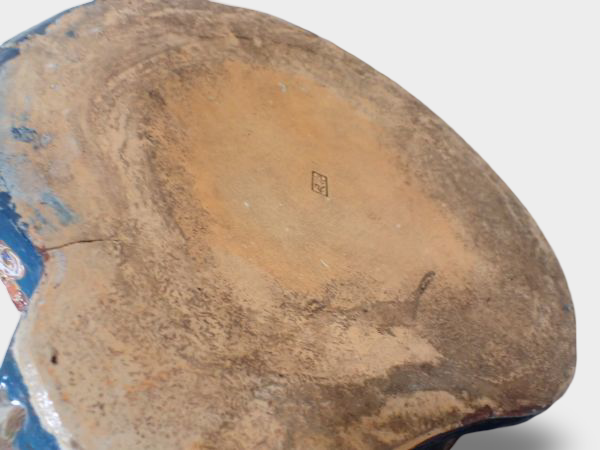
The sculpture shows expected age‑related wear, including surface abrasions, minor enamel losses, and areas of gilding wear. These characteristics are consistent with long‑term display and preservation and should be regarded as historical evidence rather than flaws. No structural cracks or modern repairs are observed.
Dimensions
- Height: approximately 60 cm
- Width: approximately 40 cm
- Depth: approximately 30 cm
Collector Relevance
Monumental Kutani Maneki‑neko of this scale are seldom encountered on the open market. This example is particularly suited for collectors of Japanese ceramics, cultural institutions, hospitality interiors, or private collectors seeking a statement object with cultural gravitas.
Collector’s Resonance
This piece resonates most strongly with collectors who value presence over portability—those drawn to objects that define a room rather than decorate it. It appeals to individuals and institutions seeking symbolic authority, historical depth, and visual impact in equal measure.
Confidence & Verification Notes
While precise kiln attribution and dating cannot be definitively established without institutional testing, the materials, techniques, and wear patterns align with traditional Kutani production. All descriptions are provided in good faith based on visual scholarship and market comparison.
Shipping & Logistics
Due to its size and weight, this item requires professional packing. Estimated packaged weight is approximately 35–40 kg. Shipping options include EMS (where available), international courier freight, or specialized art logistics. Delivery timelines and costs will vary by destination.
Cargo Shipping & Handling Notice
Due to the final packaged weight and/or dimensional requirements of this piece, standard parcel services such as Japan Post EMS, DHL, FedEx, or UPS are not applicable. This item will be shipped via cargo or freight-based shipping methods.
Cargo shipments require additional preparation time to ensure proper handling, which may include custom crating, reinforced packing, coordination with domestic logistics providers, and scheduling with international freight consolidators and export brokers. As a result, estimated delivery timelines typically range from 6 to 10 weeks, depending on routing, carrier availability, and customs clearance procedures in the destination country.
Please note that actual shipping costs may differ from automated shipping calculator estimates. By default, a portion of the expected shipping cost may be reflected in the listing price. Any difference or discrepancy will be quoted separately once destination, delivery method, and handling requirements are confirmed.
We kindly ask that collectors contact us prior to purchase to request an exact, customized shipping quotation for their destination. This ensures full transparency and allows us to arrange the most appropriate, secure, and efficient shipping solution for this piece.
Thank you for your understanding and patience as we take the necessary care to deliver this work safely.
Explore Our Services
If you would like white-glove packing, multi-item consolidation, or destination-specific shipping strategy, explore our Concierge Logistics options.