Rare Vintage, Antiques and Art Collector / Curator / Personal Shopper From Japan
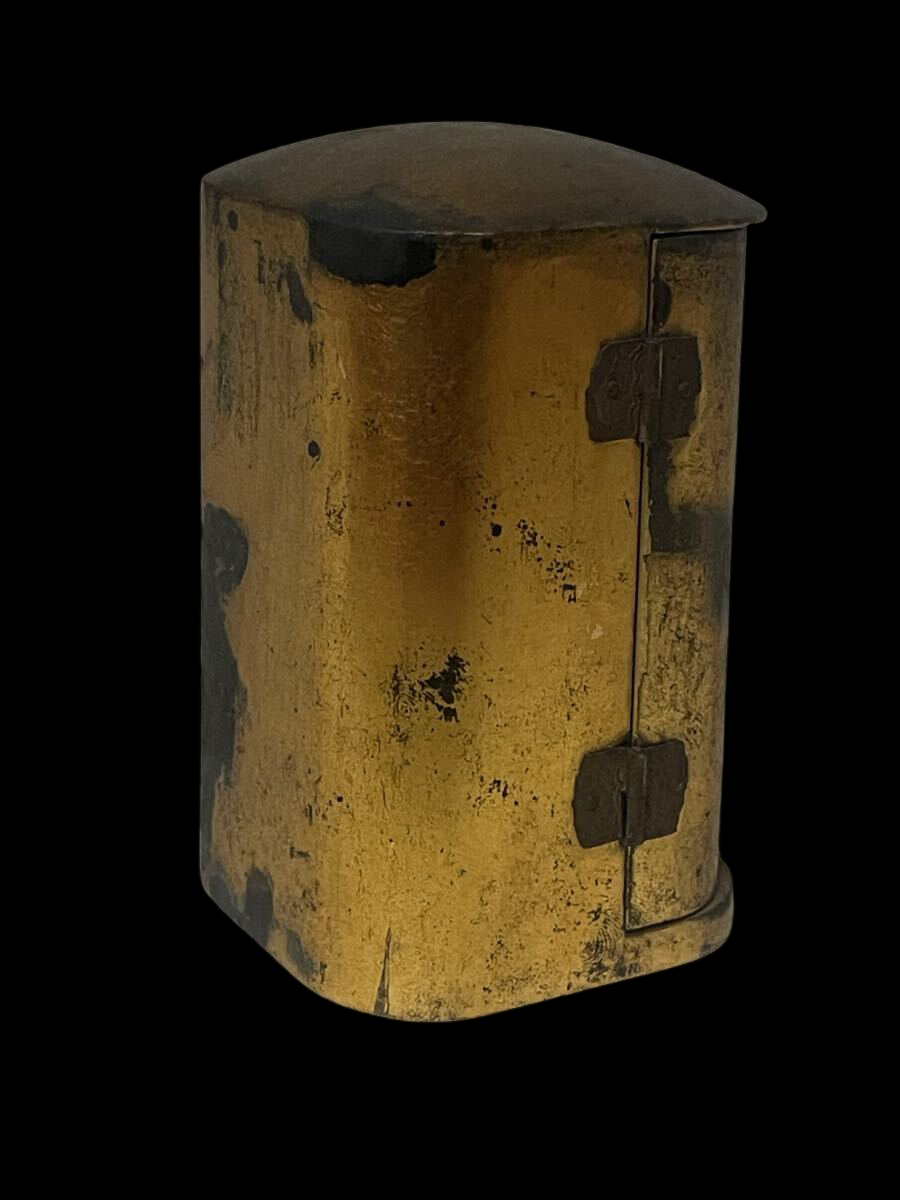
Miniature Zushi Shrine: Dakiniten with Fox Attendant — Gilt Interior, Hand-Painted Devotional Icon (Est. H13 cm) | Japanese Sacred Art
Miniature Zushi Shrine: Dakiniten with Fox Attendant — Gilt Interior, Hand-Painted Devotional Icon (Est. H13 cm) | Japanese Sacred Art
Couldn't load pickup availability
Have a reasonable price in mind? Submit your best offer and our concierge will review it personally.
Miniature Zushi Shrine: Dakiniten with Fox Attendant — Gilt Interior, Hand-Painted Devotional Icon (Est. H13 cm)
Object: Miniature zushi (portable cabinet shrine) housing Dakiniten with a fox attendant.
Estimated period: Edo–Meiji style (exact age unverified; see Confidence & Verification Notes).
Estimated size (from photo): approx. H 13 cm × W 8 cm × D 6 cm (closed).
Condition: visible age wear and surface scuffs consistent with long handling and storage; treat photos as the primary condition record.
What you are looking at
This is a compact zushi—a private, close-range shrine format made for personal devotion rather than public temple display. The gilt interior acts like a stage: it concentrates light, frames the figure, and turns a small icon into a focused devotional “room.” The central figure reads as Dakiniten, paired with a fox attendant placed forward in the niche. That pairing is the clue: it signals the historical overlap between esoteric Buddhist Dakiniten worship and the broader fox symbolism many people associate with Inari.
Who is this deity?
- Dakiniten is an esoteric Buddhist figure whose Japanese worship absorbed older dakini traditions and reinterpreted fox symbolism inside Buddhist ritual life.
- Fox attendants function as messengers and threshold-keepers—an iconographic bridge that helps explain why Dakiniten is often confused with, or compared to, Inari.
- Why a zushi? A zushi is a “private altar architecture” in miniature: doors, niche, and interior finish create a devotional environment at hand scale.
Why collectors pursue zushi-format icons
Zushi objects are intensely personal artifacts—the kind of piece that survives because it was kept close, carried, and stored carefully. The artistry here is not about grand scale; it is about intimacy: tiny facial modeling, restrained palette, and the architectural presence of the shrine itself. For collectors building a coherent archive of Japanese sacred art, zushi formats add the missing domestic layer: how devotion looked inside the home.
Museum-style comparison: Dakiniten vs Inari
Inari is primarily a Shinto kami associated with rice, fertility, and prosperity, commonly represented through fox messengers at shrines. Dakiniten, by contrast, is a Buddhist/esoteric figure whose worship absorbed and reframed fox symbolism within Buddhist ritual practice—often linked to protection, worldly benefit, and the “power” of vow and consecration. Where an Inari shrine encounter is public and landscape-based (torii paths, open precincts, communal offerings), a Dakiniten zushi is interior and private: it lives at eye level, behind doors, inside the rhythm of daily life. This is why zushi-format Dakiniten pieces read so strongly to collectors: they embody the historical negotiation between visible shrine culture and hidden household practice.
Curatorial placement
Display this as a jewel object: stable shelf, soft directional light from above-left, and enough negative space so the doors and niche can “breathe.” Photograph one front-open “altar view,” one three-quarter angle showing door thickness, and one close detail of the fox and the figure’s face.
Confidence & Verification Notes
- Deity identification is a best-fit reading from the icon pairing (figure + fox attendant) and shrine format; confirm with additional close-ups (hands/implements, headdress, base marks).
- Period is estimated from style and wear; avoid definitive era claims without documentation.
- Dimensions are estimated from the ruler photo; request exact measurements for customs-perfect declarations.
Explore more in Buddhist Statues & Sacred Art and request white-glove handling via Concierge Logistics.
Authenticity & Stewardship
Evaluated under the Japonista Authentication Framework™:
- Material, carving, and surface-study comparison
- Iconographic and stylistic verification
- Condition and stability review (surface integrity)
- Construction assessment and handling-risk evaluation
Guaranteed 100% Authentic. Covered by the Japonista Lifetime Authenticity Warranty™.
A Note on Stewardship and Collecting
At Japonista, we approach Buddhist statues, sacred images, and ritual objects not merely as collectibles, but as cultural and spiritual artifacts deserving of respect, understanding, and careful presentation. Every piece we offer is thoughtfully examined, researched, and curated with sensitivity to its origin, meaning, and historical role.
Our role is not only to offer access to rare and meaningful objects, but to serve as responsible custodians—connecting the right works with collectors who value depth, intention, and authenticity.
Inquiries, Availability, and Private Consideration
Some of the cultural and heritage works may allow room for discussion, while others are held firmly due to rarity, condition, or cultural importance. All inquiries are reviewed personally and discreetly, and we welcome thoughtful questions or expressions of interest.
If you are exploring a particular theme, deity, lineage, or period—or seeking guidance in building a focused collection—our concierge team is always available to assist with quiet expertise and care.
Concierge Support & Collector Guidance
Japonista Concierge™ provides personalized assistance for collectors seeking deeper understanding, thoughtful acquisition, or long-term curation strategies. Whether your interest is devotional, scholarly, or aesthetic, we are here to help guide your journey with clarity and respect.
For select high-value or historically significant works, private reservation or structured payment arrangements may be available on a case-by-case basis. Please reach out to discuss eligibility and discreet options.
Before Proceeding
We kindly encourage collectors to review our shop policies and house guidelines, available through the links in our website footer, which outline shipping, handling, and conditions specific to vintage, sacred, and collectible works.
A Closing Note
Thank you for exploring Japonista’s collection of Oriental Cultural Heritage and arts. We are honored to share these meaningful works and to help place them where they may continue to be appreciated, studied, and respected.
If you have questions or wish to explore related works, please feel free to contact Japonista Concierge™ at any time.