Rare Vintage, Antiques and Art Collector / Curator / Personal Shopper From Japan
LAFEET Any Jika Tabi Comfort Sneaker SL09 | Lightweight Split-Toe Walking Shoe | Black Brown Wine Silver | Unisex
LAFEET Any Jika Tabi Comfort Sneaker SL09 | Lightweight Split-Toe Walking Shoe | Black Brown Wine Silver | Unisex
Couldn't load pickup availability
Have a reasonable price in mind? Submit your best offer and our concierge will review it personally.
Product Curatorial Overview
The modern sneaker world chases foam heights and exaggerated silhouettes.
LAFEET walks the opposite direction.
This model belongs to the Japanese anatomical lineage of jika tabi, a split-toe structure historically worn by craftsmen, runners, and laborers who required balance, ground sensitivity, and endurance.
The LAFEET “any” iteration translates that heritage into contemporary daily wear. It removes theatrical styling and replaces it with restraint. Clean vamp. Subtle contouring. A profile that reads like a classic walking sneaker, until the toe reveals its structural intelligence.

This is not novelty footwear.
It is biomechanical design wrapped in simplicity.
The guiding concept: “Like a foot.”
Structural & Anatomical Intelligence
Split Toe Architecture
The forefoot mirrors natural toe splay. Unlike conventional shoes that compress the hallux toward the second toe, this construction allows independent big toe activation. Walking becomes propulsion rather than shuffling.
Flexion-Responsive Outsole
EVA midstructure combined with rubber traction segments creates a flexible bending axis aligned to metatarsal articulation. This reduces fatigue accumulation during extended walking sessions.
Lightweight Engineering
At approximately 200 g (23 cm), the shoe borders on feather-class. Reduced mass lowers swing-phase energy expenditure.
Pressure-Free Forefoot Volume
The toe box does not taper aggressively. It respects natural foot geometry.
Heel Stability with Anti-Slip Interior
Internal grip construction reduces heel lift and friction-related blistering.
Antibacterial & Deodorizing Insole
Designed for hygiene longevity, especially in humid climates or frequent wear rotations.
Side Zipper Entry System
Once laces are dialed in, daily wear becomes zip-and-go. No retying ritual required.


🧠 Biomechanics: Why the Split Matters
1️⃣ Big Toe Independence = Better Stability
The big toe, medically called the hallux, contributes heavily during push-off when walking or running. When it's allowed to sit straight and separate:
-
You get better weight distribution.
-
The arch engages more naturally.
-
Balance improves, especially during dynamic movement.
Think of it as unlocking a stabilizer wing that modern narrow shoes keep folded.
2️⃣ Toe Splay & Natural Foot Mechanics
Most modern shoes compress toes inward. Over time, that creates crowding and structural adaptation.
Split-toe design encourages:
-
Natural toe alignment
-
Slight toe spread during stance
-
Increased proprioception, meaning better awareness of ground contact
More nerve input → better muscular response. Your feet become smarter, not just cushioned.
🦶 Hallux Valgus (Bunions) & Split Toe Footwear
Hallux valgus happens when:
-
The big toe drifts inward
-
The first metatarsal bone shifts outward
-
The joint becomes inflamed and painful
Narrow toe boxes are a known contributing factor.
Can jika tabi prevent it?
They may help in these ways:
✔️ Reduce medial compression on the big toe
✔️ Encourage straighter alignment
✔️ Prevent progressive inward drift
However, important reality check:
-
Jika tabi do not reverse established structural bunions.
-
Genetics, ligament laxity, and foot structure also play roles.
-
Severe cases need medical assessment.
But as prevention? They are biomechanically friendlier than narrow fashion sneakers.
Material & Craft Assessment
Upper
Soft synthetic leather selected for durability and ease of maintenance. It resists water spotting better than natural leather and allows wipe-clean upkeep.
Outsole
EVA for cushioning absorption.
Rubber zones for abrasion resistance and traction.
The combination yields shock attenuation without bulk inflation.
Functional Contexts
• Urban walking
• Travel days and airport transitions
• Golf practice environments
• Light round walking sessions
• Long museum visits
• Daily commuting
• Senior wellness mobility
This is a cross-generational footwear format.
It serves:
Men
Women
Active retirees
Urban commuters
Comfort-priority buyers
Minimalist silhouette enthusiasts
🏃 Other Medical & Functional Advantages
🌿 Improved Balance
The separated hallux acts almost like a claw grip. Martial artists and construction workers have historically valued this.
🌿 Strengthens Intrinsic Foot Muscles
Less rigid arch support forces your foot muscles to engage more naturally.
🌿 Better Ground Feedback
Thin soles increase sensory input, which improves:
-
Posture
-
Coordination
-
Fall prevention (especially long-term)
🌿 May Reduce Some Knee & Hip Stress
When the foot aligns better, the kinetic chain above benefits. Subtle, but real.
Variation Architecture
Black
Discreet, versatile, formal-leaning daily wear.
Brown
Classic leather tone, ideal for travel and business-casual.
Wine
Deep burgundy nuance with subtle personality.
Silver
Contemporary casual expression, lighter wardrobe pairing.
Historical Context
The jika tabi split-toe format emerged in Japan in the early 20th century after rubber sole integration into traditional cloth tabi footwear.
It was originally engineered for:
Construction workers
Festival carriers
Field laborers
Marathon runners
Its biomechanical advantage was recognized long before modern sports science popularized “natural foot movement.”
LAFEET modernizes that architecture for civilian daily life.
🪞The Big Picture
Modern shoes often prioritize:
-
Cushion
-
Height
-
Narrow aesthetic silhouette
Jika tabi prioritize:
-
Ground connection
-
Toe independence
-
Structural alignment
They are closer to minimalist footwear philosophy than to modern sneakers.
Collector & Market Relevance
This product sits at the intersection of:
Japanese ergonomic footwear
Anatomical walking culture
Split-toe sneaker niche
Comfort-driven unisex daily wear
For buyers exploring:
Tabi footwear
Minimalist shoe formats
Japanese wellness products
Lightweight walking sneakers
Travel-friendly comfort shoes
It holds structural authenticity rather than fashion gimmick value.
Summary Positioning
This is not a costume tabi.
Not a fashion runway tabi.
Not a worksite cloth tabi.
It is a contemporary biomechanical walking system disguised as a clean sneaker.
Low weight.
Zip convenience.
Toe articulation.
Fatigue mitigation.
Hygienic insole.
Practical intelligence.
Why Consider Split-Toe Jika Tabi?
An Educational Overview of Foot Structure, Biomechanics & Cultural Design Intelligence
1. The Big Toe Is Not Just Another Toe


The big toe, medically called the hallux, plays a disproportionate role in walking mechanics. During the push-off phase of gait, the hallux bears significant load and stabilizes forward propulsion.
When the hallux is compressed inward by narrow footwear, the foot compensates. Over time this may contribute to:
-
Reduced toe splay
-
Altered gait mechanics
-
Medial joint stress
-
Decreased balance stability
Split-toe design restores structural independence to the hallux. It allows the toe to remain aligned rather than angled toward the second toe.
This is not aesthetic. It is anatomical.
2. Natural Toe Splay & Load Distribution


Human toes naturally spread when bearing weight. This increases surface area and distributes pressure across the metatarsal heads.
Modern footwear often restricts this spread. Over years, that restriction may:
-
Increase pressure on the first metatarsophalangeal joint
-
Encourage toe crowding
-
Reduce intrinsic muscle activation
Split-toe footwear permits separation of the hallux while maintaining overall foot containment. The result is:
-
More balanced pressure mapping
-
Improved proprioceptive feedback
-
Greater stability in static and dynamic positions
This principle is aligned with contemporary minimalist footwear research.
3. Hallux Valgus (Bunion) Considerations


Hallux valgus is a structural condition where the big toe deviates laterally and the first metatarsal shifts medially.
Contributing factors may include:
-
Genetic predisposition
-
Ligament laxity
-
Foot shape
-
Prolonged use of narrow toe box shoes
Split-toe footwear does not reverse established deformity. However, it may:
-
Reduce medial compression of the hallux
-
Support straighter toe positioning
-
Help prevent further crowding progression
As a preventive measure, footwear that does not force inward angulation is biomechanically rational.
4. Intrinsic Foot Muscle Engagement
The foot contains over 100 muscles, tendons, and ligaments. Many modern shoes provide rigid arch support and cushioning that reduce intrinsic muscle demand.
Jika tabi traditionally feature:
-
Flexible soles
-
Minimal heel elevation
-
Lightweight structure
This encourages:
-
Activation of stabilizing foot muscles
-
Enhanced arch responsiveness
-
Improved ground adaptation
Transition should be gradual, as intrinsic strengthening takes time.
5. Proprioception & Balance
The sole of the foot is rich in sensory receptors. Thinner, flexible soles increase sensory feedback.
Improved proprioception may contribute to:
-
Better postural alignment
-
More stable stance
-
Enhanced coordination
Historically, split-toe footwear has been used by craftsmen, performers, and martial artists precisely because ground sensitivity supports controlled movement.
6. Cultural Design Intelligence
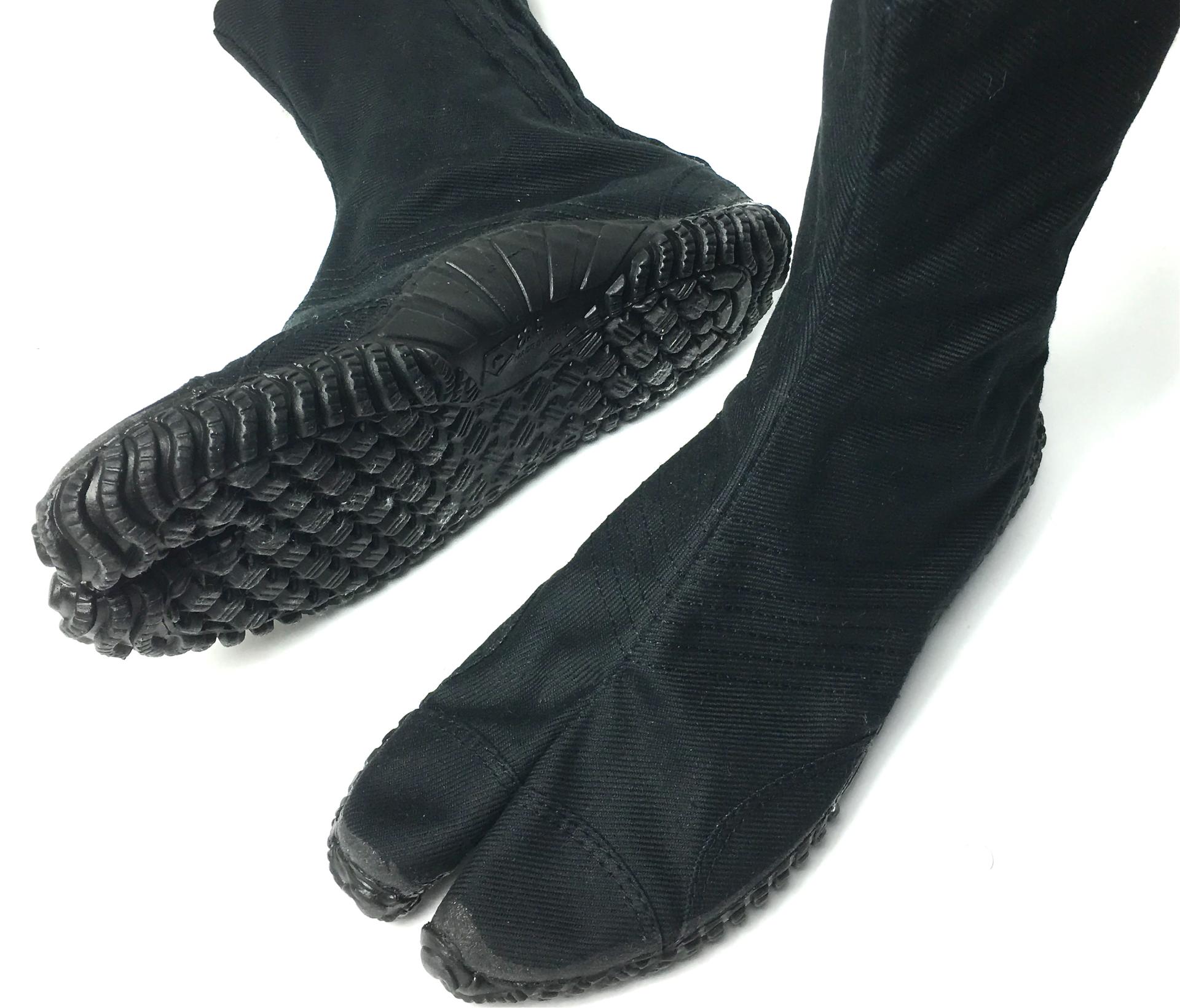


Jika tabi evolved in Japan during the late 19th century as an outdoor adaptation of the tabi.
They became standard footwear for:
-
Construction workers
-
Farmers
-
Festival performers
-
Martial artists
Their endurance across generations suggests functional validation, not novelty.
The split is a response to anatomy and movement requirements, not fashion trend cycles.
Summary: A Structural Perspective
Wearing split-toe jika tabi may support:
-
Natural toe alignment
-
Reduced medial toe compression
-
Balanced load distribution
-
Intrinsic muscle activation
-
Enhanced proprioceptive awareness
They are not corrective medical devices.
They are anatomically permissive footwear.
In an era of increasingly rigid and narrow silhouettes, split-toe construction represents a return to structural neutrality.
Not a miracle solution.
Not a trend.
A biomechanical option grounded in history.
Authenticity & Stewardship
Evaluated under the Japonista Footwear Authentication Framework™:
• Brand and production verification
• Material assessment including canvas, leather, rubber, and stitching
• Structural integrity, sole condition, and seam durability review
• Packaging originality and condition transparency evaluation
Guaranteed 100% Authentic.
All footwear is curated and backed by the Japonista Lifetime Authenticity Warranty™.
A Note on Form, Movement & Cultural Continuity
Jika Tabi footwear originates from Japan’s labor tradition, where anatomical precision and ground sensitivity were essential to construction, agriculture, and movement-based trades. The split-toe design is not aesthetic novelty; it is biomechanical logic.
Tabi footwear reflects anatomical awareness and cultural continuity, blending traditional split-toe construction with modern material adaptation. Their design balances flexibility, stability, and symbolic heritage.
At Japonista, we approach jika tabi and related footwear as structural objects shaped by movement. Sole wear, material softening, and stitching integrity are evaluated carefully, preserving authenticity while ensuring clarity regarding condition.
Our role is to steward these works as functional expressions of Japanese design logic rather than novelty footwear.
Inquiries, Availability, and Private Consideration
Certain limited-production or specialty Jika Tabi models are held firmly due to rarity, condition tier, or production origin. All inquiries are handled discreetly, and we welcome thoughtful discussion regarding sizing, fit, and long-term care.
If you are building a footwear archive centered on anatomical design or traditional reinterpretation, our team is available to provide informed guidance.
Concierge Support & Collector Guidance
Japonista Concierge™ offers personalized assistance regarding fit considerations, material aging, storage recommendations, and integration into broader fashion or cultural collections.
Whether your interest is performance use or archival preservation, we guide each acquisition with clarity and contextual respect.
For select rare models, private reservation or structured arrangements may be available on a case-by-case basis.
Before Proceeding
We kindly encourage collectors to review our shop policies and footwear care guidelines, available through the links in our website footer, outlining condition transparency, sizing disclosures, and handling considerations specific to split-toe and specialty footwear.
A Closing Note
Thank you for exploring Japonista’s curated archive of Jika Tabi footwear and sneakers. These works represent anatomical innovation shaped by labor discipline and cultural continuity—and we are honored to steward them responsibly.
If you have questions or wish to explore related items, please feel free to contact Japonista Concierge™ at any time.