Rare Vintage, Antiques and Art Collector / Curator / Personal Shopper From Japan
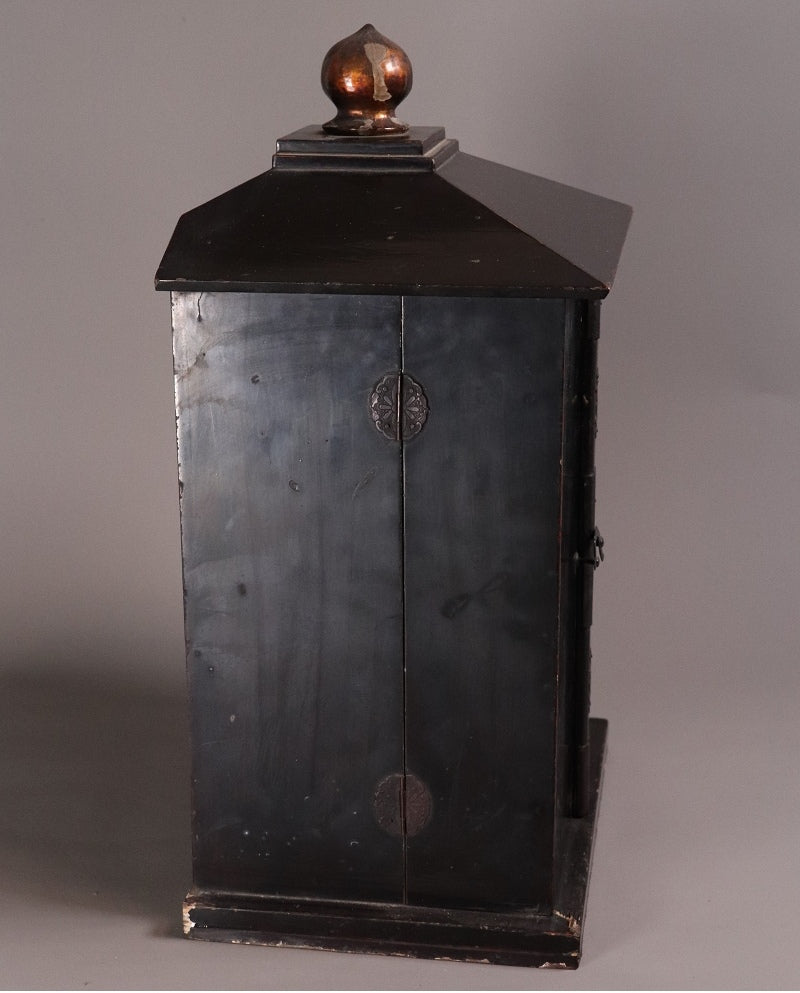
Kobo Daishi (Kukai) Seated Zushi Shrine — Polychrome Wood Portable Altar, Early-Modern Japan, Temple Provenance Style, 48cm Zushi Cabinet
Kobo Daishi (Kukai) Seated Zushi Shrine — Polychrome Wood Portable Altar, Early-Modern Japan, Temple Provenance Style, 48cm Zushi Cabinet
Couldn't load pickup availability
Have a reasonable price in mind? Submit your best offer and our concierge will review it personally.
Curator’s Note: Some objects feel like sculpture. Others feel like a room. This portable zushi shrine belongs to the second category: a small devotional architecture that opens to reveal a seated portrait of Kobo Daishi (Kukai), the founding master of Japanese Shingon Buddhism, presented in temple-style polychromy and housed within a tall cabinet that reads as a private inner sanctum.
Overview
This work is offered as a complete zushi shrine: a carved and painted wooden portrait figure seated in calm authority, enclosed by a cabinet with doors that open and close normally. In the language of Japanese religious material culture, the zushi is not merely a container. It is a threshold — a miniature altar-room that frames the figure as “presence,” not only as form.
Portrait images of Kukai are widely revered for their association with disciplined practice, learning, protection, and spiritual steadiness. When presented in a zushi, the meaning intensifies: the doors function as a ritual gesture, turning the act of viewing into an act of approach.
What is a Zushi Shrine?
A zushi is a protective devotional cabinet used to house a sacred figure. Historically, zushi shrines served both temples and private settings: household altars, study rooms, travel contexts, and small chapel spaces. The format protects the sculpture from dust and light, but it also structures attention. When closed, the shrine holds the sacred image in reserve; when opened, it stages a moment of encounter.
Who is Kobo Daishi (Kukai)?
Kobo Daishi (known historically as Kukai) is the founder of Japanese Shingon Buddhism, celebrated as a scholar, ritual master, and transmitter of esoteric teachings. In Japanese culture he is associated with mantra practice, protective rites, the ethics of study, and the resilience required to keep going when circumstances become difficult. A Kukai portrait shrine is often collected as a symbol of guidance and intellectual clarity, as well as a powerful anchor for a contemplative interior.
Art-Historical Reading (Why This Form Matters)
1) Temple-style polychromy: The surface shows layered color and age-softened transitions that suggest long-term handling and exposure to interior shrine environments. Even when losses are present, the remaining pigment gives a sense of lived ritual atmosphere rather than decorative finish.
2) Architectural staging: The cabinet height creates vertical “breathing space” above the figure, a compositional choice that emphasizes sanctum rather than display case. This is one reason zushi pieces feel emotionally stronger than stand-alone statues at similar size.
3) Presence over spectacle: Kukai portrait images often prioritize calm authority. The power is not in dramatic gesture; it is in stability, gaze, and the suggestion of inner discipline.
Condition (Transparent, Collector-Useful)
Offered in aged condition with expected wear for an early-modern shrine: scuffs, surface losses, chips, and areas of separation or repair traces may be present. The seller notes accessory loss (kept in a small bag) and general age-related wear. Doors open and close normally. Please review all photographs for exact surface reading and edges, as small losses can occur along protruding details and cabinet corners.
Measurements (From Listing)
- Zushi cabinet: approx. 48 cm height, approx. 30.5 cm width, approx. 22.2 cm depth; approx. 2.425 kg
- Figure: approx. 28.7 cm height, approx. 23.2 cm width, approx. 16.5 cm depth; approx. 1.020 kg
Collector Relevance
Why collectors seek this: (a) Kukai portrait subject matter holds deep cultural gravity; (b) zushi format adds architectural presence and display value; (c) scale is substantial but still practical; (d) patina reads as lived devotion, not decorative reproduction.
Collector’s Resonance: This is for the collector who wants a shrine-object with real interior weight — not merely a figure — and who values atmosphere, historical use, and the quiet authority of esoteric Buddhist culture.
Institutional Acquisition Variant (Optional Label Copy)
For institutional collections, the object may be catalogued as: “Portable zushi shrine with seated portrait of Kukai (Kobo Daishi), polychrome wood; early-modern Japan.” Note that without inscription or documentary record, workshop attribution should remain open. This is consistent with responsible catalog practice.
Frequently Asked Questions
Is this a named workshop? No workshop is claimed without inscription or documentation. It is described as early-modern Japan in temple-style presentation, based on iconography and construction.
Is age wear a negative? Not necessarily. In zushi shrines, patina and handling wear often read as evidence of lived use. Collectors typically want honest notes and clear photos more than “perfect” surfaces.
Can it be displayed open or closed? Yes — both are historically correct. Closed display emphasizes mystery and protection; open display emphasizes presence and ritual encounter.
Explore related scholarship on our site: Kobo Daishi and Shingon Buddhism · What is a Zushi Shrine? · Japanese Polychrome Wood Sculpture · Buddhist Sculpture and Shrines
Authenticity & Stewardship
Evaluated under the Japonista Authentication Framework™:
- Material, carving, and surface-study comparison
- Iconographic and stylistic verification
- Condition and stability review (surface integrity)
- Construction assessment and handling-risk evaluation
Guaranteed 100% Authentic. Covered by the Japonista Lifetime Authenticity Warranty™.
A Note on Stewardship and Collecting
At Japonista, we approach Buddhist statues, sacred images, and ritual objects not merely as collectibles, but as cultural and spiritual artifacts deserving of respect, understanding, and careful presentation. Every piece we offer is thoughtfully examined, researched, and curated with sensitivity to its origin, meaning, and historical role.
Our role is not only to offer access to rare and meaningful objects, but to serve as responsible custodians—connecting the right works with collectors who value depth, intention, and authenticity.
Inquiries, Availability, and Private Consideration
Some of the cultural and heritage works may allow room for discussion, while others are held firmly due to rarity, condition, or cultural importance. All inquiries are reviewed personally and discreetly, and we welcome thoughtful questions or expressions of interest.
If you are exploring a particular theme, deity, lineage, or period—or seeking guidance in building a focused collection—our concierge team is always available to assist with quiet expertise and care.
Concierge Support & Collector Guidance
Japonista Concierge™ provides personalized assistance for collectors seeking deeper understanding, thoughtful acquisition, or long-term curation strategies. Whether your interest is devotional, scholarly, or aesthetic, we are here to help guide your journey with clarity and respect.
For select high-value or historically significant works, private reservation or structured payment arrangements may be available on a case-by-case basis. Please reach out to discuss eligibility and discreet options.
Before Proceeding
We kindly encourage collectors to review our shop policies and house guidelines, available through the links in our website footer, which outline shipping, handling, and conditions specific to vintage, sacred, and collectible works.
A Closing Note
Thank you for exploring Japonista’s collection of Oriental Cultural Heritage and arts. We are honored to share these meaningful works and to help place them where they may continue to be appreciated, studied, and respected.
If you have questions or wish to explore related works, please feel free to contact Japonista Concierge™ at any time.