Japonista
Kanō Sasshin (Jōun) Attributed Rakan Arhat Hanging Scroll, Inscribed at Age Sixty-Three, Edo Kanō School
Kanō Sasshin (Jōun) Attributed Rakan Arhat Hanging Scroll, Inscribed at Age Sixty-Three, Edo Kanō School
Couldn't load pickup availability
Ink and a whisper of red conjure a solitary Arhat of rugged, deeply human presence, his robes dissolving into sweeping brush lines. An inscription in the name of Hōkyō Kanō Jōun Sasshin, at the age of sixty-three, connects the scroll to the Edo-period Kanō tradition.
The Piece
This Japanese Buddhist kakejiku depicts a solitary Rakan, or Arhat, attributed through its inscription to the Edo-period Kanō-school painter Kanō Sasshin, also known as Jōun. The sacred figure is shown in quiet contemplation beneath a softly painted circular halo; his deeply expressive face, tightly curled hair, pronounced brows, beard, elongated ears and flowing monastic robes give the portrait a powerful human presence.
Broad black ink lines define the folds of the robes, while restrained red-orange color accents the shawl draped around the shoulders and draws the eye toward the head and upper body. The face is rendered with closely observed detail as the robes dissolve into broad, curling brush lines, and the faint halo separates the monk from the aged ground without overwhelming the image. Aged beige, charcoal black, faded red, muted blue and warm gold create an atmosphere of disciplined stillness and weathered dignity; the scroll's appeal lies in its age, patina and the accumulated atmosphere of an object that has survived generations rather than in a polished finish.
Rakan are enlightened disciples of the Buddha, commonly represented in East Asian Buddhist art as ascetic monks with distinctive personalities and foreign or exaggerated features. This figure's calm posture, downward gaze, halo and enveloping robes suggest contemplation, spiritual discipline and detachment from worldly distraction. The painting is mounted in the traditional hanging-scroll format, framed in a pale blue and gold brocade-style textile with narrow gold-toned borders and warmer textile panels above and below, and carries additional calligraphy and several vermilion seals in its upper section.
The scroll suits a Buddhist altar or devotional space, a tea room or tokonoma alcove, a study or library, or a collection of Buddhist, Kanō-school and Asian religious art.
Details
- Artist: Attributed by inscription to Kanō Sasshin, art name Jōun (Kanō school)
- Inscription: 法橋 狩野 如運 察信 行年六十三歳筆, read as "Painted by Hōkyō Kanō Jōun Sasshin at the age of sixty-three"
- Subject: Contemplative Rakan (Arhat) with circular halo
- Era: Edo period Kanō-school character
- Origin: Japan
- Format: Hanging scroll, kakejiku
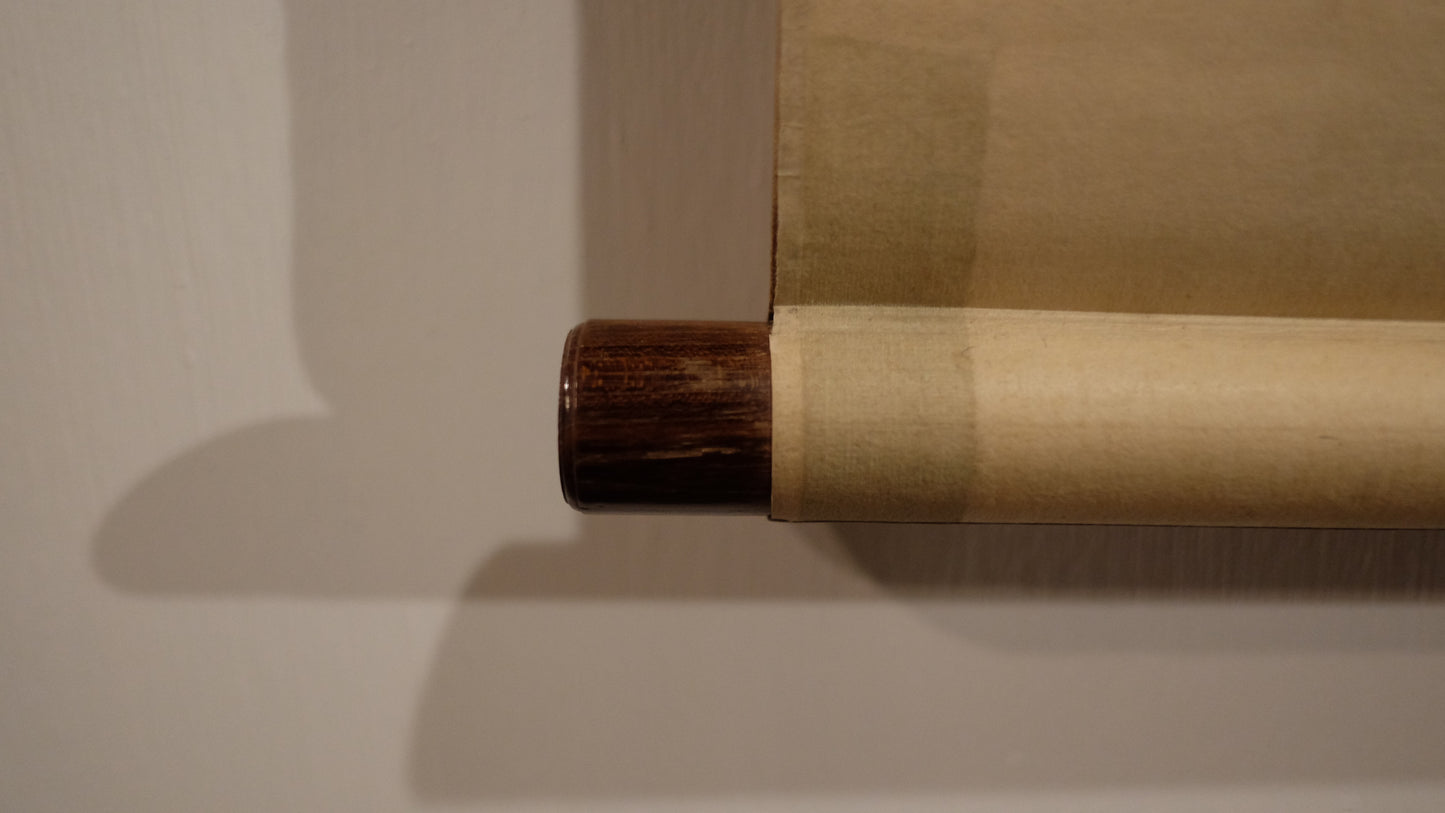
- Material: Black ink and light color on aged paper (apparent); patterned textile mounting with narrow gold-toned edging, hanging cords and lower scroll rod
- Color: Aged beige, charcoal black, faded red, muted blue and warm gold
- Markings: Painter's inscription at lower right; upper calligraphy with several vermilion seals
Condition
- A significantly aged hanging scroll with extensive visible signs of time, storage, handling and previous display; these are substantial and form part of its present condition rather than minor imperfections.
- Strong overall toning and brown discoloration, with uneven coloration across the paper.
- Horizontal fold lines and creases throughout the painting, with surface waviness and wrinkles.
- Scattered staining, foxing, spots and small marks.
- Areas of rubbing, fading and possible pigment loss, with wear and minor surface disturbance around the figure.
- Age-related wear to the calligraphy and seals; wear, fading and discoloration to the textile mounting.
- Possible old repairs, reinforcement or remounting not independently assessed.
- The photographs show the actual piece and form an essential part of the condition record; colors may vary slightly with lighting and screen settings.
Attribution Notes
The Rakan is not identified by name, and the figure should not be represented as a specific named Arhat or as Bodhidharma without further scholarly documentation.
Although the visible brushwork and inscriptions suggest a hand-executed work, the materials, pigments, date, authorship, seals, mounting date and restoration history have not been independently examined. No guarantee is given of unbroken provenance from the named artist, that every inscription and seal is contemporaneous, of genuine silk mounting, of mineral pigments, of an untouched or unrestored surface, or of authentication by a museum, scholar or recognized appraisal body.
Authenticity & Care
The lower-right inscription supports an attribution to Kanō Sasshin (Jōun), but the attribution, exact date, seals, provenance and the relationship between the painting and the upper calligraphy have not been independently authenticated; the upper inscription and red seals may have been added by another calligrapher or owner. Every piece is examined and documented in Japan before dispatch and is offered with the Japonista authenticity guarantee.
Delivery from Japan
Packed by hand in Japan and shipped insured and tracked by EMS or an equivalent express service. Import duties and taxes, where applicable, are payable on arrival. Returns follow our published policy.
Considered offers are welcome through Send an Offer, and each one is reviewed personally. Pieces over $1,000 may be reserved over several payments with Layaway Privilege™.
Continue browsing: Scrolls & Paintings · Butsudan & Altars
Related pieces: Jizō Bosatsu standing lotus hanging scroll · Ryū dragon rising from waves ink scroll · Kunii Dōsei Willow Kannon on clouds scroll
Paper & Silk
Scrolls, screens and prints can be examined, documented and conserved before shipping through the Restoration & Documentation Lab™. Request a condition report →
Collectors also search: kano sasshin scroll · kano joun rakan painting · japanese arhat hanging scroll · rakan kakejiku edo · kano school buddhist scroll · antique japanese monk painting · inscribed buddhist scroll japan