Rare Vintage, Antiques and Art Collector / Curator / Personal Shopper From Japan
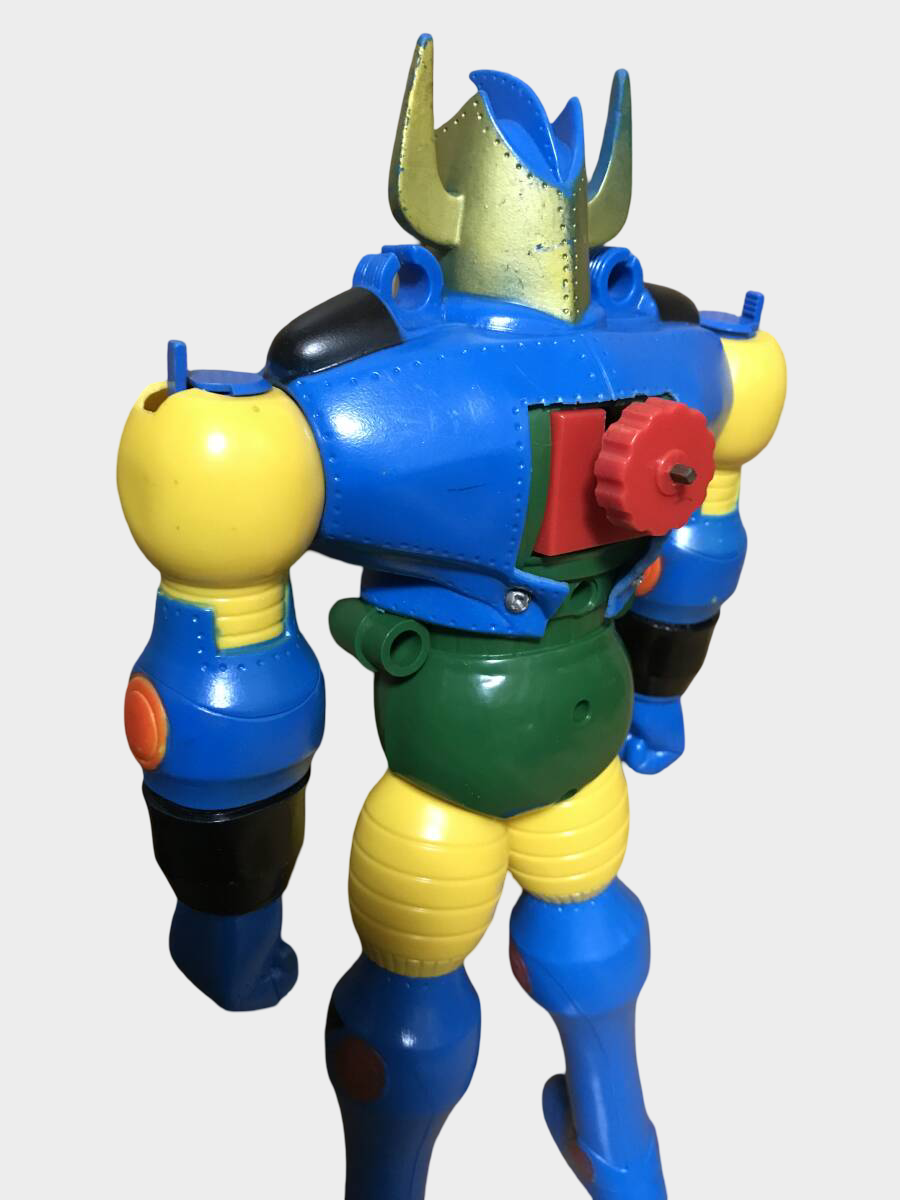
Vintage Jumbo Machinder Super Robot Soft Vinyl Figure (Jumbo Class) — Chest Lever Detached (Repairable) — Popy/Bandai-Era Display Mecha
Vintage Jumbo Machinder Super Robot Soft Vinyl Figure (Jumbo Class) — Chest Lever Detached (Repairable) — Popy/Bandai-Era Display Mecha
Couldn't load pickup availability
Have a reasonable price in mind? Submit your best offer and our concierge will review it personally.
Jumbo Machinder refers to a large-scale Japanese robot toy format, typically produced in soft vinyl at approximately 60 cm in height. Developed during the 1970s super-robot era, these figures were designed as monumental display pieces with missile-launching features and bold mechanical presence. Many of the most iconic examples were produced by Popy, a Bandai subsidiary renowned for defining the standards of Japanese robot toys.
CURATORIAL OVERVIEW — WHAT THIS OBJECT ACTUALLY IS
This is the kind of vintage soft vinyl that wasn’t designed to whisper—it was designed to read instantly across a living room. The silhouette is pure “super robot” grammar: helmet crest, high-contrast armor blocks, and a chest zone engineered as the character’s identity plate. In this category, the object’s value is less about micro-detail and more about graphic authority—big color fields, confident proportions, and the slightly yielding material logic that makes large-format vintage feel more like a presence than a toy.
The seller frames it as a broadcast-era piece (放映当時品), and that matters: these figures sit at the intersection of media and material culture, when televised robots were being translated into household objects that kids could hold—mythic industrial heroes miniaturized into daily life. Even when imperfect, they remain culturally loud: a room changes when one of these stands in it.
Object: “Javado / Magurobo” style Super Robot figure (vintage soft vinyl), associated with Jumbo Machinder / Bandai / Popy-era collecting culture (seller keywords)
Approx. size: Visually ~30–35 cm class (ruler shown in photos; scale-read)
Condition (seller-stated — fully woven):
-
Broadcast-era item (放映当時品)
-
Chest lever section is detached / has come off
-
notes: a handy person may be able to repair
ICONOGRAPHY & THEMATIC ANALYSIS
The chest is the altar in super robot design—where emblems, vents, meters, and “control panel” motifs live. This figure’s chest lever belongs to that tradition of mechanical theater: a tactile detail that implies systems, power, transformation, or weapon readiness. When that lever detaches, it’s not just “a part”—it’s a disruption to the character’s symbolic center.
That’s why the seller’s note is important and must stay visible in our narrative: the lever is off, and a capable restorer might bring it back. In collector language, that moves the piece into a specific tier: honest, repair-inviting vintage, where the story is “survivor + presence,” not “museum-perfect completeness.”
MATERIAL & CRAFT ASSESSMENT
Soft vinyl’s advantage at this scale is resilience: it tolerates bumps better than brittle plastics, and it’s forgiving under careful packing. The common risks are:
-
Paint rub on raised areas (horns/crest, chest ridges, knees)
-
Stress tears at joints if squeezed in storage
-
Accessory/feature loss (like the chest lever here)
For this specific listing, the chest lever detachment is the headline. Best practice is to treat the detached lever as a separate component during packing—bagged, padded, and immobilized—so it cannot scuff the torso or crack at the attachment point.
HISTORICAL CONTEXT — WHY THESE SURVIVE AT ALL
Large-format vintage character figures survive unevenly because they lived active lives: they were handled, displayed, moved house, and stored through decades of humidity cycles. Condition, therefore, is not a moral virtue—it’s an accident of history. In that context, a broadcast-era piece with a known fault can still be highly desirable because the real commodity is scale + era-authentic design language—the specific way Japanese super robots were visualized in the period when color blocking and bold geometry did most of the storytelling.
This is also why disclosure sells: collectors don’t fear flaws; they fear surprises. A clearly disclosed detached chest lever makes this listing cleaner, not weaker, because it restores trust.
COLLECTOR RELEVANCE
Best-fit buyer:
-
Super robot collectors building a “one giant per series/era” wall
-
Display-first collectors who want silhouette + color authority
-
Restoration-friendly collectors who enjoy reversible fixes
Condition reality (no sugar):
This is not “perfect.” The chest lever is detached, and the buyer must judge from images whether it’s included and repairable or partially compromised.
SUMMARY — WHY THIS PIECE MATTERS
A vintage jumbo-class soft vinyl super robot figure is pop-industrial sculpture: a broadcast-era hero translated into a physical totem. This example carries an explicitly stated flaw—the chest lever is detached—but that same clarity gives it credibility. For the right collector, the value is still obvious: scale, era presence, and unmistakable design language, with a realistic path for careful repair if the part is present.
Why Popy Matters
Founded in 1971 and later integrated into Bandai, Popy occupies a foundational position in the history of Japanese character toys. During the explosive growth of anime and tokusatsu in the 1970s, Popy established the manufacturing and design standards that would define how robots and heroes were translated from screen to physical form.
Popy’s significance lies not only in licensing major properties, but in formalizing scale, weight, and material language. Through lines such as Chogokin and Jumbo Machinder, the company set expectations for mass, durability, and visual authority—creating toys that felt monumental rather than disposable. These objects were designed to command space, functioning as both playthings and display icons within the home.
Many conventions now taken for granted in Japanese robot toys—die-cast heft, oversized proportions, bold mechanical silhouettes—were normalized through Popy’s output. Even after the brand was absorbed into Bandai in the early 1980s, the term “Popy era” continues to signal a peak period of experimentation, quality, and cultural impact.
For collectors, Popy represents origin rather than revival: the moment when Japanese toy design matured into a globally influential language. Items bearing the Popy name are recognized not merely as licensed merchandise, but as historical benchmarks in the evolution of modern toy culture.
Authenticity & Collectible Stewardship
Evaluated under the Japonista Collectibles Authentication Framework™:
-
Period, manufacturer, and production-era assessment
-
Material, paint, lithography, and surface-wear analysis
-
Mechanical, structural, and component integrity review (where applicable)
-
Design, iconography, and cultural-context verification
Guaranteed 100% Authentic.
Every piece is backed by the Japonista Lifetime Authenticity Warranty™ and curated with collector-grade scrutiny.
A Note on Collecting & Preservation
At Japonista, we approach vintage and modern toys not merely as nostalgic objects, but as design artifacts, cultural touchstones, and expressions of their era—from postwar ingenuity and Showa imagination to contemporary pop and designer movements.
Each work is carefully examined, researched, and presented with respect for its original intent, historical context, and collector relevance, balancing preservation with the honest character earned through time and play.
Our role is not only to offer access to meaningful collectibles, but to act as thoughtful custodians—connecting the right pieces with collectors who value history, originality, and lasting significance.
Inquiries, Availability, and Private Consideration
Some collectible works may allow room for discussion, while others are held firmly due to rarity, condition, provenance, or cultural importance. All inquiries are reviewed personally and discreetly, and we welcome thoughtful questions or expressions of interest.
If you are exploring a specific theme, franchise, maker, era, or mechanical category—or seeking guidance in building a focused collection—our team is always available to assist with informed, quiet expertise.
Concierge Support & Collector Guidance
Japonista Concierge™ offers personalized assistance for collectors seeking deeper understanding, strategic acquisitions, or long-term curation across vintage and modern collectibles.
Whether your interest lies in nostalgia, design history, mechanical fascination, or pop-culture legacy, we are here to support your collecting journey with clarity, care, and discretion.
For select high-value or historically significant pieces, private reservation or structured payment arrangements may be available on a case-by-case basis. Please contact us to discuss eligibility and options.
Before Proceeding
We kindly encourage collectors to review our shop policies and house guidelines, available through the links in our website footer, which outline shipping, handling, and condition standards specific to vintage, mechanical, and collectible works.
A Closing Note
Thank you for exploring Japonista’s collection of vintage and modern toys, robots, and cultural collectibles. We are honored to share these enduring objects of imagination and design—and to help place them where they may continue to be appreciated, studied, and enjoyed.
If you have questions or wish to explore related works, please feel free to contact Japonista Concierge™ at any time.