Rare Vintage, Antiques and Art Collector / Curator / Personal Shopper From Japan
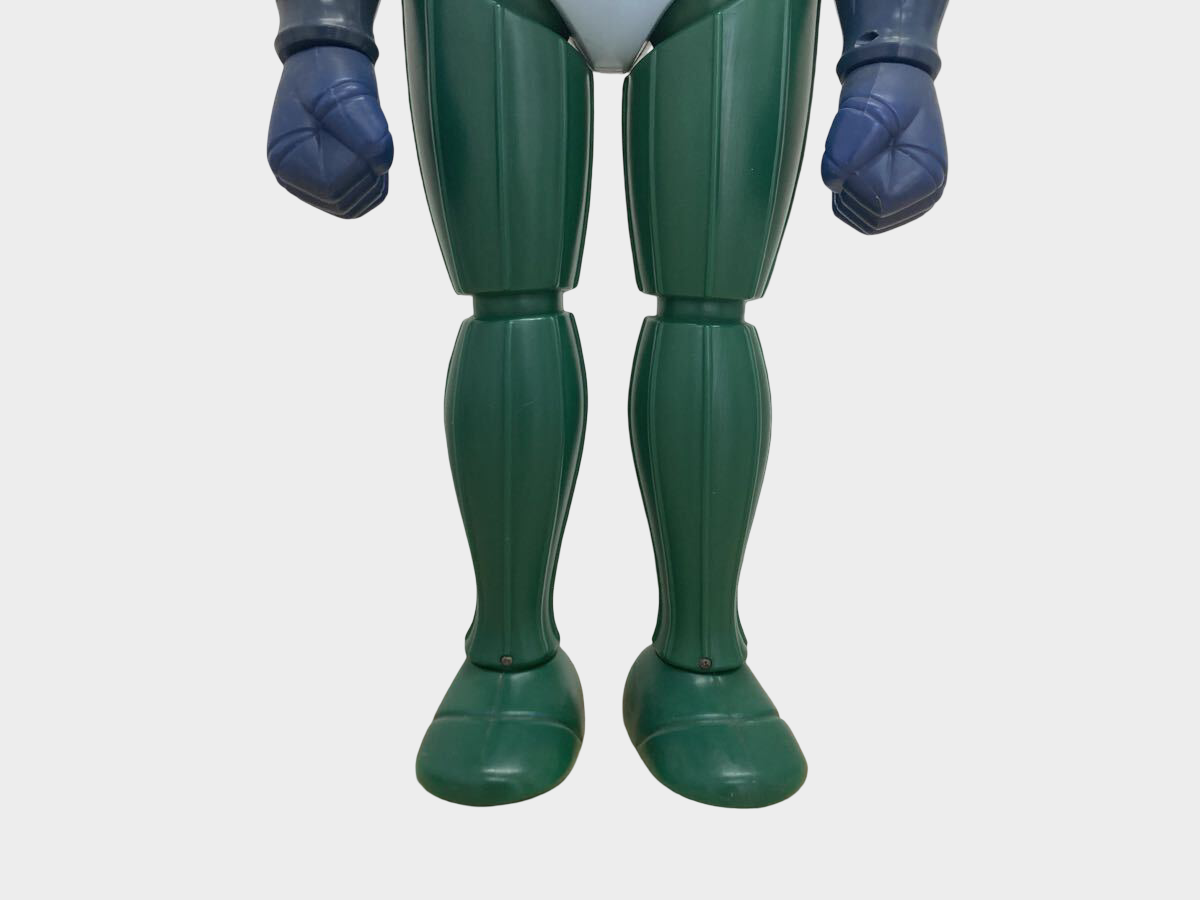
Vintage Steel Jeeg Soft Vinyl Figure 65cm — Rocket Punch Working — Display Giant Jumbo Machinder — Classic Retro Mecha (Propeller Missing)
Vintage Steel Jeeg Soft Vinyl Figure 65cm — Rocket Punch Working — Display Giant Jumbo Machinder — Classic Retro Mecha (Propeller Missing)
Couldn't load pickup availability
Have a reasonable price in mind? Submit your best offer and our concierge will review it personally.
Jumbo Machinder refers to a large-scale Japanese robot toy format, typically produced in soft vinyl at approximately 60 cm in height. Developed during the 1970s super-robot era, these figures were designed as monumental display pieces with missile-launching features and bold mechanical presence. Many of the most iconic examples were produced by Popy, a Bandai subsidiary renowned for defining the standards of Japanese robot toys.
CURATORIAL OVERVIEW — WHAT THIS OBJECT ACTUALLY IS
This is a giant-format character figure built for impact—an era when Japanese toy design treated engineering as storytelling. Large soft vinyl bodies weren’t just “big versions” of small toys; they were display presences: bold silhouette, simplified surfaces that catch light well, and mechanical features (like punch actions) that turn a static figure into a performer. In the mecha lineage, Steel Jeeg sits in that beautiful zone where heroic design is graphic—strong primary blocks, helmet geometry, “chest-emblem readability”—because the figure had to communicate identity instantly from across a room.
The collector’s reality is equally clear: this piece is not complete. The abdomen propeller element is missing, which changes the way purists grade it. But “incomplete” doesn’t automatically mean “undesirable” in large-format vintage—because the core value here is scale + character recognition + functioning action. The seller states the rocket punch feature still works, and that matters: it suggests the internal fit and structural integrity are still doing their job, which is often the first thing to fail in older large-format play/display figures.
Object: Vintage Steel Jeeg character figure (large-format soft vinyl), classic “rocket punch” style body engineering
Approx. size: ~65 cm tall (seller-stated)
Condition):
-
Abdominal propeller piece missing (key callout)
-
Rocket punch works (seller says functioning)
-
Light surface soil / age wear present
ICONOGRAPHY & THEMATIC ANALYSIS
Steel Jeeg is part of a mecha tradition that treats the robot as a mythic knight translated into industry: helmeted head, emblematic chest, and “weaponized limbs” as ritualized power. The rocket punch isn’t just a gimmick; it’s a signature of the genre’s physical imagination—violence stylized into clean, almost ceremonial motion. That’s why collectors care whether it works: a functioning action restores the object’s original “idea,” not just its form.
The missing abdomen propeller is also thematically interesting: it highlights how these figures were designed with modular identity markers—one missing part changes the “read” of the character’s body language. A good listing doesn’t hide that; it frames it as a known absence while emphasizing what remains strong: silhouette, paint presence, and action integrity.
MATERIAL & CRAFT ASSESSMENT
Soft vinyl at this scale is a specific craft logic: it’s durable, slightly forgiving, and resistant to the brittle shattering you see in some harder plastics. It also ages in a recognizable way—minor surface soil, scuffs, and micro-wear that read as “handled history,” not necessarily damage. The risk points are usually:
-
Paint wear at contact edges (hands/forearms/boots)
-
Joint stress at shoulders/hips if posed or stored under pressure
-
Internal mechanisms (spring tension / latch fit) for punch features
Here the seller explicitly calls out: slight soil + missing abdomen propeller, but rocket punch working. That combination often signals “honest wear, still structurally alive.”
HISTORICAL CONTEXT — WHY THESE SURVIVE AT ALL
Large-format vintage character figures survive less often than small ones because they lived harder lives: they were handled, displayed, moved, knocked, and stored in tight Japanese homes where size itself becomes a hazard. Boxes get crushed, parts get lost, and sun exposure does its slow work. A surviving giant figure with a functioning action feature is, statistically, a narrower slice of the population than the character’s popularity would suggest.
This is also why condition language in this category needs to be sober: collectors aren’t buying perfection as much as they’re buying presence with credible disclosure. The missing abdomen propeller is exactly the kind of detail that separates serious listings from fantasy listings—and it’s better for conversion to state it clearly while upgrading the narrative around what still makes the piece worth owning.
COLLECTOR RELEVANCE
Best-fit buyer:
-
A collector building a mecha wall or “one-giant-per-series” display
-
Someone who values scale + silhouette over completeness
-
A studio / interior client who wants retro Japanese pop-industrial presence
-
A collector who enjoys restoration hunting (if a replacement part ever appears)
Not ideal for:
-
Completionists who require all original parts
-
Investors who only buy top-grade, top-complete examples
The sell: This is a display titan—65 cm of instant identity—with a working action feature, priced and presented honestly due to one missing component.
SUMMARY — WHY THIS PIECE MATTERS
A large-format Steel Jeeg soft vinyl figure is the kind of object that turns a room into a collection. It’s not subtle; it’s totemic. This example carries real vintage honesty—wear consistent with age, a clearly stated missing abdomen propeller, and the crucial upside that the rocket punch mechanism still functions. For the right collector, that trade-off is exactly the sweet spot: maximum presence without pretending it’s perfect.
Why Popy Matters
Founded in 1971 and later integrated into Bandai, Popy occupies a foundational position in the history of Japanese character toys. During the explosive growth of anime and tokusatsu in the 1970s, Popy established the manufacturing and design standards that would define how robots and heroes were translated from screen to physical form.
Popy’s significance lies not only in licensing major properties, but in formalizing scale, weight, and material language. Through lines such as Chogokin and Jumbo Machinder, the company set expectations for mass, durability, and visual authority—creating toys that felt monumental rather than disposable. These objects were designed to command space, functioning as both playthings and display icons within the home.
Many conventions now taken for granted in Japanese robot toys—die-cast heft, oversized proportions, bold mechanical silhouettes—were normalized through Popy’s output. Even after the brand was absorbed into Bandai in the early 1980s, the term “Popy era” continues to signal a peak period of experimentation, quality, and cultural impact.
For collectors, Popy represents origin rather than revival: the moment when Japanese toy design matured into a globally influential language. Items bearing the Popy name are recognized not merely as licensed merchandise, but as historical benchmarks in the evolution of modern toy culture.
Authenticity & Collectible Stewardship
Evaluated under the Japonista Collectibles Authentication Framework™:
-
Period, manufacturer, and production-era assessment
-
Material, paint, lithography, and surface-wear analysis
-
Mechanical, structural, and component integrity review (where applicable)
-
Design, iconography, and cultural-context verification
Guaranteed 100% Authentic.
Every piece is backed by the Japonista Lifetime Authenticity Warranty™ and curated with collector-grade scrutiny.
A Note on Collecting & Preservation
At Japonista, we approach vintage and modern toys not merely as nostalgic objects, but as design artifacts, cultural touchstones, and expressions of their era—from postwar ingenuity and Showa imagination to contemporary pop and designer movements.
Each work is carefully examined, researched, and presented with respect for its original intent, historical context, and collector relevance, balancing preservation with the honest character earned through time and play.
Our role is not only to offer access to meaningful collectibles, but to act as thoughtful custodians—connecting the right pieces with collectors who value history, originality, and lasting significance.
Inquiries, Availability, and Private Consideration
Some collectible works may allow room for discussion, while others are held firmly due to rarity, condition, provenance, or cultural importance. All inquiries are reviewed personally and discreetly, and we welcome thoughtful questions or expressions of interest.
If you are exploring a specific theme, franchise, maker, era, or mechanical category—or seeking guidance in building a focused collection—our team is always available to assist with informed, quiet expertise.
Concierge Support & Collector Guidance
Japonista Concierge™ offers personalized assistance for collectors seeking deeper understanding, strategic acquisitions, or long-term curation across vintage and modern collectibles.
Whether your interest lies in nostalgia, design history, mechanical fascination, or pop-culture legacy, we are here to support your collecting journey with clarity, care, and discretion.
For select high-value or historically significant pieces, private reservation or structured payment arrangements may be available on a case-by-case basis. Please contact us to discuss eligibility and options.
Before Proceeding
We kindly encourage collectors to review our shop policies and house guidelines, available through the links in our website footer, which outline shipping, handling, and condition standards specific to vintage, mechanical, and collectible works.
A Closing Note
Thank you for exploring Japonista’s collection of vintage and modern toys, robots, and cultural collectibles. We are honored to share these enduring objects of imagination and design—and to help place them where they may continue to be appreciated, studied, and enjoyed.
If you have questions or wish to explore related works, please feel free to contact Japonista Concierge™ at any time.