Rare Vintage, Antiques and Art Collector / Curator / Personal Shopper From Japan
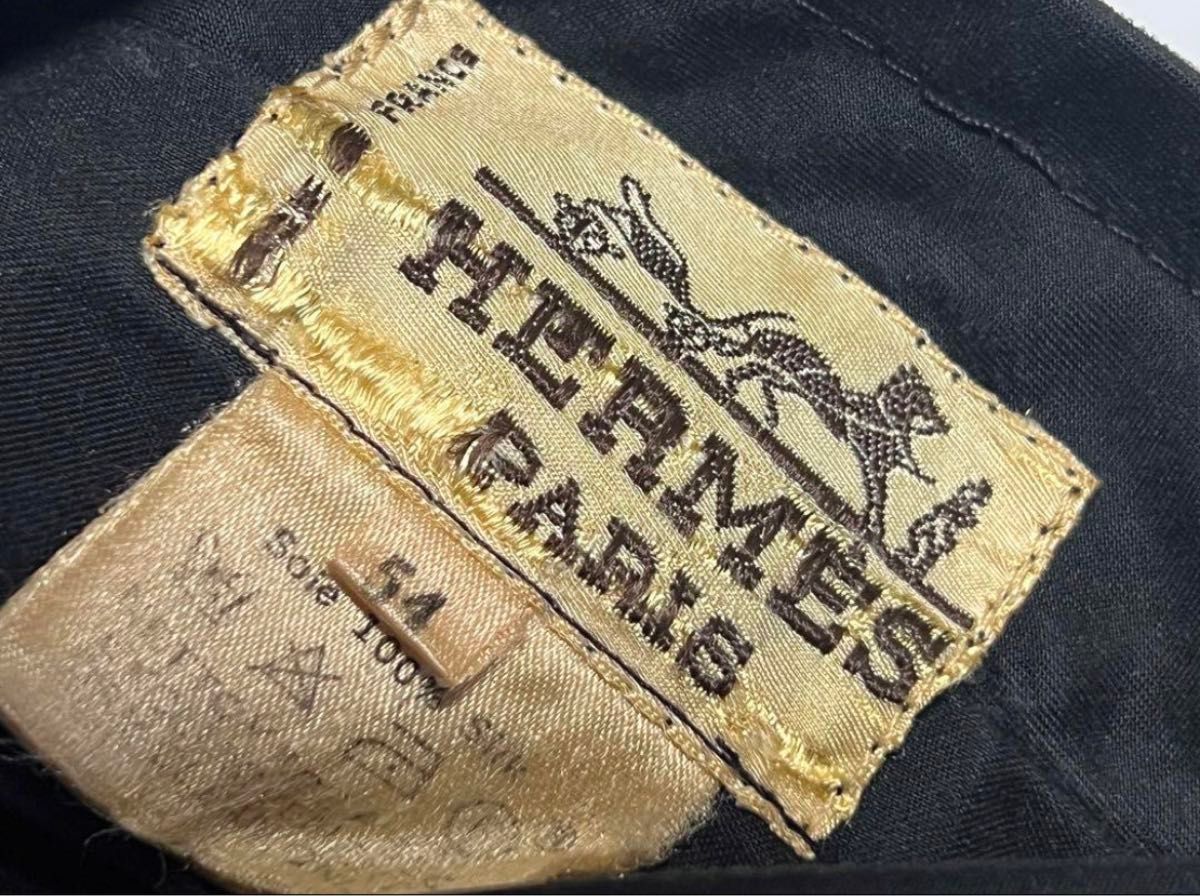
Hermès Vintage Reversible Silk Bomber Jacket Egyptian Motif Torana Design Size 54 Paris Made
Hermès Vintage Reversible Silk Bomber Jacket Egyptian Motif Torana Design Size 54 Paris Made
Couldn't load pickup availability
Have a reasonable price in mind? Submit your best offer and our concierge will review it personally.
CURATORIAL OVERVIEW — WHAT THIS OBJECT ACTUALLY IS
This piece represents Hermès at its most intellectually expressive moment, when the house translated its legendary silk carré language into architectural garments rather than accessories. During the late 1980s and early 1990s, Hermès experimented with reversible blousons that treated silk not as decoration, but as structural narrative material.
This jacket is not “printed fashion.” It is wearable silk cartography—a full narrative composition wrapped around the human form. The reversible construction effectively offers two curatorial faces, allowing the wearer to alternate between maximal iconographic density and restrained luxury presentation.
Such pieces were produced in extremely limited quantities, never intended for mass export, and largely disappeared due to silk’s fragility over time.
Object Type
Hermès Paris reversible silk blouson / bomber jacket
Era
Circa late 1980s–early 1990s (Carré-driven ready-to-wear expansion period)
House
Hermès (Paris)
Construction
Fully reversible luxury blouson with quilted silk exterior, alternate interior face, ribbed knit collar/cuffs/hem
Motif Family
Ancient Egypt / Nile cosmology / pharaonic iconography
Material
100% silk shell (both sides), luxury rib knit trims
Size
Marked 54 (true XL / relaxed European cut)
Measured (approx.)
-
Length: 69 cm
-
Shoulder: 56 cm
-
Chest (pit-to-pit): 73 cm
-
Sleeve: 67 cm
Condition
Vintage condition with signs of age, wear, and prior use; repairable wear consistent with silk garments of this era
ICONOGRAPHY & THEMATIC ANALYSIS
The Egyptian motif draws from pharaonic relief traditions, featuring stylized figures, ritual procession geometry, symbolic animals, and hieroglyphic-inspired framing. The imagery is not literal Egyptology; rather, it reflects European high-luxury romanticism of ancient civilizations, filtered through Hermès’ Parisian graphic discipline.
Key visual characteristics include:
-
Vertical procession logic, echoing temple wall reliefs
-
Gold-dominant palette, symbolizing divinity, eternity, and solar power
-
Repetitive symbolic units, creating rhythm rather than illustration
-
Panel segmentation, suggesting architectural stone blocks or friezes
This is the same visual intelligence seen in collectible Hermès carrés of the era—transposed onto a garment with volume, motion, and reversibility.
MATERIAL & CRAFT ASSESSMENT
Silk blousons of this complexity are not feasible under modern production economics. The jacket requires:
-
High-tension silk printing capable of maintaining clarity across quilting
-
Precision alignment across seams so iconography remains legible
-
Balanced weight distribution to prevent silk distortion
-
Reversible finishing with no exposed structural compromise
Hermès’ silk supply chain during this period was vertically integrated, allowing such experiments. Today, comparable craftsmanship would be cost-prohibitive even at couture level.
HISTORICAL CONTEXT — WHY THESE SURVIVE AT ALL
Most silk outerwear from this era did not survive. Silk is vulnerable to UV exposure, abrasion, moisture, and improper storage. That this jacket exists at all—complete, wearable, and reversible—places it in a narrow survival bracket.
Additionally, Hermès did not archive these garments publicly the way it did scarves. Many designs were one-season experiments, undocumented, and quietly retired. As a result, surviving examples circulate almost exclusively through Japan’s secondary luxury market.
COLLECTOR RELEVANCE
This piece appeals simultaneously to:
-
Hermès collectors seeking non-scarce-but-scarce garments
-
Vintage luxury archivists
-
Designers studying pre-minimalist maximalism
-
High-end fashion stylists sourcing statement archive pieces
-
Buyers priced out of contemporary Hermès but seeking true house DNA
Size 54 further increases desirability, as most surviving examples skew small.
SUMMARY — WHY THIS PIECE MATTERS
This is Hermès as cultural artifact, not trend fashion. It embodies a period when luxury houses still took intellectual risks—when garments carried narrative weight, historical curiosity, and artisanal bravado.
It is not loud because it is decorative; it is loud because it is confidently informed.
Authenticity & Stewardship
Evaluated under the Japonista Amekaji & Vintage Fashion Authentication Framework™:
-
Brand, production-era, and origin verification
-
Fabric, weave, dye, and material composition analysis
-
Construction quality, stitching, hardware, and pattern assessment
-
Condition evaluation including wear, fading, repairs, and structural stability
Guaranteed 100% Authentic.
Every garment is curated under the Japonista Lifetime Authenticity Warranty™, with rigorous attention to provenance, originality, and material truth.
A Note on Amekaji, Translation, and Iconic Form
Amekaji—American casual as interpreted through Japan—is not imitation, but translation. Drawing from workwear, military surplus, denim, sportswear, and mid-century American style, Japanese makers refined these forms through superior materials, disciplined construction, and obsessive attention to detail.
At Japonista, we approach Amekaji and premium vintage fashion as cultural reinterpretation archives. Fading, patina, and wear are preserved as records of use rather than flaws, while quality of cut, fabric aging, and construction integrity are evaluated with the same seriousness given to historical artifacts.
Iconic garments—whether Japanese-made reinterpretations or original vintage pieces—are treated as design milestones, not trends. Our stewardship prioritizes authenticity over condition perfection and narrative accuracy over nostalgia.
Inquiries, Availability, and Private Consideration
Some garments may allow thoughtful discussion, while others are held firmly due to rarity, archival importance, or condition sensitivity. All inquiries are reviewed personally and discreetly, with clear communication regarding fit, wearability, and long-term care.
Collectors building focused Amekaji wardrobes, archival fashion collections, or study-based references are encouraged to consult with our team.
Concierge Support & Collector Guidance
Japonista Concierge™ provides informed guidance on brand lineages, production eras, fabric behavior, and long-term garment preservation.
Whether the intent is wear, archive, or hybrid use, we assist collectors in making acquisitions that align with both lifestyle and historical value.
For ome of our curated listings and works, private reservation or structured payment arrangements may be available on a case-by-case basis. Please reach out to discuss eligibility and discreet options.
Before Proceeding
We kindly encourage collectors to review our shop policies and house guidelines, available through the links in our website footer, which outline shipping, handling, and conditions specific to vintage, sacred, and collectible works.
A Closing Note
Thank you for exploring Japonista’s Amekaji clothing and premium vintage fashion archive. These garments stand at the intersection of global influence, Japanese discipline, and lived experience—and we are honored to help place them where their material history can continue with clarity and respect.
If you have questions or wish to explore related items, please feel free to contact Japonista Concierge™ at any time.