Rare Vintage, Antiques and Art Collector / Curator / Personal Shopper From Japan
Hermès 1992 Kermit Oliver Reversible Silk Jacket — Museum Archive Art-to-Wear, Rare Illustrated Textile
Hermès 1992 Kermit Oliver Reversible Silk Jacket — Museum Archive Art-to-Wear, Rare Illustrated Textile
Couldn't load pickup availability
Have a reasonable price in mind? Submit your best offer and our concierge will review it personally.
CURATORIAL OVERVIEW — WHAT THIS OBJECT ACTUALLY IS
This object is not merely a jacket. It is a portable museum surface—a rare convergence of Hermès silk mastery and Kermit Oliver’s narrative illustration, executed during the most culturally significant period of Hermès’ art collaborations.
Produced in 1992, this reversible silk jacket translates Oliver’s hand-drawn mytho-historical imagery—originally conceived for Hermès scarves—into three-dimensional wearable form. Unlike mass-market silk bombers of later decades, this piece belongs to an era when Hermès treated garments as extensions of fine art, not fashion cycles.
Its reversibility is not decorative gimmickry; it is structural duality, allowing two fully resolved visual narratives to coexist within a single object.
Object Type
Luxury archival fashion object — reversible silk jacket
Brand
Hermès
Artist / Designer (Textile Artwork)
Kermit Oliver
Year
1992
Origin
France
Material
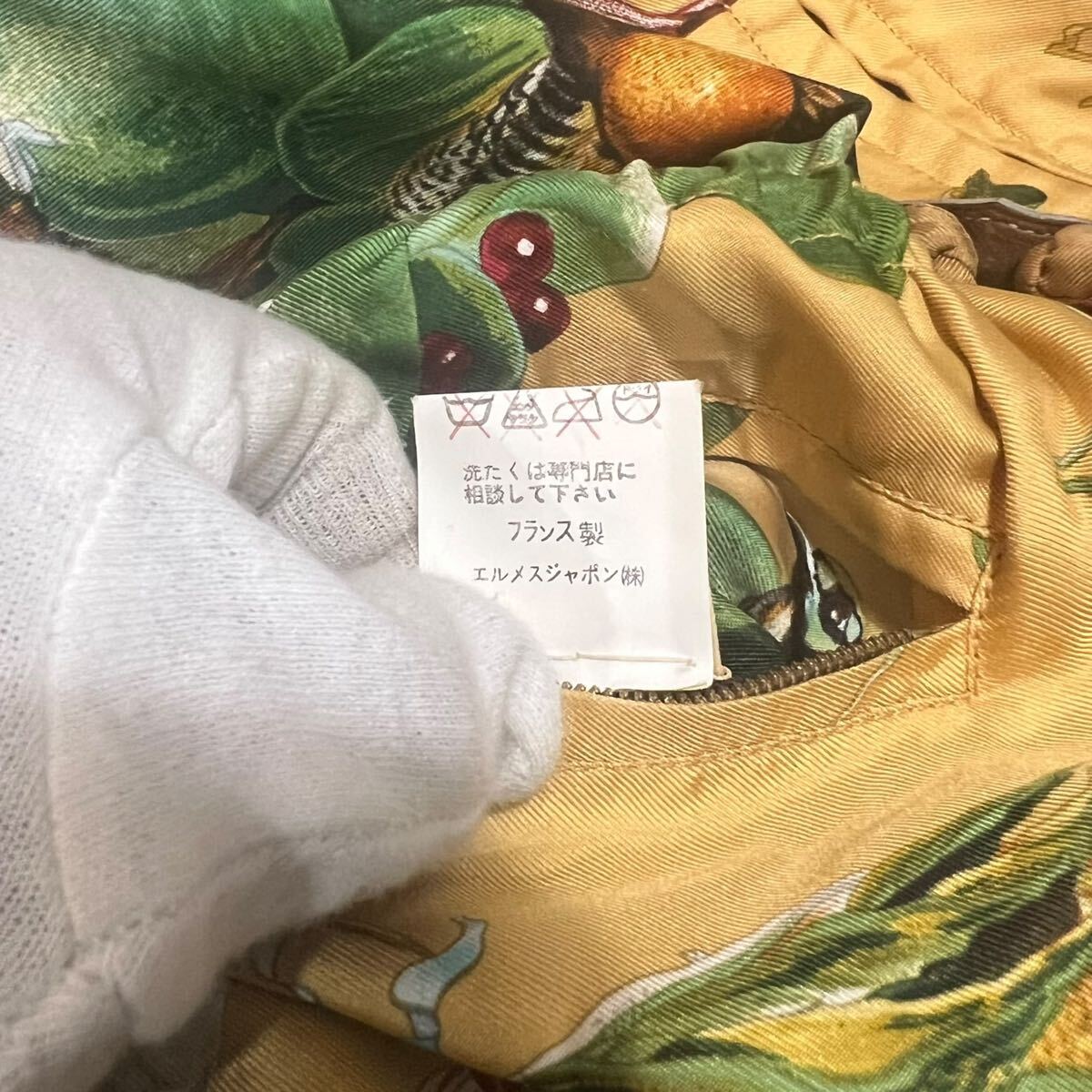
100% silk (printed silk twill construction)
Construction
Fully reversible, single-layer silk structure with mirrored print logic
Category
Hermès Art-to-Wear Archive / Collectible Fashion Artifact
ICONOGRAPHY & THEMATIC ANALYSIS
Kermit Oliver’s work is immediately recognizable by its dense figurative storytelling, combining:
-
Natural history
-
Mythic symbolism
-
Cultural memory
-
Hand-drawn line discipline
On this jacket, the imagery operates as a moving tableau rather than a repeating pattern. Figures, flora, fauna, and symbolic vignettes are arranged with painterly intent, closer to illuminated manuscripts than textile repeats.
This approach sharply contrasts European ornamental symmetry. Instead, Oliver’s American narrative tradition—rooted in storytelling, history, and observation—introduces temporal depth into Hermès’ visual language.
Collectors recognize these works as wearable paintings, not fashion prints.
MATERIAL & CRAFT ASSESSMENT
-
Silk Type: Hermès-grade silk twill, identical lineage to scarf production
-
Print Method: Multi-layer screen print with high color fidelity
-
Construction: Reversible single-shell execution — technically demanding due to alignment and seam discipline
-
Hand Feel: Lightweight yet structured; fluid drape without collapse
-
Durability: Remarkably high for silk when properly stored
This level of silk construction has largely disappeared from modern luxury due to cost and labor intensity.
HISTORICAL CONTEXT — WHY THESE SURVIVE AT ALL
Hermès garments from the early 1990s occupy a unique historical window:
-
Pre-fast-luxury
-
Pre-logo maximalism
-
Pre-outsourced mass production
Kermit Oliver’s collaborations are especially rare because:
-
He was never a career fashion illustrator
-
His output was extremely limited
-
Each design required direct translation from fine art to textile
Many examples were worn, damaged, or lost. Surviving reversible jackets in strong condition are increasingly scarce, especially as global collectors move beyond scarves into Hermès art-to-wear archives.
COLLECTOR RELEVANCE
This piece appeals simultaneously to:
-
Hermès archive collectors
-
Textile art collectors
-
Museum-grade fashion buyers
-
Art historians tracking Oliver’s legacy
-
Serious vintage investors seeking non-cyclical value
Unlike trend-based fashion, Kermit Oliver Hermès works do not depreciate. They function more like limited-edition prints with material presence.
SUMMARY — WHY THIS PIECE MATTERS
This jacket represents:
-
A vanished production philosophy
-
A cross-cultural art collaboration
-
A peak moment in Hermès textile history
It is not replaceable, not reproducible, and not trend-dependent. It belongs to the category of objects that quietly migrate from wardrobes into private collections and eventually into institutional archives.
Authenticity & Stewardship
Evaluated under the Japonista Amekaji & Vintage Fashion Authentication Framework™:
-
Brand, production-era, and origin verification
-
Fabric, weave, dye, and material composition analysis
-
Construction quality, stitching, hardware, and pattern assessment
-
Condition evaluation including wear, fading, repairs, and structural stability
Guaranteed 100% Authentic.
Every garment is curated under the Japonista Lifetime Authenticity Warranty™, with rigorous attention to provenance, originality, and material truth.
A Note on Amekaji, Translation, and Iconic Form
Amekaji—American casual as interpreted through Japan—is not imitation, but translation. Drawing from workwear, military surplus, denim, sportswear, and mid-century American style, Japanese makers refined these forms through superior materials, disciplined construction, and obsessive attention to detail.
At Japonista, we approach Amekaji and premium vintage fashion as cultural reinterpretation archives. Fading, patina, and wear are preserved as records of use rather than flaws, while quality of cut, fabric aging, and construction integrity are evaluated with the same seriousness given to historical artifacts.
Iconic garments—whether Japanese-made reinterpretations or original vintage pieces—are treated as design milestones, not trends. Our stewardship prioritizes authenticity over condition perfection and narrative accuracy over nostalgia.
Inquiries, Availability, and Private Consideration
Some garments may allow thoughtful discussion, while others are held firmly due to rarity, archival importance, or condition sensitivity. All inquiries are reviewed personally and discreetly, with clear communication regarding fit, wearability, and long-term care.
Collectors building focused Amekaji wardrobes, archival fashion collections, or study-based references are encouraged to consult with our team.
Concierge Support & Collector Guidance
Japonista Concierge™ provides informed guidance on brand lineages, production eras, fabric behavior, and long-term garment preservation.
Whether the intent is wear, archive, or hybrid use, we assist collectors in making acquisitions that align with both lifestyle and historical value.
For ome of our curated listings and works, private reservation or structured payment arrangements may be available on a case-by-case basis. Please reach out to discuss eligibility and discreet options.
Before Proceeding
We kindly encourage collectors to review our shop policies and house guidelines, available through the links in our website footer, which outline shipping, handling, and conditions specific to vintage, sacred, and collectible works.
A Closing Note
Thank you for exploring Japonista’s Amekaji clothing and premium vintage fashion archive. These garments stand at the intersection of global influence, Japanese discipline, and lived experience—and we are honored to help place them where their material history can continue with clarity and respect.
If you have questions or wish to explore related items, please feel free to contact Japonista Concierge™ at any time.