Rare Vintage, Antiques and Art Collector / Curator / Personal Shopper From Japan
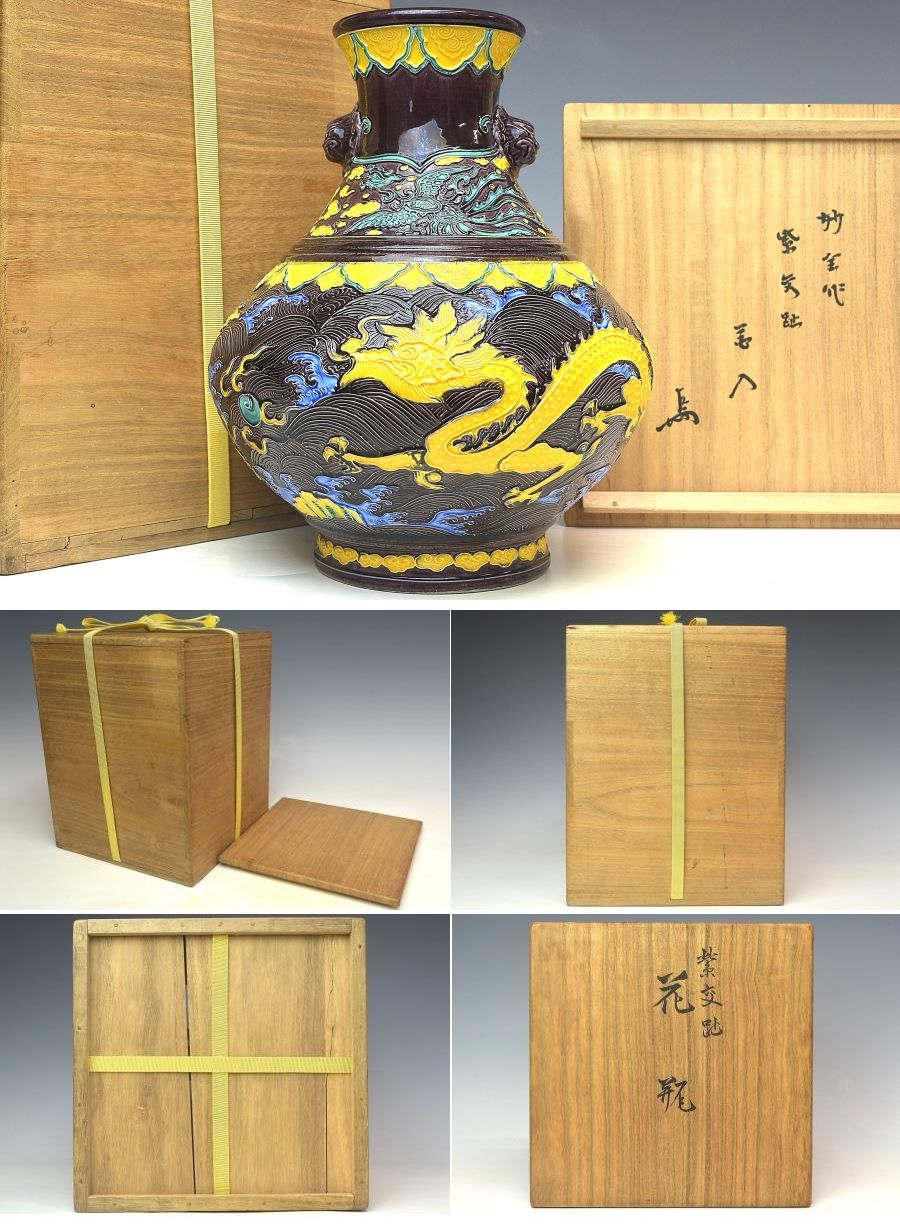
Exquisite Eiraku Zengoro XIV (Myosen) Purple Kochi Dragon & Phoenix Vase — Signed Tomobako — 26 cm Kyoto Ware Masterpiece
Exquisite Eiraku Zengoro XIV (Myosen) Purple Kochi Dragon & Phoenix Vase — Signed Tomobako — 26 cm Kyoto Ware Masterpiece
Couldn't load pickup availability
Have a reasonable price in mind? Submit your best offer and our concierge will review it personally.
Overview & Cultural Context
This is a rare Kyoto-ware flower vessel attributed to Eiraku Zengoro XIV, known by the art name "Myosen." In the tea world, the Eiraku lineage signals disciplined kiln control, historically favored color systems, and a deliberate balance between decorative brilliance and formal restraint. A vase like this is not "just a display object"—it is a tokonoma anchor, designed to hold space and stabilize the mood of a room.
The work presents the classic pairing of dragon and phoenix: opposing energies held in one composition. The dragon reads as command, protection, and decisive force; the phoenix reads as renewal, virtue, and refined auspiciousness. Together, they function like a visual vow: strength without brutality, beauty without fragility. In a tea or gallery setting, this iconographic pairing becomes a quietly persuasive symbol—prosperity framed as ethical order.
Artist & Lineage
Eiraku Zengoro is a Kyoto kiln lineage with deep ties to tea culture and the aesthetic expectations of formal utensils. The “Myosen” attribution is especially meaningful because it points to a generational signature style: confident glazing, crisp edge control, and a taste for surfaces that feel both celebratory and composed. The included storage presentation (tomobako) and the presence of a tea-master-associated lid/mark indicated in the original listing are notable, because tea masters historically acted as cultural validators—selecting, naming, and preserving objects that met the standard of a refined alcove. Even when displayed purely as art, these cues add legitimacy and help explain why Eiraku-lineage pieces consistently sit in a higher collector tier than unsigned decorative wares.
Material & Technique
The surface is described in the listing as purple Kochi (kochi-style) glazing—an established color field associated with classical taste and disciplined firing. The relief work emphasizes the dragon’s body and movement in a way that reads clearly from across a room. This is not a miniature "detail piece"; it is built to be readable at distance. The vessel shape provides a stable body mass for arrangement, while the rim and shoulder proportions keep the silhouette elegant rather than heavy.
Iconography & Meaning
The dragon is the emblem of upward force, control over weather and water, and the protective intelligence that "sees before it strikes." The phoenix is a counterweight: harmony, rebirth, cultural refinement, and the promise that order can be beautiful. On a functional flower vessel, this pairing is more than decoration—it becomes a daily atmosphere-setting instrument. Placed in a tokonoma, it speaks before any conversation starts.
Why Buyers Seek This Type of Work
- Tea-room authority: The Eiraku name is consistently associated with tea-adjacent standards—objects that look impressive but also belong in formal culture.
- "Room anchor" scale: At approximately 26 cm tall, it has enough height to command a shelf, alcove, or cabinet without needing a pedestal.
- Iconic pairing: Dragon + phoenix is one of the most universally collected auspicious pairings in East Asian decorative arts.
- Display + lineage value: Tomobako storage, artist attribution, and tea-master association cues (per listing) are the kind of provenance signals collectors prioritize.
- Rare color discipline: Kochi-style purple reads rich and formal—less common than typical blue-and-white, and often favored for curated interiors.
Condition & Notes
The original listing notes the wooden box has signs of age such as light soiling or minor wear, while the work itself is described as being in a good, clean condition with no standout damage. As always for collectible ceramics, please review all photos closely for hairline lines, glaze variations, and kiln marks that are normal to the medium.
Key Facts
- Object type: Kyoto-ware flower vase (tokonoma / tea-room display vessel)
- Attribution: Eiraku Zengoro XIV (Myosen) (per listing)
- Technique: Kochi-style color glaze with dragon & phoenix relief motif
- Height: approx. 26 cm (per listing)
- Included: tomobako storage box; tea-master-associated lid/mark indicated in listing
- Condition: work appears clean; box shows age wear (per listing)
Shipping & Logistics
This piece will be professionally packed for ceramic safety: internal padding, edge stabilization at rim and shoulder, and a double-box method. Because glaze surfaces can chip from shock at the rim and shoulder, we pack for impact resistance rather than minimal size.
Confidence & Verification Notes
Artist name, dating nuance, and tea-master association cues are based on the original listing text and visible presentation cues. Without independent workshop documentation, these should be treated as highly plausible rather than absolute. We catalog this piece as a Kyoto-ware, Eiraku-lineage-associated flower vessel with strong collector legitimacy signals.
Explore the Collection
To browse related museum-grade ceramics and culturally significant works curated under the same standards, explore our Japanese Ceramics & Decorative Arts collection.
Concierge Logistics
If you need destination-specific courier optimization, multi-item consolidation, or white-glove handling instructions, our concierge team can support you end-to-end. Learn more via Japonista Concierge Logistics™.
Authenticity & Stewardship
Evaluated under the Japonista Authentication Framework™:
- Material, carving, and surface-study comparison
- Iconographic and stylistic verification
- Condition and stability review (surface integrity)
- Construction assessment and handling-risk evaluation
Guaranteed 100% Authentic. Covered by the Japonista Lifetime Authenticity Warranty™.
A Note on Stewardship and Collecting
At Japonista, we approach Buddhist statues, sacred images, and ritual objects not merely as collectibles, but as cultural and spiritual artifacts deserving of respect, understanding, and careful presentation. Every piece we offer is thoughtfully examined, researched, and curated with sensitivity to its origin, meaning, and historical role.
Our role is not only to offer access to rare and meaningful objects, but to serve as responsible custodians—connecting the right works with collectors who value depth, intention, and authenticity.
Inquiries, Availability, and Private Consideration
Some sacred works may allow room for discussion, while others are held firmly due to rarity, condition, or cultural importance. All inquiries are reviewed personally and discreetly, and we welcome thoughtful questions or expressions of interest.
If you are exploring a particular theme, deity, lineage, or period—or seeking guidance in building a focused collection—our concierge team is always available to assist with quiet expertise and care.
Concierge Support & Collector Guidance
Japonista Concierge™ provides personalized assistance for collectors seeking deeper understanding, thoughtful acquisition, or long-term curation strategies. Whether your interest is devotional, scholarly, or aesthetic, we are here to help guide your journey with clarity and respect.
For select high-value or historically significant works, private reservation or structured payment arrangements may be available on a case-by-case basis. Please reach out to discuss eligibility and discreet options.
Before Proceeding
We kindly encourage collectors to review our shop policies and house guidelines, available through the links in our website footer, which outline shipping, handling, and conditions specific to vintage, sacred, and collectible works.
A Closing Note
Thank you for exploring Japonista’s collection of Buddhist statues, sacred art, and spiritual artifacts. We are honored to share these meaningful works and to help place them where they may continue to be appreciated, studied, and respected.
If you have questions or wish to explore related works, please feel free to contact Japonista Concierge™ at any time.