Rare Vintage, Antiques and Art Collector / Curator / Personal Shopper From Japan
Edo Period Zushi Shrine – Benzaiten Daikokuten Bishamonten Triad | Antique Japanese Buddhist Sculpture
Edo Period Zushi Shrine – Benzaiten Daikokuten Bishamonten Triad | Antique Japanese Buddhist Sculpture
Couldn't load pickup availability
Have a reasonable price in mind? Submit your best offer and our concierge will review it personally.
ITEM IDENTIFICATION
Figures (Triad):
-
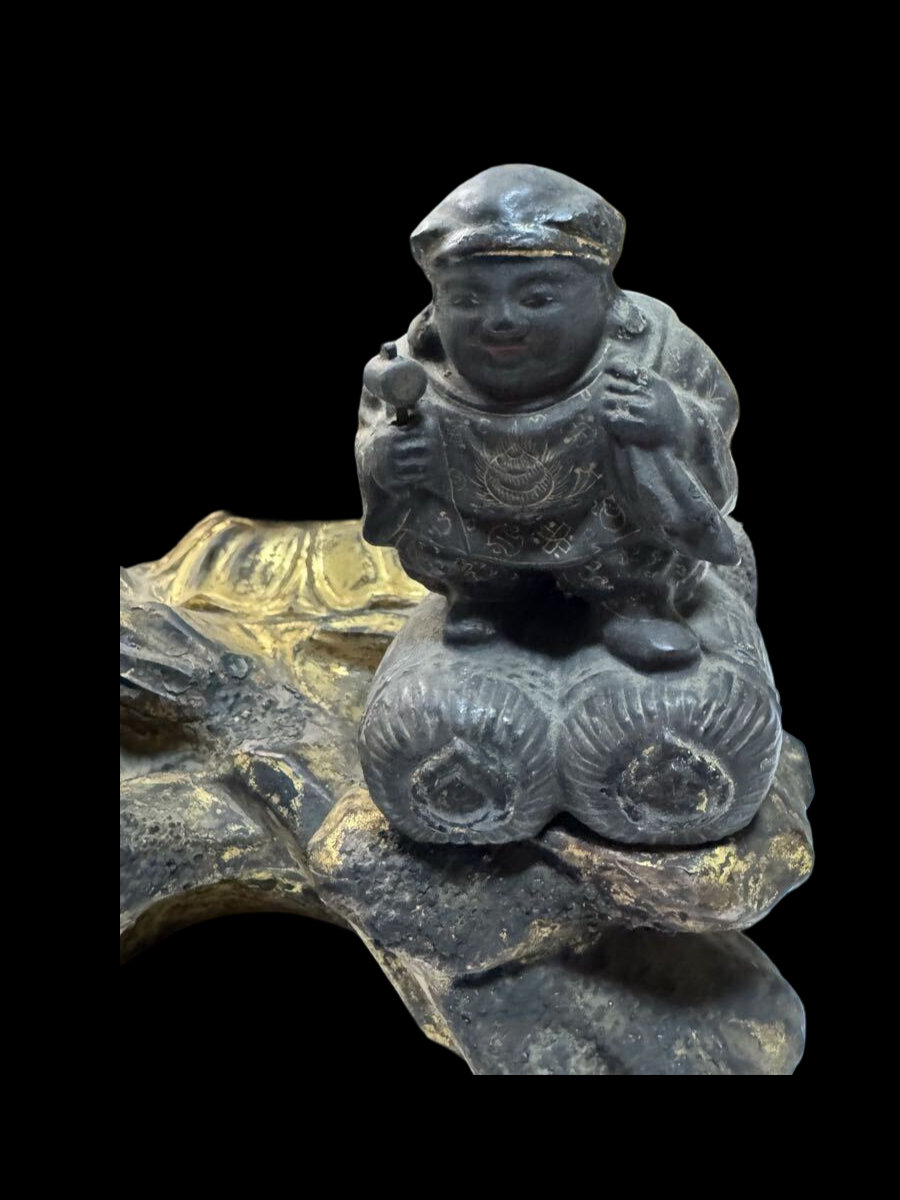
Benzaiten – deity of eloquence, water, art, music, and wisdom
-
Daikokuten – deity of prosperity, sustenance, and household fortune
-
Bishamonten – guardian king of the north, protector of the Dharma
Housing:
Original wooden zushi with hinged doors and gilt-lacquered interior
Material:
Carved wood figures; lacquered shrine with gilt interior surfaces
Function:
Private household devotional shrine combining fortune deities and protective guardians, a configuration particularly resonant in Edo-period domestic worship.
DIMENSIONS (Approximate)
-
Overall height: ~32 cm
-
Width: ~23 cm
-
Depth: ~16 cm
This scale places the object firmly within household altar use, suitable for tokonoma display, family butsudan adjacency, or private devotional shelving.
ICONOGRAPHY & DEVOTIONAL CONTEXT
This triad brings together three figures whose combined presence is both practical and symbolic. Unlike single-deity shrines focused on one doctrinal function, this configuration reflects the Edo-period tendency toward integrated, lived spirituality — protection, prosperity, and cultivated refinement unified within a single sacred space.
-
Benzaiten, the only female among the Seven Lucky Gods, introduces grace, intellect, and artistic cultivation.
-
Daikokuten anchors the triad in earthly sustenance, abundance, and household stability.
-
Bishamonten, armored and commanding, serves as a spiritual bulwark — a guardian against misfortune and moral decay.
Placed together within a zushi, these figures transform the shrine into a microcosm of balanced life: creativity, material well-being, and protection. During the Edo period, such combinations were especially favored by merchants, artisans, and educated households who sought both worldly success and spiritual safeguarding.
ZUSHI AS SACRED ARCHITECTURE
The zushi is not merely a container. Its dark exterior contrasts deliberately with the warm gilt interior, creating a ritual reveal when the doors are opened. The interior gold surfaces amplify light, visually elevating the figures and marking the space as distinct from the ordinary world.
Wear visible on the lacquer — including areas of flaking — should be read as evidence of age and repeated devotional handling, not neglect. Many Edo-period zushi survive today precisely because they were valued, opened, closed, moved, and protected across generations.
MATERIAL & SURFACE OBSERVATION
-
Wooden figures with softened contours from age
-
Interior gilt showing oxidation and tonal depth rather than brightness
-
Exterior lacquer exhibiting loss consistent with long-term use
-
No visual indicators of modern repainting or aggressive restoration
Overall surface condition aligns with authentic Edo-period devotional objects, not later Meiji export works or modern reproductions.
CONDITION REPORT
-
Noticeable age-related wear throughout
-
Lacquer loss and flaking on the zushi exterior
-
General surface patina consistent with “old Buddha” condition
No attempt is made to present this as pristine. Its value lies in historical presence, not cosmetic perfection.
COLLECTOR RELEVANCE
This piece will strongly appeal to:
-
Collectors of Edo-period domestic Buddhism
-
Those interested in Seven Lucky Gods iconography
-
Wabi-sabi aligned interiors and contemplative spaces
-
Collectors seeking complete shrine + figures, not loose statuary
The triadic combination, intact zushi, and legible age make this an educationally rich and display-ready artifact.
Authenticity & Stewardship
Evaluated under the Japonista Authentication Framework™:
- Material, carving, and surface-study comparison
- Iconographic and stylistic verification
- Condition and stability review (surface integrity)
- Construction assessment and handling-risk evaluation
Guaranteed 100% Authentic. Covered by the Japonista Lifetime Authenticity Warranty™.
A Note on Stewardship and Collecting
At Japonista, we approach Buddhist statues, sacred images, and ritual objects not merely as collectibles, but as cultural and spiritual artifacts deserving of respect, understanding, and careful presentation. Every piece we offer is thoughtfully examined, researched, and curated with sensitivity to its origin, meaning, and historical role.
Our role is not only to offer access to rare and meaningful objects, but to serve as responsible custodians—connecting the right works with collectors who value depth, intention, and authenticity.
Inquiries, Availability, and Private Consideration
Some of the cultural and heritage works may allow room for discussion, while others are held firmly due to rarity, condition, or cultural importance. All inquiries are reviewed personally and discreetly, and we welcome thoughtful questions or expressions of interest.
If you are exploring a particular theme, deity, lineage, or period—or seeking guidance in building a focused collection—our concierge team is always available to assist with quiet expertise and care.
Concierge Support & Collector Guidance
Japonista Concierge™ provides personalized assistance for collectors seeking deeper understanding, thoughtful acquisition, or long-term curation strategies. Whether your interest is devotional, scholarly, or aesthetic, we are here to help guide your journey with clarity and respect.
For select high-value or historically significant works, private reservation or structured payment arrangements may be available on a case-by-case basis. Please reach out to discuss eligibility and discreet options.
Before Proceeding
We kindly encourage collectors to review our shop policies and house guidelines, available through the links in our website footer, which outline shipping, handling, and conditions specific to vintage, sacred, and collectible works.
A Closing Note
Thank you for exploring Japonista’s collection of Oriental Cultural Heritage and arts. We are honored to share these meaningful works and to help place them where they may continue to be appreciated, studied, and respected.
If you have questions or wish to explore related works, please feel free to contact Japonista Concierge™ at any time.