
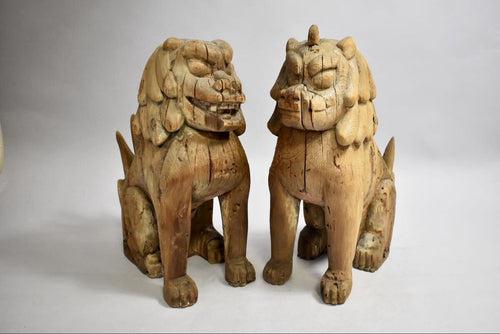


Late Edo Large Carved Wood Komainu Pair, A-Un Shrine Guardian Lion-Dogs, Provincial Sculpture, 53 cm
Late Edo Large Carved Wood Komainu Pair, A-Un Shrine Guardian Lion-Dogs, Provincial Sculpture, 53 cm
- Dispatch
- Prepared and sent from Tokyo within 7–14 days, often sooner, or as arranged
- Arrival
- United States · usually 4–7 days after dispatch, insured and tracked Check the Shipping Flowchart here
- Shipping
- Quoted for this piece before purchase ·
- Import
Duties and customs · View the estimate
A guide for this piece: about $678, based on the 10% US charge on the declared value of goods made in Japan.
The final figure is set by US Customs and depends on where the piece was made and the kind of object it is. Many antiques over a century old carry no ordinary duty; most jewellery and leather goods add a single-digit rate.
With EMS, any charge is collected by your postal service on delivery. For pieces of significant value we can often arrange duties prepaid before dispatch.
Your customs authority: U.S. Customs and Border Protection (CBP), CBP Information Center · +1 877 227 5511 within the United States; +1 202 325 8000 from abroad (Monday to Friday, 8:30 to 17:00 Eastern)
These figures are estimates for your guidance; the charge set by customs may come in over or under them.
How the estimate is reached · Ask for a figure on this piece
- Character
- Scoring underway ·
- Replies
- Within one Tokyo business day · Ask the curator team
- Guarantee
- Authenticity guaranteed · How we grade
Every piece is measured by hand, in centimetres as Japan measures. Please allow 1–2 cm (about ½ inch) for the give of the material and the hand that held the tape.
Where each figure is taken · View the plate

Object, sculpture and ceramics
Freight piece: please confirm delivery before purchase
This piece travels in a crate or by freight rather than standard mail, and may need careful dismantling before it can be packed. The shipping shown at checkout is an estimate. Japonista reserves the right to determine the final handling, crating and freight cost when your order is received, according to the piece, the destination and carrier conditions at that time.
We advise requesting a delivery quote before checkout. If the final cost is higher than the amount paid, we send the difference for your approval before dispatch. Your piece is held for you until it is settled.
Questions about delivery? Write to the curator deskCouldn't load pickup availability
All sales are final. Please read our refund policy before purchase.
Considered offers only. The Desk replies personally to figures made in good faith; those set far below the asking price receive no reply.
Examined in Tokyo, one price, insured to your door. How buying from Japonista works · Join the Circle, free
Oversized heads, block-cut manes and stern but measured faces give these large komainu the restrained power of late Edo provincial shrine carving. A matched, intact a-un pair in wood, the material most prone to loss, they are survivors of shrine rebuilding, reform and consolidation, now ready for a gallery or entryway.
The Piece
These komainu speak the restrained yet powerful sculptural language typical of late Edo provincial shrine production. The heads are oversized relative to the torsos, emphasizing vigilance and spiritual authority over anatomical realism, while the manes are carved in layered, block-like planes rather than deeply undercut curls, suggesting a workshop that prioritized durability and outdoor placement. Facial expressions are stern but not exaggerated, as befits guardians of a boundary rather than theatrical intimidators.
The a-un configuration remains intact: the open-mouthed figure symbolizes cosmic beginning and breath, the closed-mouthed figure completion and containment. Rooted in Shinto shrine guardianship with cross-influence from Buddhist temple statuary, the pair is carved in wood as single-block figures with applied elements, and surface wear reveals original tool paths beneath later smoothing, evidence of hand-carved production rather than serial replication.
Large wooden komainu of this size were typically commissioned by regional shrines rather than urban temples, which makes surviving examples comparatively scarce; their survival often depended on shrine rebuilding cycles, Meiji-era religious reforms and postwar consolidation. The absence of heavy repainting suggests the figures either predate widespread Meiji repainting campaigns or were deliberately left uncoated to emphasize raw material presence.
Comparable pairs of similar scale are increasingly absorbed into private collections, museum study groups and architectural salvage collections rather than remaining in shrine use. Large size, a matched original pair, wood construction with its higher attrition rate than stone and an intact a-un pairing all add to their rarity, for collectors of Japanese religious sculpture, shrine architectural artifacts, large-scale interior statements and museum reference.
Details
- Era: Late Edo period (18th–19th century), attributed
- Origin: Japan
- Material: Carved wood (single-block carving with applied elements)
- Measurements: Komainu A: height approx. 53 cm, depth approx. 48 x 19 cm · Komainu B: height approx. 51 cm, depth approx. 45.5 x 19 cm
- Weight: Komainu A approx. 9.36 kg · Komainu B approx. 9.88 kg · Combined packed shipping weight approx. 26–28 kg (estimated)
- Configuration: A-un (open mouth / closed mouth) guardian pairing
- Scale: Large-scale shrine-grade figures (not domestic altar size)
- Context: Shinto shrine guardianship with cross-influence from Buddhist temple statuary
- Also known as: Shishi pair; temple or shrine guardian figures
Condition
- Authentic aged condition consistent with Edo-period shrine statuary; both figures self-supporting and structurally stable.
- Surface abrasions from prolonged exposure.
- Age-related cracking along grain lines.
- Evidence of insect activity, inactive and historic.
- Localized repairs and stabilization.
- Minor losses to extremities consistent with shrine placement.
- Dry, matte wood surface with coloration deepened by age and oxidation; honest shrine-used condition with no aggressive restoration detected.
Display Considerations
- Floor-standing installation
- Entryway or gallery placement
- Requires structural flooring support due to weight
Authenticity & Care
The late Edo attribution rests on carving vocabulary, surface aging, iconographic proportions and construction method, and original tool paths visible beneath later smoothing point to hand-carved production. Every piece is examined and documented in Japan before dispatch and is offered with the Japonista authenticity guarantee.
Delivery from Japan
Packed by hand in Japan and shipped insured and tracked by EMS or an equivalent express service. Import duties and taxes, where applicable, are payable on arrival. Every sale is final; please ask anything you wish to know before you buy, and see our published policy.
Considered offers are welcome through Send an Offer, and each one is reviewed personally. Pieces over $1,000 may be reserved over several payments with Layaway Privilege™.
Continue browsing: Butsudan & Altars · Buddhist Statues & Sacred Art
Temple to Home
Monumental statues, zushi shrines and altars travel crated and insured through our Museum-Grade Logistics Suite™. Seeking a particular deity or school? The Hunting Salon™ searches Japan for it. Arrange crating and freight →
Collectors also search: large wooden komainu pair · edo period komainu statues · antique shrine guardian lion dogs · a-un komainu pair · japanese shrine guardian sculpture · carved wood shishi pair large · antique komainu japan


Chosen for you