Rare Vintage, Antiques and Art Collector / Curator / Personal Shopper From Japan
Edo Period Gyokugan Amida Nyorai Zushi 69cm — Temple-Housed Wooden Buddhist Sculpture with Crystal Eyes
Edo Period Gyokugan Amida Nyorai Zushi 69cm — Temple-Housed Wooden Buddhist Sculpture with Crystal Eyes
Couldn't load pickup availability
Have a reasonable price in mind? Submit your best offer and our concierge will review it personally.
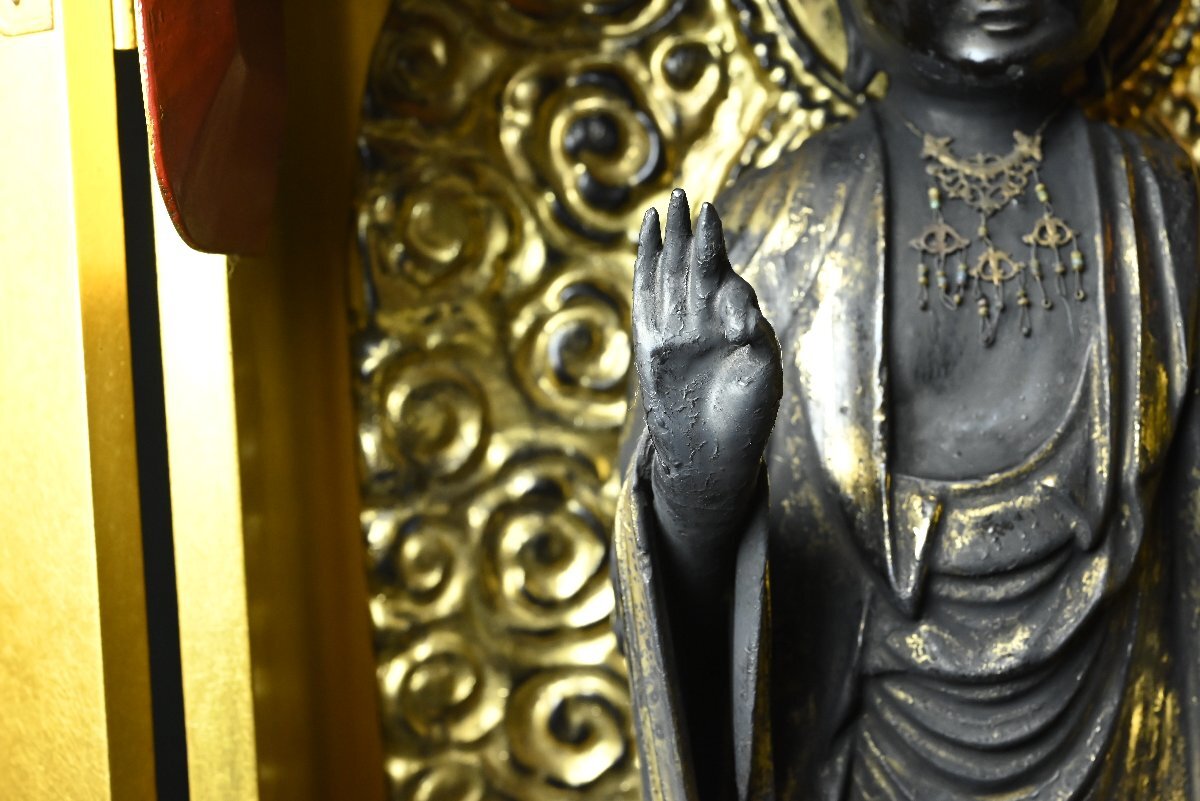
Catalogue Note: An imposing Edo-period image of Amida Nyorai (Amitābha Buddha), enshrined within its original zushi and standing approximately 69 cm in overall height. Distinguished by gyokugan crystal inset eyes, the sculpture achieves an immediacy of presence that is central to Pure Land devotion: Amida’s compassionate gaze as visual theology. In scale and intent it exceeds the domestic “small altar” register: works of this height were often commissioned for subsidiary halls, temple side chapels, and the private devotional rooms of high-ranking patrons whose religious practice was integrated with the temple economy of the period.
The figure is distinguished by the use of gyokugan—crystal inset eyes—an Edo-period technique reserved for higher-grade sculpture. By introducing a translucent, light-reactive gaze, gyokugan effects a kind of spiritual immediacy: the eyes do not merely depict seeing, they simulate presence. In the Pure Land context, this is not a superficial naturalism. Amida’s compassionate regard is doctrinal: it is the visual corollary of Infinite Light and Infinite Life, the promise that the devotee is “seen,” received, and guided toward rebirth in the Western Paradise.
The original zushi elevates the sculpture from an isolated image to a consecrated micro-architecture. It frames Amida not as an object, but as an installed presence, a “small hall” whose doors regulate visibility, reverence, and ritual time. The zushi’s gilded interior and aged surfaces—darkened where hands and incense smoke have passed—form a material record of practice. In collecting terms, this intact relationship between icon and shrine is a principal value driver: cabinet and figure together preserve the logic of use, not merely the logic of display.
The intact zushi elevates the work from an isolated figure to a consecrated micro-architecture, preserving the original relationship between icon and shrine. The gilded interior and age-darkened surfaces form a material record of ritual life.
Iconography and Context
Amida Nyorai stands at the center of Japanese Pure Land devotion (Jōdo and Jōdo Shin lineages), where recitation of the nembutsu and reliance on Amida’s vow offer a path of salvation accessible beyond monastic elite. Sculptural images of Amida are therefore not simply “Buddha statues”; they are instruments of vow and visual theology. The serenity of the expression, the controlled posture, and the measured stillness of the body communicate the doctrinal promise of reception (raigō) and the quiet inevitability of compassion.
Materials and Construction
Carved wood (species unconfirmed), assembled and finished for shrine display; gyokugan crystal eyes set within the face. Surface wear, abrasion, and patina should be interpreted as age-consistent rather than defects. The zushi is a functional cabinet construction rather than a later decorative frame.
Condition
Age-related wear and surface softening are expected. Please assume minor abrasions, small losses to surface finish, and oxidation/soiling within recesses consistent with shrine housing. Any restorations should be treated as possible unless specifically documented; no aggressive modern refinishing is implied.
Measurements
- Overall height (with zushi): approx. 69 cm
Authenticity & Stewardship
Evaluated under the Japonista Authentication Framework™:
- Material, carving, and surface-study comparison
- Iconographic and stylistic verification
- Condition and stability review (surface integrity)
- Construction assessment and handling-risk evaluation
Guaranteed 100% Authentic. Covered by the Japonista Lifetime Authenticity Warranty™.
A Note on Stewardship and Collecting
At Japonista, we approach Buddhist statues, sacred images, and ritual objects not merely as collectibles, but as cultural and spiritual artifacts deserving of respect, understanding, and careful presentation. Every piece we offer is thoughtfully examined, researched, and curated with sensitivity to its origin, meaning, and historical role.
Our role is not only to offer access to rare and meaningful objects, but to serve as responsible custodians—connecting the right works with collectors who value depth, intention, and authenticity.
Inquiries, Availability, and Private Consideration
Some of the cultural and heritage works may allow room for discussion, while others are held firmly due to rarity, condition, or cultural importance. All inquiries are reviewed personally and discreetly, and we welcome thoughtful questions or expressions of interest.
If you are exploring a particular theme, deity, lineage, or period—or seeking guidance in building a focused collection—our concierge team is always available to assist with quiet expertise and care.
Concierge Support & Collector Guidance
Japonista Concierge™ provides personalized assistance for collectors seeking deeper understanding, thoughtful acquisition, or long-term curation strategies. Whether your interest is devotional, scholarly, or aesthetic, we are here to help guide your journey with clarity and respect.
For select high-value or historically significant works, private reservation or structured payment arrangements may be available on a case-by-case basis. Please reach out to discuss eligibility and discreet options.
Before Proceeding
We kindly encourage collectors to review our shop policies and house guidelines, available through the links in our website footer, which outline shipping, handling, and conditions specific to vintage, sacred, and collectible works.
A Closing Note
Thank you for exploring Japonista’s collection of Oriental Cultural Heritage and arts. We are honored to share these meaningful works and to help place them where they may continue to be appreciated, studied, and respected.
If you have questions or wish to explore related works, please feel free to contact Japonista Concierge™ at any time.