Rare Vintage, Antiques and Art Collector / Curator / Personal Shopper From Japan
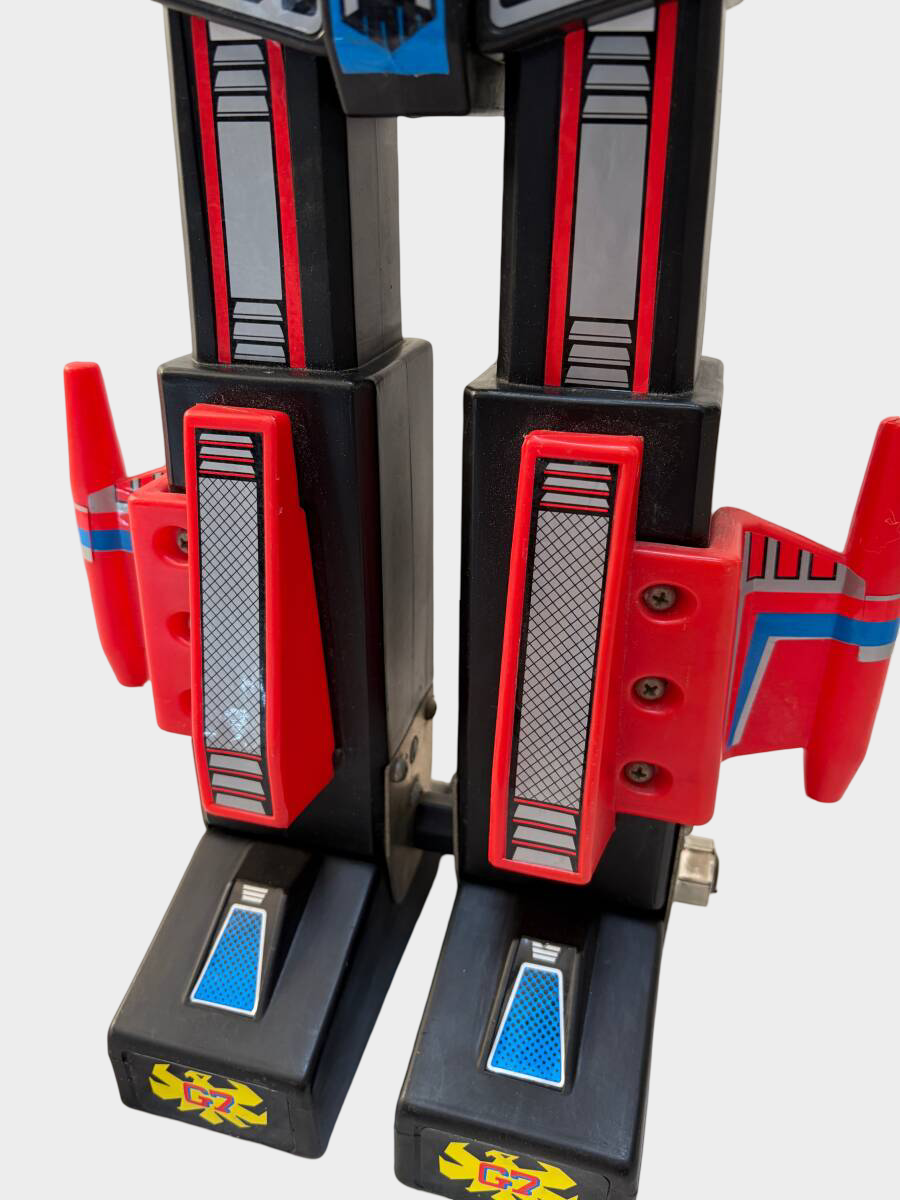
Clover Trider G7 Jumbo Machinder Display Figure, Vintage 1980s Japanese Robot, Large 60cm Class Collectible
Clover Trider G7 Jumbo Machinder Display Figure, Vintage 1980s Japanese Robot, Large 60cm Class Collectible
Couldn't load pickup availability
Have a reasonable price in mind? Submit your best offer and our concierge will review it personally.
Jumbo Machinder refers to a large-scale Japanese robot toy format, typically produced in soft vinyl at approximately 60 cm in height. Developed during the 1970s super-robot era, these figures were designed as monumental display pieces with missile-launching features and bold mechanical presence. Many of the most iconic examples were produced by Popy, a Bandai subsidiary renowned for defining the standards of Japanese robot toys.
CURATORIAL OVERVIEW — WHAT THIS OBJECT ACTUALLY IS
This is the kind of object that sits in the overlap between toy history and pop-design furniture. A large-format “Jumbo Machinder” class robot figure is not simply an upsized plaything; it is a room-presence artifact, built for visual impact first, then tactility. Trider G7’s design language, broad shoulders, emphatic crest, and banner-like wings, reads like a heraldic emblem translated into engineering. On a shelf it performs like a sculptural signpost: unmistakably Japanese mecha, unmistakably early-1980s, unmistakably made for collectors who want scale, not subtlety.
Trider G7 itself comes from Sunrise’s 1980–1981 robot television run, a period where robots were becoming brands, not just characters. This figure distills that era’s priorities into a single silhouette: strong front-facing geometry, high-contrast color blocking, and a “graphic clarity” that stays legible from across a room. In other words, it’s a display object engineered to be read at distance, which is exactly why the jumbo size tier matters.
Object: Clover “Invincible Robot Trider G7” Jumbo Machinder-format display figure (robot)
Category: Vintage Japanese character robot toy / display-scale figure
Era: 1980s (series era is 1980–1981; toy ecosystem continued into early 80s)
Format note: “Jumbo Machinder” is the collector shorthand for the big ~60 cm class of Japanese robot figures originally popularized in the 1970s and carried forward as an iconic size tier.
Condition: Vintage wear consistent with age; no major breakage reported in the listing details panel (expect scuffs/rubs and small paint/edge wear typical for this format).
Dimensions (display):
-
Height: ~60 cm (class-standard for Jumbo Machinder format; photos match the silhouette/scale)
-
Width: ~26 cm (wing span)
-
Depth: ~15 cm (torso-to-back)
ICONOGRAPHY & THEMATIC ANALYSIS
Trider G7 is a working-class hero robot dressed in ceremonial shapes. The wings read like a crest or standard, turning the robot into a moving insignia. The chest emblem functions as an authority mark, almost like a uniform plate. This is a recurring motif in late-70s to early-80s mecha: the machine is not only a weapon, it is a symbol, a flag for the story’s moral alignment.
The color architecture matters. Black anchors the torso like armor, while the bright primary accents map “function zones” for the eye. The result is less about realism and more about instant identification. In the jumbo format, that design logic becomes architectural: the figure is effectively a standing poster, but three-dimensional.
MATERIAL & CRAFT ASSESSMENT
In this size tier, construction choices prioritize durability and presence. Expect a mixed-material build common to large Japanese robot figures: rigid body shells with resilient components, designed to survive handling and display over decades. The collector tells are the edges and planes: crisp geometry that catches light cleanly, plus large uninterrupted color fields that show patina honestly (micro scuffs, surface rubs, and small gloss shifts are normal and often visually pleasing on display).
Because this is a large figure, condition grading is less about “mint perfection” and more about whether the silhouette reads cleanly at distance: straight stance, intact crest/wings, and no catastrophic fractures. This piece appears positioned as a display-forward example.
HISTORICAL CONTEXT — WHY THESE SURVIVE AT ALL
The jumbo robot era is a time capsule of Japanese industrial optimism. These objects were made when character robots were cultural infrastructure: Saturday TV, department-store toy floors, and the birth of modern collector memory. The reason survivors are prized is simple: big toys live hard lives. They are moved, stored, bumped, and outgrown. Boxes get lost, wings get stressed, corners get scuffed. So when a large-format robot remains visually “complete” in stance and presence, it becomes less a toy and more a surviving artifact of a domestic design culture.
Trider G7’s 1980–1981 timing matters too: it sits at a hinge moment between earlier super-robot iconography and the broader evolution of robot narratives in the 80s. The jumbo figure carries that moment into the physical world.
COLLECTOR RELEVANCE
This is for the collector who wants scale as a value language. A 60 cm class robot is the difference between “I collect” and “my room is a gallery.” It pairs naturally with vintage robot box art, mid-century shelving, studio desks, and modern interiors that need one loud, intelligent object to anchor a corner.
It also fits the “one-per-series” strategy: a single flagship jumbo robot per franchise, chosen for silhouette strength. Trider G7 qualifies because the wings and crest make it instantly legible, even to non-specialists.
SUMMARY — WHY THIS PIECE MATTERS
A Clover Trider G7 jumbo-format figure is a high-impact survivor from Japan’s golden age of home mecha culture: bold geometry, emblematic wings, and the kind of scale that turns nostalgia into interior design. It’s not subtle, and that’s the point. It’s a standing monument to the era when robots were household icons and toy engineering doubled as graphic art.
Why Popy Matters
Founded in 1971 and later integrated into Bandai, Popy occupies a foundational position in the history of Japanese character toys. During the explosive growth of anime and tokusatsu in the 1970s, Popy established the manufacturing and design standards that would define how robots and heroes were translated from screen to physical form.
Popy’s significance lies not only in licensing major properties, but in formalizing scale, weight, and material language. Through lines such as Chogokin and Jumbo Machinder, the company set expectations for mass, durability, and visual authority—creating toys that felt monumental rather than disposable. These objects were designed to command space, functioning as both playthings and display icons within the home.
Many conventions now taken for granted in Japanese robot toys—die-cast heft, oversized proportions, bold mechanical silhouettes—were normalized through Popy’s output. Even after the brand was absorbed into Bandai in the early 1980s, the term “Popy era” continues to signal a peak period of experimentation, quality, and cultural impact.
For collectors, Popy represents origin rather than revival: the moment when Japanese toy design matured into a globally influential language. Items bearing the Popy name are recognized not merely as licensed merchandise, but as historical benchmarks in the evolution of modern toy culture.
Authenticity & Collectible Stewardship
Evaluated under the Japonista Collectibles Authentication Framework™:
-
Period, manufacturer, and production-era assessment
-
Material, paint, lithography, and surface-wear analysis
-
Mechanical, structural, and component integrity review (where applicable)
-
Design, iconography, and cultural-context verification
Guaranteed 100% Authentic.
Every piece is backed by the Japonista Lifetime Authenticity Warranty™ and curated with collector-grade scrutiny.
A Note on Collecting & Preservation
At Japonista, we approach vintage and modern toys not merely as nostalgic objects, but as design artifacts, cultural touchstones, and expressions of their era—from postwar ingenuity and Showa imagination to contemporary pop and designer movements.
Each work is carefully examined, researched, and presented with respect for its original intent, historical context, and collector relevance, balancing preservation with the honest character earned through time and play.
Our role is not only to offer access to meaningful collectibles, but to act as thoughtful custodians—connecting the right pieces with collectors who value history, originality, and lasting significance.
Inquiries, Availability, and Private Consideration
Some collectible works may allow room for discussion, while others are held firmly due to rarity, condition, provenance, or cultural importance. All inquiries are reviewed personally and discreetly, and we welcome thoughtful questions or expressions of interest.
If you are exploring a specific theme, franchise, maker, era, or mechanical category—or seeking guidance in building a focused collection—our team is always available to assist with informed, quiet expertise.
Concierge Support & Collector Guidance
Japonista Concierge™ offers personalized assistance for collectors seeking deeper understanding, strategic acquisitions, or long-term curation across vintage and modern collectibles.
Whether your interest lies in nostalgia, design history, mechanical fascination, or pop-culture legacy, we are here to support your collecting journey with clarity, care, and discretion.
For select high-value or historically significant pieces, private reservation or structured payment arrangements may be available on a case-by-case basis. Please contact us to discuss eligibility and options.
Before Proceeding
We kindly encourage collectors to review our shop policies and house guidelines, available through the links in our website footer, which outline shipping, handling, and condition standards specific to vintage, mechanical, and collectible works.
A Closing Note
Thank you for exploring Japonista’s collection of vintage and modern toys, robots, and cultural collectibles. We are honored to share these enduring objects of imagination and design—and to help place them where they may continue to be appreciated, studied, and enjoyed.
If you have questions or wish to explore related works, please feel free to contact Japonista Concierge™ at any time.