Bullmark
Bullmark Walking Jirass (Giras) Battery-Operated Remote-Control Tin Kaiju, Ultraman Era, Ref. 0913
Bullmark Walking Jirass (Giras) Battery-Operated Remote-Control Tin Kaiju, Ultraman Era, Ref. 0913
Couldn't load pickup availability
Have a reasonable price in mind? Submit your best offer and our concierge will review it personally.
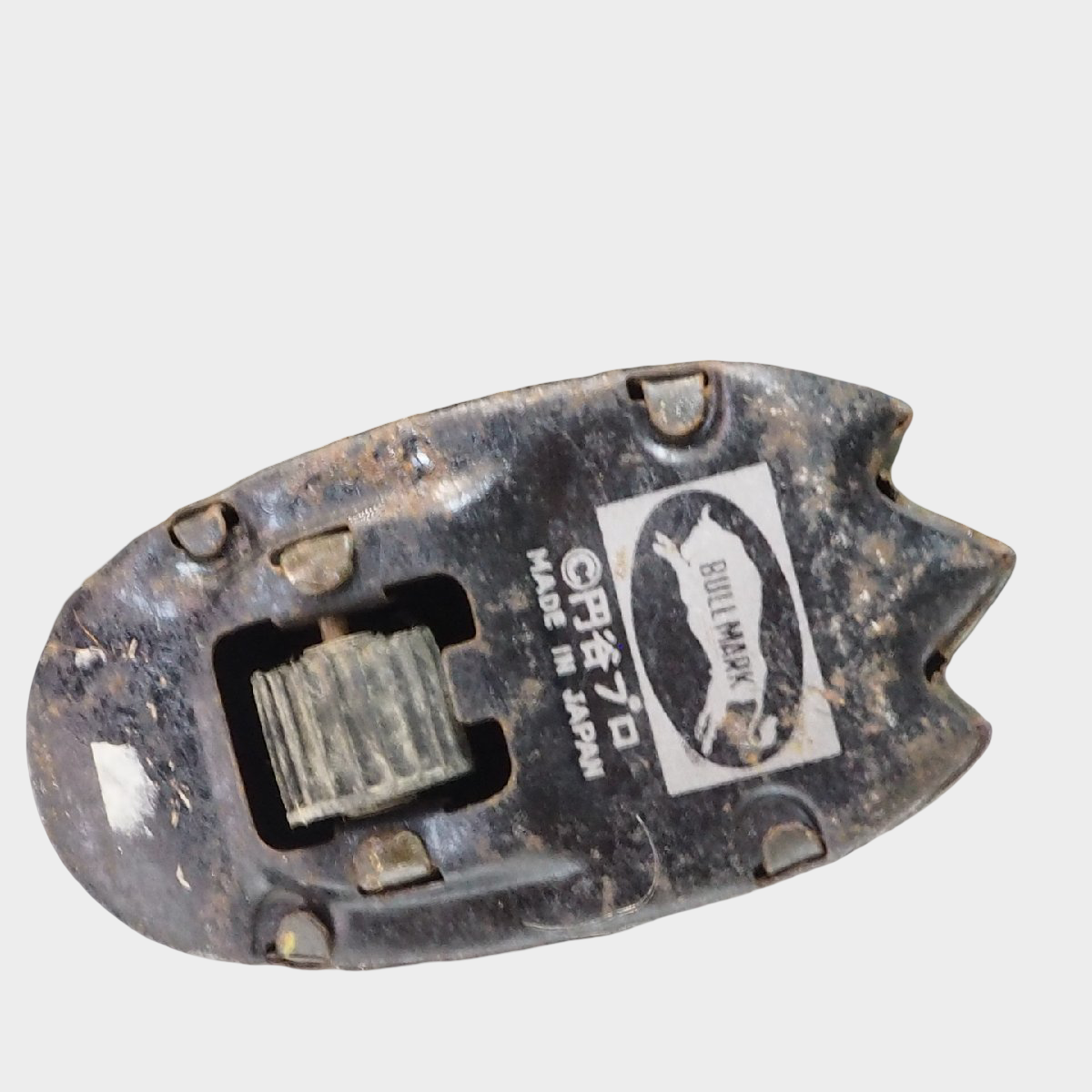
Jirass, with its upright reptilian body and dramatic neck frill, is one of the most recognizable monsters of the early Ultraman era. Bullmark built it in thick-gauge tin with remote-control walking action, and this example keeps its original wiring, mechanism and factory paint beneath an aged patina.
The Piece
This Bullmark kaiju tin toy depicts Jirass, known to many collectors as Giras, from Japan's Ultraman-era tokusatsu golden age. Engineered for floor play and built with thick-gauge tin, the figure translates television monster spectacle into kinetic, mechanical presence.
Jirass is recognizable by its upright stance, reptilian body and frill-like neck structure, a design that reflects mid-1960s tokusatsu aesthetics: theatrical, bold and engineered for silhouette impact on the television screens of the day. Bullmark's interpretation turns that on-screen presence into a large-format mechanical tin figure, favoring mass, stance and movement over fine surface detail, exactly as intended for kaiju play.
Bullmark dominated the kaiju toy market during the late-1960s Showa explosion of tokusatsu media. While many makers produced static figures, Bullmark pushed toward motion: walking, sparking, remote-controlled monsters that brought television battles into the home. Its kaiju were known for thick-gauge tin, simplified but powerful sculpting and robust internal mechanisms, and even in worn condition intact mechanical examples remain highly desirable because so few survive.
Serious collectors prioritize Bullmark for era authenticity, as the toys were made during the original broadcast years rather than as nostalgia revivals; for mechanical complexity, since remote-control walking kaiju represent the highest tier of Showa toy engineering; for low survival, large tin kaiju having been played hard; and for a monster-first focus that made the kaiju the main attraction. Jirass in particular adds depth to Ultraman collections beyond the usual icons. Compared with Marusan vinyl kaiju (softer, more sculptural, less mechanical), Yonezawa tin robots (hero-focused) and later nostalgic soft vinyl releases, it sits where mechanical tin engineering meets kaiju mythology, within a blue-chip category of Showa collectibles defined by low survivorship, mechanical complexity and enduring franchise importance.
Details
- Maker: Bullmark (Japan)
- Reference: 0913
- Character: Jirass (ジラース), also known as Giras; Ultraman-era kaiju
- Era: Ultraman era, Showa period
- Origin: Japan
- Material: Lithographed tin body with molded and applied details
- Finish: Original factory paint with aged surface patina
- Mechanism: Battery-operated remote-control walking action; original wiring and mechanism present
- Scale: Large, floor-play oriented kaiju format
Condition
- Original factory paint with an aged surface patina.
- The original wiring and walking mechanism are present.
Jirass or Giras
Both names are correct but used differently. The monster's Japanese name, ジラース, is written and pronounced closer to Jirass, which is the form used in official media, episode guides and modern reference books. When early Ultraman materials were translated, catalogued or exported, the name was often simplified to Giras, the form still common on vintage toy boxes, in overseas dealer catalogues and among Western collectors.
What a Kaiju Is
Kaiju (怪獣) literally means "strange beast" or "mysterious creature": the giant monsters of Japanese film, television and popular culture. They function less as villains than as symbols, forces of nature and moral metaphors, each one a being that represents something humanity cannot fully control, whether nuclear power, war trauma, natural disaster, pollution, technological hubris or fear of the unknown.
The form emerged in post-war Japan, after Hiroshima and Nagasaki, United States nuclear testing in the Pacific and rapid industrialization. Godzilla (Gojira) came first, a living metaphor for nuclear devastation, and kaiju became a language for disaster. Unlike Western monsters, which are usually individual villains defeated once, kaiju are collective threats that return, neutral and consequential rather than evil, and their stories tend to end in uneasy balance, sacrifice or containment rather than victory. In Ultraman, kaiju are weekly, manageable fears; in Godzilla, the kaiju is the trauma itself.
- Nature-born kaiju: earth spirits, ancient creatures, natural balance gone wrong
- Science-created kaiju: nuclear mutation and experiments gone wrong, as with Godzilla and many Showa-era monsters
- Alien kaiju: invasions and external threats, common in late Showa films
- Mechanical kaiju: artificial answers to fear, as with Mechagodzilla
Authenticity & Care
Bullmark remote-control walking Jirass retaining its original wiring, mechanism and factory paint. Every piece is examined and documented in Japan before dispatch and is offered with the Japonista authenticity guarantee.
Delivery from Japan
Packed by hand in Japan and shipped insured and tracked by EMS or an equivalent express service. Import duties and taxes, where applicable, are payable on arrival. Returns follow our published policy.
Considered offers are welcome through Send an Offer, and each one is reviewed personally. Pieces over $1,000 may be reserved over several payments with Layaway Privilege™.
Continue browsing: Vintage Toys · Anime Collectibles
Related pieces: Bullmark Baragon metallic green tin kaiju · Bullmark Godzilla remote-control tinplate toy · Bullmark Baragon electric walking tin kaiju
Toy Box Requests
Hunting a particular robot, kaiju, figure or model? The Hunting Salon™ searches Japan’s collector shops and private collections, and the Deputy Vault™ secures a piece you have already found. Begin a Hunting Salon™ request →
Collectors also search: bullmark jirass · bullmark giras tin toy · giras kaiju toy · jirass ultraman monster toy · bullmark remote control kaiju · vintage ultraman kaiju tin toy · bullmark walking kaiju