Rare Vintage, Antiques and Art Collector / Curator / Personal Shopper From Japan
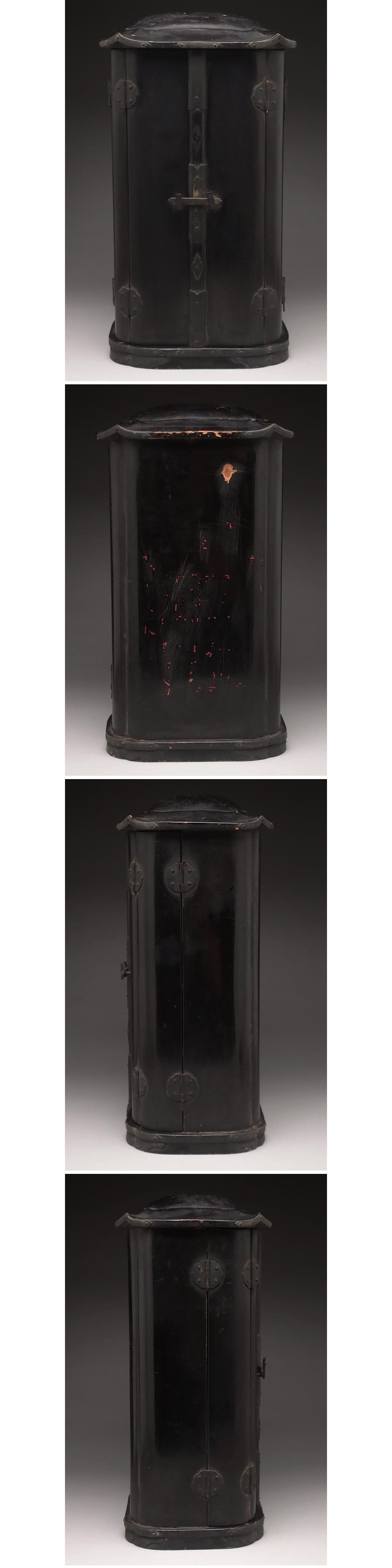
Bato Kannon Zushi (Horse-Head Kannon) — Eight-Armed Polychrome Wood Image | Edo-Period Esoteric Protector | Portable Shrine Cabinet (37.4 cm)
Bato Kannon Zushi (Horse-Head Kannon) — Eight-Armed Polychrome Wood Image | Edo-Period Esoteric Protector | Portable Shrine Cabinet (37.4 cm)
Couldn't load pickup availability
Have a reasonable price in mind? Submit your best offer and our concierge will review it personally.
Bato Kannon Zushi — Horse‑Head Kannon (Eight‑Armed Esoteric Form)
This Edo‑period Buddhist zushi enshrines Bato Kannon, the Horse‑Head manifestation of Kannon revered in esoteric Buddhism for pacifying rage, protecting sentient beings, and guiding those bound by instinct and suffering. Distinguished by a fierce countenance and dynamic posture, this form represents compassion expressed through forceful clarity.
A compact shrine cabinet (zushi) housing a forceful and rare iconographic form of Avalokiteshvara: Bato Kannon—“Horse-Head Kannon”—here rendered in the eight-armed esoteric (Myo-o) mode. Even in small domestic formats, Bato Kannon is never gentle in presentation. The deity’s function is to cut through delusion, suppress harmful forces, and deliver beings from states of suffering with a directness that looks fierce because its compassion is urgent.
Within Japanese devotional culture, this image sits at an intersection: the familiar compassion of Kannon, and the wrathful visual language of esoteric Buddhism. The horse-head crest is not decorative. In doctrine it is a sign of unstoppable momentum—an emblem of power that tramples obstacles, drives out disease and malign influence, and pulls the practitioner through karmic impasses.
This example appears as a seated polychrome wooden image, contained within a lacquer-tone cabinet with gilt interior panels. The cabinet reads as a threshold: doors open to reveal a concentrated ritual space, turning a shelf or alcove into a miniature sanctuary.
MATERIAL, PERIOD & ATTRIBUTION
- Material: Carved wood with polychrome pigments
- Technique: Hand‑carved, assembled, and painted; zushi shrine cabinet construction
- Period: Edo period (17th–19th century)
- Tradition: Esoteric Buddhist devotional sculpture
ICONOGRAPHY & FORM
- Deity: Bato Kannon (Horse‑Head Kannon)
- Form: Wrathful manifestation of Avalokiteshvara
- Arms: Multi‑armed (interpreted as eight‑armed esoteric form)
- Function: Subjugation of negative forces, karmic purification, protection
DIMENSIONS
- Total height (including zushi): approx. 37–38 cm
- Zushi cabinet width: approx. 18–20 cm
Collector’s Relevance
Wrathful Kannon forms are markedly rarer than serene devotional types, particularly in complete zushi ensembles. This piece holds strong appeal for collectors of esoteric Buddhist iconography, Shugendo‑related imagery, and Edo‑period domestic religious art.
Authenticity & Stewardship
Evaluated under the Japonista Authentication Framework™:
- Material, carving, and surface-study comparison
- Iconographic and stylistic verification
- Condition and stability review (surface integrity)
- Construction assessment and handling-risk evaluation
Guaranteed 100% Authentic. Covered by the Japonista Lifetime Authenticity Warranty™.
A Note on Stewardship and Collecting
At Japonista, we approach Buddhist statues, sacred images, and ritual objects not merely as collectibles, but as cultural and spiritual artifacts deserving of respect, understanding, and careful presentation. Every piece we offer is thoughtfully examined, researched, and curated with sensitivity to its origin, meaning, and historical role.
Our role is not only to offer access to rare and meaningful objects, but to serve as responsible custodians—connecting the right works with collectors who value depth, intention, and authenticity.
Inquiries, Availability, and Private Consideration
Some of the cultural and heritage works may allow room for discussion, while others are held firmly due to rarity, condition, or cultural importance. All inquiries are reviewed personally and discreetly, and we welcome thoughtful questions or expressions of interest.
If you are exploring a particular theme, deity, lineage, or period—or seeking guidance in building a focused collection—our concierge team is always available to assist with quiet expertise and care.
Concierge Support & Collector Guidance
Japonista Concierge™ provides personalized assistance for collectors seeking deeper understanding, thoughtful acquisition, or long-term curation strategies. Whether your interest is devotional, scholarly, or aesthetic, we are here to help guide your journey with clarity and respect.
For select high-value or historically significant works, private reservation or structured payment arrangements may be available on a case-by-case basis. Please reach out to discuss eligibility and discreet options.
Before Proceeding
We kindly encourage collectors to review our shop policies and house guidelines, available through the links in our website footer, which outline shipping, handling, and conditions specific to vintage, sacred, and collectible works.
A Closing Note
Thank you for exploring Japonista’s collection of Oriental Cultural Heritage and arts. We are honored to share these meaningful works and to help place them where they may continue to be appreciated, studied, and respected.
If you have questions or wish to explore related works, please feel free to contact Japonista Concierge™ at any time.