

What Is a Sukajan?
Origins, Meaning of Embroidery, Materials, and How to Choose the Right Souvenir Jacket
1. “Sukajan” is a souvenir jacket—originally created for American soldiers stationed in Japan.
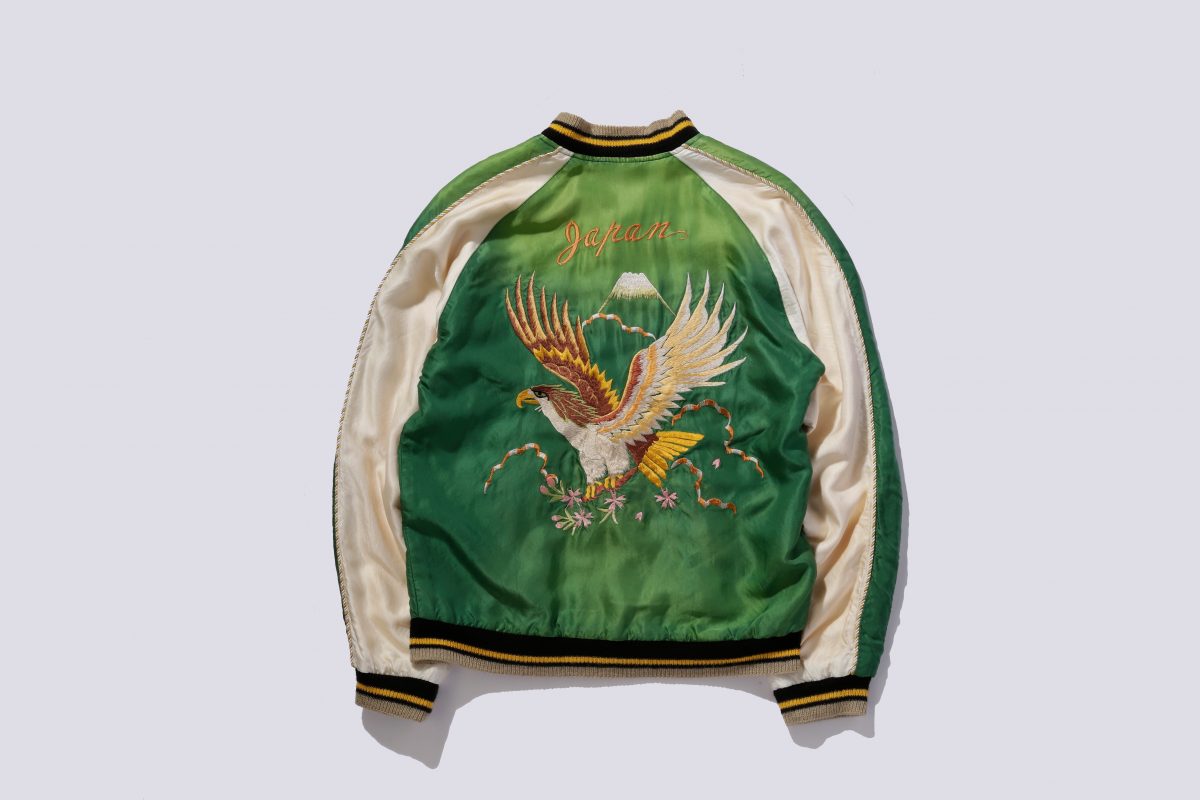
In Japan, a sukajan is instantly recognizable: a satin-like body with bold, high-contrast embroidery on the chest and back. In the United States, it’s commonly referred to as a “souvenir jacket”—and that name is not metaphorical. The category was born from a very specific postwar impulse: the desire to turn a deployment into a personal record you can wear.
In the early postwar period, American military personnel stationed in Japan began decorating jackets with Japanese-inspired “Oriental” motifs and unit-related imagery as a way to mark place, time, and identity. At the same time, soldiers were buying traditional items—kimonos, obi, dolls, pottery—as souvenirs for themselves and their families. Watching what sold and what emotionally resonated, manufacturers began producing jacket bodies that felt familiar to Americans (baseball jacket silhouettes) while delivering what soldiers wanted most: unmistakably Japanese visual symbolism.
Material scarcity shaped the look. With silk limited and supply chains unstable, early sukajan bodies often used silk-like acetate/rayon blends that could mimic luster while remaining feasible to produce. This combination—American jacket familiarity + Japanese motif fantasy + postwar material improvisation—is the DNA of the sukajan as we know it.
Distribution began around bases throughout Japan, then expanded outward. By the 1950s the style peaked in visibility as a “souvenir” product culture, and later—especially from the 1970s onward—entered broader Japanese fashion under the nickname “Yokosuka jacket” and the shortened term sukajan.
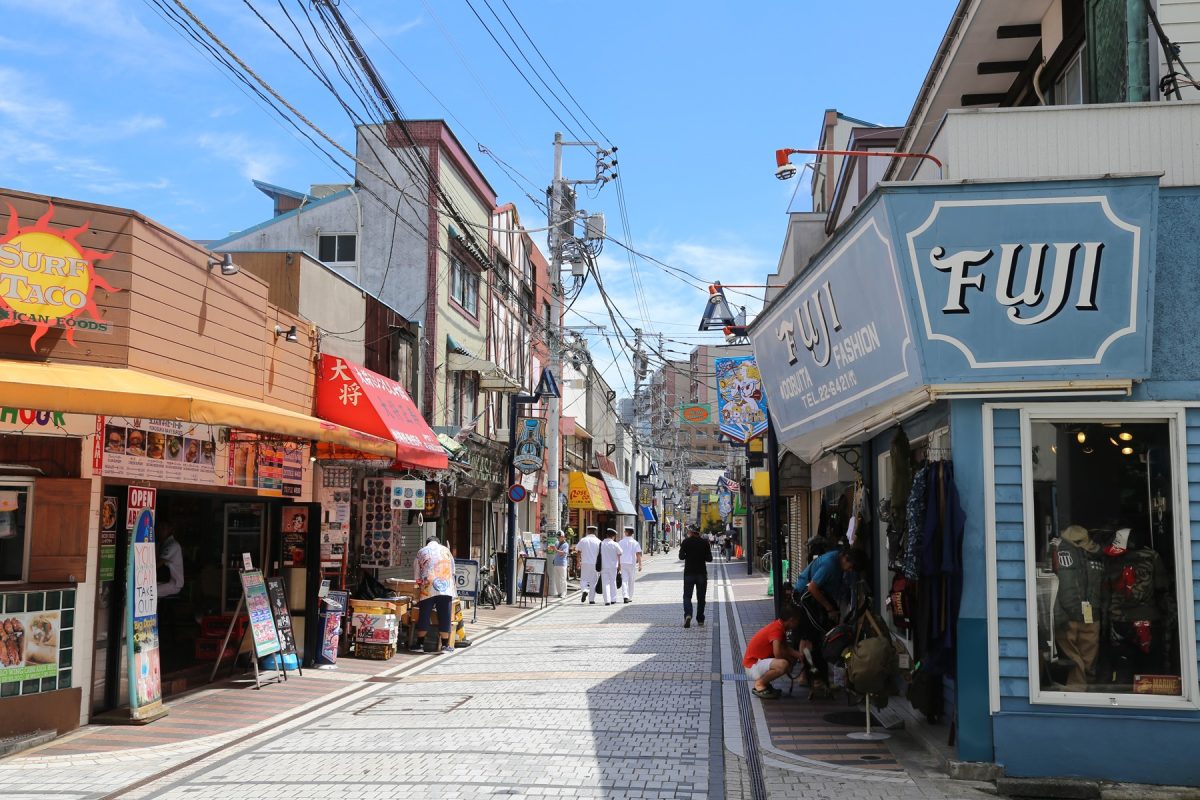
Interesting Fact: Even today, Yokosuka’s Dobuita Street is known for its distinct base-adjacent atmosphere. It’s a place where you can still feel the cultural overlap that helped “souvenir style” become a real fashion language.
2. What Materials Are Used in Sukajan Jackets?
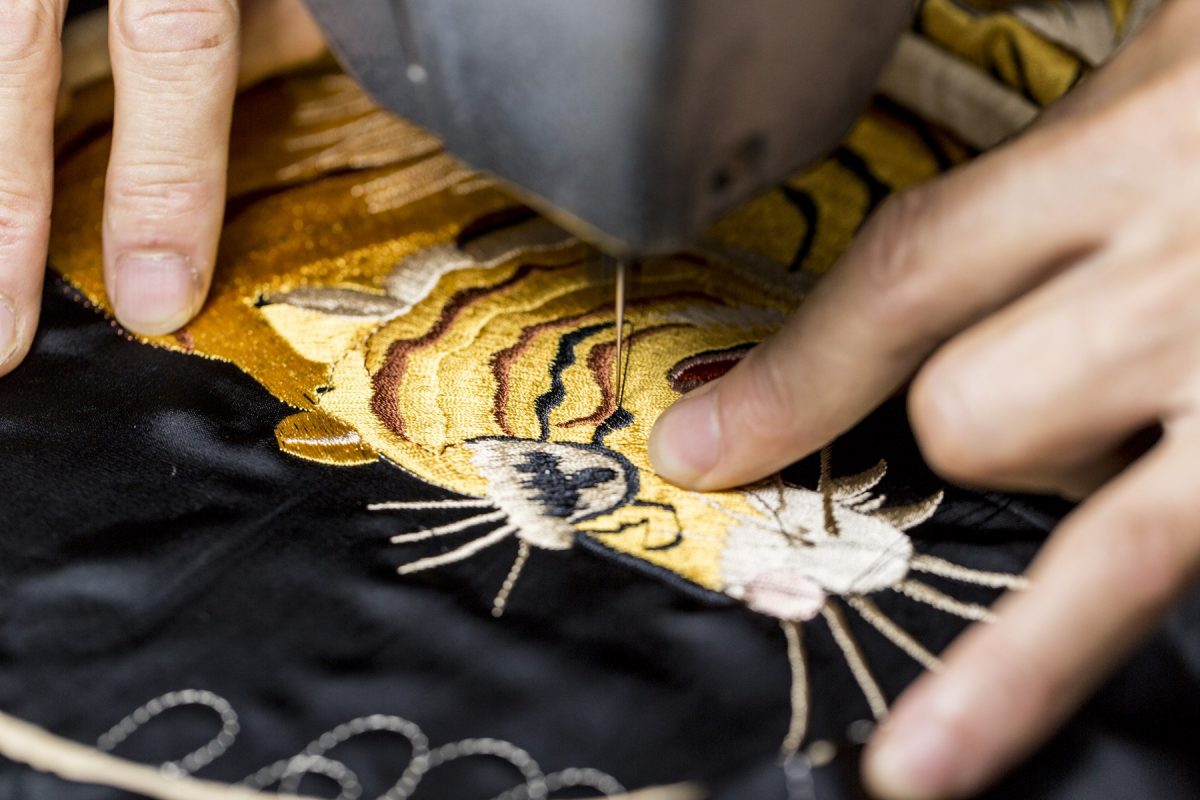
The sukajan’s magic is a physical one: the way satin catches light, the way embroidery rises off the surface, the way colors shift as the jacket moves. But “sukajan” is not a single material—it’s a family of constructions. Understanding materials is how you move from “I like it” to “I know what I’m buying.”
Acetate Rayon (Satin-like body)
Many classic sukajan are built from acetate rayon or similar satin-like blends. The appeal is the luster—silk-adjacent shine—paired with an aging behavior that collectors love. Over time, the fabric can develop character: subtle dulling, soft creasing, and a vintage drape that feels “earned” rather than manufactured.
Becchin (Velour / Pile body)
Not all sukajan are satin. Another beloved category uses becchin—a velvety pile fabric with a fuzzy, tactile surface. Becchin pieces often feel heavier, warmer, and more seasonal. If satin is “flash,” becchin is “depth.” Fans often treat becchin sukajan as a cold-weather essential.
Quilting (Padding + structure)
Many reversible sukajan include quilting to stabilize interior padding and add both warmth and visual rhythm. Quilting is not merely functional: the stitch pattern becomes part of the jacket’s identity, especially on the “plain” side of a reversible build.
Vintage Processing (Archive-inspired aging)
Some modern sukajan makers develop techniques to replicate the “feel” of vintage without damaging fabric integrity—aiming for convincing fade and patina while keeping durability. When done well, it bridges the gap between everyday wearability and collector aesthetics.
3. What Do Sukajan Embroidery Motifs Symbolize?
Most sukajan motifs are not random decoration. They are visual shorthand—symbols that communicate power, place, identity, and “Japan-ness” as seen through a postwar souvenir lens. Many jackets combine multiple motifs in a single composition, creating a dense emblem rather than a single statement.
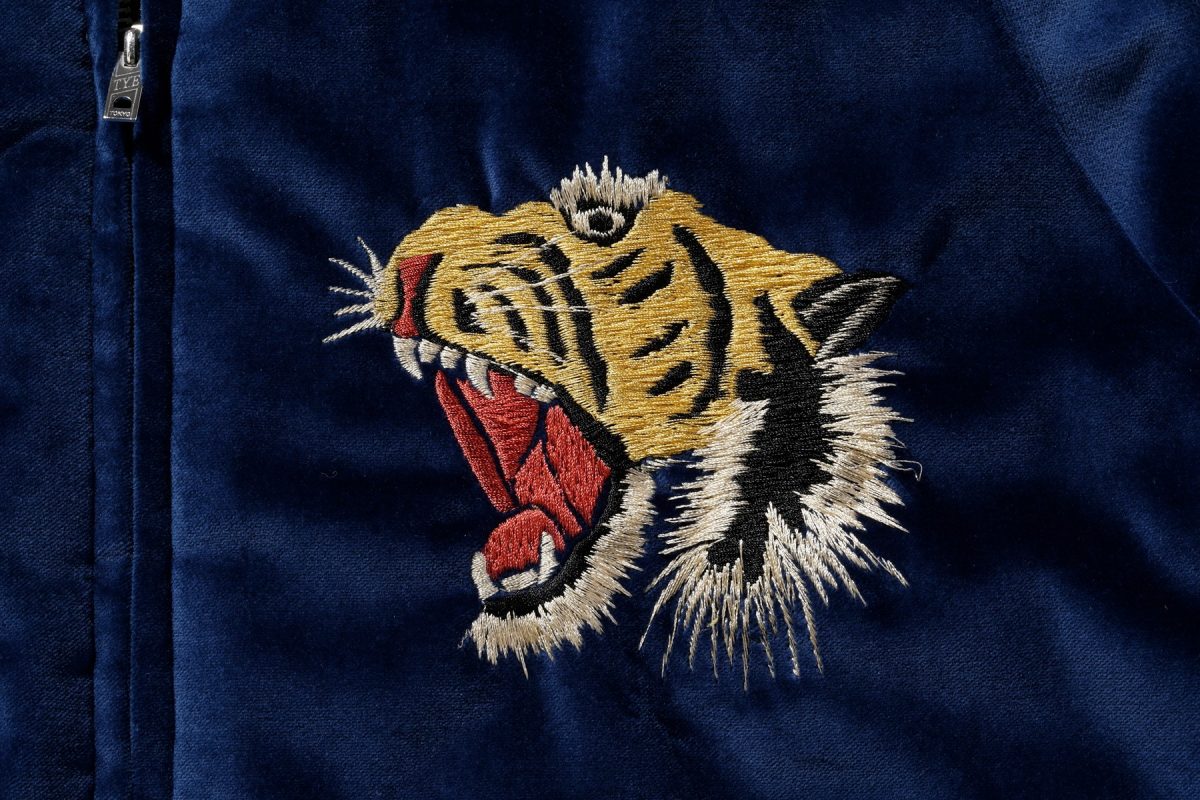
Tiger (Tora)
The tiger is a classic sukajan motif because it reads immediately as strength. Tigers are not native to Japan, yet they have long existed in Japanese art and imagination, imported through Asian iconography and reinterpreted locally. For American buyers, the tiger also aligned perfectly with “tough” masculine symbolism—making it an instant favorite.
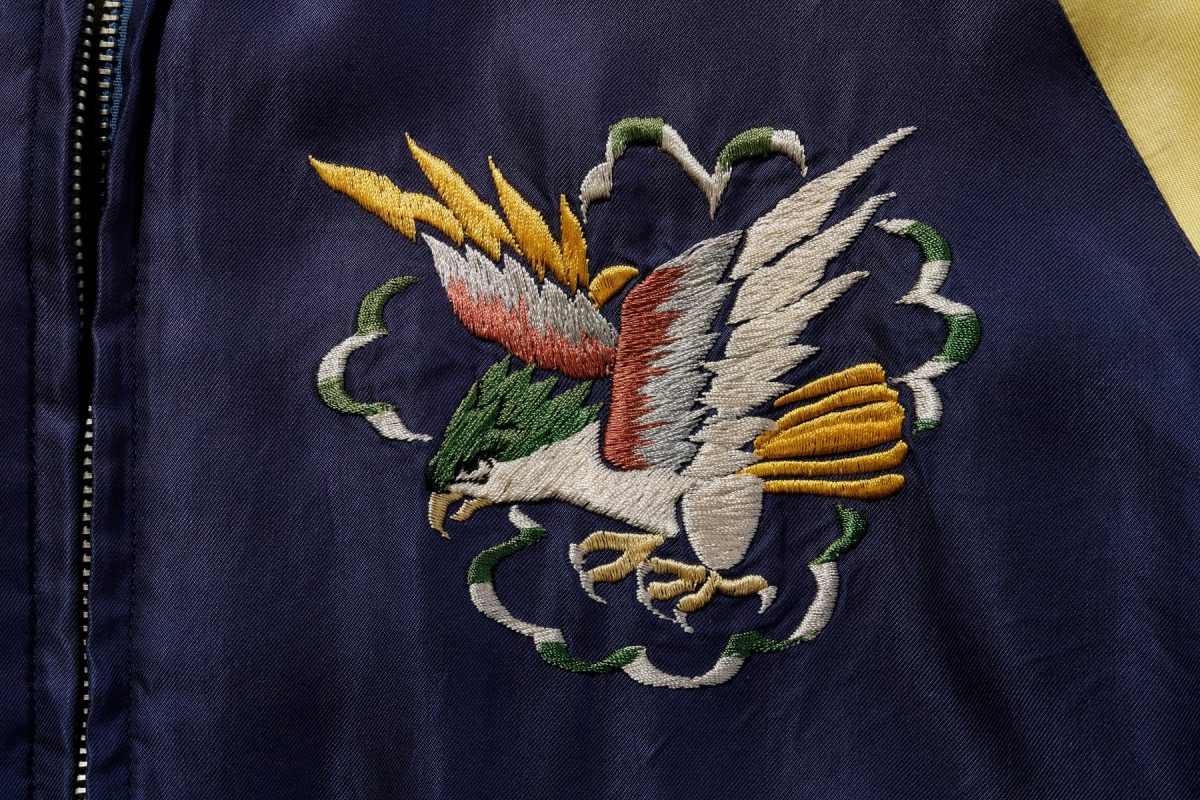
Eagle (Washi)
The eagle—especially in a bold, aggressive pose—connects directly to American iconography and military style. It appears frequently across bomber jackets and unit-adjacent apparel, and in sukajan it often acts as a bridge symbol: American identity rendered through Japanese embroidery technique.
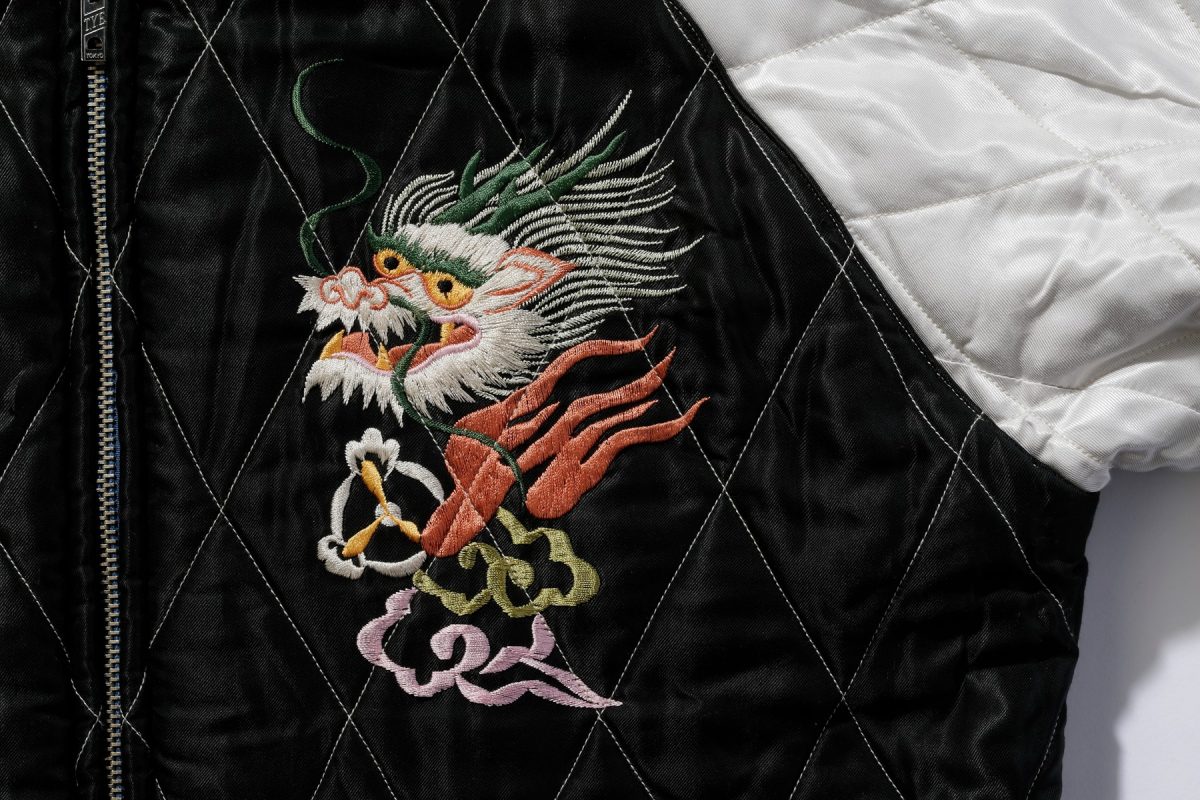
Dragon (Ryu)
Dragons are mythic, flexible, and visually spectacular. While rooted in broader East Asian tradition, the dragon became a perfect “souvenir” motif because it felt unmistakably Oriental to Western eyes, while offering endless design variation—coiling bodies, storm clouds, claws, pearls, flames, waves.
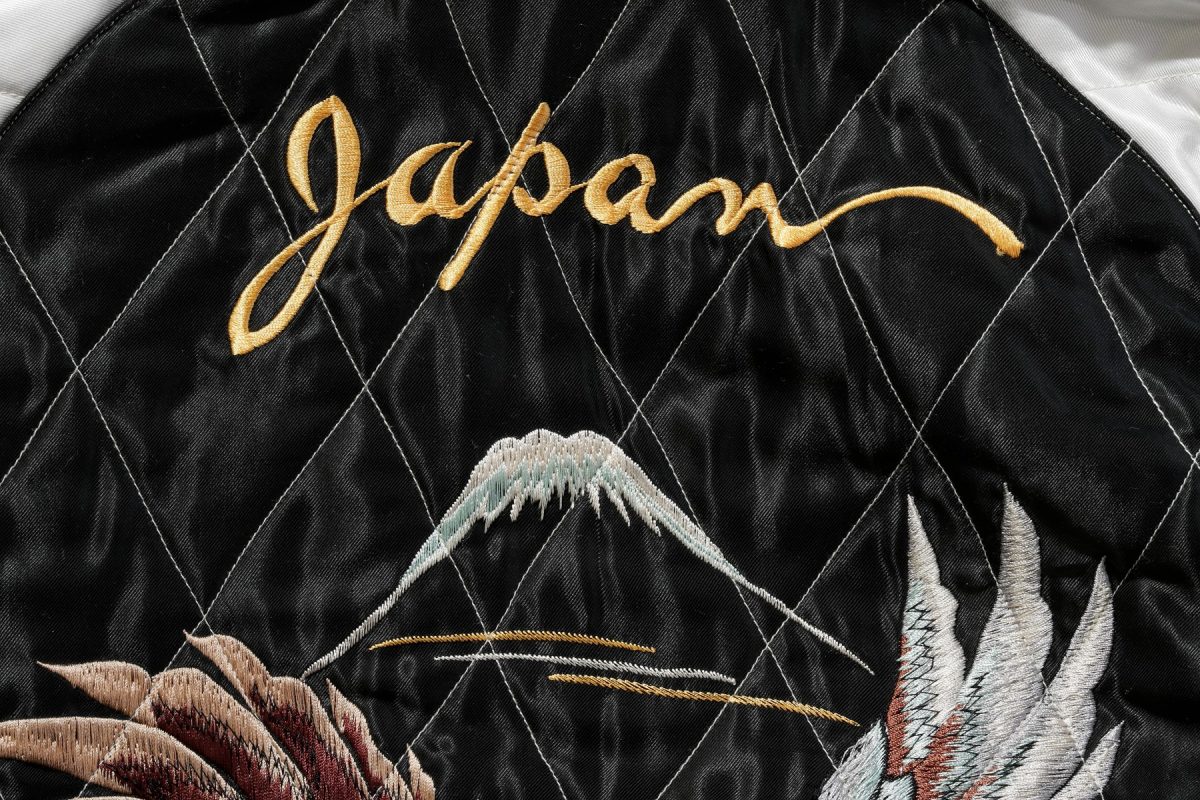
Japan Motifs (Fuji, Gardens, Geisha)
Many backs feature “Japan as image”: Mount Fuji, gardens, pagodas, geisha, temples, or scenic compositions that function like wearable postcards. These motifs are the purest expression of the jacket’s original purpose: proof of place, stylized into art.
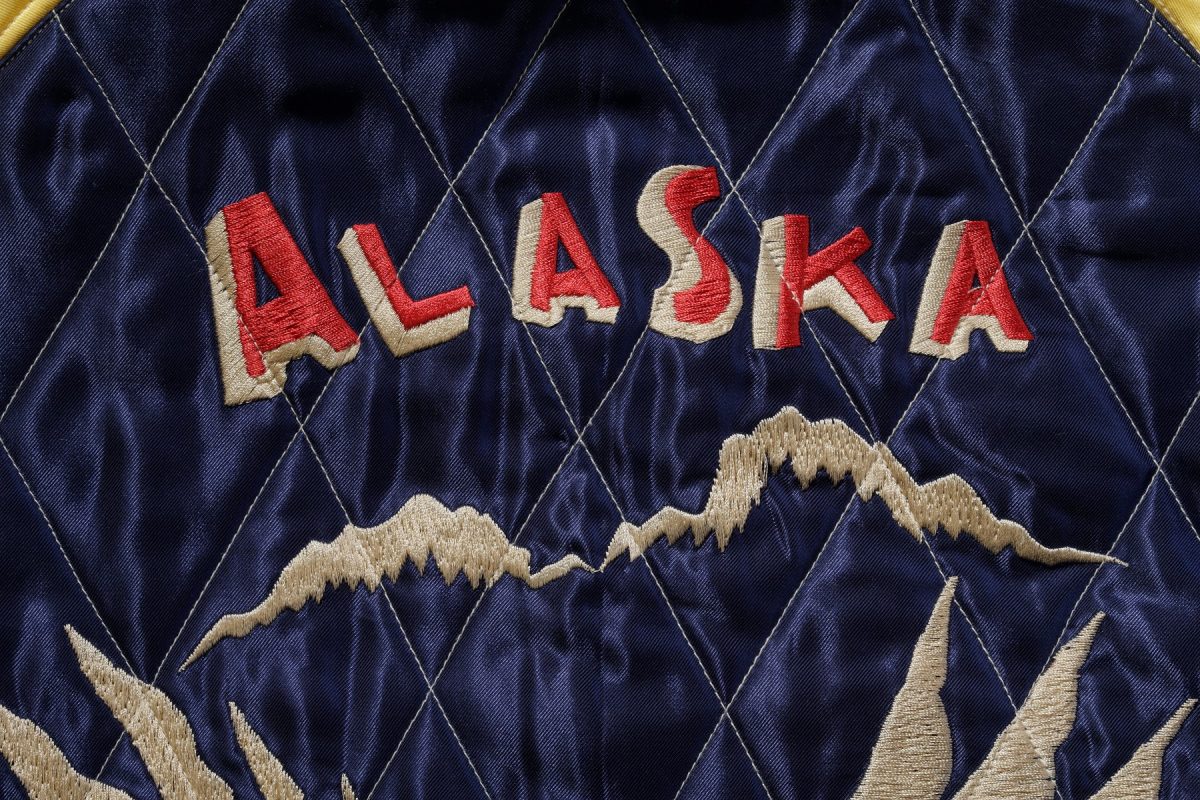
Regional Names
Place names—bases, cities, regions—often appear as direct embroidery text. They transform the jacket into a document. In the 1950s this logic extended beyond Japan, as deliveries and demand followed military networks internationally.
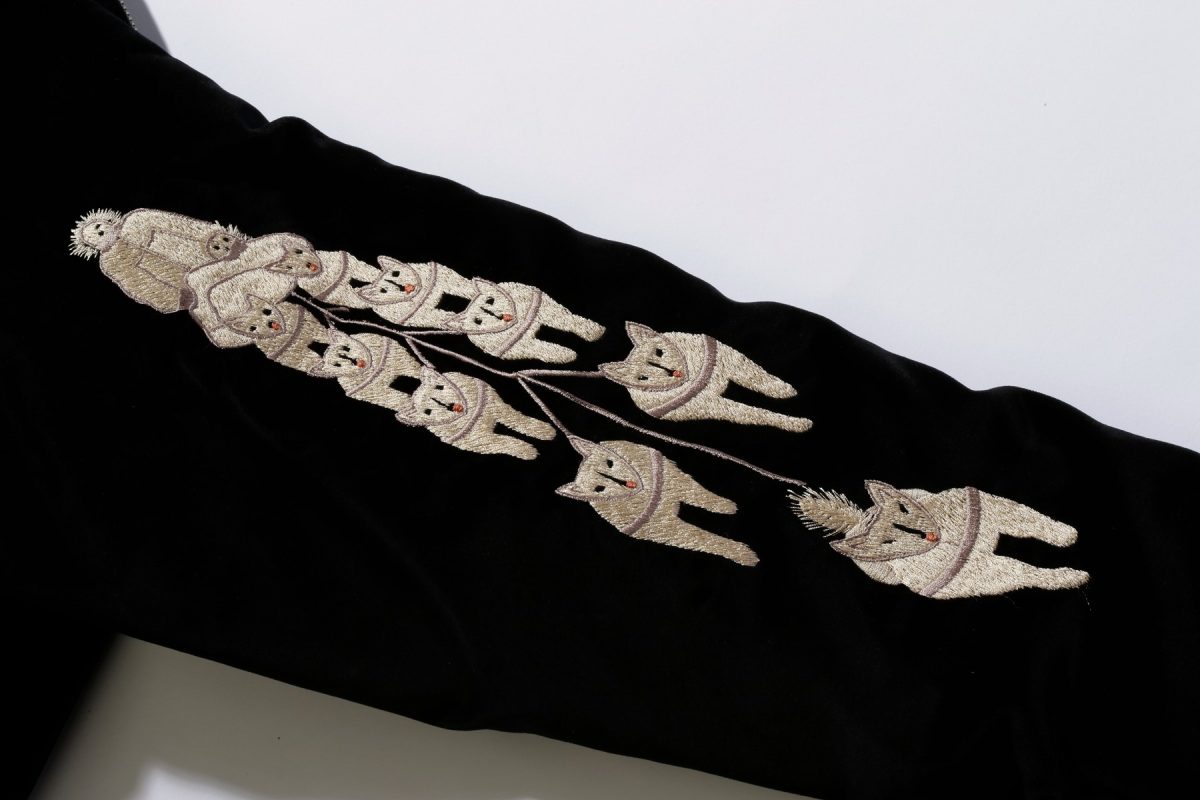
Custom Motifs
Custom-ordered sukajan could include unit references, local scenery, or personal symbols. This is why sukajan design ranges from standard “catalog classics” to surprisingly specific one-offs. The category was never purely fashion—personalization is a core mechanic.
Detail to Watch: Ribbing
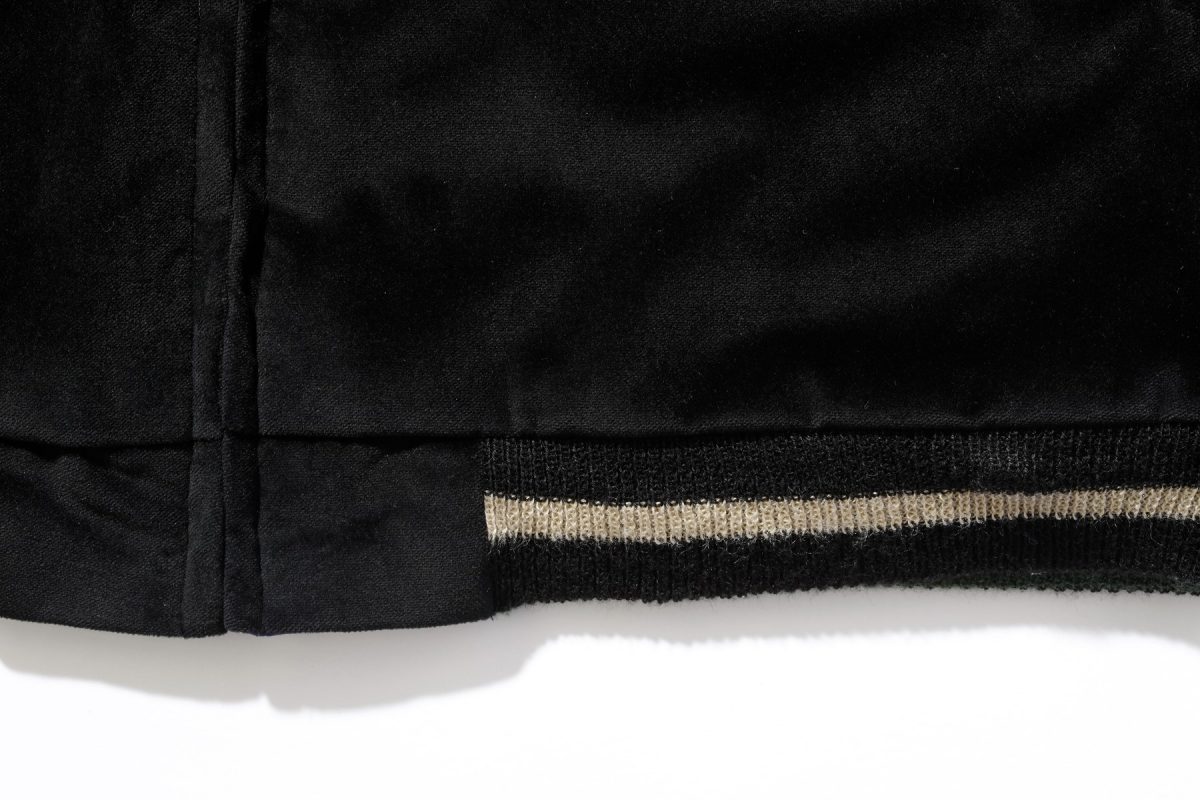
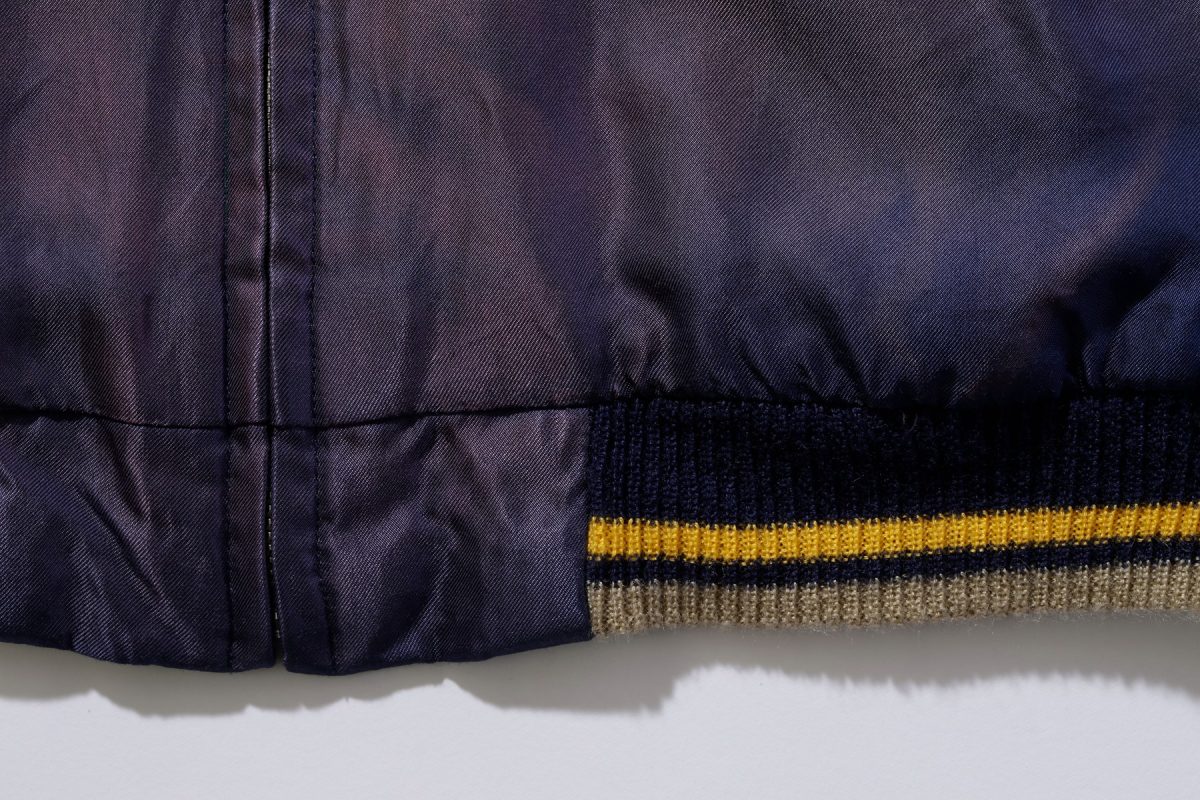
Collectors pay attention to ribbing: stripe count, width, color harmony, and—crucially—how it ages. Rib wear can add authenticity and “life,” and on some pieces the rib pattern feels intentionally coordinated with embroidery density and palette.
4. A Style Reference: “The Wanderers”
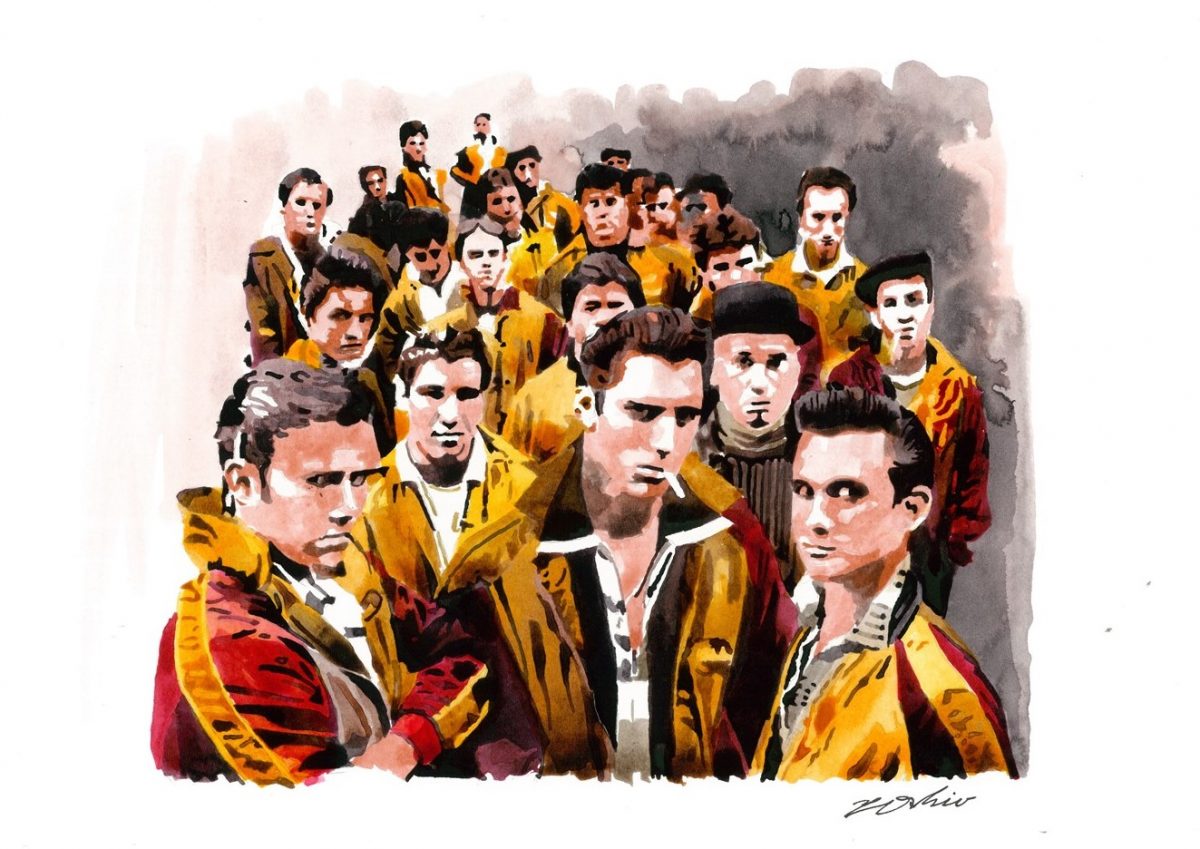
In American youth-culture films, clothing often functions as identity armor—gang unity, belonging, and symbolic power. In The Wanderers (set in early 1960s Bronx), different groups establish visual cohesion through matching jackets. While not always “true” sukajan by strict vintage definitions, the shiny satin base, bold color blocking, and emblematic intent make it a compelling style reference: the sukajan as a social uniform—glamorous, confrontational, and instantly readable.
5. Tailor Toyo: The Recommended Benchmark Brand
If sukajan has an “iconic” name in modern fashion culture, it is Tailor Toyo. The reason is not hype; it’s lineage. Sukajan production historically grew through manufacturers that understood both embroidery spectacle and the realities of production for military distribution channels. Tailor Toyo’s identity is anchored in that archive logic—revisiting vintage references and rebuilding them with obsessive attention to motif composition, fabric choice, and period-feel.
For many buyers, Tailor Toyo functions as a compass: if you want a sukajan that reads as “authentic” in silhouette and mood, it’s a dependable reference point. That doesn’t mean it’s the only valid choice—but it is often the most educational one.
Selected Tailor Toyo archive-inspired examples:
Early 1950s Style Acetate Souvenir Jacket “KOSHO & CO.” Special Edition “BAMBOO & TIGER” x “TIGER PRINT”
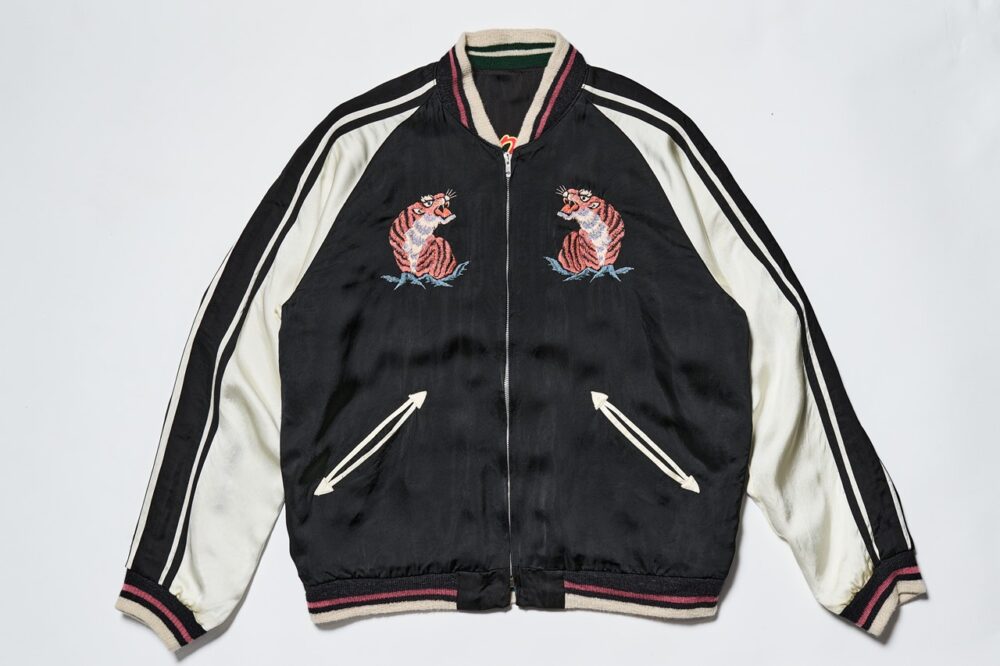
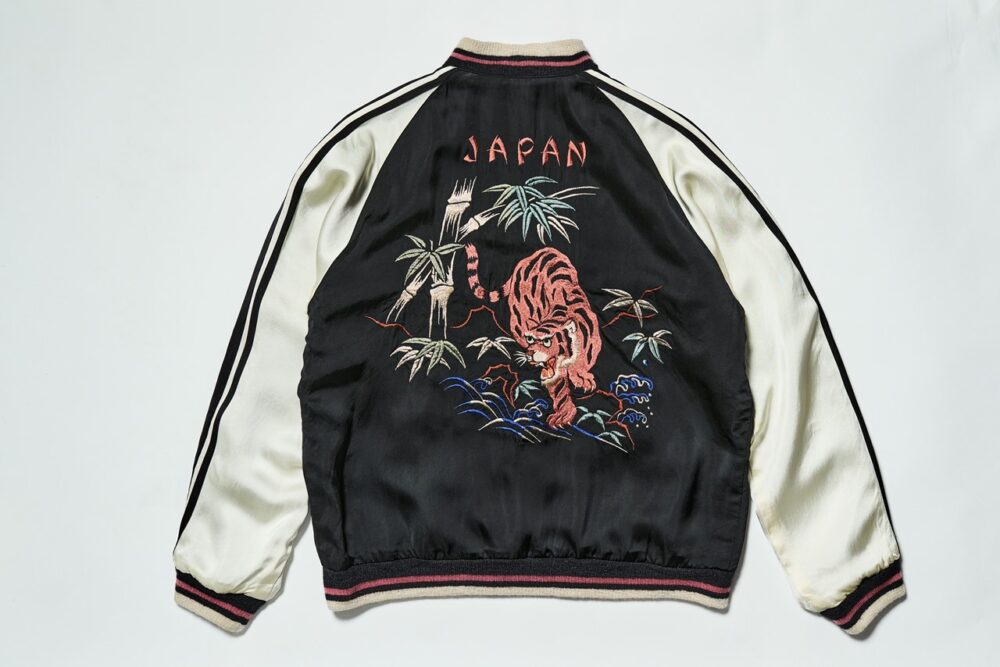
REVERSIBLE
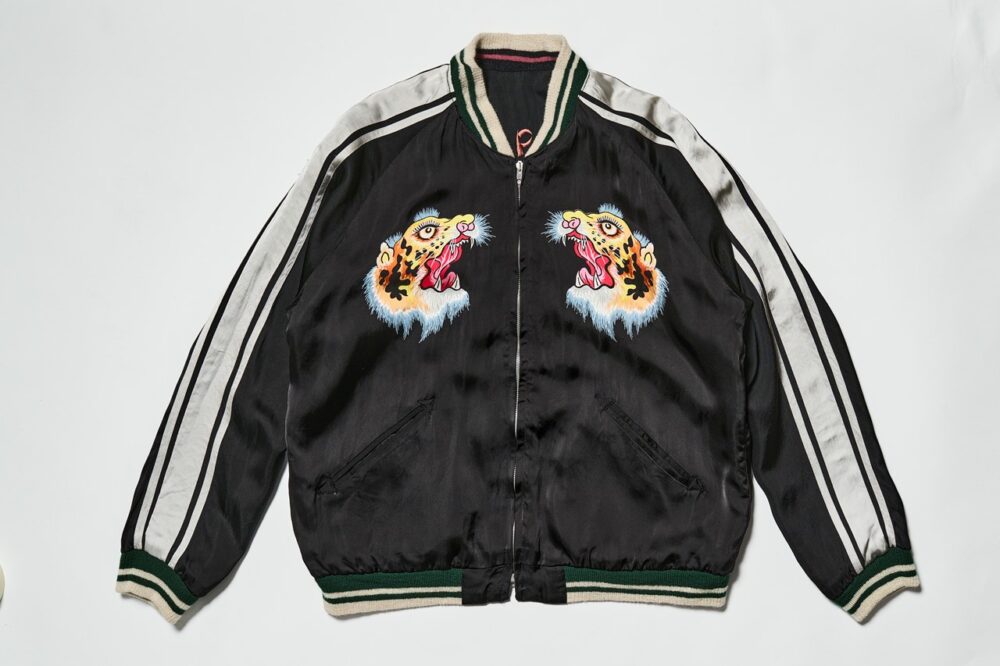
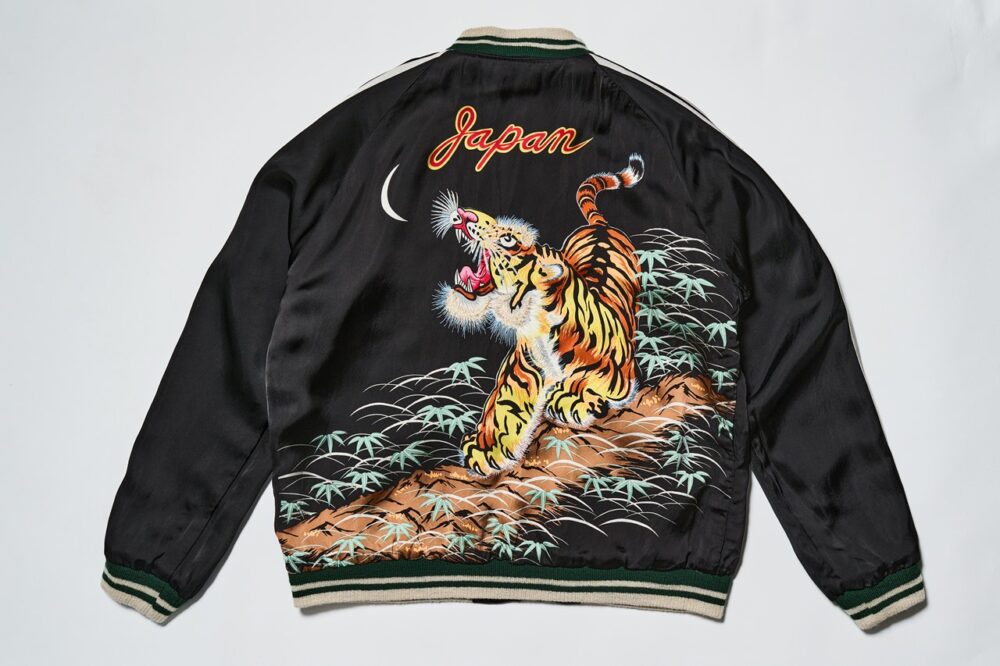
This type of piece illustrates what “archive fusion” can mean in sukajan: a bold bamboo-and-tiger composition paired with a contrasting reverse that changes the jacket’s entire personality. The best reversible sukajan feel like two complete garments—each side intentional, not an afterthought.
Early 1950s Style Acetate Souvenir Jacket “KOSHO & CO.” Special Edition “TIGER HEAD” x “ROARING TIGER”
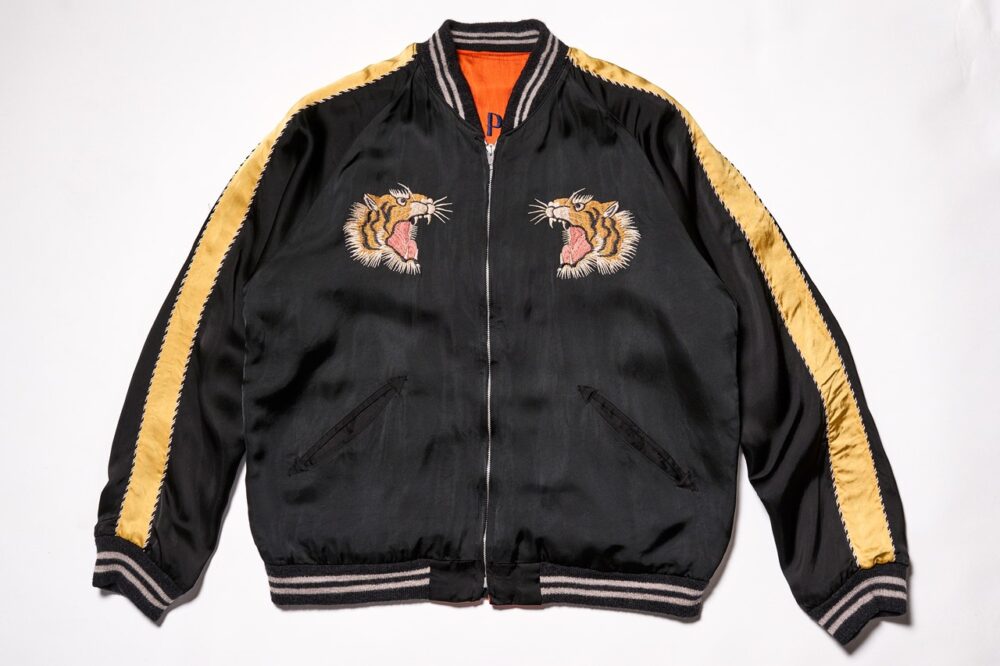
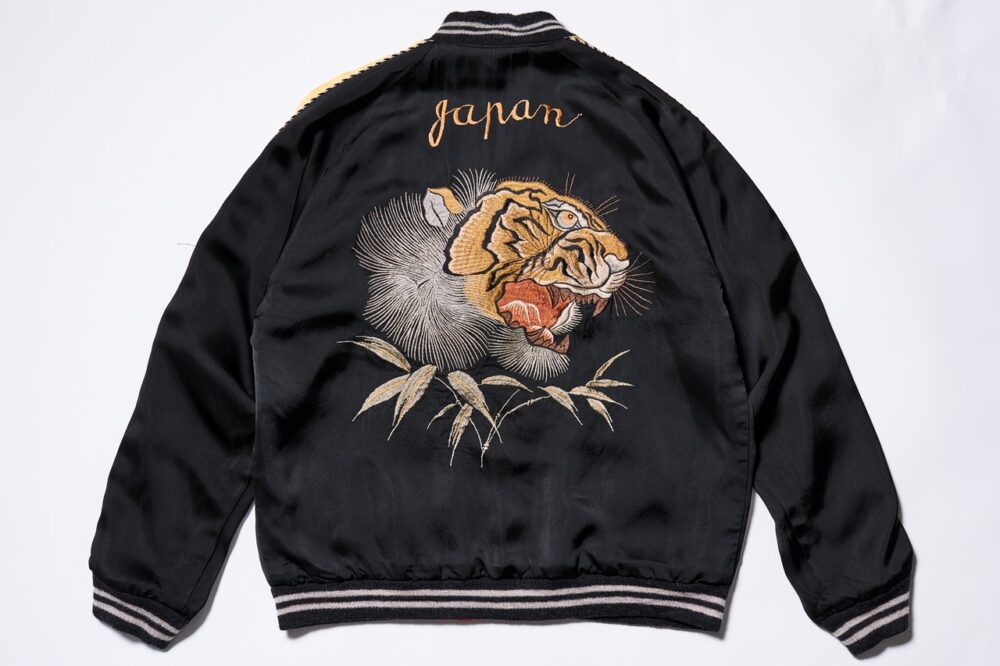
REVERSIBLE
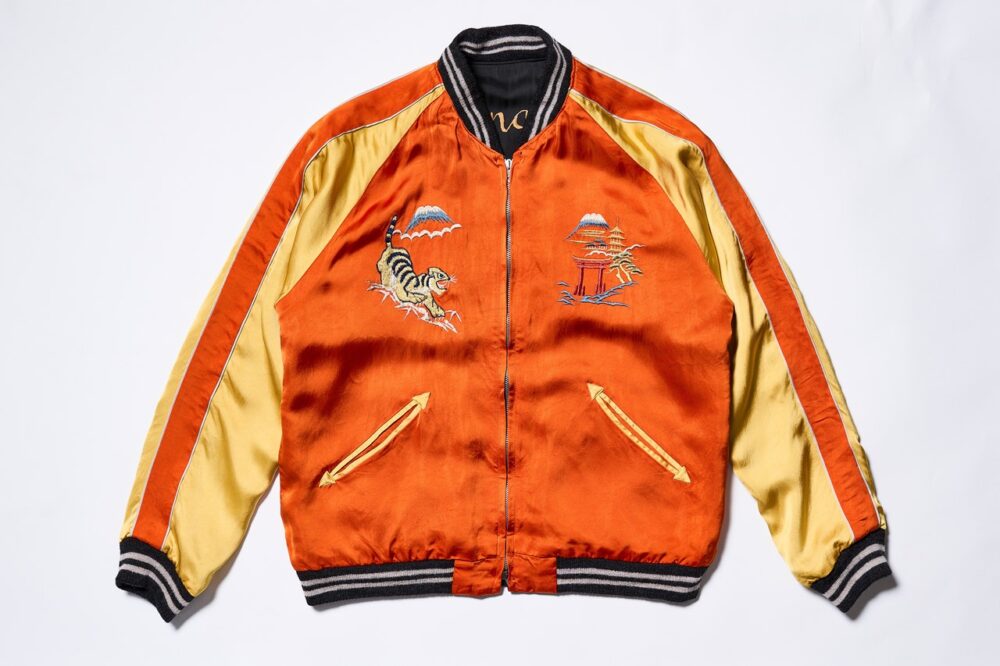
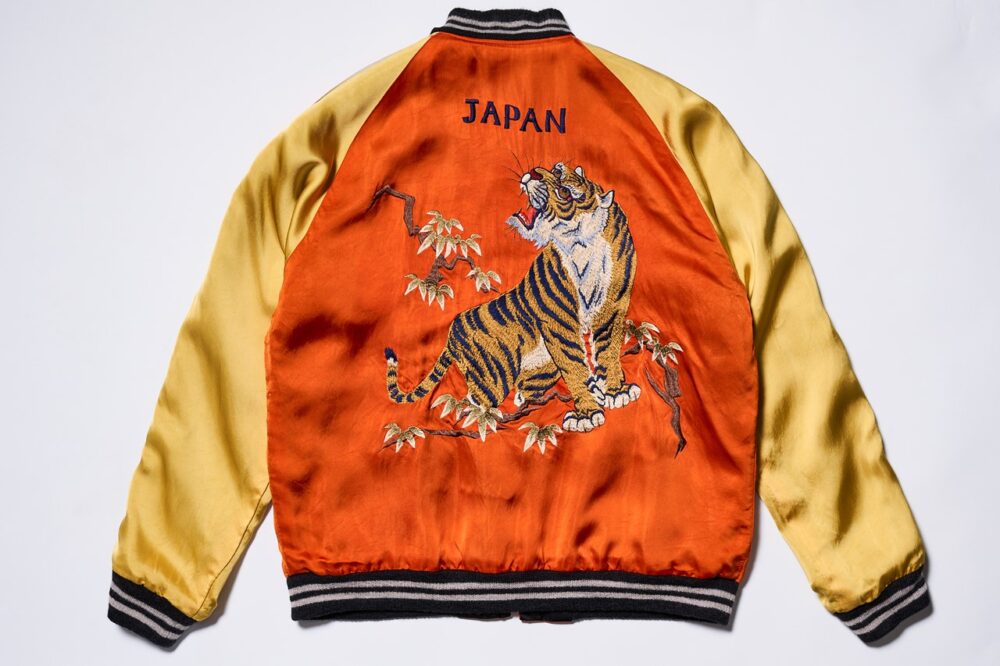
When sukajan is done at a high level, you can “read” the embroidery like sculpture: mane texture, density shifts, contrast placement, and how the motif sits on the back panel proportions. These are the details that separate loud from legendary.
Avirex × Tailor Toyo Collaboration (Limited Edition)
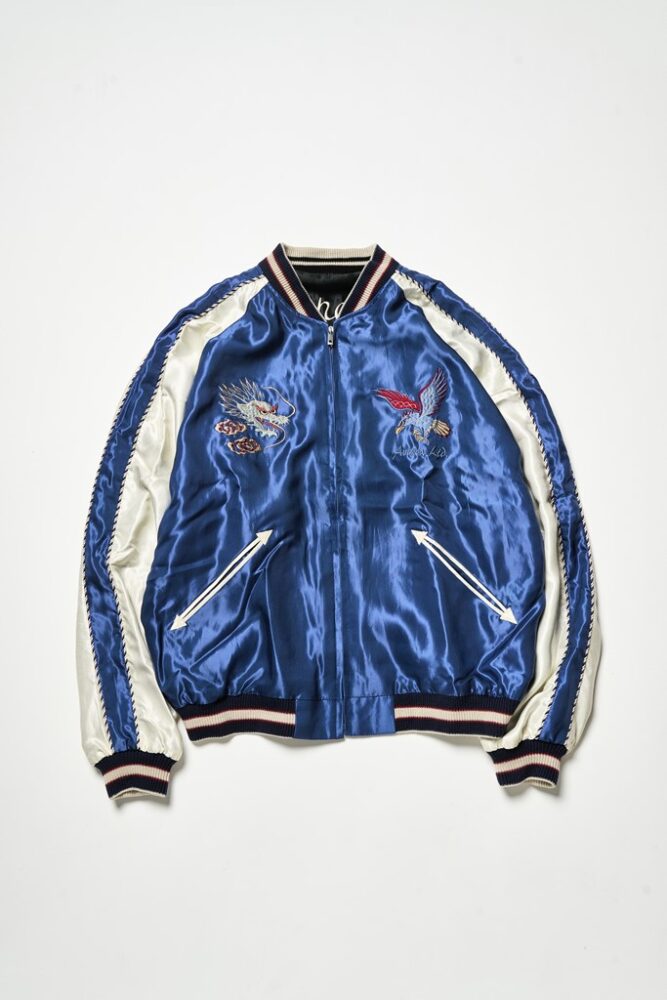
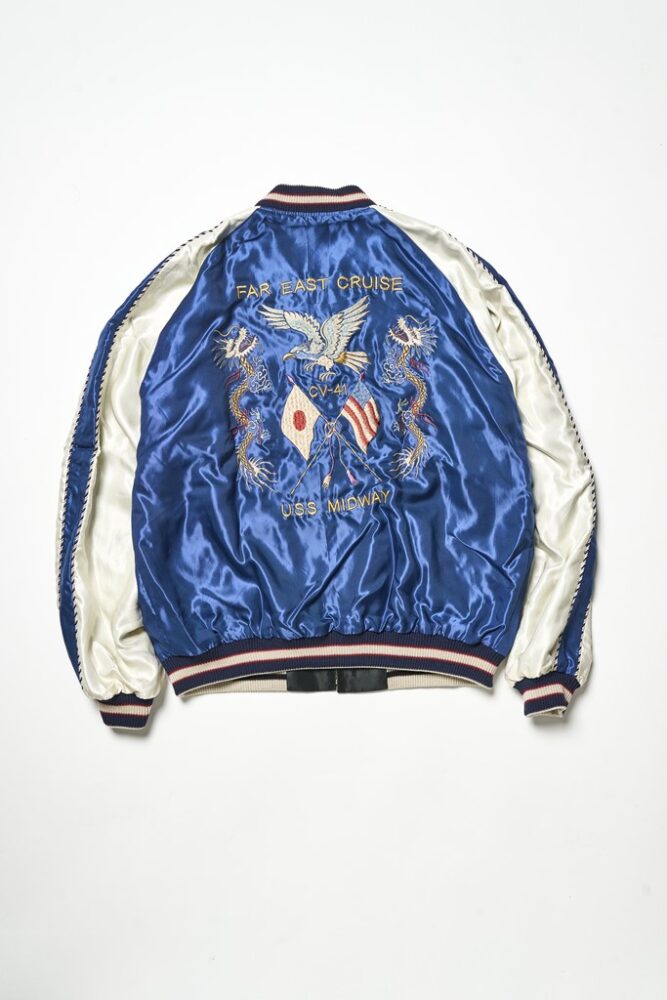
REVERSIBLE
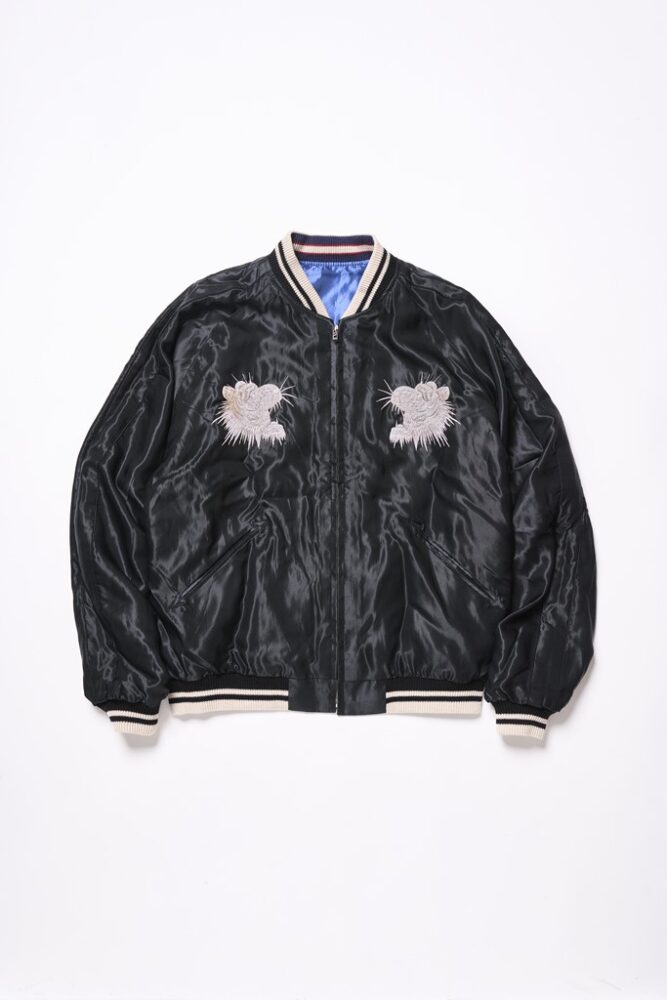
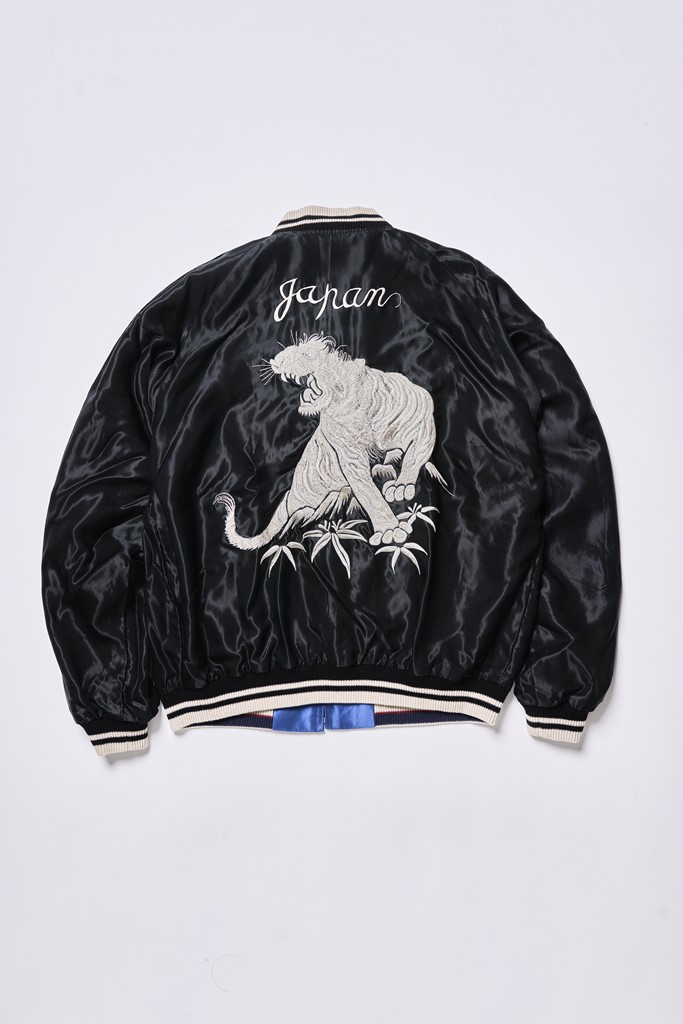
Collaborations are most interesting when they keep the sukajan’s core identity intact: embroidery impact, satin language, reversible logic—while adding a sharper modern edge. The best ones feel like a continuation of the artifact, not a costume version of it.
How to “Read” a Sukajan Like a Collector
- Start with the body: satin acetate/rayon vs becchin (velour) changes seasonality, weight, and the jacket’s entire “presence.”
- Inspect embroidery density: look for deliberate layering, dimensional threadwork, and motif balance across panels.
- Check ribbing: stripe count, knit firmness, and how it complements motif palette.
- Confirm reversible intent: both sides should feel designed, not “one good side + one filler side.”
- Respect the purpose: sukajan is a souvenir artifact turned fashion staple—its best designs carry that dual identity.