
Marks, Seals and Signatures
Pottery Almanac · Reading
Marks, Seals and Signatures
A mark on the base of a Japanese pot is a clue, not a verdict. It can name a kiln, a maker, a wish for good fortune or the law of the country it was sold in, and the same mark can be used by more than one hand.
Fact sheet
At a glance
- Marks began as sorting. A reference on turuta.jp says written inscriptions and seals appeared when kilns grew more advanced and communal firing began, so that pieces fired together could be told apart.
- The box can matter. A box inscribed by the maker or a successor is part of the evidence, as a museum record of Seifū Yohei shows.
- Fuku is shared. The good-fortune character appears on Kutani, Imari and Kakiemon wares and was used by several studios.
- Export marks follow law. From 1 March 1891 imports into the United States had to carry the country of origin in Western letters.
- Some great pieces are unmarked. One reference reminds the reader that some Japanese National Treasures carry no mark at all.
Why Potters Began to Sign
A reference on the turuta.jp ceramics-story site, which is loosely translated and does not name its publisher, says that written inscriptions and seals appeared when kilns became more advanced and communal firing began. A mark helped to tell apart pieces that had gone into the kiln together. Over time, it adds, a mark let a collector find a favoured craftsman, so the kiln mark became the place where the maker's individuality shows, comparable to a painter's seal. Tea utensils, it says, carried the same significance.
The same reference describes three kinds of Edo-period inscription: the name of a kiln, a famous master in the capital or a euphonious name; an auspicious character or motif, such as fuku at Kutani and Imari; and a seal presented by a patron or guardian who sponsored the ware. It lists the scripts used, seal, clerical, standard, line and cursive, and says seal and standard script are the most common. It reports that a single seal is usual, though some kyusu teapots carry dozens stamped across the surface.
On the name seal, Wikipedia says the potter Ninsei, who worked in the Edo period, was bestowed with his artistic name, with a seal, and the turuta.jp reference says name seals developed after the Kyoto kilns, whose founder Ninsei used impressive ones. Wikipedia's article on Raku ware adds that Toyotomi Hideyoshi presented Chōjirō's son Jōkei with a seal bearing the character raku, after which Raku became the name of the family.
Where to Look on a Piece
The turuta.jp reference says a seal is usually placed on the left side of the base, on the back of the lid of an incense container, and on the underside of the handle of a kyusu. The Cleveland Museum of Art records other places. A teapot by Seifū Yohei III is incised with the name on one of its sides, in relatively large characters, on the side that would face the host if the pot were held by the handle in the right hand, and the museum remarks that many teapots have their marks on the base instead. A bowl by the same potter has an impressed mark inside the foot ring, which is circled in blue.
Diagram by Japonista. Schematic. Positions as reported by turuta.jp and the Cleveland Museum of Art.
Look closer: Four small panels each carry a red square or dot where a mark may sit.
Diagram by Japonista
The diagram sets these positions side by side. It is a guide to where a mark may be, not a rule, and the turuta.jp reference itself says the positions are usual rather than fixed.
| Place | What the source reports | Source |
|---|---|---|
| Base of a vessel | Usually the left side of the base | turuta.jp |
| Inside the foot ring | An impressed mark, circled in blue, on a bowl by Seifū Yohei III | Cleveland Museum of Art |
| Side of a teapot | The name incised in large characters on the side facing the host | Cleveland Museum of Art |
| Underside of a kyusu handle | The usual place for a seal on that form | turuta.jp |
| Back of an incense-container lid | The usual place for a seal on that form | turuta.jp |
| Storage box | Inscription and seals on the top and underside of the lid | Cleveland Museum of Art |
One Maker, Three Objects
The Cleveland Museum of Art holds a group of pieces by Seifū Yohei III and his successor, and its catalogue notes show how a mark is weighed. A teapot with cherry blossoms, dated 1914 to 1946 and attributed to Yohei IV, has a mark impressed into the base that appears to be one used by Yohei III. The box inscription is brushed in a hand matching Yohei IV. The seal on the lid is one often used by Yohei III, while the seal beside the signature on the back of the lid is one generally used by Yohei IV.
The museum judges that a mismatch between pot and box is unlikely, though not impossible, because the design, the technique and the object named on the box all agree. It notes that many works by Yohei III are stored in boxes inscribed and sealed by Yohei IV, but that in such cases Yohei IV clearly identifies himself as authenticating his father's work and often adds his father's Imperial Household Artist seal. It suggests the teapot may be a transitional piece in which the son used his father's mark on the base of his own work.
The lesson is plain. No single mark settled the matter. The base, the box, the seals and the brushwork were read together, and the museum chose its words with care.
The Box Beside the Pot
A tomobako is a box made for a piece and inscribed by the maker or by someone who vouches for it. The Toledo Museum of Art holds one by Kawai Kanjirō, of about 1970, and says that such boxes verify the makers of the vessels they hold, and that those makers are highly regarded. Its inscription translates as Kanjirō having made a three-colour bride's coat tea bowl, signed by Kawai, with a note that Takeichi authenticates the piece.
The journal has a longer account of how tea ceramics travel with their boxes, in tomobako, hakogaki and tea-ceramics provenance. The Cleveland photographs below show the other side of the story: the lid of a storage box with a brushed title and a red seal on the top, and a signature and seal on the underside.
Good Fortune and Borrowed Reigns
Not every mark names a person. A dealer's reference list of marks at Oriental Antiques records the fuku character, meaning good fortune, on Kutani wares by various studios, in underglaze blue on early eighteenth-century Kakiemon porcelain, and on a yellow ground on an Edo-period charger in the Yoshidaya style. It says the fuku mark was used by several studios, and records the swirling uzu-fuku form on Kakiemon and other Arita porcelain from the Edo period.
The same list records Chinese reign marks, among them Chenghua and Wanli, on Japanese wares, and calls them apocryphal. The turuta.jp reference explains why the practice is confusing: in China, it says, marks from the Ming dynasty on usually gave the date of production, as reign marks such as Wanli and Qianlong do, rather than the place.
Gotheborg, a collectors' site for Chinese and Japanese porcelain, sorts the marks found on Kutani ware into several groups: the two characters for Kutani, sometimes with a word meaning made by; artists' or pen names, often ending in zan or yama, mountain; shop, exporter or kiln names; Dai Nippon marks; marks of the Occupied Japan years; and decorative marks such as fuku. It adds that marks appear in many colours, with red the most common, and may be incised, impressed, underglaze or overglaze.
From Nippon to Made in Japan
Gotheborg's page on the McKinley Tariff says that the American act of 1890 required imported porcelain to show its country of origin in the Western alphabet, in force from 1 March 1891, with Nippon used for Japanese porcelain. It reports that in 1921 the United States ruled that Nippon had to be changed to Japan. Its companion page on twentieth-century Japanese marks adds that wares made before 1891 were either unmarked or marked in Japanese characters, that Japan marks run roughly from 1921 to 1941, and that Made in Japan marks generally follow, with numerous exceptions.
Two cautions come from the same page. The first is that the absence of Nippon is not conclusive, because the rule did not apply everywhere and paper labels were sometimes used. The second is that transfer-printed Nippon marks were applied to imported porcelain in the 1960s, and the page says they can be spotted because the mark sits inside a glaze area looking a bit like a piece of adhesive tape.
For the years of the American occupation, from 1945 to 1952, the page says plain Japan or Made in Japan marks without company names generally date from just after the war, that some carry Occupied Japan, and that the mark was required only for certain exports to the United States. It also says dating of this kind is empirical and tentative, and offers its dates as personal opinions given in good faith.
| Mark | Reported period | Source |
|---|---|---|
| Japanese characters or no mark | Before 1891 | Gotheborg |
| Nippon | From 1 March 1891 until 1921 | Gotheborg, McKinley Tariff page |
| Japan | Roughly 1921 to 1941 | Gotheborg |
| Occupied Japan | 1945 to 1952, certain exports only | Gotheborg |
| Made in Japan | Generally later, with numerous exceptions | Gotheborg |
What a Mark Cannot Tell You
The Gotheborg page on Kutani warns that marks there are varied, often hard to read and unreliable for dating or authentication. It cautions that even Japanese readers cannot be assumed to read them, that many characters used in the Meiji period and earlier are no longer in use, that some Japanese National Treasures are unmarked, and that forged marks are increasingly found. It says that Ko-Kutani-style dishes are difficult to have authenticated.
The dealer's list at Oriental Antiques adds that a Noritake mark was sometimes also faked by other studios, that Kinkozan marks can vary greatly by decorator and quality, that readings differ, and that a mark may belong to a namesake and not to the famous artist. A name on the base is a lead to follow, then, and the foot, the clay, the glaze, the painting and the box must agree with it.
Marks in the Museum Record
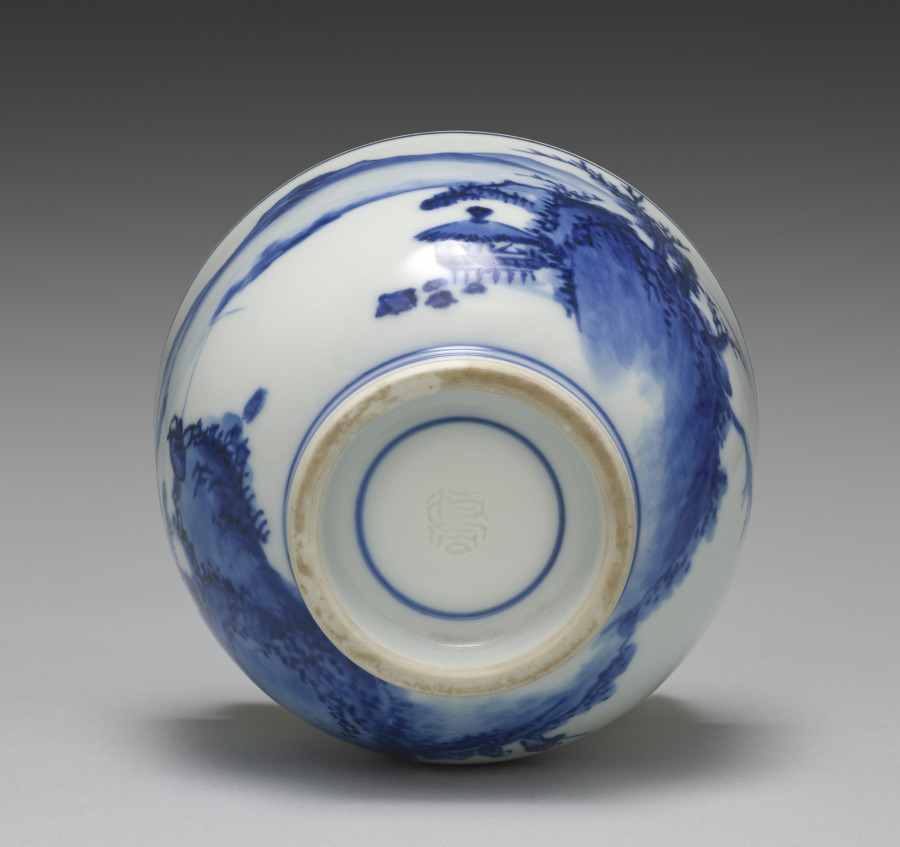
Seifū Yohei III, Bowl with Chinese Landscape, 1893–1914, porcelain with underglaze blue and overglaze red. The Cleveland Museum of Art, Gift of James and Christine Heusinger, accession 2022.153. View 5.
Look closer: the foot ring is circled in blue and a small impressed mark sits in the centre of the base. The museum says the inside of the foot ring is circled in blue around the impressed mark.
Image: The Cleveland Museum of Art, Open Access (CC0)
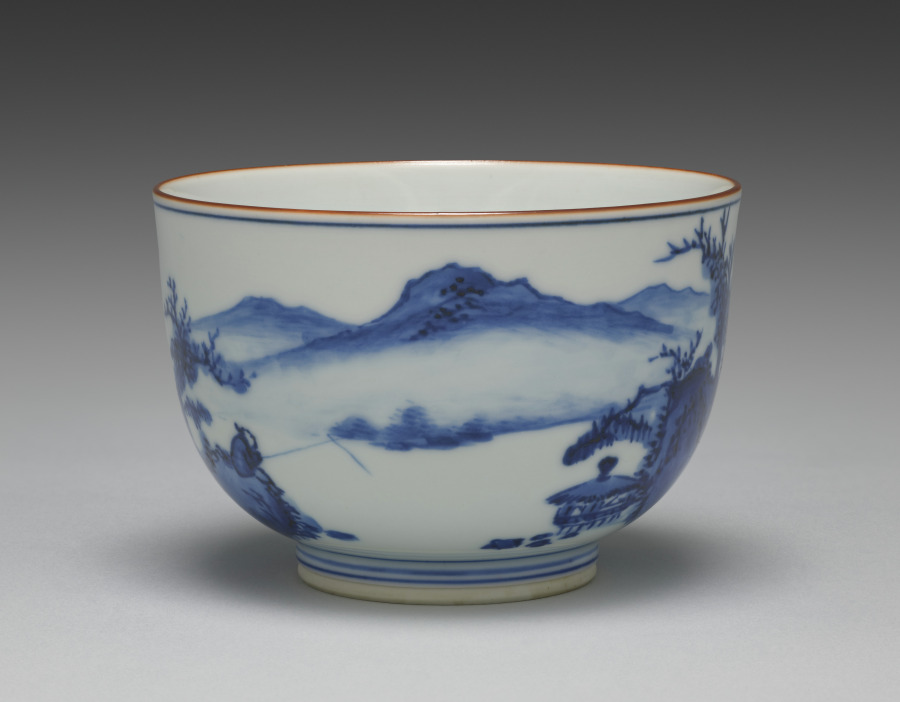
Seifū Yohei III, Bowl with Chinese Landscape, 1893–1914, porcelain with underglaze blue and overglaze red. The Cleveland Museum of Art, Gift of James and Christine Heusinger, accession 2022.153. View 1.
Look closer: a river scene runs round the wall in blue, and the rim is covered in red iron oxide, as the museum describes.
Image: The Cleveland Museum of Art, Open Access (CC0)
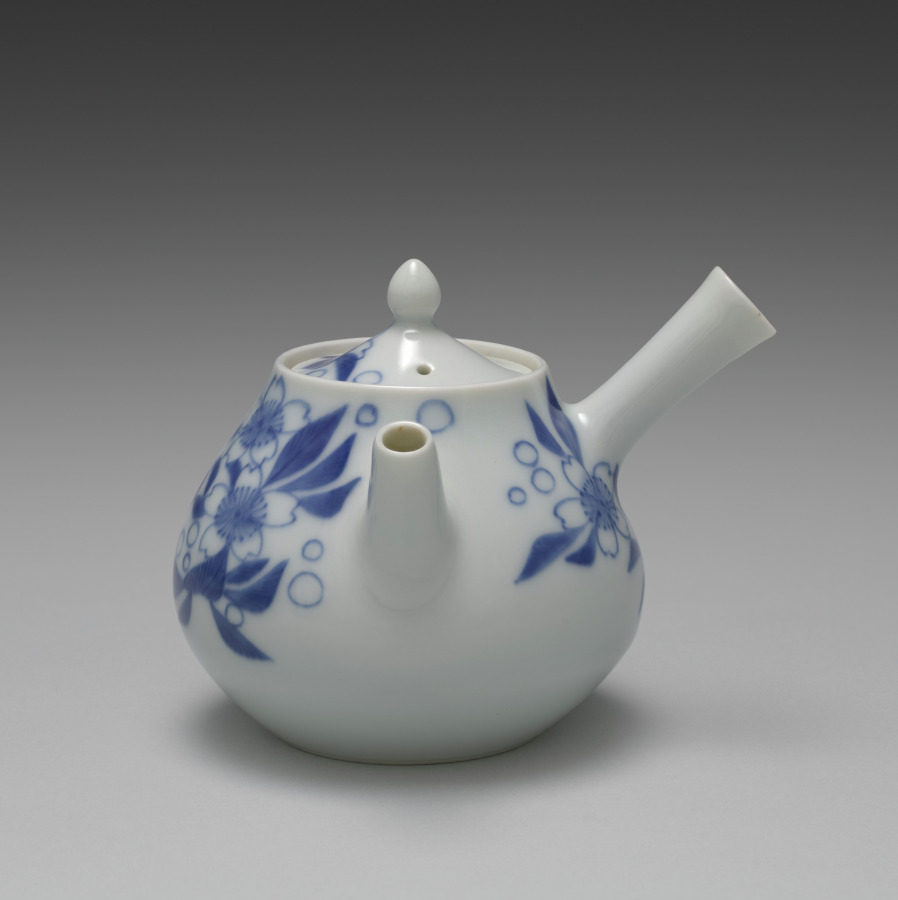
Seifū Yohei IV, Teapot with Cherry Blossoms, 1914–46, Porcelain with underglaze blue. The Cleveland Museum of Art, Gift of James and Christine Heusinger, accession 2022.201. View 1.
Look closer: blue cherry blossom sprays run over the body and lid. The museum reads its base mark, box and seals together.
Image: The Cleveland Museum of Art, Open Access (CC0)
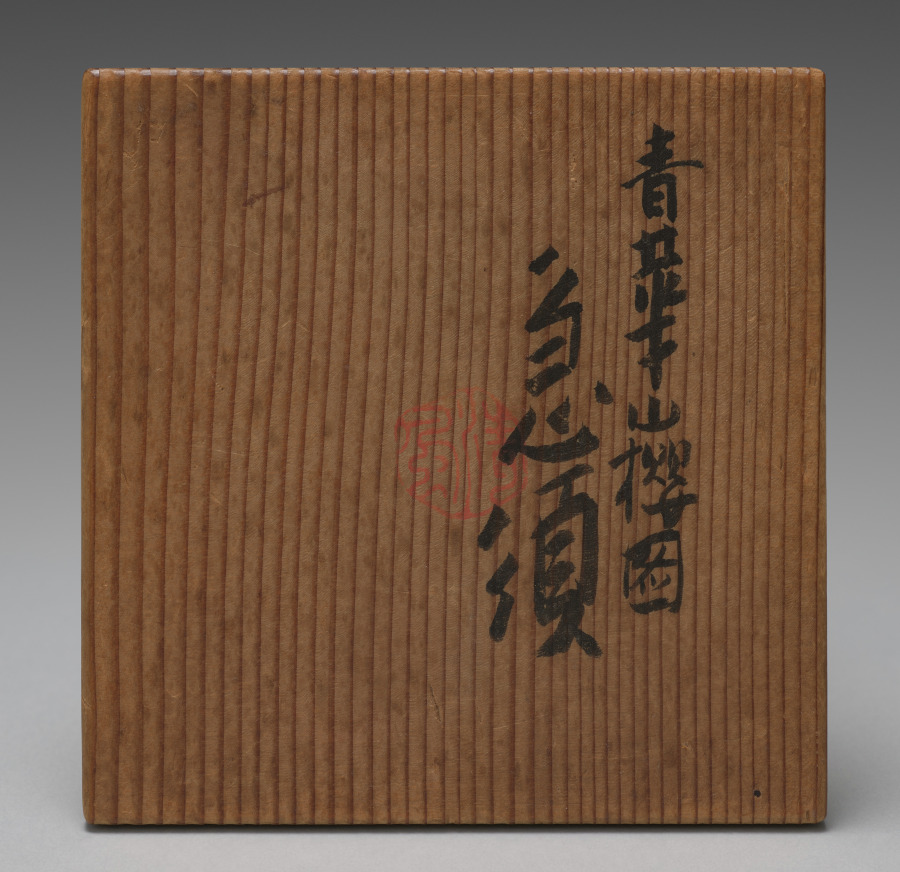
Seifū Yohei IV, Teapot with Cherry Blossoms, 1914–46, Porcelain with underglaze blue. The Cleveland Museum of Art, Gift of James and Christine Heusinger, accession 2022.201. View 5.
Look closer: the lid carries a brushed title in black ink and a red seal. The museum records a seal on top of the lid.
Image: The Cleveland Museum of Art, Open Access (CC0)
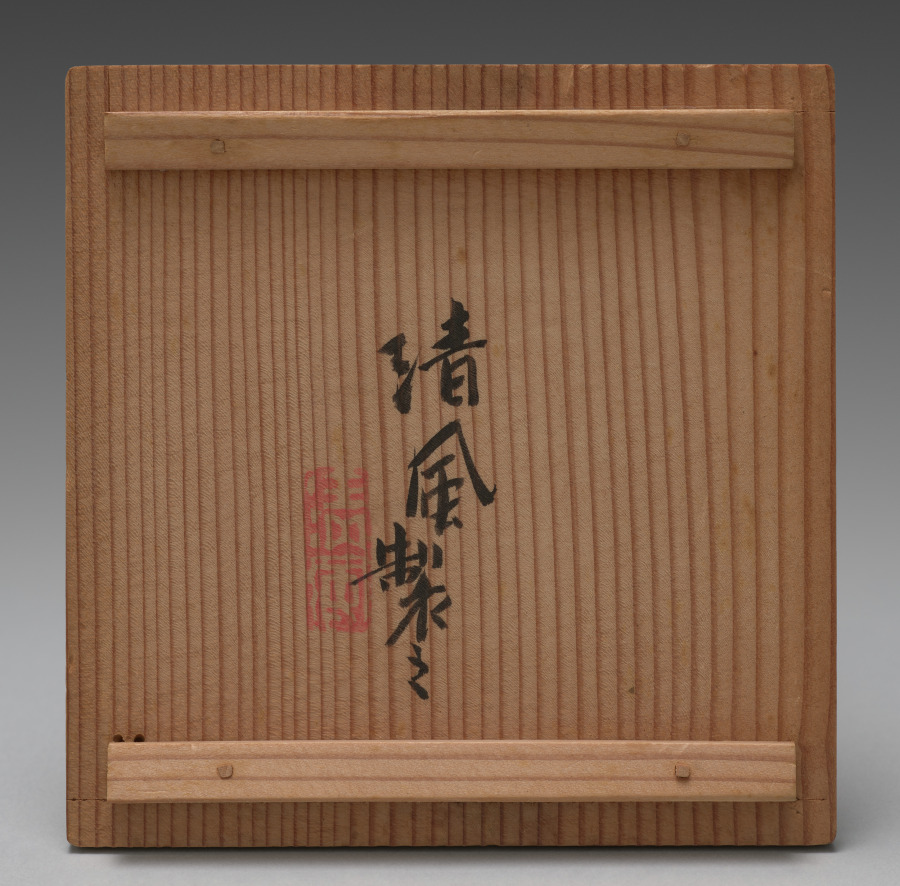
Seifū Yohei IV, Teapot with Cherry Blossoms, 1914–46, Porcelain with underglaze blue. The Cleveland Museum of Art, Gift of James and Christine Heusinger, accession 2022.201. View 6.
Look closer: a signature is brushed beside a red seal. The museum records a signature and a seal on the back of the lid.
Image: The Cleveland Museum of Art, Open Access (CC0)
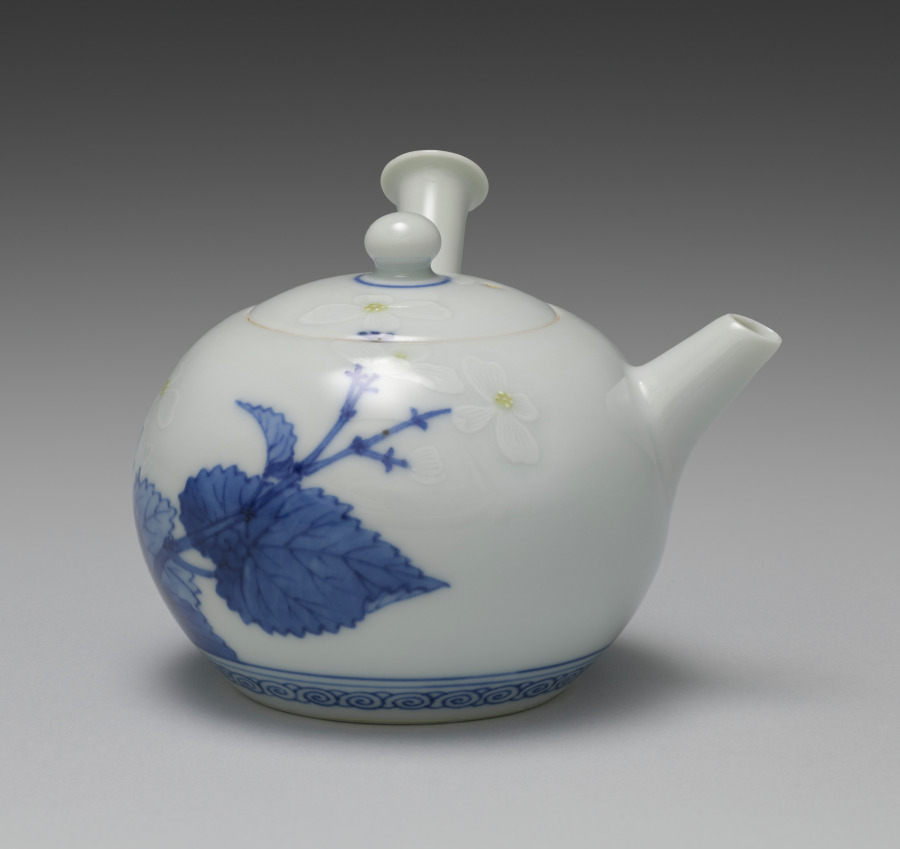
Seifū Yohei III, Teapot with Begonias, 1897–1914, Porcelain with underglaze and overglaze colors. The Cleveland Museum of Art, Gift of James and Christine Heusinger, accession 2022.168. View 1.
Look closer: a blue leaf stands out on a white body. The museum notes that the name is incised on one side in large characters.
Image: The Cleveland Museum of Art, Open Access (CC0)
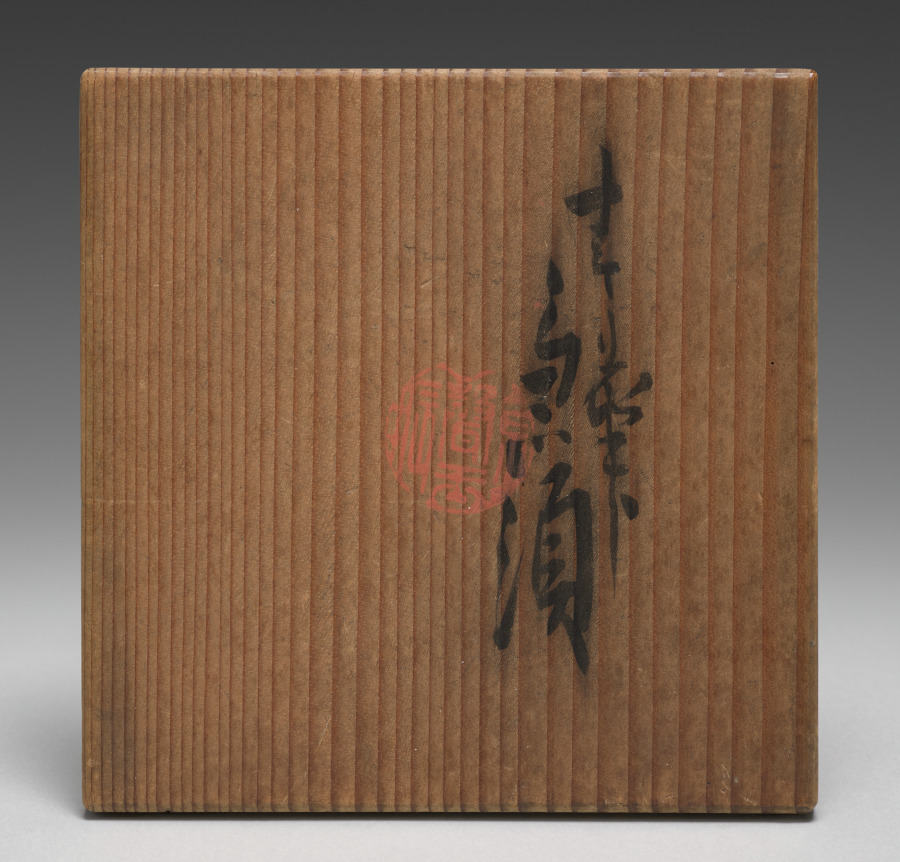
Seifū Yohei III, Teapot with Begonias, 1897–1914, Porcelain with underglaze and overglaze colors. The Cleveland Museum of Art, Gift of James and Christine Heusinger, accession 2022.168. View 6.
Look closer: a vertical inscription is brushed in black ink with a red seal beside it.
Image: The Cleveland Museum of Art, Open Access (CC0)
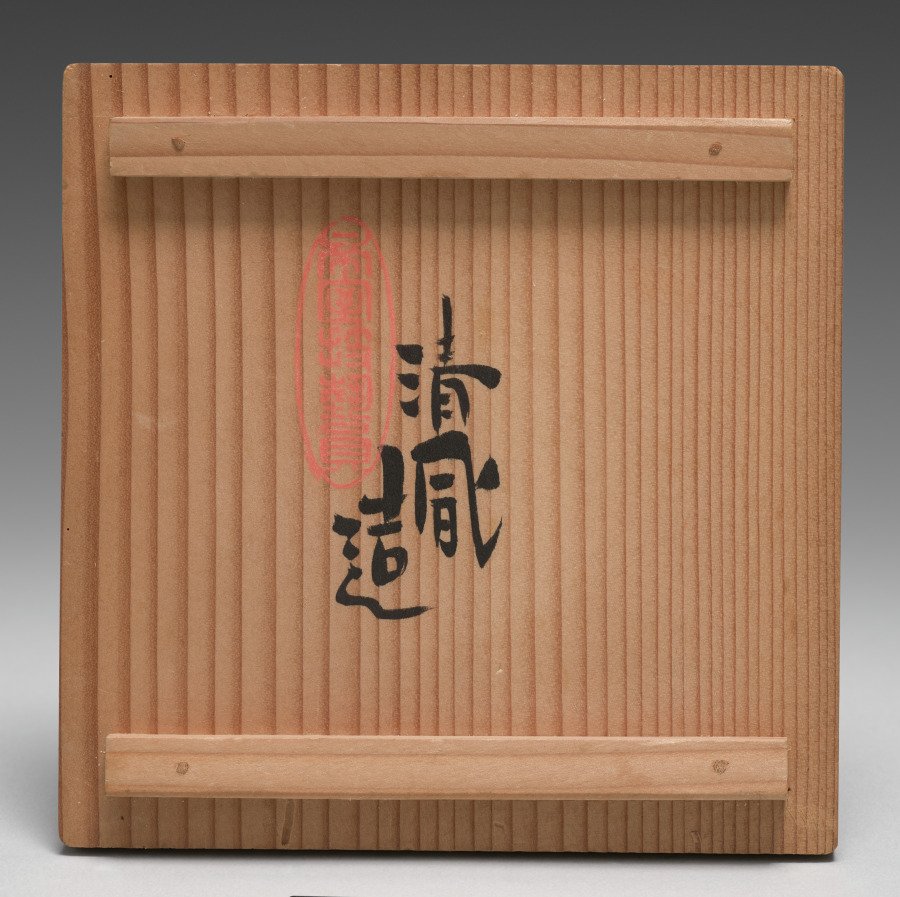
Seifū Yohei III, Teapot with Begonias, 1897–1914, Porcelain with underglaze and overglaze colors. The Cleveland Museum of Art, Gift of James and Christine Heusinger, accession 2022.168. View 7.
Look closer: a red seal stands beside a brushed signature on the underside of the lid.
Image: The Cleveland Museum of Art, Open Access (CC0)
A Shelf of Marked Wares
The house keeps a collection of Japanese Kutani ware and decorative arts, and pieces with fuku, kiln and artist marks pass through it. The concierge desk can read a base mark with you and say which parts of the evidence a piece supports and which it does not. The glossary of ceramics terms explains the vocabulary.
Answered plainly
What is a tomobako?
A box made for a piece and inscribed by the maker or someone who vouches for it. The Toledo Museum of Art says such boxes verify the makers of the vessels they hold.
What does Nippon on the base mean?
Gotheborg reports that imports to the United States had to be marked in Western letters from 1 March 1891, with Nippon used for Japan, until a change to Japan in 1921.
Can I tell the age of a piece from its mark?
Only roughly. Gotheborg calls its dating empirical and tentative, and the Cleveland Museum of Art shows one piece whose base mark, box and seals point to two generations of the same maker.
Does a Chinese reign mark on a Japanese bowl mean it is Chinese?
No. A dealer's reference calls Chenghua and Wanli marks on Japanese wares apocryphal.
Where next
Sources and image credits
- Marks on Japanese ceramics, turuta.jp ceramics story (publisher not named)
- Raku ware, Wikipedia
- Nonomura Ninsei, Wikipedia
- Authenticating box (tomobako), Toledo Museum of Art
- Japanese porcelain marks, Oriental Antiques (dealer reference list)
- Kutani marks, Gotheborg (collectors' site)
- Twentieth-century Japanese marks, Gotheborg (collectors' site)
- McKinley Tariff Act, Gotheborg glossary (collectors' site)
- Object record, Bowl with Chinese Landscape, The Cleveland Museum of Art
- Object record, Teapot with Cherry Blossoms, The Cleveland Museum of Art
- Object record, Teapot with Begonias, The Cleveland Museum of Art
Last reviewed 28 October 2026. Pictures, where shown, are public-domain or open-access and credited beneath each one.
Holding a piece with a mark you cannot read? The concierge desk replies within one to three business days.
Browse Japanese porcelain and ceramics · Make a private request
Private concierge
Looking for something in particular?
Describe the piece or the project you have in mind. A senior advisor in Tokyo reads every case file personally and replies within two business days, with fees set out in writing before any work begins.