
Masahiro Kikuno
The Japanese Watchmaker Rebuilding the Forgotten Time of the Edo Period
Within the world of modern independent horology, Masahiro Kikuno stands apart as one of the most intellectually fascinating watchmakers working today.
While many independent watchmakers focus on refining existing mechanical complications, Kikuno has taken a far more ambitious path. His work seeks to revive an entirely different way of measuring time, one that existed in Japan centuries before the adoption of modern Western clocks.

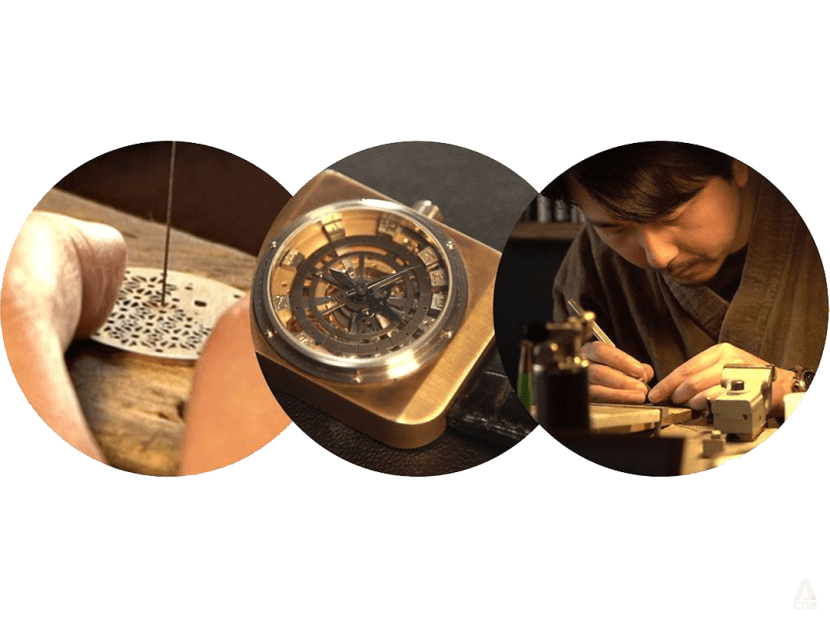
The result is a body of work that blends horology, history, astronomy, and philosophy.
Collectors often describe Kikuno’s watches not merely as timepieces but as mechanical reconstructions of historical knowledge.
A Watchmaker Who Learned Outside the Traditional Path
Masahiro Kikuno’s path into watchmaking was unconventional.
Unlike many watchmakers who train within established watch companies or Swiss schools, Kikuno largely developed his skills through independent study and apprenticeship within Japan.
He gained early recognition through the AHCI (Académie Horlogère des Créateurs Indépendants), an organization that represents some of the world’s most respected independent watchmakers.
This recognition placed Kikuno among a small group of artisans whose work is considered part of the global independent watchmaking movement.
However, Kikuno’s work differs dramatically from the Swiss tradition typically associated with independent horology.
His inspiration comes from Japan’s own historical relationship with time.
The Forgotten Time System of Edo Japan
Before Japan adopted Western clocks in the late 19th century, the country used a unique system known as wadokei timekeeping.
Under this system, the day and night were each divided into six units.
But unlike modern hours, these units were not fixed in length.
Because daylight changes throughout the year, daytime hours in summer were longer than those in winter. Nighttime hours followed the opposite pattern.
This meant that clocks had to continuously adjust the length of hours as the seasons changed.
Mechanical clocks capable of doing this were developed in Japan during the Edo period (1603–1868), but they were extremely complex and rare.
When Japan adopted Western timekeeping in the Meiji era, these systems disappeared.
Kikuno became fascinated by this lost technology.
Recreating Wadokei Time on the Wrist
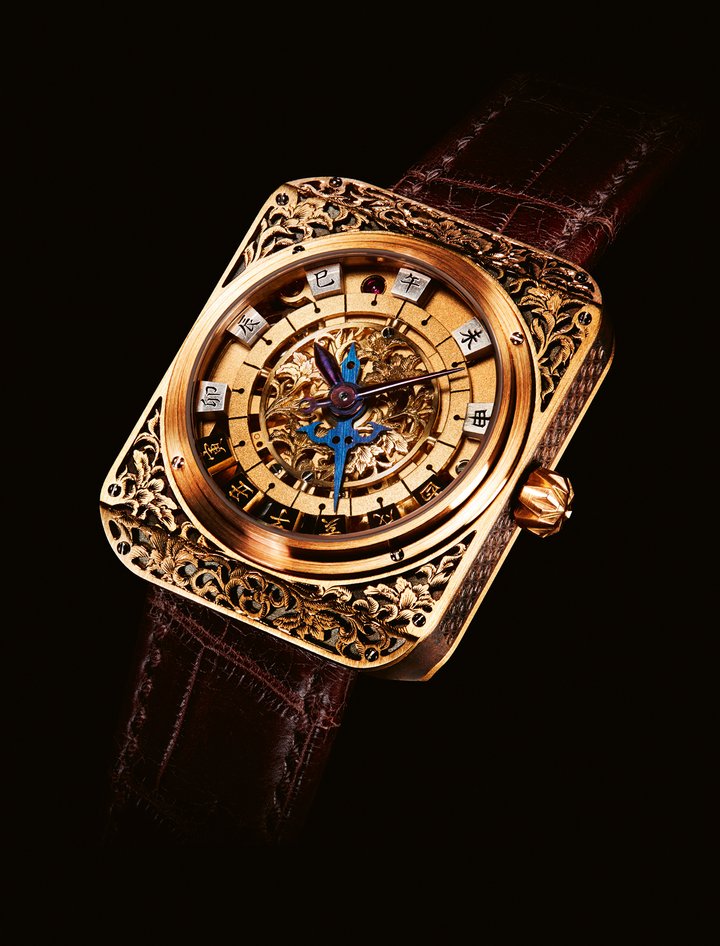
Masahiro Kikuno’s most famous watch is the Wadokei wristwatch, a modern reinterpretation of the traditional Japanese temporal hour system.
Unlike conventional watches where each hour is identical, the Wadokei watch adjusts the movement of the hour markers to reflect seasonal daylight variation.
The mechanism uses a sophisticated system of cams and gears linked to astronomical calculations.
As the seasons progress, the watch changes the spacing between hour markers so that daytime and nighttime hours shift accordingly.
The result is a mechanical wristwatch capable of displaying time in the same way Edo-period clocks once did.
This is not simply a complication.
It is the revival of an entire timekeeping philosophy.
Mechanical Complexity and Handmade Construction
Kikuno builds many components of his watches by hand.
This includes the movement architecture, gears, bridges, and various mechanical modules needed to implement his temporal hour complications.
Producing such watches requires an extraordinary amount of time and craftsmanship.
Because of this, Kikuno’s annual production is extremely limited.
Each watch becomes a rare object, more akin to a mechanical artwork than a commercial product.
Collectors who acquire a Kikuno watch are essentially obtaining a piece of horological research and engineering.
A Philosophical Approach to Time
What makes Kikuno’s work particularly compelling is the philosophical dimension behind it.
Modern timekeeping treats time as a fixed, standardized unit. Every hour is exactly the same length, regardless of the season.
But in the Edo period, time was understood differently.
Time expanded and contracted according to the rhythm of nature.
Long summer days produced longer hours of daylight. Winter nights stretched into extended periods of darkness.
Kikuno’s watches reflect this worldview.
They remind the wearer that time is not merely a mechanical measurement but a relationship between humans and the natural world.
The Global Watch Community Takes Notice
Despite the niche nature of his work, Kikuno has gained international recognition among collectors and horology scholars.
His watches are frequently discussed in enthusiast circles alongside those of prominent independent watchmakers.
Within the broader Japanese independent watchmaking ecosystem, Kikuno’s work complements other ateliers such as:
• Hajime Asaoka
• Otsuka Lotec
• Naoya Hida
However, his approach remains uniquely historical and philosophical.
Where others experiment with mechanical displays or aesthetic refinement, Kikuno explores the very meaning of time itself.
The Rarity of Kikuno Watches
Because Kikuno’s watches involve extraordinary mechanical complexity and handmade components, production remains extremely small.
Many collectors will never encounter one of his watches in person.
When they do appear in private collections or exhibitions, they are often treated more like mechanical artifacts than ordinary watches.
For collectors interested in the intellectual and historical dimensions of horology, Kikuno’s work occupies a special place.
These watches do not simply measure time.
They reinterpret the ancient Japanese understanding of time for the modern world.
Why Kikuno Matters in Modern Horology
Masahiro Kikuno’s work demonstrates that independent watchmaking can do more than produce luxury objects.
It can also revive lost knowledge, reinterpret historical technology, and invite people to think differently about something as fundamental as time itself.
In a watch industry often dominated by marketing narratives and incremental design updates, Kikuno’s work reminds collectors that true innovation sometimes comes from looking backward rather than forward.
And in doing so, he has created some of the most intellectually captivating watches of the modern era.
Submit Your Case File
Every bespoke partnership begins with clarity. Tell us what you seek, what inspired you, and the boundaries of your project.
What Happens After You Submit
Your Case File is reviewed personally by a senior advisor. We examine your objectives, logistics requirements, cultural considerations, and practical constraints. You will receive a tailored proposal outlining recommended services, timelines, and all applicable fees.
- Bespoke service design tailored to your specific needs
- Museum-grade logistics for art, antiques, fashion, and collectibles
- Transparent partnership with no hidden or surprise costs
“All fees, deposits, and retainers will be clearly presented for approval before any work begins.”
Thank you for entrusting us with your vision. We look forward to representing you with precision and discretion.