
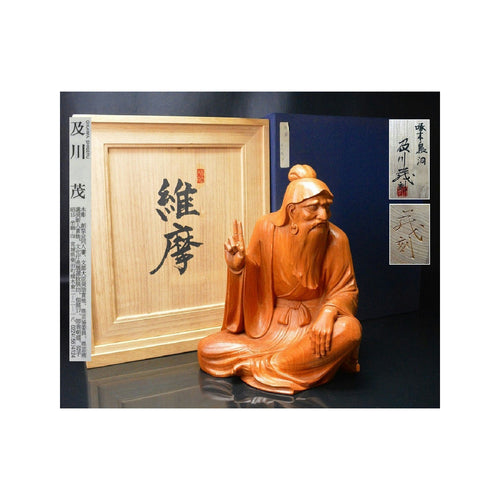

Oikawa Shigeru Japanese wood sculpture of Vimalakirti, Buddhist okimono, Showa-Heisei eras, 32 cm with tomobako and tatou-bako, Excellent grade
Oikawa Shigeru Japanese wood sculpture of Vimalakirti, Buddhist okimono, Showa-Heisei eras, 32 cm with tomobako and tatou-bako, Excellent grade
- Dispatch
- Prepared and sent from Tokyo within 7–14 days, often sooner, or as arranged
- Arrival
- Estados Unidos · usually 4–7 days after dispatch, insured and tracked Check the Shipping Flowchart here
- Shipping
- EMS recommended, with FedEx, DHL and UPS compared ·
- Import
Duties and customs · View the estimate
A guide for this piece: about $258, based on the 10% US charge on the declared value of goods made in Japan.
The final figure is set by US Customs and depends on where the piece was made and the kind of object it is. Many antiques over a century old carry no ordinary duty; most jewellery and leather goods add a single-digit rate.
With EMS, any charge is collected by your postal service on delivery. For pieces of significant value we can often arrange duties prepaid before dispatch.
Your customs authority: U.S. Customs and Border Protection (CBP), CBP Information Center · +1 877 227 5511 within the United States; +1 202 325 8000 from abroad (Monday to Friday, 8:30 to 17:00 Eastern)
These figures are estimates for your guidance; the charge set by customs may come in over or under them.
How the estimate is reached · Ask for a figure on this piece
- Character
- Quiet 3 of 10 ·
- Replies
- Within one Tokyo business day · Ask the curator team
- Guarantee
- Authenticity guaranteed · How we grade
Every piece is measured by hand, in centimetres as Japan measures. Please allow 1–2 cm (about ½ inch) for the give of the material and the hand that held the tape.
Where each figure is taken · View the plate

Object, sculpture and ceramics
Condition report
Excellent
- Giftable
- Mint
- Excellent
- Very Good
- Good
- Honest Wear
- As Found
Best for: Collectors of Japanese fine art sculptures and modern wood carving
Condition notes
No cracks or chips observed; seller notes good condition overall with slight age-related scuffs or stains.
Photograph review
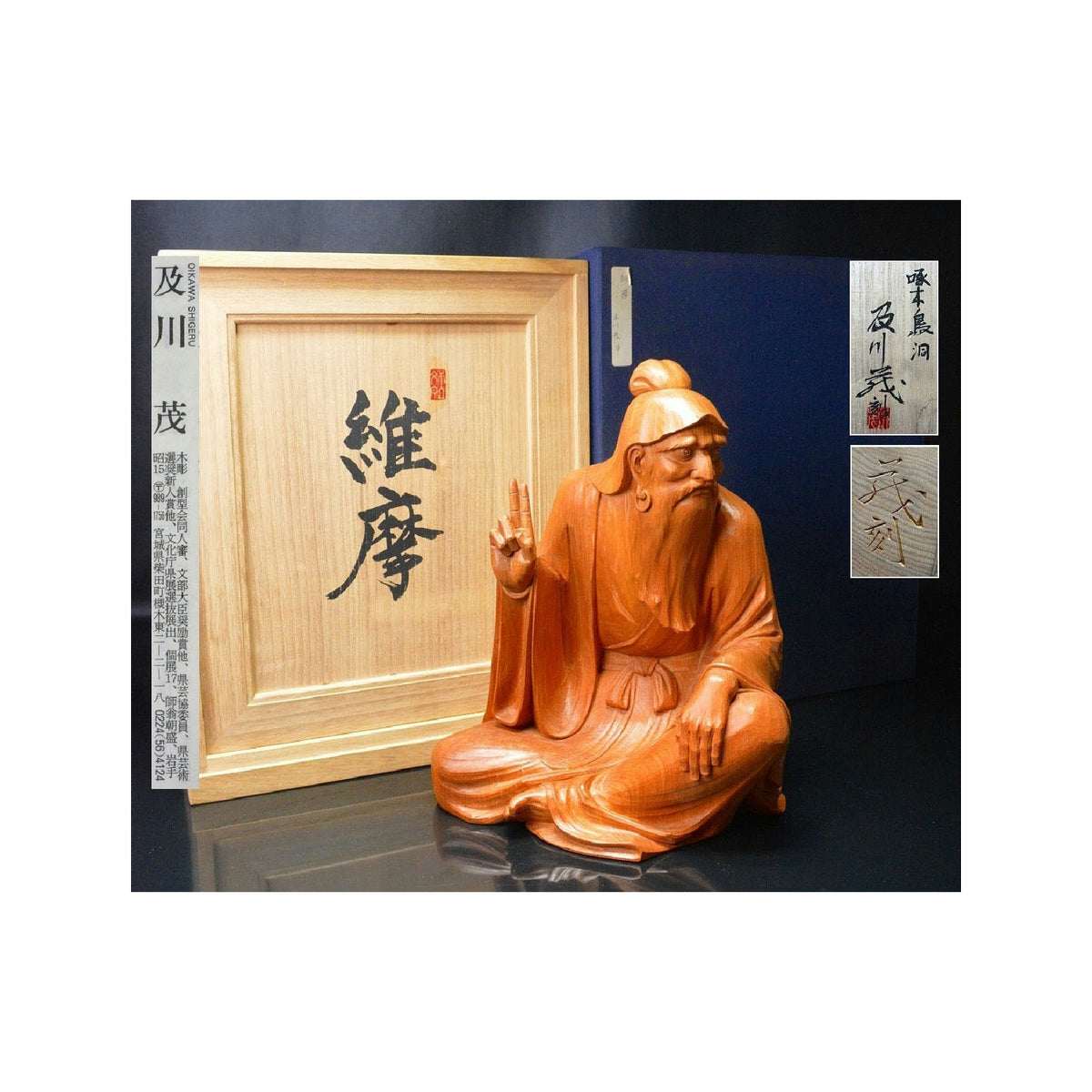
1. whole_front: Wooden carved statue of Vimalakirti (維摩) displayed in front of its signed wooden box (tomobako), blue cloth-covered outer box (tatou-bako), with inset close-ups of signature, seal, and carving mark; text/graphic overlays present on side.
2. other: Generic Japanese notice graphic asking buyers to switch to PC mode to view extra photos. (dropped)
Grades, ratings and commentary are given to the best of our ability, knowledge and experience, and condition remains partly a matter of personal perception. What we stand behind without qualification is authenticity, truthful description and provenance, to the best of our knowledge. How we grade
No se pudo cargar la disponibilidad de recogida
All sales are final. Please read our refund policy before purchase.
Examined in Tokyo, one price, insured to your door. How buying from Japonista works · Join the Circle, free
The Piece
Carved by Oikawa Shigeru in Japan’s Showa to Heisei transition, this modern okimono statue exemplifies the synthesis of traditional Buddhist wood carving with modern sensibility. Standing 32 cm tall and projecting 25.5 by 21 cm in breadth and depth, it asserts a substantial presence both in the hand and as a focal point in any display setting. Its subject, the lay Buddhist sage Vimalakirti, is a paragon of secular enlightenment in Mahayana lore, portrayed here with refined sculptural dynamism and subtle detail. The fluidity of the carved robes, meticulously following the natural grain, and the serene character of the face connect directly to the lineage of Japanese Buddhist statuary, whose roots span back to the Nara and Heian periods. This statue’s composition, with balanced seated pose, is a modern homage to those classical precedents.
Oikawa Shigeru is regarded among the ranks of Japanese modern carvers who contributed to the renewal of okimono and Buddhist statuary traditions during the late twentieth century. Okimono, literally "objets for placement", are carved figures specifically made for residential or ceremonial display. The piece’s size makes it suitable for a tokonoma alcove, gallery shelf, or Buddhist altar, harmonising with wabi-sabi aesthetics and refined interior decor. In the hand, the figure is weighty and commands careful handling, while its visual complexity provides layers for close study: from the grain alignment chosen to optimise both strength and visual appeal, to the patina that develops with age and respectful touch. Collectors of Japanese fine art sculptures and modern wood carving value such works for both their spiritual resonance and technical accomplishment.
The subject, Vimalakirti, is highly esteemed among Buddhist and academic collectors for his role as a challenger to monastic orthodoxy and advocate for lay wisdom; this thematic challenge is reflected in the artistic challenge for the carver, conveying depth of philosophy through posture, expression, and surface. From the late Showa era into Heisei, Buddhist art in Japan experienced a revitalisation as modern artists like Oikawa revisited historical forms with renewed expressiveness and fidelity to material. As with other hand-carved Buddhist okimono, this statue employs seasoned wood, selected by the artist for durability and beauty. Each stage, from design sketch to roughing-out, detail carving, and surface finishing, is executed with the goal of creating a piece both individually expressive and firmly grounded in tradition.
Display options for a work of this type range from private home settings, where it can serve as a meditative inspiration or focus for seasonal arrangements, to institutional collections, where its stylistic references and maker’s signature may be the basis for scholarly appreciation. The inclusion of an original tomobako, inscribed and sealed by Oikawa, is essential in Japanese collection culture: the box accompanies the piece and forms an integral part of its history, also providing critical protection. The presence of the cloth-covered tatou-bako adds another layer of preservation, typical for artworks intended for gifting or formal presentation. Limited exposure to light and dust, thanks to proper box storage, has contributed to the longevity of the surface and clarity of carved details.
To safeguard the statue, collectors should handle only with freshly washed hands or gloves, display away from direct sunlight and avoid drastic shifts in indoor climate, measures in line with best practices for wooden sculpture worldwide. Japanese collectors and curators typically use a soft, clean brush or dry cloth for regular dust removal and recommend gentle periodic airing out of both item and storage boxes. Returning the piece to its tomobako and tatou-bako when not on view is not only customary, but also optimises preservation of finish and provenance for future generations.
Details
- Maker: Oikawa Shigeru
- Model: Vimalakirti
- Type: Wooden statue (okimono)
- Style: Japanese modern wood carving / Buddhist figure sculpture
- Materials: Wood (exact species unknown)
- Colour: Brown, tan, light brown; visible natural grain
- Dimensions: Height 32 cm (12.6 in); Width 25.5 cm (10.0 in); Depth 21 cm (8.3 in)
- Weight: 3.6 kg (7.9 lbs)
- Era: Showa to Heisei
- Country of origin: Japan
- Included: Tomobako (original wooden box); tatou-bako (cloth-covered outer box)
- Condition grade: Excellent (minor age-related scuffs or stains)
Condition
Graded Excellent on the house scale, corresponding to the Japanese rank of no significant damage or dirt. Minor scuffs or light stains from age and handling are noted but no cracks or chips are present. The finish is well preserved, owing to storage in its original tomobako and outer box. How we grade condition.
Authenticity & Care
This piece is attested with the artist’s signature and seal, both on the sealed base and inside the included tomobako, bearing the artist's signature and seal. Traditional tomobako and outer box storage is included, essential for preserving both finish and provenance in Japanese collecting practice. Clean carefully using a soft, dry cloth and avoid water, solvents or prolonged manual contact. Keep away from direct sunlight, fluctuating humidity and dust; display in a cool, stable environment and return to boxes when not on view. This care regimen is standard for fine Japanese wood sculpture, ensuring long-term preservation for future collections.
Delivery from Japan
This statue ships from Tokyo via tracked and insured service, professionally packed for both item and boxes. The original tomobako and tatou-bako will be included in the same parcel. Every sale is final. For additional images or questions, private requests are welcomed prior to purchase.
Chosen for you