
Bonsai Pots, Tools and Display | Japonista
Craft and Ceremony Wing · Container and Frame
Bonsai Pots, Tools and Display
盆栽鉢
A bonsai is judged with its pot, its stand and the wall behind it. This chapter reads the container first, then the instruments of the grower, the viewing stone that sits beside the tree, and the three-part composition of the formal display.
Fact sheet
At a glance
- A frame for a painting. Wikipedia says pot shape, colour and size are chosen to complement the tree as a picture frame is chosen to complement a painting.
- Clay with a long record. Pottery made in Tokoname dates back to the twelfth century, and Tokoname was one of the Six Ancient Kilns of Japan.
- The indoor display is brief. A formal indoor display usually lasts a day or two, because most bonsai are intolerant of indoor conditions.
The Pot Is the Frame
Wikipedia’s article on bonsai states the rule plainly: for a tree shown in its completed state, pot shape, colour and size are chosen to complement the tree as a picture frame complements a painting. Straight sides and sharp corners go with formally shaped trees, oval or round pots with informal designs. Evergreen bonsai are often placed in unglazed pots, while deciduous trees usually appear in glazed ones. The overall design of the tree, the thickness of its trunk and its height decide the size.
There are practical rules beneath the aesthetic ones. Bonsai pots have drainage holes in the base to suit fast-draining bonsai soil, and growers cover the holes with a screening to keep soil in and pests out. Pots usually have vertical sides so that the root mass can be lifted out for inspection, pruning and replanting. During training the tree may live in a growing box or a training box instead, for which the article says there are no aesthetic guidelines at all. Only the completed tree is given its formal pot.

Ryūryūkyo Shinsai · 1806 · Privately published woodblock prints (surimono) mounted in an album; ink and color on paper
Ryūryūkyo Shinsai, Bonsai Plum, Compass, and Pocket Sundial with Design of Calendar, from Spring Rain Surimono Album (Harusame surimono-jō, vol. 3), 1806. The Metropolitan Museum of Art, H. O. Havemeyer Collection, Bequest of Mrs. H. O. Havemeyer, 1929 (accession JP2295). Public domain, Met Open Access. Record
The prints of the Edo period show how long the pot has been part of the picture. In a surimono by Shinsai, a blue pot with white dots is drawn with the same love as the plum it holds. A lacquer painting by Shibata Zeshin of 1882, now in the Metropolitan Museum, shows small trees in bowls of different colours on a dark root stand. The tree and its container were collected as a pair.
Tokoname and the Antique Pot
Collectors of pots keep one name in the front of their minds. Wikipedia’s article on Tokoname ware says the town in Aichi was the location of one of the Six Ancient Kilns of Japan, that pottery there dates back to the twelfth century, and that antique bonsai pots are collector’s items still produced today. Its modern reputation, the article says, was established by Koie Hōju, who introduced the red ware for which the town became renowned, building on his father Hōkyū’s chambered climbing kiln of the late Edo period. The largest climbing kiln still standing in Japan, the Tōei Kiln, was built in 1887, used until 1974 and designated an Important Tangible Cultural Property in 1982; it has eight firing chambers on a seventeen-degree incline and ten chimneys.
The living tradition has its honours too. According to the same article, the third-generation potter Yamada Jōzan III (1924 to 2006) was named a Living National Treasure in 1998 for making small pouring vessels, and his son took the title after him. The pots to be bought in the shop today were therefore made in a place with an unbroken eight-century record.
The Metropolitan Museum holds Tokoname ware from the early centuries. A stoneware bowl with ash glaze, labelled Tokoname ware, is dated to the Kamakura period (1185 to 1333), and a large storage jar of the Muromachi period (1392 to 1573), 54.6 centimetres high, has the same natural ash glaze. They are storage vessels and bowls rather than bonsai pots, but they show the clay and the finish on which the later container tradition drew. Wikipedia adds that collectible pots also come from Yixing in China, which is why Chinese antique pots are a separate and valued class in Japan; see the house essay on bonsai pots.
Ten Sizes, From Poppy Seed to Imperial
A bonsai is sorted by size before it is sorted by style, and the sizes have names that are older than the rulers. Wikipedia’s bonsai article gives a table in which the smallest class, keshitsubo, is “poppy-seed size”, the next, shito, “fingertip size”, and mame, “palm size”. At the other end stand the great trees named by the number of hands needed to carry them: the four-handed dai or omono, the six-handed hachi-uye and the eight-handed “imperial” class, named, the article says, for the trees in Japan’s Imperial Palace.
The article is candid that sources disagree. It gives shohin, the small-tree class that dominates modern shows, as 13 to 25 centimetres in its running text and as 13 to 20 centimetres in the table, and it notes the discrepancy. The pot has to follow the tree: wikipedia says pot size depends on the tree’s overall design, trunk thickness and height, and that straight sides and sharp corners go with formally shaped trees while oval or round containers go with informal ones.
The pot also follows the foliage. According to the same article, evergreens are often placed in unglazed pots, while deciduous trees usually appear in glazed pots. The rule is a rule of thumb and not a law, but it explains why a visitor to a show sees so many brown and grey containers under pines and junipers, and blues, creams and greens under maples and flowering trees.
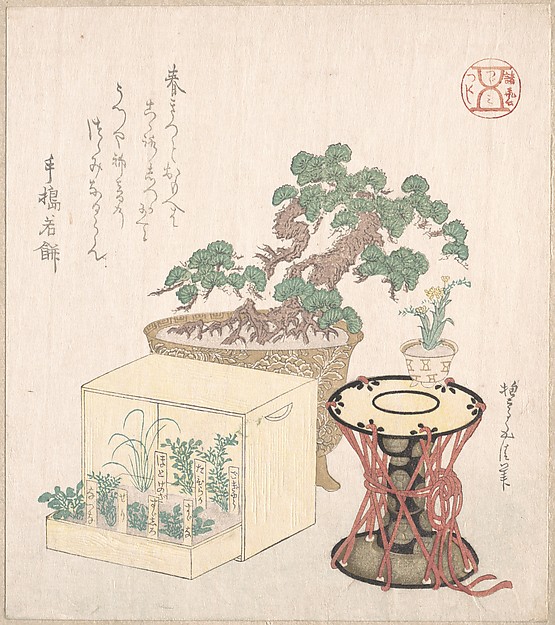
Sunayama Gosei · 18th–19th century · Woodblock print (surimono); ink and color on paper
Look closer: the pine fills the upper middle of the sheet; the deep, plain pot is set beside a small box of seven herbs.
Sunayama Gosei, Potted Pine Tree Drum and Seven Herbs Planted in a Box, 18th–19th century. The Metropolitan Museum of Art, H. O. Havemeyer Collection, Bequest of Mrs. H. O. Havemeyer, 1929 (accession JP2199). Public domain, Met Open Access. Record

Keisai Eisen · probably 1812 · Woodblock print (surimono); ink and color on paper
Look closer: the blue-and-white pot at the upper left holds a small plant; the other objects crowd the lower half of the sheet.
Keisai Eisen, Kakemono of Monkey, Wine Cup and Potted Plants, probably 1812. The Metropolitan Museum of Art, H. O. Havemeyer Collection, Bequest of Mrs. H. O. Havemeyer, 1929 (accession JP2220). Public domain, Met Open Access. Record
| Class | Name | Height as the article gives it |
|---|---|---|
| Imperial | Eight-handed | 152 to 203 cm (60 to 80 in) |
| Hachi-uye | Six-handed | 102 to 152 cm (40 to 60 in) |
| Dai or omono | Four-handed | 76 to 122 cm (30 to 48 in) |
| Chiu or chumono | Two-handed | 41 to 91 cm (16 to 36 in) |
| Katade-mochi | One-handed | 25 to 46 cm (10 to 18 in) |
| Komono | One-handed | 15 to 25 cm (6 to 10 in) |
| Shohin | One-handed | 13 to 20 cm (5 to 8 in); 13 to 25 cm in the text |
| Mame | Palm size | 5 to 15 cm (2 to 6 in) |
| Shito | Fingertip size | 5 to 10 cm (2 to 4 in) |
| Keshitsubo | Poppy-seed size | 3 to 8 cm (1 to 3 in) |
Steel, Wire and Soil
The grower’s repertoire, as Wikipedia lists it, is leaf trimming, pruning of trunk, branches and roots, wiring, clamping, grafting, defoliation, and the deadwood techniques called jin and shari that simulate age. The instruments for these developed with the art. The article says wire replaced string, rope and burlap for shaping around 1910, with zinc-galvanised steel wire at first and expensive copper wire reserved for trees of real potential. In the 1920s and 1930s the toolsmith Masakuni I (1880 to 1950) designed the first steel tools made for the requirements of bonsai styling, among them the concave cutter, a branch cutter that leaves a shallow indentation on the trunk which, properly treated, fills over with live tissue and bark.
The cutter embodies the principle of no trace of the artist described in chapter one. A branch must leave without a visible scar; the tool is made so that the wound heals back into the trunk. Soil is a question of the same kind. The article notes that Japanese bonsai soil components such as akadama clay are available worldwide, and that growers use fast-draining soil together with the holes in the pot. The house pages on Japanese bonsai tools and akadama, kanuma and kiryū give the working detail.
One caution from the article deserves repeating before any purchase. Trees from the wild, called yamadori, are described as often the most expensive and prized of all bonsai, and the Japanese tradition has no indoor bonsai. A tree, unlike a pot, cannot be exported without regard to its species and destination; see the note on what can travel.
The Cutter That Hides the Cut
Steel arrived late in the story of the art. Wikipedia’s bonsai article says shaping with wire replaced string, rope and burlap around 1910, credited to the Sanyu-en Bonsai-Dan, and that zinc-galvanised steel wire was used first, with copper wire kept for trees of real potential. The tool that changed the way a branch is taken off was developed in the 1920s and 1930s with the toolsmith Masakuni I (1880 to 1950): the concave cutter, which leaves a shallow indentation that fills in with live tissue over time and so reduces the scar.
A good cutter, in other words, is a device for hiding the artist’s hand, and the history of the bonsai tool is the history of the same principle that governs the pot. The art asks that nothing remain visible of the labour. It is also why growing boxes and training boxes, which the article says have no aesthetic rules, are never shown: they are the workshop. The pot is the first thing that appears once the work is done.
The article adds that Japanese bonsai soil includes akadama, a Japanese soil component now available worldwide, with local equivalents made elsewhere. Soil is not an ornament, yet it is the only part of the composition the viewer is not meant to see: moss covers it, and the pot’s rim frames it.
Landscapes in a Bowl
Not every container holds a tree. The Met has a pair of woodblock-printed books of 1848 by Utagawa Yoshishige, Views of Instructions for Bonsai along the Fifty-three Stations of the Tōkaidō, in which each of the famous stations is built as a miniature landscape in a bowl. One bowl is yellow, with blue-green rocks and a few small pines; another is a patterned cup with a flowering tree on a grey mountain. The books are a reminder that the pot was a stage as well as a vessel, and that miniature landscapes were taught and sold by pattern book in the nineteenth century.

Utagawa Yoshishige 歌川芳重 · 1848 · Set of two woodblock printed books; ink and color on paper
Look closer: each bowl holds a small hill with rocks and trees in tight clusters, framed in a plain rectangle.
Utagawa Yoshishige 歌川芳重, Views of Instructions for Bonsai along the Fifty-three Stations of the Tōkaidō (Tōkaidō gojūsantsugi hachiyama zue) 東海道五十三次鉢山図絵, 1848. The Metropolitan Museum of Art, Purchase, Mary and James G. Wallach Foundation Gift, 2013 (accession 2013.863a, b). Public domain, Met Open Access. Record
A single surimono of 1796 by Kubo Shunman shows the other end of the same practice: a small, bare-branched plum in a deep pot, standing on a low bench with a lidded box beside it. Verses fill the space above; the bench plays the part of the stand, and the box beside it is the shelf.

Kubo Shunman · 1796 · Woodblock print (surimono); ink and color on paper
Look closer: the plum is bare of leaves; the box on the bench is plain, and verses fill the space above and to the left.
Kubo Shunman, Bonsai Plum Tree on Bench and Box, 1796. The Metropolitan Museum of Art, Purchase, Marjorie H. Holden Gift, 2012 (accession 2012.248.25). Public domain, Met Open Access. Record
The Viewing Stone Beside the Tree
Bonsai are often shown with stones. Wikipedia defines suiseki as naturally formed stones appreciated as viewing stones for their ability to suggest landscapes or natural phenomena, closely related to the display arts of the tea tradition and the tokonoma. The term, it says, is approximately 150 years old, with the word coming into common use around the mid-nineteenth century. Stone appreciation began in China, where scholar’s rocks were collected as early as the Han dynasty, and the Huntington Library dates its arrival in Japan to about 600 AD.
The key principle is restraint. The article says the stone should not be carved, polished or reshaped to enhance its suggestive qualities; alteration is limited to what is needed for stable display, such as the fitting of a base. Stones are mounted on a carved wooden base, the daiza, or set in a shallow tray of sand or water, called suiban or doban. The article adds a comparison drawn from Bonsai Clubs International: Japanese bases are typically custom-carved and restrained, designed to complement rather than compete with the stone, while Chinese stands tend to be more elaborately carved, and Japanese practice favours horizontal alignment where Chinese tradition more often favours the vertical.
The Metropolitan Museum owns a woodblock-printed Suiseki Picture Album, dated 1814, by Satō Suiseki, the first volume of a series of which the museum also holds the second, of 1820. The two volumes show that the genre was already being illustrated in print in the early nineteenth century.
Scholar’s Rock and the Carved Base
The Chinese scholar’s rock is the ancestor of the Japanese viewing stone, and the Met has one that shows the difference at a glance. A white Taihu limestone of the seventeenth century, pierced and hollowed by water, rises in an arc from a carved wooden stand, and the stand is as carved as the stone is not. Wikipedia’s suiseki article records exactly this contrast: Chinese stands tend to be more elaborately carved, and Japanese bases are typically custom-carved and restrained.

probably 17th century · White Taihu limestone; wood stand
Look closer: the stone is pierced with holes and hollows; the carved stand beneath it is darker and heavily worked.
Scholar’s rock, probably 17th century. The Metropolitan Museum of Art, Rosenblum Family Collection, Gift of Anna Rosenblum Palmer, 2011 (accession 2011.575.9a, b). Public domain, Met Open Access. Record
A Japanese hanging scroll of 1831 by Takahashi Sōhei shows how the idea travelled onto paper. In Taihu Rock and Banana Plant, a lone pierced rock and a plantain stand at the lower left of a tall, empty sheet, with a column of calligraphy above; the wide silence is part of the picture.

Takahashi Sōhei · 1831 · Hanging scroll; ink and color on paper
Look closer: the rock and plant crowd into the lower left corner; the rest of the sheet is empty but for the inscription.
Takahashi Sōhei, Taihu Rock and Banana Plant, 1831. The Metropolitan Museum of Art, Mary Griggs Burke Collection, Gift of the Mary and Jackson Burke Foundation, 2015 (accession 2015.300.183). Public domain, Met Open Access. Record
Three Elements in the Alcove
Wikipedia describes the formal indoor display as a representation of a landscape. It traditionally consists of the featured tree in an appropriate pot on a wooden stand, a companion plant, shitakusa, representing the foreground, and a hanging scroll representing the background. The three are chosen to complement one another and evoke a season, and they are composed asymmetrically to mimic nature. The diagram below sets the three out in the order in which the eye travels.

Schematic, not to scale
Look closer: read from left to right: far, middle, near.
Diagram by Japonista. Drawn from the facts cited in this chapter; schematic, not to scale.
The same article gives the viewing rules. The tree is shown from its designed front, at a height that lets the viewer imagine a full-size tree seen from a distance, neither so low that the viewer hovers above it nor so high that the viewer looks up at it from underground. The writer Peter Adams is quoted as recommending a presentation as in an art gallery, at the right height, in isolation and against a plain background, free of labels and “vulgar little accessories”. In exhibitions, a sequence of small alcoves with neutral backs lets each tree be seen alone, and the pot nearly always sits on a formal stand sized to suit.
The alcove itself has a history. Wikipedia’s article on the tokonoma gives two theories of its origin, from the Heian shinden-zukuri room or from the Kamakura Zen monastery’s oshiita, a board carrying candlesticks, incense burners and vases before a Buddhist scroll, which developed into the shoin-zukuri alcove of the Muromachi period. The most important guest sits closest to it, and stepping into it is strictly forbidden except to change the display. See Tokonoma, Chabana and Tea-Room Scrolls and the Tea Room Atlas for the room, and Kazari for the house guide to display.
Where the Public Sees the Pot
The pot is seen by the public at an exhibition, and the modern exhibition has a documented history. Wikipedia’s bonsai article gives the first national annual show as held at Hibiya Park in 1914 and continuing to 1933. The great national exhibition, the Kokufu-ten, began in Ueno Park in 1934 and was cancelled for four years before returning in 1947. It is held every February for eight days, by invitation only, now at the Tokyo Metropolitan Art Museum; the 2023 edition was the 97th, and the article calls it Japan’s oldest competition and the most prestigious for amateur-owned trees.
Professionals have their own. The Nippon Bonsai Sakufu-ten is held in December for professional growers, and the article records that the top Prime Minister Award went in 2022 to Hiroaki Suzuki for a shimpaku juniper. In 1975 the first gafu-ten, a show of small trees, and the first creative exhibit were held; the first World Bonsai Convention followed in Osaka in 1980. Museums extend the record: the article names the Shunka-en Bonsai Garden in Tokyo, the Ōmiya Bonsai Museum in Saitama, the National Bonsai and Penjing Museum in Washington, DC and the Pacific Bonsai Museum near Tacoma, Washington.
The practice of the show is a lesson in how the pot is read. Each tree sits in its own alcove with a neutral back, on a formal stand sized to the pot; the article quotes the writer Peter Adams on showing bonsai as in an art gallery, isolated against a plain background. Indoor displays usually last only a day or two, because most bonsai lose vigour indoors.
The Tree Named for Its Pot
The most famous tree of the Tokugawa age had a keeper, and the keeper was a shogun. Wikipedia’s bonsai article says the five-needle pine Sandai Shōgun was trained as a bonsai by 1610 and documented as cared for by Tokugawa Iemitsu; it is thought to be at least 500 years old and is held in the Tokyo Imperial Palace collection.
The name of the art itself has a story. The article records that around the fourteenth century the Japanese term was hachi no ki, “the bowl’s tree”, and that in the early nineteenth century scholars at Itami renamed these trees bonsai, a term for a shallow container. The word was not widely used for nearly a century. The tree was named after its pot.
The Mustard Seed Garden Manual, a Chinese painting manual first published in 1679, reached Japanese literati and, the article says, influenced bonsai ideas. Together with the Chan monks who helped shape the art’s reputation, it supports the claim that the container and the composition were learned from China and then simplified. The article notes that Japanese artists removed the figurines that penjing keeps.
Dates from the Twelfth Century to 2026
Dates come from the articles cited at the foot of the page. Where a source gives a century and not a year, the table says so.
| Year | Event |
|---|---|
| 12th century | Pottery made at Tokoname, one of the Six Ancient Kilns |
| 14th century | Takasaka kiln built; the older term hachi no ki, “the bowl’s tree” |
| 1610 | Sandai Shōgun pine trained as bonsai by this date |
| 1679 | Mustard Seed Garden Manual first published |
| 1796 | Kubo Shunman’s surimono shows a plum on a bench |
| 1848 | Utagawa Yoshishige’s books of landscapes in bowls |
| c. 1910 | Wire replaces string, rope and burlap in shaping |
| 1914 | First national annual show, Hibiya Park |
| 1920s to 1930s | Masakuni I develops the concave cutter |
| 1934 | Kokufu-ten begins in Ueno Park |
| 1947 | Kokufu-ten returns after four years |
| 1975 | First gafu-ten and first creative exhibit |
| 1980 | First World Bonsai Convention, Osaka |
| 1998 | Yamada Jōzan III named a Living National Treasure |
| 2026 | The 100th Kokufu-ten, held 8 to 18 February at the Tokyo Metropolitan Art Museum |
Curiosities of the Potting Bench
The tallest bonsai are sized by hands. The article’s size table counts hands, from one to eight, and the names of the classes say how many people it takes to carry the tree and its pot.
The same article lists a few of the numbers behind the hobby: more than 1,400 bonsai books in at least 28 languages, about 100,000 enthusiasts in about 1,500 clubs and associations, and more than five million unaffiliated hobbyists. By 1940 about 300 bonsai dealers were working in Tokyo.
The largest climbing kiln in Japan is in Tokoname. The Tōei Kiln, built in 1887 and used until 1974, has eight firing chambers on a seventeen-degree incline and ten chimneys of varying height.
Terms Used on This Page
A short vocabulary, in the order a visitor is likely to meet the words.
| Term | Meaning |
|---|---|
| Bonsai | “Tray planting”; the tree in its pot |
| Hachi no ki | “The bowl’s tree”; an older name |
| Shohin | A small tree, about 13 to 25 centimetres |
| Mame, shito, keshitsubo | The smallest classes: palm, fingertip and poppy-seed sized |
| Akadama | A Japanese bonsai soil component |
| Tokoname | A town and ware of Aichi, one of the Six Ancient Kilns |
| Yixing | The Chinese region of collectible bonsai pots |
| Shitakusa | The companion plant at a tree’s foot |
| Suiseki | A viewing stone, “water stone” |
| Daiza | The carved base of a stone |
| Suiban, doban | The shallow tray of water or sand for a stone |
| Tokonoma | The alcove for formal display |
| Kokufu-ten | The great national bonsai exhibition, in February |
| Sakufu-ten | The professional exhibition, in December |
| Gafu-ten | A show of small trees |
| Yamadori | A tree collected from the wild |
| Concave cutter | A cutter that leaves a shallow hollow that heals over |
Pots, Shows and Makers Today
The year 2026 marked a milestone for the oldest exhibition. The 100th Kokufu-ten opened on 8 February 2026 and ran until 18 February at the Tokyo Metropolitan Art Museum in Ueno Park, in two periods, and a bonsai blogger who reported on it described about 250 masterpieces in the double-show format. The count follows Wikipedia: if the 97th was held in 2023, the hundredth falls in 2026.
Pots keep their own calendar. Tokoname was protected as a local brand in January 2007, according to Wikipedia, and the INAX museums in the town show the history of industrial production, while the Tokoname Pottery Association sells the pots. The third-generation potter Yamada Jōzan III’s title now passes to his son Yamada Jōzan IV, born in 1954.
Visitors most often search for how to choose a bonsai pot, whether to glaze it, why the holes are there, what Tokoname ware is and how to display a viewing stone. The answers are in the questions below.
Clay, stone and lacquer in the museum

Shibata Zeshin · 1882 · Lacquer on paper
Shibata Zeshin, Lacquer Paintings of Various Subjects: Bonsai, 1882. The Metropolitan Museum of Art, The Howard Mansfield Collection, Purchase, Rogers Fund, 1936 (accession 36.100.102). Public domain, Met Open Access. Record
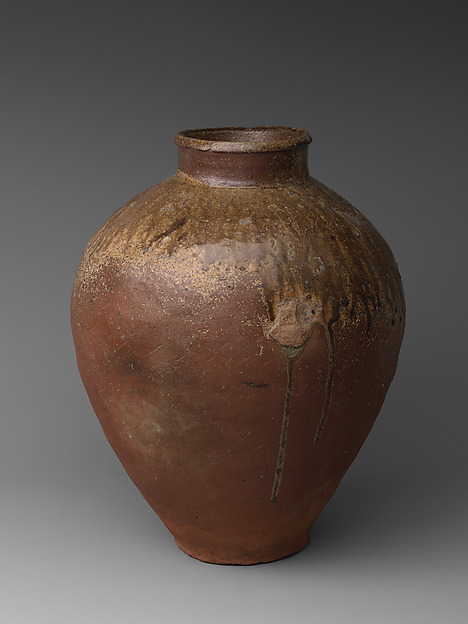
16th century · Stoneware with natural ash glaze (Tokoname ware)
Large Storage Jar (Ōtsubo), 16th century. The Metropolitan Museum of Art, Mary Griggs Burke Collection, Gift of the Mary and Jackson Burke Foundation, 2015 (accession 2015.300.275). Public domain, Met Open Access. Record

14th century · Stoneware with ash glaze (Tokoname ware)
Bowl, 14th century. The Metropolitan Museum of Art, Purchase, Jack C. Greene Gift, 1978 (accession 1978.195). Public domain, Met Open Access. Record
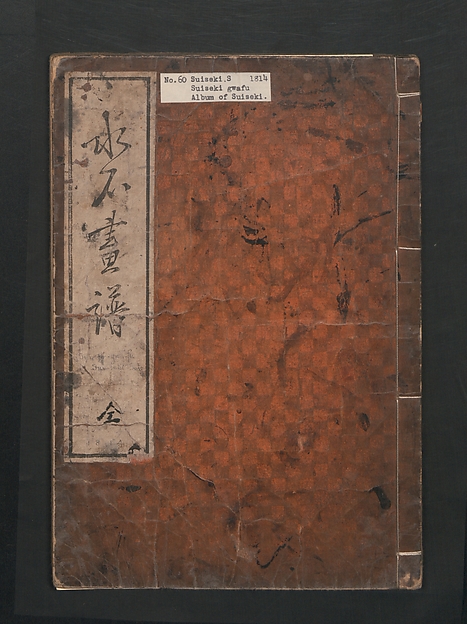
Satō Suiseki 佐藤水石 · 1814, sixth month; preface dated 1814, fourth month · Woodblock printed book; ink and color on paper
Satō Suiseki 佐藤水石, Suiseki Picture Album (Suiseki gafu) 水石画譜, 1814, sixth month; preface dated 1814, fourth month. The Metropolitan Museum of Art, Rogers Fund, 1918 (accession JIB60). Public domain, Met Open Access. Record

15th–16th century · Wood with red over black lacquer; Negoro ware
Look closer: a stand of the kind that raises a bowl; a bonsai stand does the same for a pot.
Stand for a Tenmoku Teabowl, 15th–16th century. The Metropolitan Museum of Art, Gift of Florence and Herbert Irving, 2019 (accession 2019.193.17). Public domain, Met Open Access. Record

Ryūryūkyo Shinsai · ca. 1820 · Woodblock print (surimono); ink and color on paper
Ryūryūkyo Shinsai, First Tea Gathering of the New Year, ca. 1820. The Metropolitan Museum of Art, H. O. Havemeyer Collection, Bequest of Mrs. H. O. Havemeyer, 1929 (accession JP2375). Public domain, Met Open Access. Record
Pots and Stones
The Bonsai and Suiseki shelf is small and exacting. The concierge desk can search Japan for an antique pot, a carved stand or a named stone.
Answered plainly
Should a bonsai pot be glazed?
Wikipedia’s account says evergreen bonsai are often placed in unglazed pots and deciduous trees usually in glazed ones; these are guidelines rather than laws.
Why does a bonsai pot have holes?
To match the fast-draining soil; growers cover the holes with a screening to keep soil in and pests out.
What is Tokoname ware?
Stoneware and ceramics from Tokoname, Aichi, one of the Six Ancient Kilns, with records from the twelfth century; antique bonsai pots are collector’s items and still produced.
What is shitakusa?
The companion plant that represents the foreground in a formal indoor display.
Can a viewing stone be polished?
Not in the tradition. The stone should not be carved or polished beyond what is needed for stable display, such as fitting a base.
How big is a shohin bonsai?
About 13 to 25 centimetres in the running text of Wikipedia’s article, although its table gives 13 to 20; the article says sources disagree.
Which trees go in glazed pots?
Wikipedia says evergreens are often placed in unglazed pots and deciduous trees usually in glazed ones.
What is the concave cutter?
A bonsai tool developed in the 1920s and 1930s with the toolsmith Masakuni I. It leaves a shallow indentation that fills in with live tissue and reduces the scar.
When did bonsai start to be shaped with wire?
Around 1910, according to Wikipedia, when wire replaced string, rope and burlap; zinc-galvanised steel wire was used first and copper reserved for promising trees.
What is the Kokufu-ten?
Japan’s oldest and most prestigious bonsai competition for amateur-owned trees, held by invitation each February in Ueno Park, Tokyo, since 1934. The 100th was held from 8 to 18 February 2026.
What is the difference between Kokufu-ten and Sakufu-ten?
Kokufu-ten is for amateur-owned trees and is held in February; the Nippon Bonsai Sakufu-ten is for professional growers and is held in December.
Why is bonsai called “the bowl’s tree”?
Hachi no ki was the older Japanese term. Scholars at Itami renamed the trees bonsai in the early nineteenth century, after the word for a shallow container.
How is a viewing stone mounted?
On a carved wooden base called a daiza, or in a shallow tray of sand or water. The stone itself should not be carved or polished.
How long can a bonsai stay indoors?
Wikipedia says indoor formal displays usually last only a day or two, because most bonsai lose vigour indoors.
Where next
References and image credits
- Bonsai, Wikipedia
- Tokoname ware, Wikipedia
- Suiseki, Wikipedia
- Tokonoma, Wikipedia
- 100th Koku-Fu Bonsai Exhibition, Part I, 2026, Valavanis Bonsai Blog
- Metropolitan Museum of Art Open Access: Asian Art collection records (credited beneath each image)
Last reviewed 28 October 2026. Every photograph is public domain or openly licensed and credited beneath it; drawn diagrams are by Japonista.
Searching for a pot, a carved stand or a named stone? The concierge desk replies within one to three business days.
Private concierge
Looking for something in particular?
Describe the piece or the project you have in mind. A senior advisor in Tokyo reads every case file personally and replies within two business days, with fees set out in writing before any work begins.