

PRIDE OF YOKOSUKA: Inside Japan’s Sukajan Legacy—From Post-War Souvenirs to Museum-Grade Wearable Art
I went to the 15th anniversary PRIDE OF YOKOSUKA Sukajan exhibition held at the Yokosuka Museum of Art—and if you’ve ever dismissed sukajan as just “flashy jackets,” this kind of show changes your brain. It wasn’t a single “trend recap.” It was a curated timeline of post-war memory, base-town culture, and embroidery craftsmanship—presented through roughly 140 vintage and modern pieces that make sukajan read less like streetwear and more like portable historical documents.
First—do you know what sukajan is? It’s not the same thing as a typical American stadium jacket. Sukajan (often called “suka jackets” or “souvenir jackets”) are usually made with rayon/acetate satin (sometimes velveteen), and they’re defined by bold, dense embroidery—dragons, eagles, tigers, maps, place-names, and unit references—often built as reversible jackets with two “fronts,” two moods, and two stories. That reversibility isn’t just a gimmick; it’s part of the garment’s original logic: one side can be loud, the other side more discreet, depending on where you were wearing it and what you were signaling.
What hit me hardest in the exhibition is that sukajan is one of the rare cases where a garment can be read like a post-war artifact: it captures an unequal moment in history (occupation and base towns), but it also captures something deeply human—people turning time abroad into a personal emblem, and local makers translating “requests” into imagery that could survive decades.
History of Sukajan
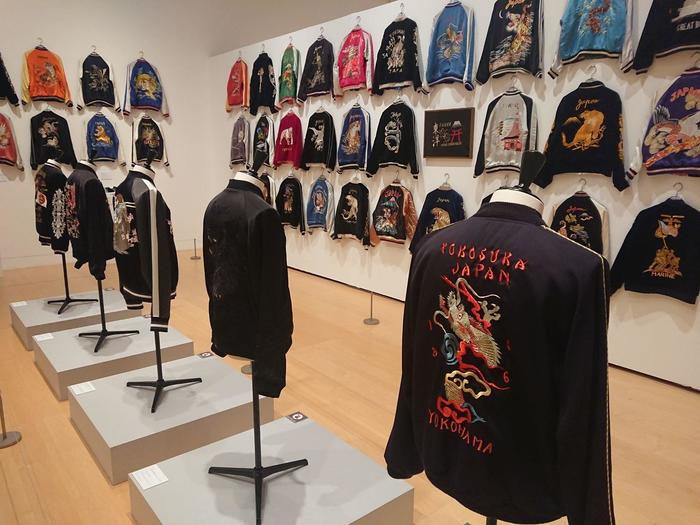
Sukajan is said to have been born in the late 1940s, shortly after the war, during the period when Japan’s port cities and shopping streets reorganized around new flows of people and money. The earliest sukajan weren’t born from a “fashion industry.” They were born from street commerce + tailoring + souvenir demand, especially near areas used by the occupation forces.
Many stalls were lined up in Ginza, Tokyo, around Wako (requisitioned at the time and used as a department store oriented to the occupation forces). Kimono and obi were displayed as coveted souvenirs—traditional Japanese items that felt rare and “Far East” to American officers. And then someone noticed something: American buyers didn’t only want objects—they wanted custom markers. That’s when the idea clicked: take a jacket shape familiar to Americans (baseball / bomber silhouettes), and translate “Japan” into embroidery that reads instantly—Fuji, eagles, dragons, tigers, cherry blossoms, maps, place names.
When the jacket first appeared, it was called a souvenir jacket / souvenir jumper. It sold fast. Then PX channels (stores connected to US bases) noticed the demand, and once distribution moved beyond stalls into broader base commerce, demand grew so quickly that artisans couldn’t keep up with the embroidery work. From the beginning, sukajan has been a collision of desire and capacity—the world wants more than the craft can comfortably produce.
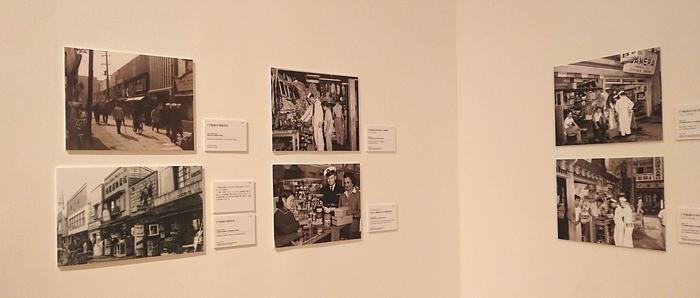
Beyond official routes, souvenir shops opened around US military bases across the country selling jackets and other “memory goods.” In Yokosuka, shops called “souvenirs” that targeted US sailors began lining the area around what’s now called Dobuita-dori (originally Honmachi-dori)—a street that becomes almost a character in sukajan history.
Sukajan’s roots were as souvenirs for American soldiers.
Within military culture there has long been a real habit of customizing personal gear: hidden embroidery in uniforms, painted suitcases, patches, markings, names, dates, unit identifiers. Sukajan is that instinct, translated through Japanese hands.
Another popular souvenir was a portrait drawn on silk, called a silk portrait. People bought portraits of themselves, their families, and scenes like Mt. Fuji, then brought them back home. Sukajan didn’t stand alone—it sat inside a larger ecosystem of base-town souvenirs: embroidered textiles, painted luggage, scarves, handkerchiefs—objects that made a foreign posting feel “real” and recordable.
Dobuita Street
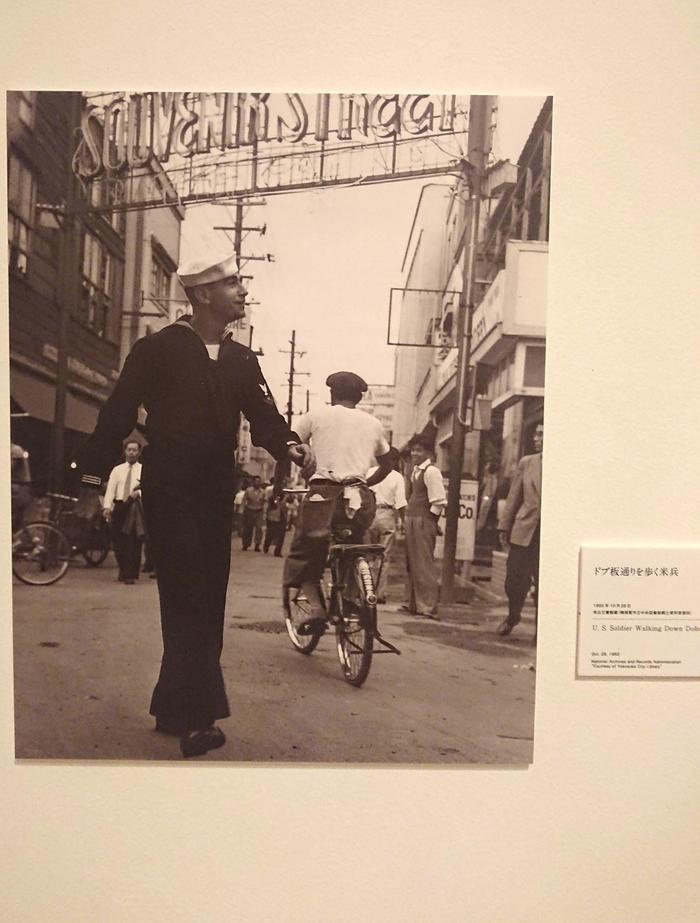
<<American Soldiers Walking Down Street> October 28, 1955, U.S. National Archives (provided by Yokosuka City Central Library Local Materials Room)>
Dobuita-dori matters because sukajan history is inseparable from “base town” geography. This street ran parallel to the gate culture of Yokosuka—restaurants, bars, tailors, souvenir storefronts—an economy that grew around sailors with money to spend, time to kill, and a desire to carry proof of “Japan” home with them.
Souvenirs from before Skajan appeared
After the war, in Yokosuka where the US Navy base was located, many souvenir shops targeting sailors were lined up around Dobuita Street, selling all kinds of souvenirs—not just jackets.
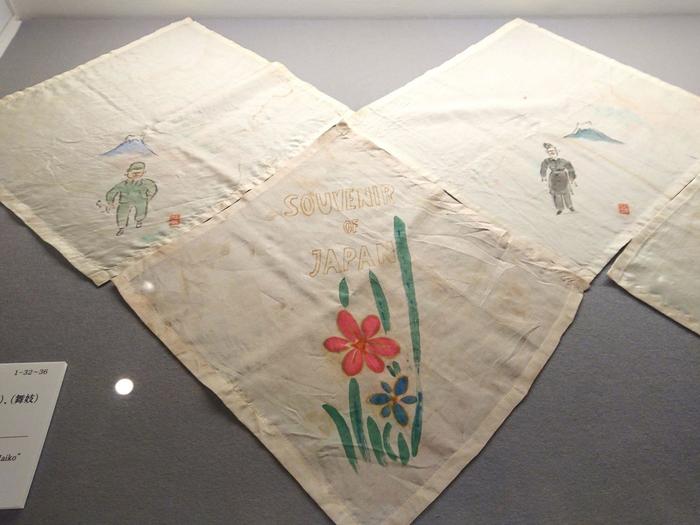
<<Souvenir handkerchief>> Late 1940s to early 1950s, Yokosuka City Central Library Local Materials Room>
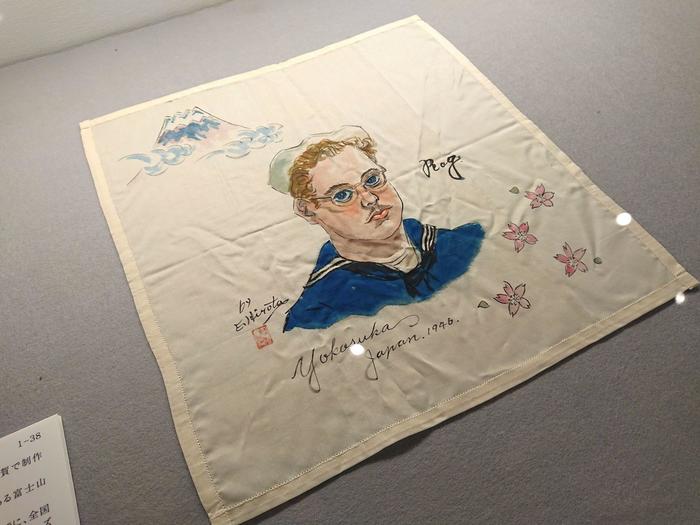
<<Caricature Scarf "Yokosuka Japan 1946"> 1946 Collection of Tomoji Yokochi Hiroumi>
These items help explain why sukajan took off: the market was already trained to buy portable identity—objects that encode a place name, a date, and a visual shorthand of the experience.
Portrait
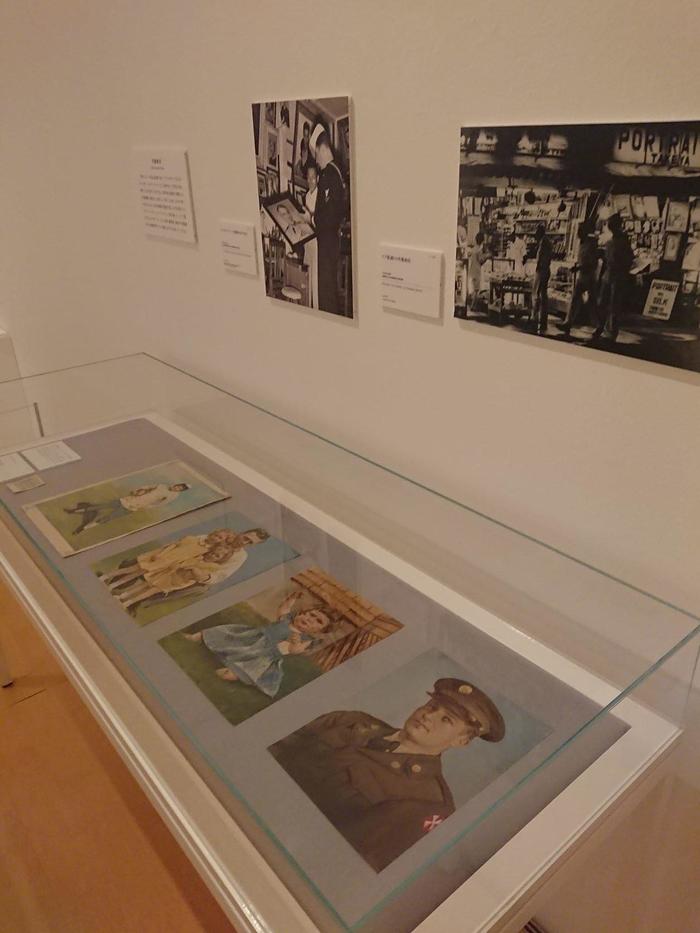
<<Silk Portrait>> Late 1940s to early 1950s, Yokosuka City Museum of Nature and Humanities>
From the 1940s to the 1950s, color photos were expensive, so painted silk portraits became popular. In a way, this is the same urge as sukajan: make the memory tactile.
Embroidery and custom culture
American soldiers have long customized uniform parts and bags—especially hidden areas—so commissioning embroidery in Japan wasn’t strange; it was a natural extension of their culture.
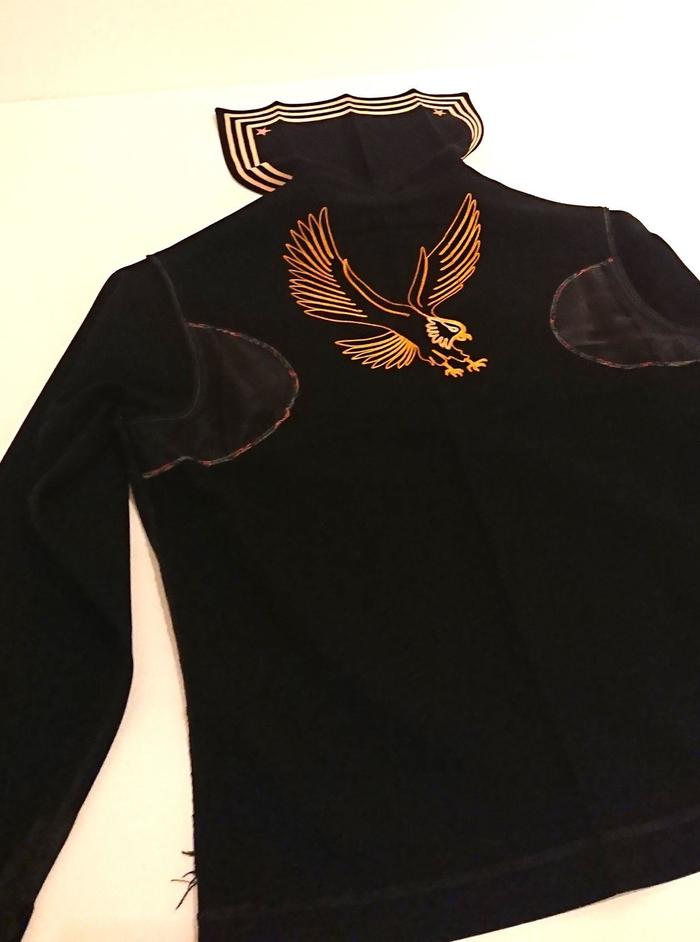
<<Custom Sailor Uniform "Eagle Embroidered on the Reverse Side"> (detail) Early 1940s Collection of Tomoji Yokochi Hiroumi>
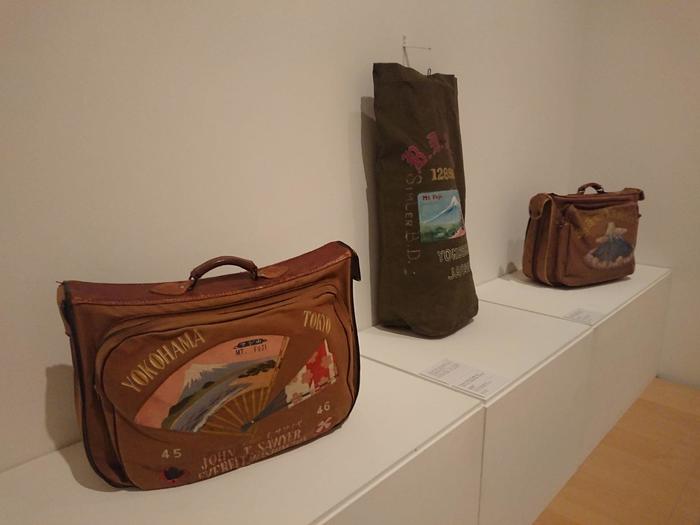
<(Front) <Custom Painted Suit Case "YOKOHAMA TOKYO 45─46"> 1946 Collection of Tomoji Yokochi Hiroumi>
Cushion Cover
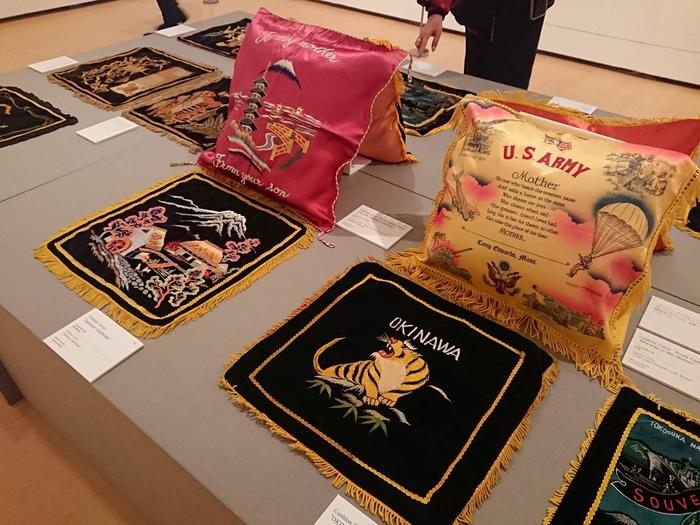
<(Center)《Cushion Cover "OKINAWA, Roaring Tiger"》Mid-late 1950s, Collection of Tomohiro Yokochi>
Embroidery didn’t only live on jackets. The same visual language moved onto home goods—proof sukajan aesthetics were part of broader base-culture design.
Vintage sukajan
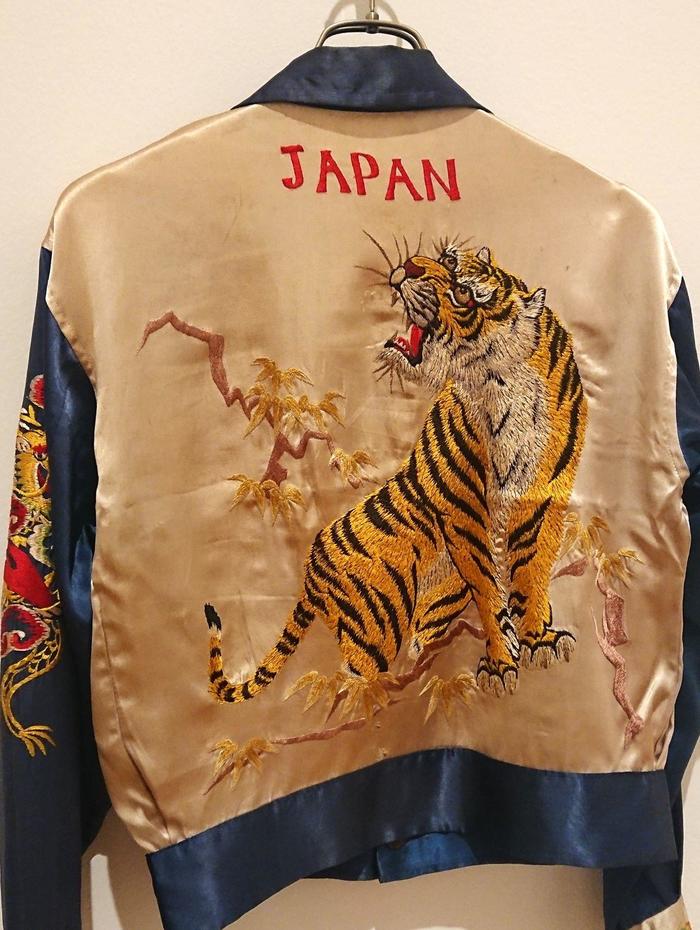
<《Bamboo and Roaring Tiger》Late 1940s to early 1950s, Taylor Toyo (Toyo Enterprises Co., Ltd.) collection>
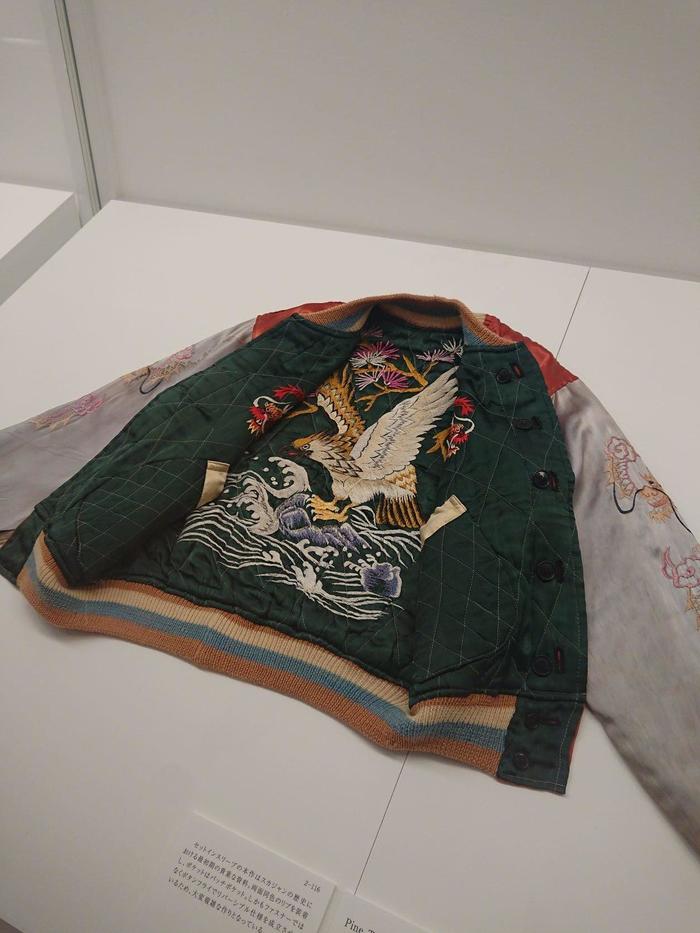
<《Pine Tree, Splash and Eagle》Late 1940s, Taylor Toyo (Toyo Enterprises Co., Ltd.) collection>
The main specifications are often reversible, with different designs on the front and back. The fabric can be acetate, velveteen, and quilting—chosen to support the distinctive embroidery. But the true signature is technique.
A unique Japanese embroidery technique called yokoburi (horizontal embroidery) uses a special machine and hand-guided control that produces a distinctive dimensionality—sometimes described as “thread painting.” Once you notice it, you start reading sukajan like you read brushwork in painting: not just “what,” but “how.”
*Horizontal embroidery: Using a “horizontal sewing machine” without the usual fabric feeding function, the operator moves the fabric by hand while controlling speed with a foot pedal and needle swing width with a knee lever—requiring experience and advanced technique.*
What became the motif of Sukajan
1. Dragon
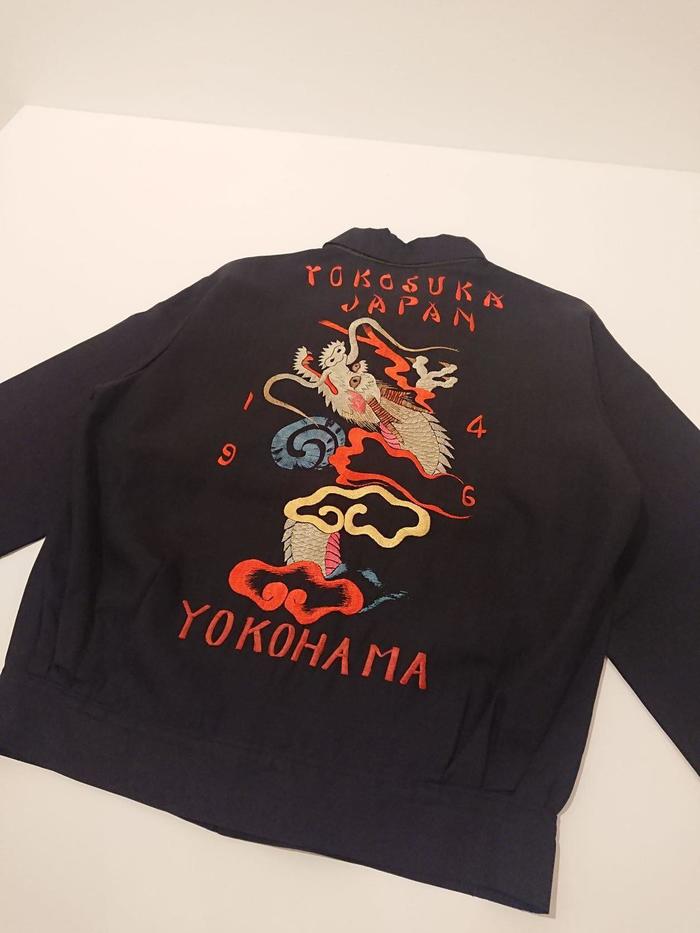
<<YOKOSUKA Dragon> (part) 1946, Taylor Toyo (Toyo Enterprises Co., Ltd.) collection>
Dragons are fictional beings deified in Eastern traditions—instantly “Oriental” to Western eyes. In sukajan, dragons also solve a design problem: they flow, curve, and fill space with rhythm.
2. Eagle
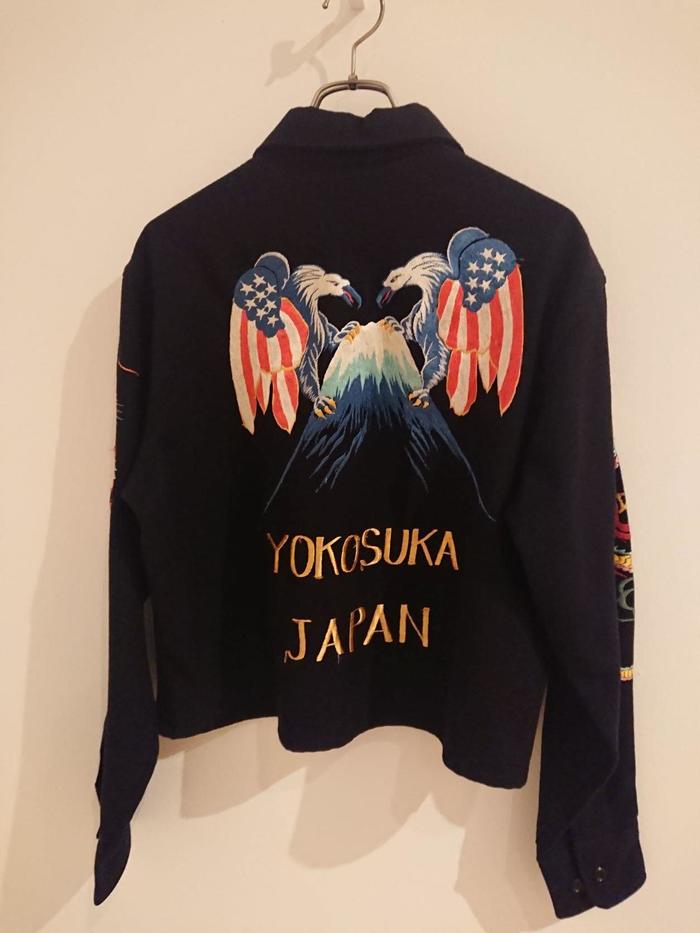
<《Souvenir Jacket "Mt. Fuji with Stars and Stripes Eagle, YOKOSUKA JAPAN"》Late 1940s Collection of Tomoji Yokochi Hiroumi>
The eagle was often the most popular among American soldiers—because it’s a bridge symbol: American identity rendered through Japanese technique.
3. Tiger
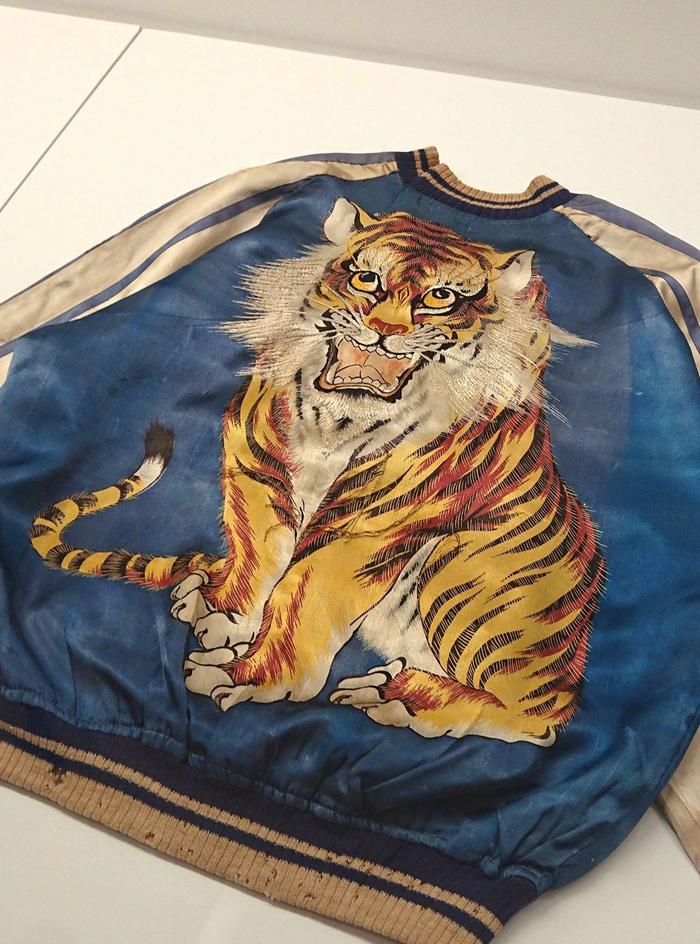
<《Roaring Tiger》Early 1950s, Taylor Toyo (Toyo Enterprises Co., Ltd.) collection>
The tiger—top predator, symbol of strength—travels well. It reads instantly across cultures and often becomes the emotional center of the jacket.
4. Japanese map/scenery
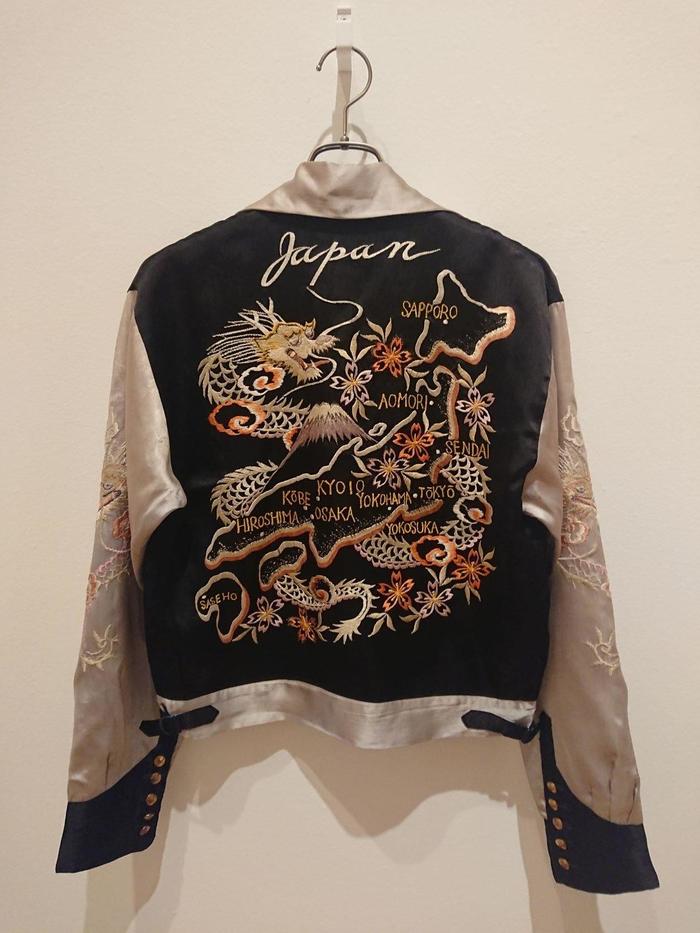
<《Dragon, Cherry Blossoms and Japan Map》Late 1940s, Taylor Toyo (Toyo Enterprises Co., Ltd.) collection>
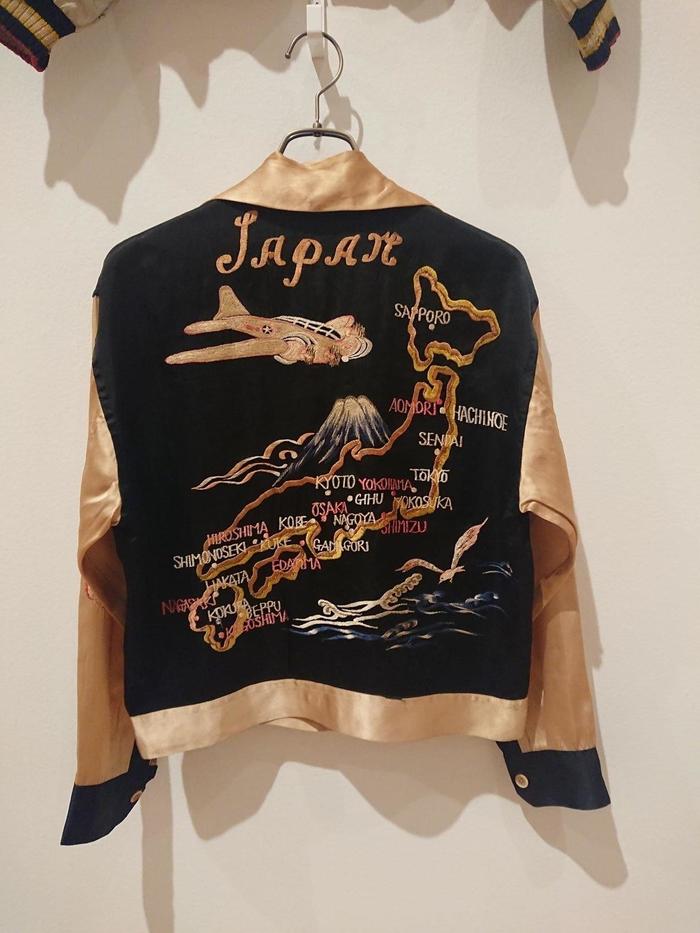
<《Flight Over Japan》Late 1940s, Taylor Toyo (Toyo Enterprises Co., Ltd.) collection>
Maps and place names are the souvenir mechanic made visible: “I was here.” They add documentary value for collectors.
5. Overseas design
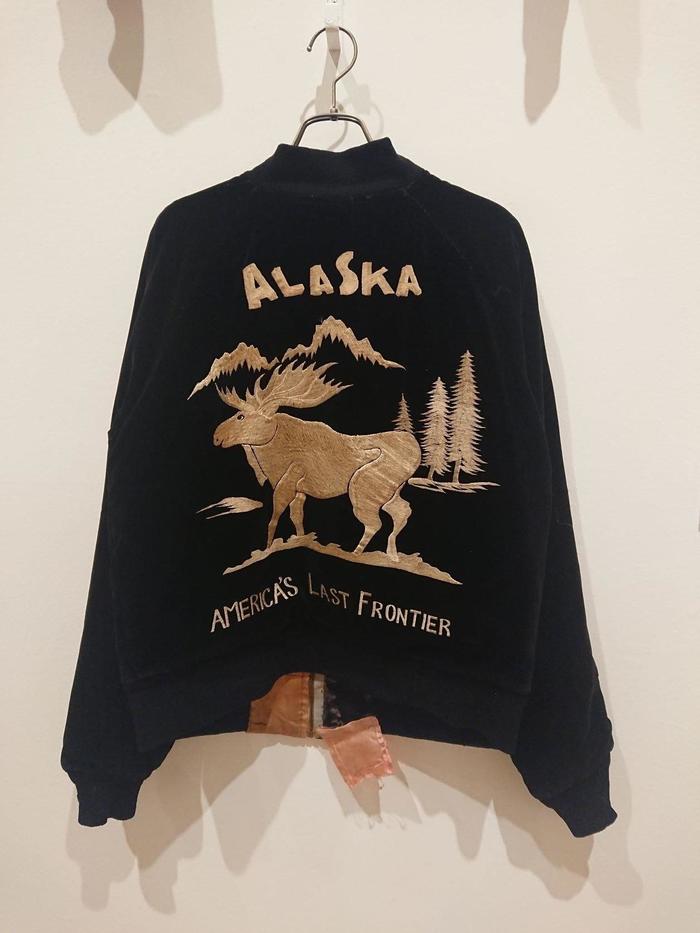
<《Alaskan Moose》Mid to late 1950s, Taylor Toyo (Toyo Enterprises Co., Ltd.) collection>
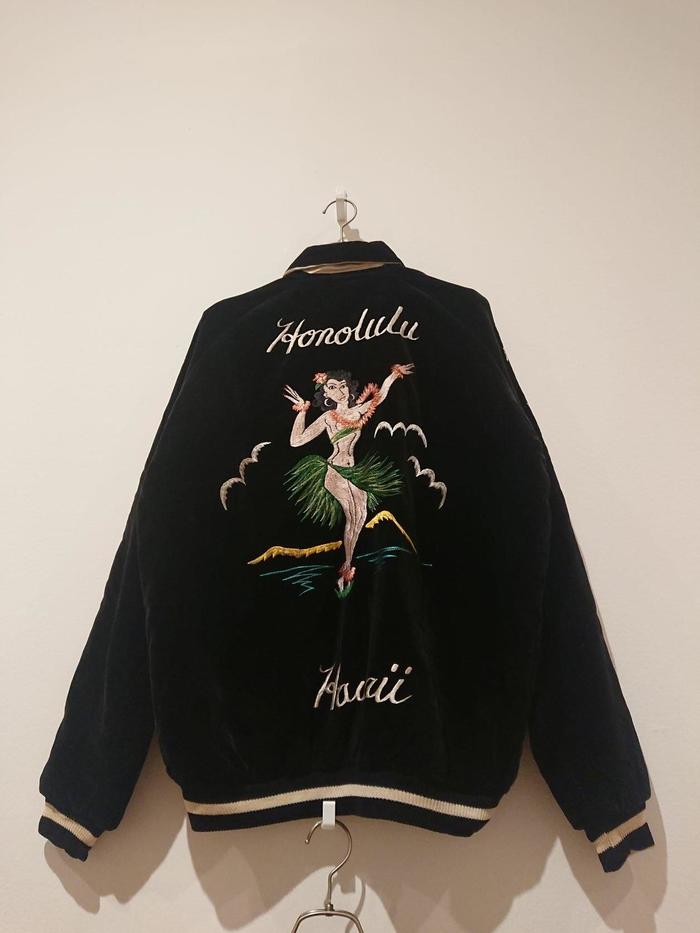
<《Hula Girl》Late 1950s, Taylor Toyo (Toyo Enterprises Co., Ltd.) collection>
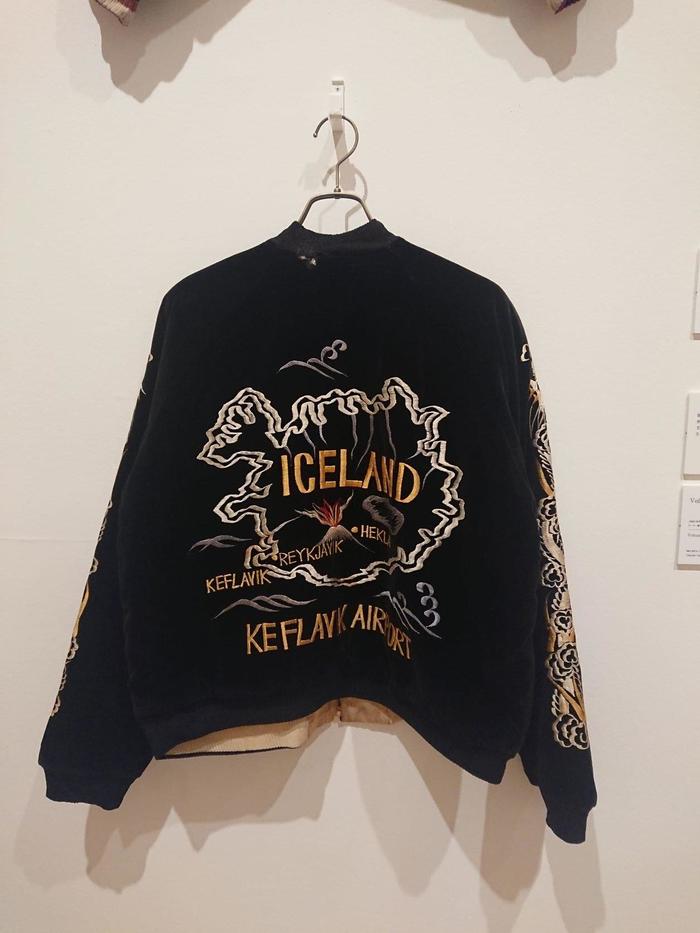
<《Volcano and Iceland Map》Mid to late 1950s, Taylor Toyo (Toyo Enterprises Co., Ltd.) collection>
Sukajan isn’t only “Japan imagery.” As base culture spread worldwide, motifs expanded—Alaska, Hawaii, Iceland—turning the garment into a global network artifact.
6. Military
There were also sukajans embroidered with unit references—proof these jackets weren’t only decorative; they were identity signals.
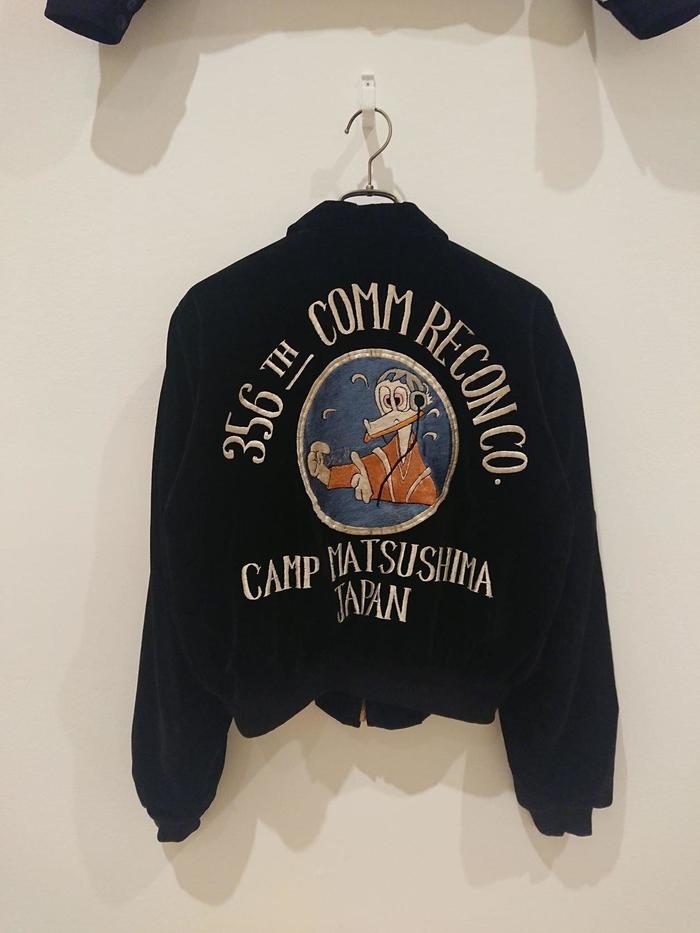
<《356th COMM RECON CO.》Mid to late 1950s, Taylor Toyo (Toyo Enterprises Co., Ltd.) collection>
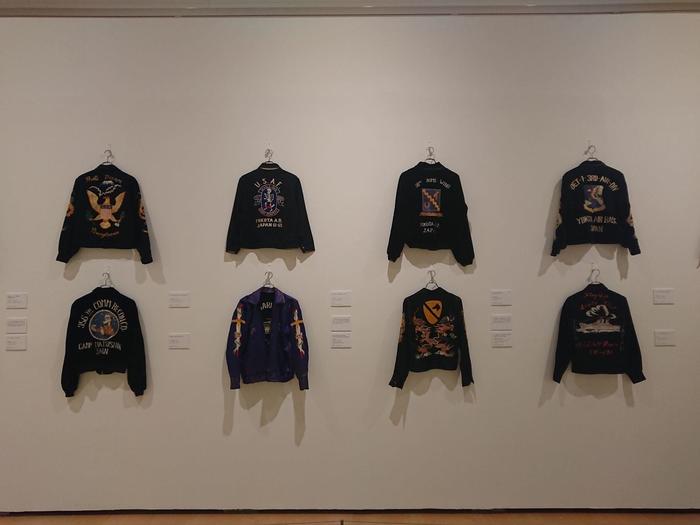
What this exhibition ultimately taught me is simple: sukajan is not just “cool.” It’s a wearable archive. It carries the fingerprints of craft, the economics of base towns, and the symbolism of post-war identity. It also explains why modern luxury revived it: embroidered satin bombers in the 2010s weren’t invented out of nowhere; they’re echoes of this origin story.
Lastly
What did you think? I can’t deny this is a bit of a spoiler, but I hope it helps you understand why the PRIDE OF YOKOSUKA Sukajan Exhibition is worth experiencing.
Now I’m an old man who doesn’t care about fashion, wearing Uniqlo from head to toe, and I only thought of sukajans as jumpers with flashy designs. However, I was overwhelmed when I saw so many Sukajans. This is amazing, I thought.
First of all, I thought it would be a loss if I didn’t see it, and I also felt that I had to share this opportunity with readers.
At the Sukajan Exhibition, I learned a bit about Japan’s post-war recovery, and I realized that these are truly made in Japan—and it’s no exaggeration to say that each piece of clothing is a work of art. But you won’t know until you see it in real life…
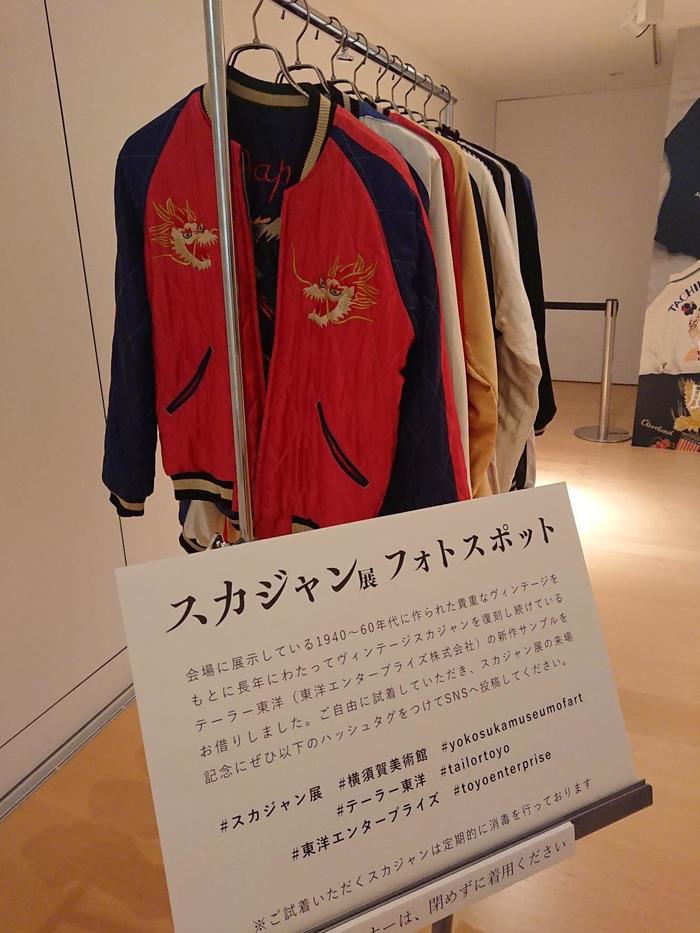
You can also take photos wearing vintage sukajans.
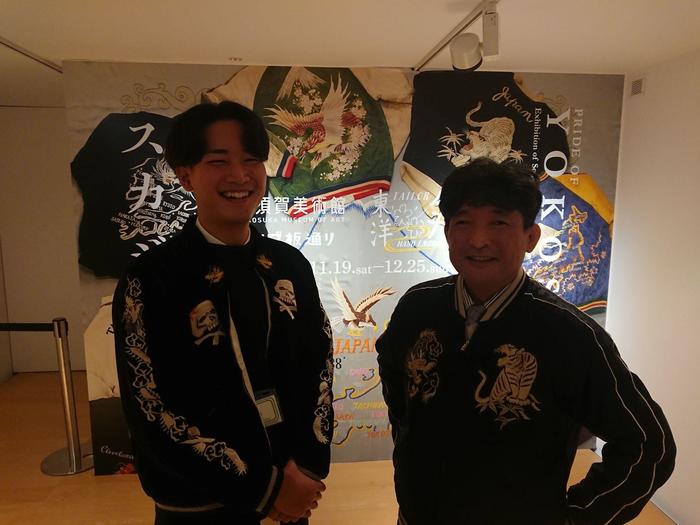
<Mr. Honma (left) and the author (right) of the Yokosuka Museum of Art, which we were shown around this time>
*Normally, photography of the vintage sukajans on display is prohibited, but this time we received special permission from the Yokosuka Museum of Art to photograph and post them. Thank you to everyone involved for your cooperation.*