

The Stadium Jacket: A Wearable Credential of Honor—and the Five Names That Defined It
The Stadium Jacket: A Wearable Credential of Honor
As each new year arrives, we’re reminded of a strange modern contradiction: everything accelerates, yet we crave what stands still. After COVID reshaped daily rhythms, “time” began to feel like something we lost and then tried to buy back—through distraction, consumption, and constant novelty. But novelty ages fast. It expires. That’s why classic garments feel increasingly magnetic right now: they don’t plead for relevance. They simply remain—quiet, proven, and ready whenever the world becomes too loud.
In that sense, the stadium jacket belongs to a category larger than fashion. It behaves like a philosophy you can wear. It offers structure in uncertainty, identity in flux, and a kind of calm authority that doesn’t need explanation. It’s “Eternal Americana” not because it is trendy, but because its original purpose was timeless: recognition, affiliation, and earned pride.
Stadium Jacket, Sutajan, Varsity Jacket: Why the Names Matter
In Japan, the item is often called “sutajan” (スタジャン), a contraction of “stadium jumper.” But this is a classic case of wasei-eigo—Japanese-made English that feels correct in Japan while drifting from how the item is named in the United States, its birthplace. In American usage, the garment is more precisely recognized as a varsity jacket, letterman jacket, award jacket, or lettered jacket.
- Varsity signals the representative team—often a university’s elite athletes.
- Award / lettered signals recognition: you didn’t simply buy membership, you were marked by it.
- Letterman points to the defining emblem: a school initial, traditionally in felt or chenille.
So the stadium jacket wasn’t originally “a jacket worn at stadiums.” It was a wearable credential—a public symbol that someone had achieved a position worthy of being seen.
Origins: Function Becomes Tradition
The commonly referenced roots trace back to American collegiate sports culture, where warming layers evolved into standardized team garments. Over time, the silhouette became codified. By the early-to-mid 20th century, the “classic” formula was established: wool body, leather sleeves, snap-button front, and ribbing at the collar/cuffs/hem.
This construction mattered. It wasn’t random styling; it was a functional architecture designed for cold bleachers, field-side evenings, and constant movement.
- Melton wool body: dense warmth and durability with a structured drape.
- Leather sleeves: abrasion resistance, flexibility, and bold contrast.
- Rib-knit collar/cuffs/hem: seals warmth and locks the silhouette into place.
- Snap closure: fast on/off over uniforms, reliable under repetition.
From Athlete-to-Fan: The Moment the Jacket Goes Public
As sports expanded—baseball to football to basketball to broader campus and local scenes—the jacket’s meaning widened. Once team marks and professional logos circulated as consumer goods, the stadium jacket gained a second identity: not only the athlete’s honor, but the fan’s loyalty. It became a portable banner of affiliation.
Japan’s Adoption: Ame-kaji, Ametora, and the Romance of “Earned” Americana
In Japan, stadium jackets have been around since the 1960s and notably surged in the 1980s as a pillar item within Ame-kaji (American casual) and broader Ametora (American traditional) style literacy. The jacket’s appeal wasn’t just “American.” It was American with rules: materials that aged, symbols that meant something, and a silhouette that carried narrative.
Now in the 2020s, the revival of 80s/90s aesthetics has renewed interest, but the deeper reason is cultural: a stadium jacket offers an antidote to disposable fashion. It feels collectible, archival, and personal.
Anatomy of a Stadium Jacket: How to Read the Details
Whether you’re collecting vintage or selecting a modern reproduction, the stadium jacket can be read like an artifact. The details reveal era, origin, and intention.
1) The Body Fabric
Classic jackets often use heavy Melton wool—dense, smooth, and structured. Later eras introduce lighter blends for comfort and mass production. Melton has a “compressed” firmness that holds shape and ages with quiet authority.
2) Sleeve Leather
Vintage leather sleeves may show grain, patina, and micro-cracking—an honest record of time. Modern variants may prioritize uniform appearance and easier care, but the visual “award” contrast remains central to the silhouette.
3) Ribbing and Knit Quality
The ribbing is more than trim; it controls fit. Strong ribbing with good recovery (it springs back) signals better construction. Stretch fatigue at cuffs/hem can reveal how hard a jacket was lived in.
4) Hardware
Snaps and closures are telltale. Older hardware often feels heavier and more “industrial.” Repetition matters here—stadium jackets were designed for frequent wear and quick layering.
5) The Letter: Chenille as Symbolism
One of the most iconic features is the chenille patch—pile embroidery on felt, plush and dimensional. In Japan, this technique is often compared to sagara embroidery. In the stadium jacket, chenille isn’t mere decoration; it is the garment’s original language—the credential made visible.
From Ivy Restraint to West Coast Volume
Early collegiate jackets were often more restrained, especially within East Coast Ivy culture. Later—particularly from the 1970s onward—designs became louder: sleeve graphics, oversized back patches, and bolder contrasts became more common. The stadium jacket evolved from solemn honor to theatrical identity—still meaningful, just louder.
Top 5 Essential Brands That Define the Stadium Jacket
To understand the stadium jacket in full—its roots, evolution, and cultural migration—these five names form a clean, essential archive.
#1 BUTWIN — The Foundational Codebook
If you want to understand the “standard language” of the stadium jacket, you study BUTWIN. The brand is historically tied to the classic Melton-and-leather formula and the clean, authoritative silhouette. Vintage examples are prized not for hype, but for grammar: proportions, density, and sober confidence.
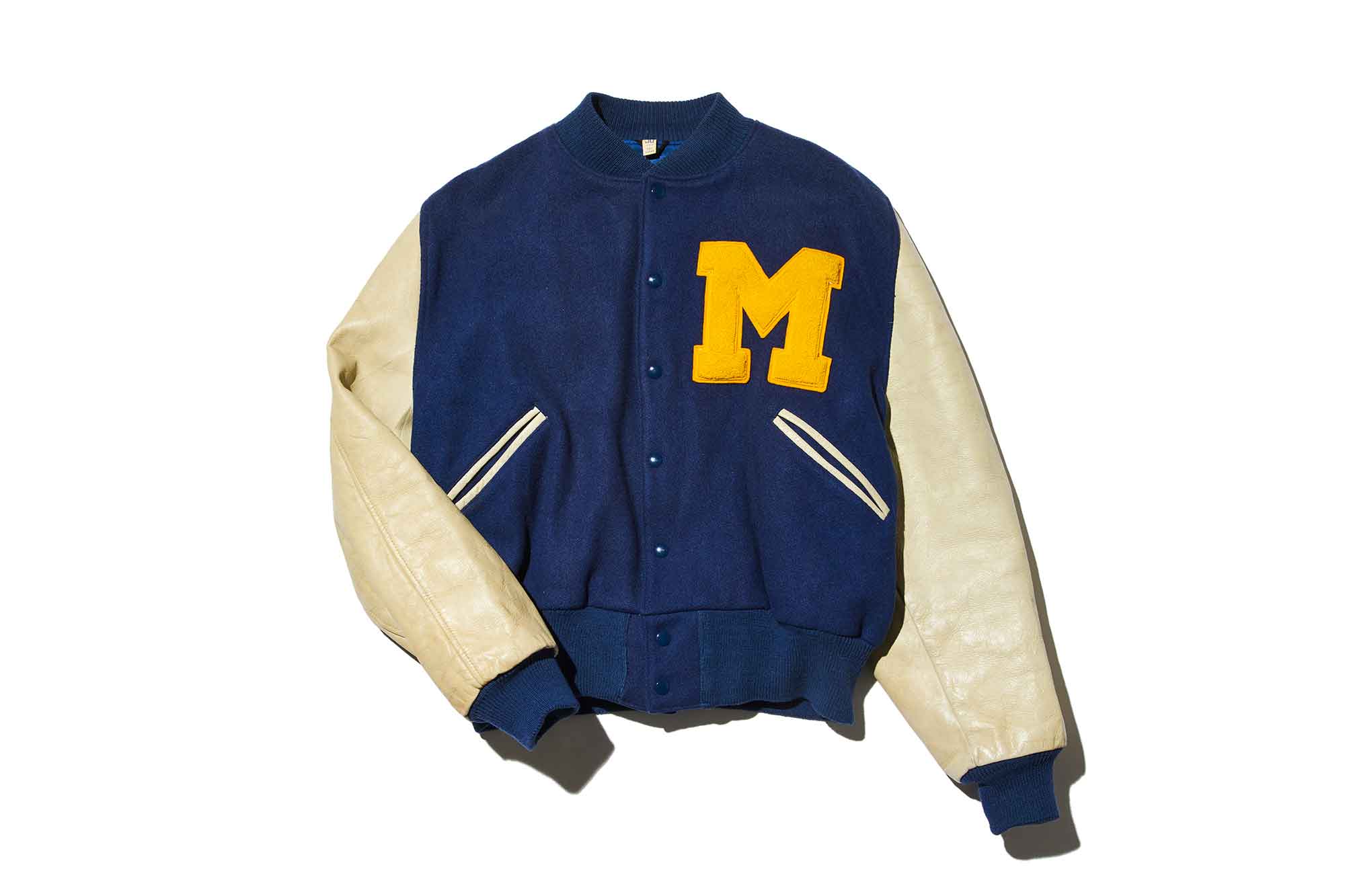
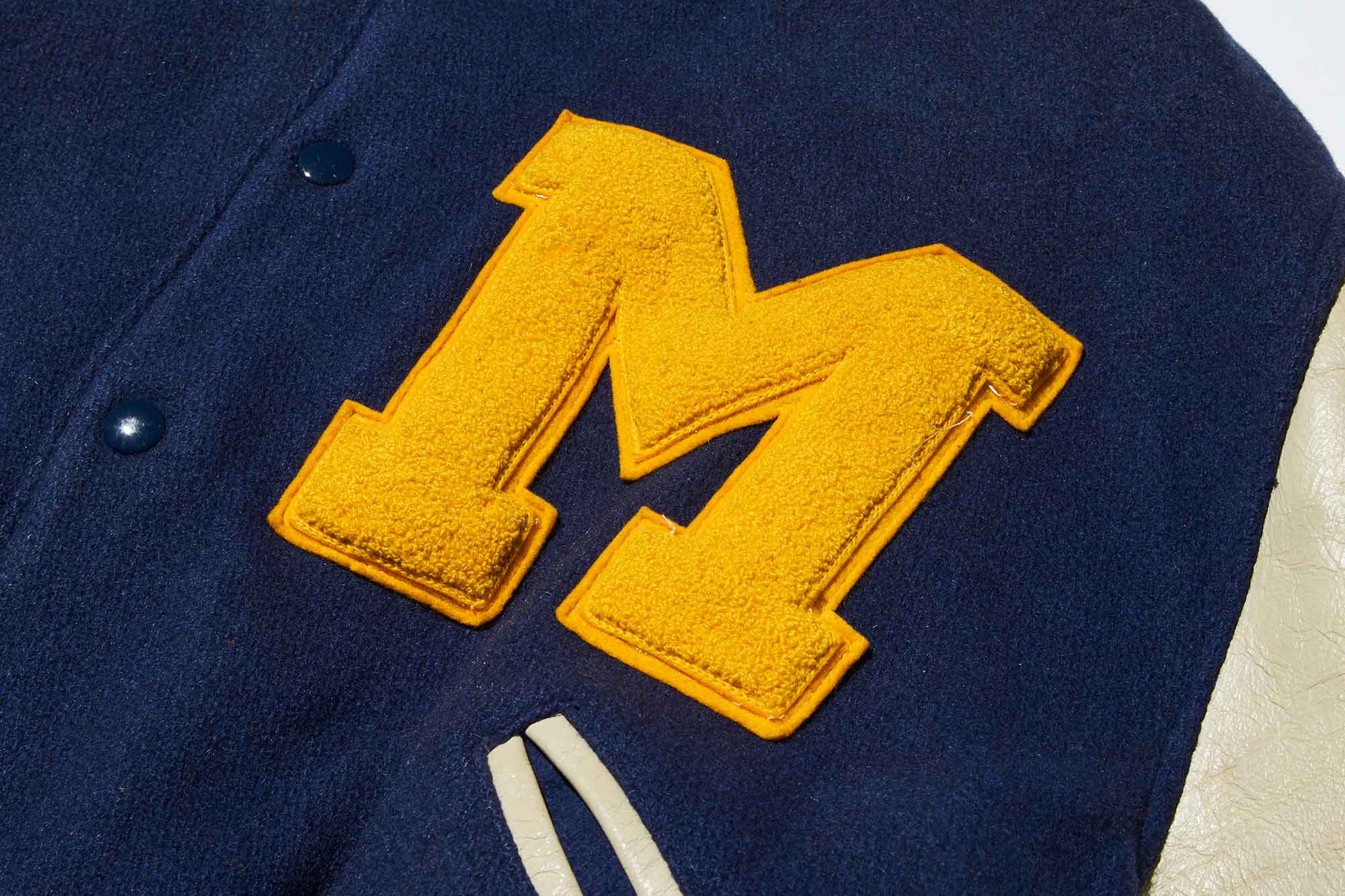
#2 DeLONG — Toughness, Comfort, and Team-Order Reality
DeLONG represents the stadium jacket as a professional-grade product: durable, wearable, and trusted at scale. Its jackets are often recognized by their balance—rugged presence without excessive heaviness—built for long seasons rather than occasional outfits.
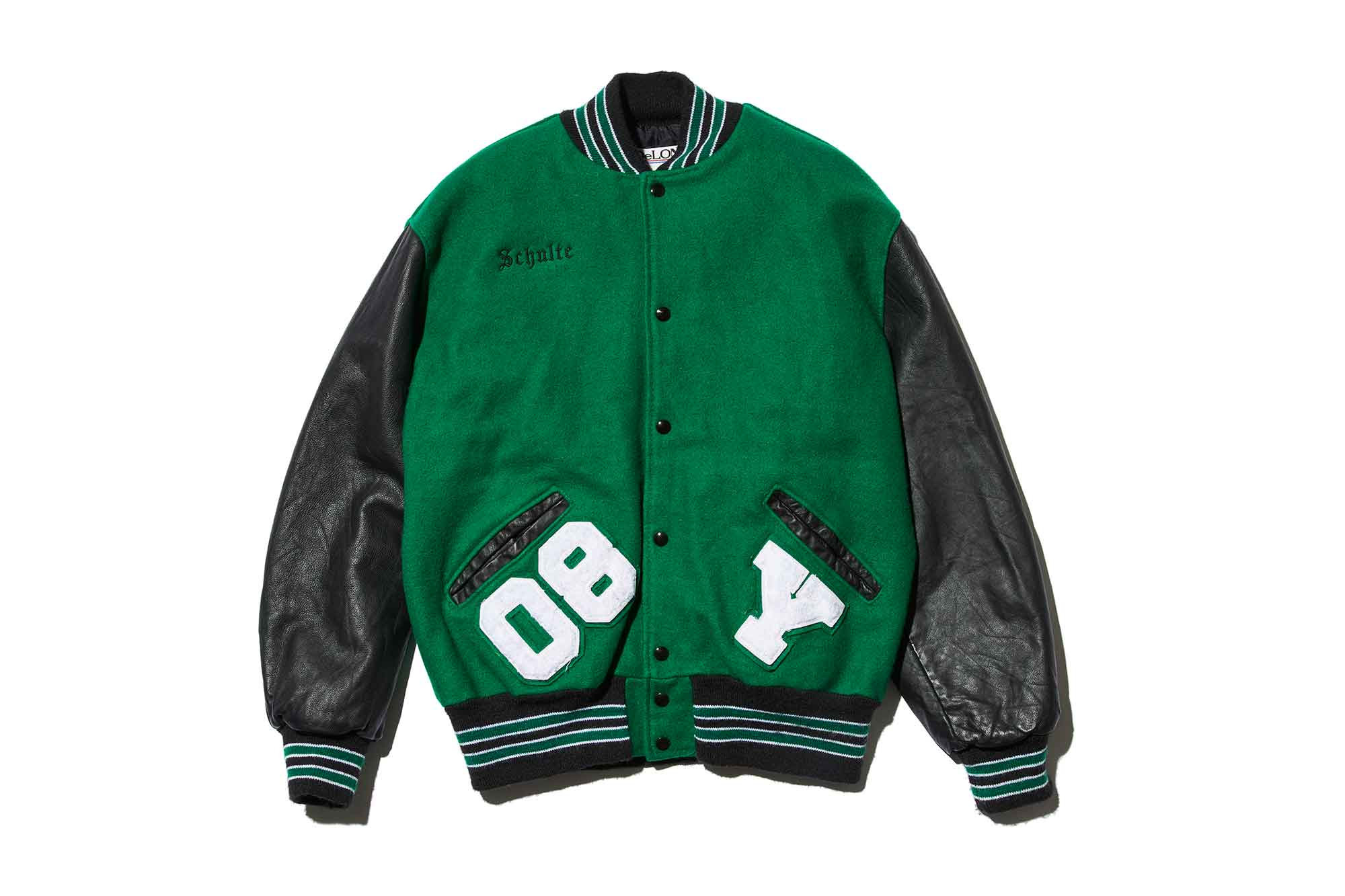
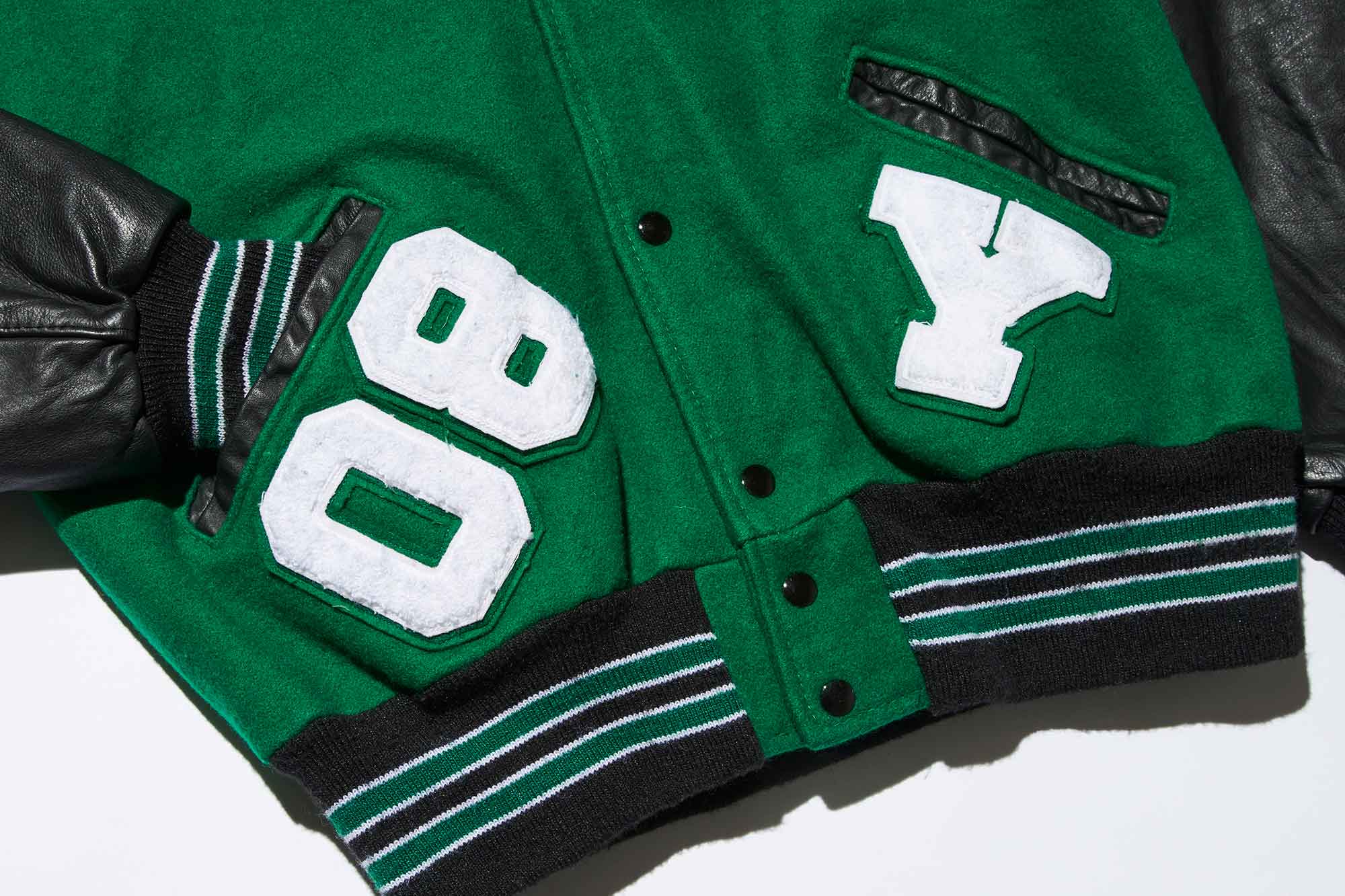
#3 SKOOKUM — Restraint, Rebellion, and Modern Silhouette Intelligence
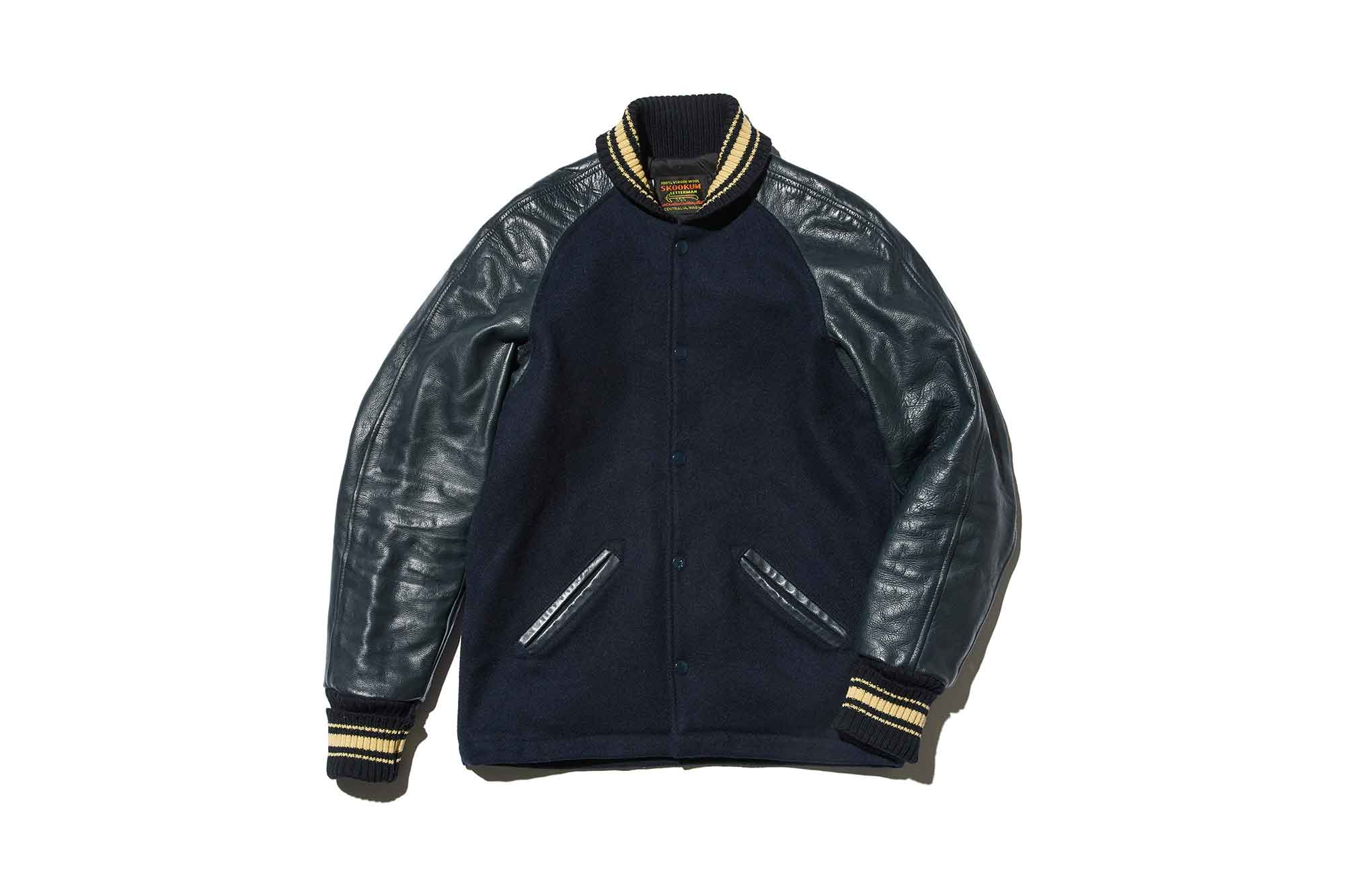
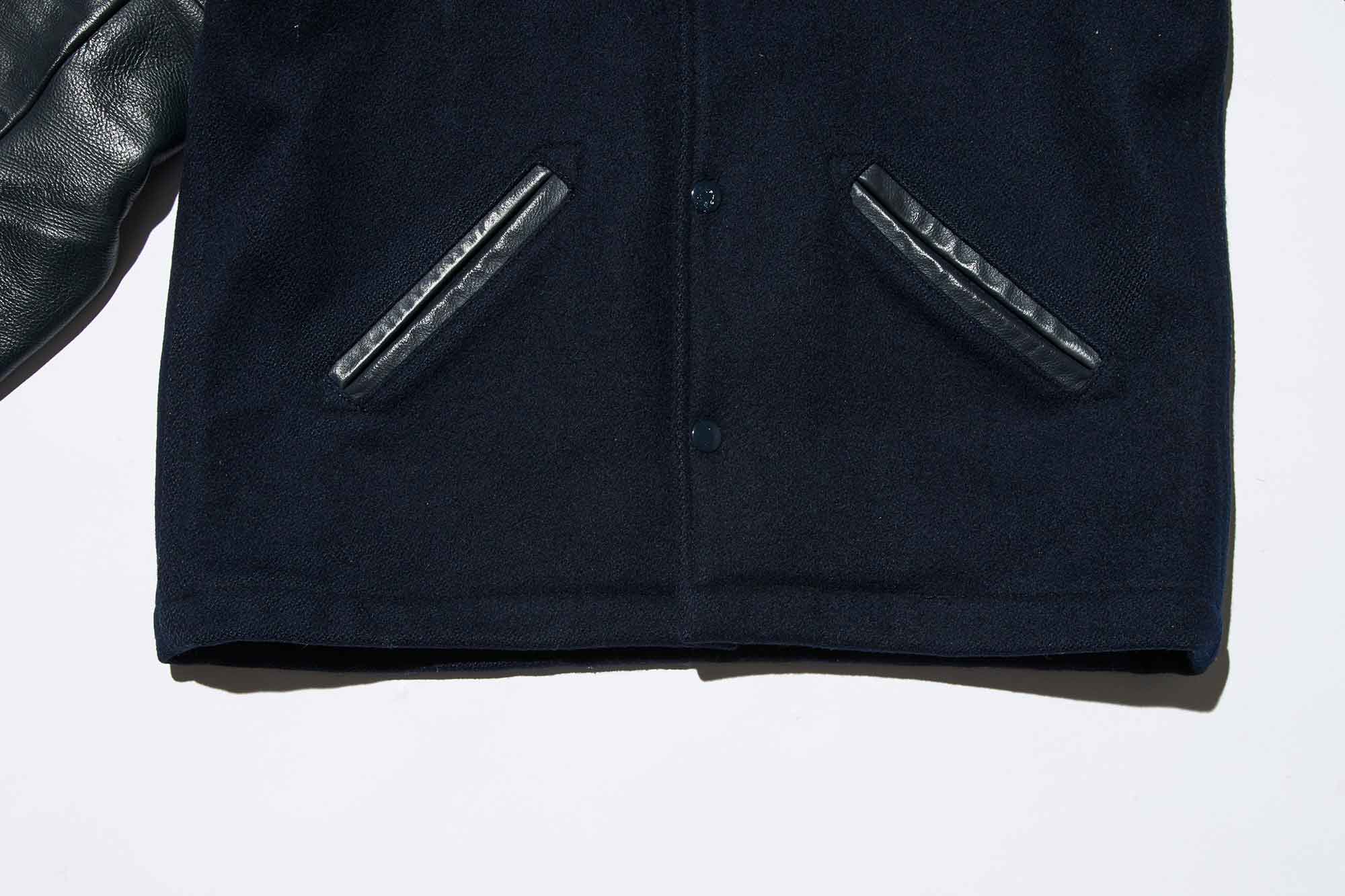
SKOOKUM proves stadium-jacket DNA can evolve without losing its spine. Clean lines, confident minimalism, and variants that drift toward car-coat territory show how the form can become cinematic without becoming costume.
#4 VAN — Japan’s Cultural Origin Point for “Stadium Jacket”
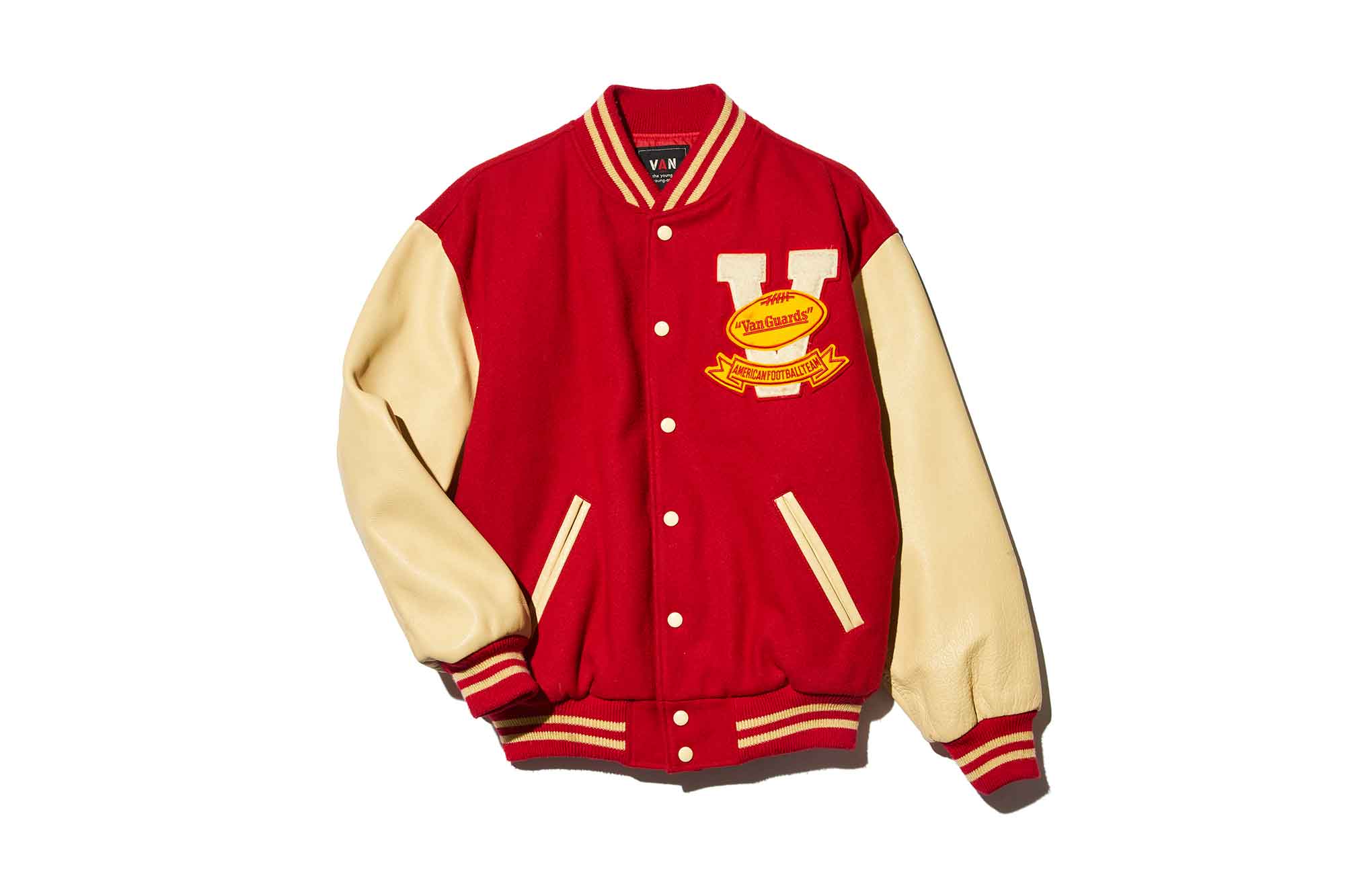
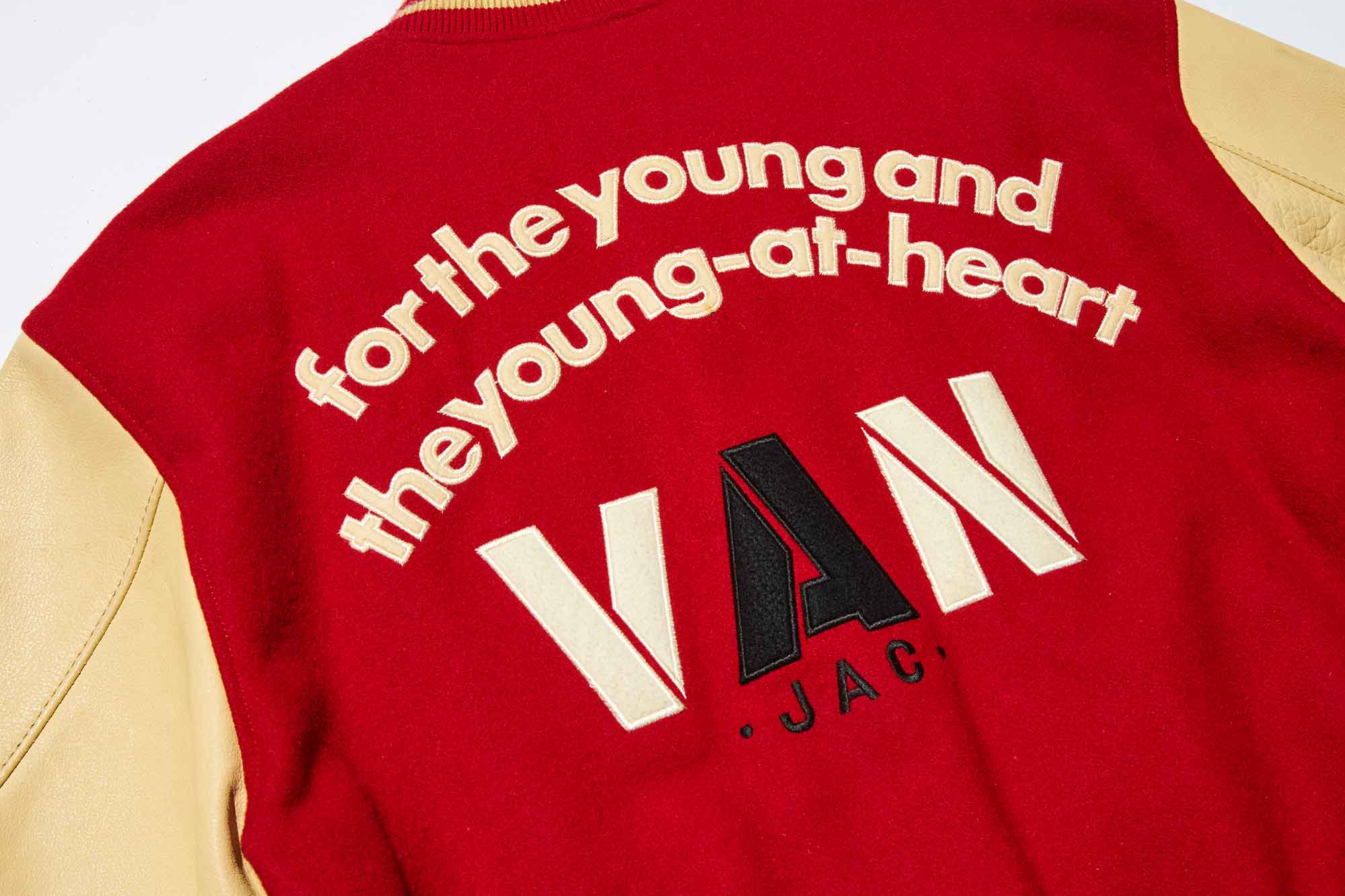
In Japanese context, you cannot discuss stadium jackets without VAN—a brand that proposed not only clothing but an entire lifestyle vocabulary. Its role in Japan’s Ivy movement gave the stadium jacket a uniquely Japanese layer: a translation of American traditional style into a local cultural language.
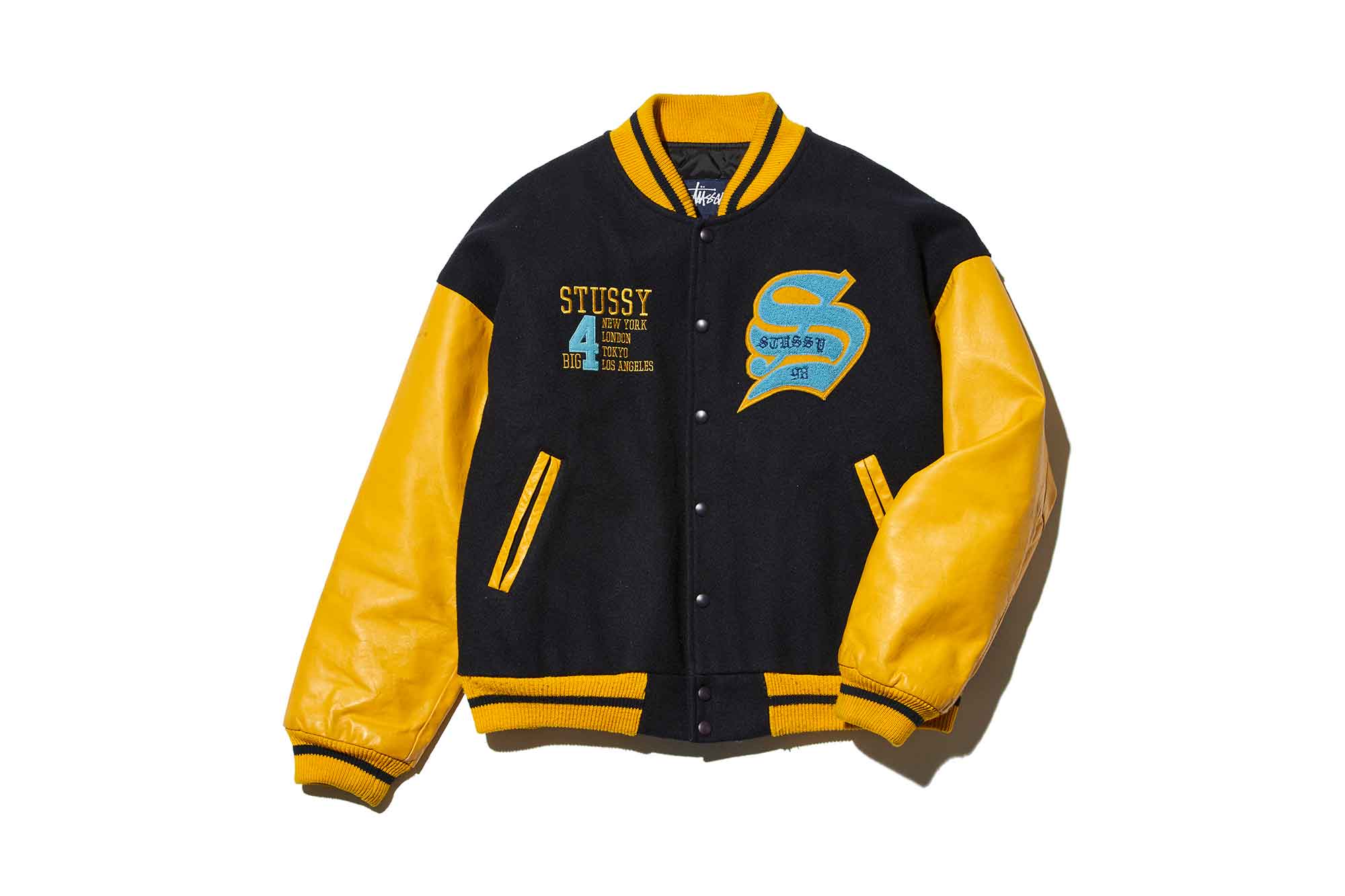
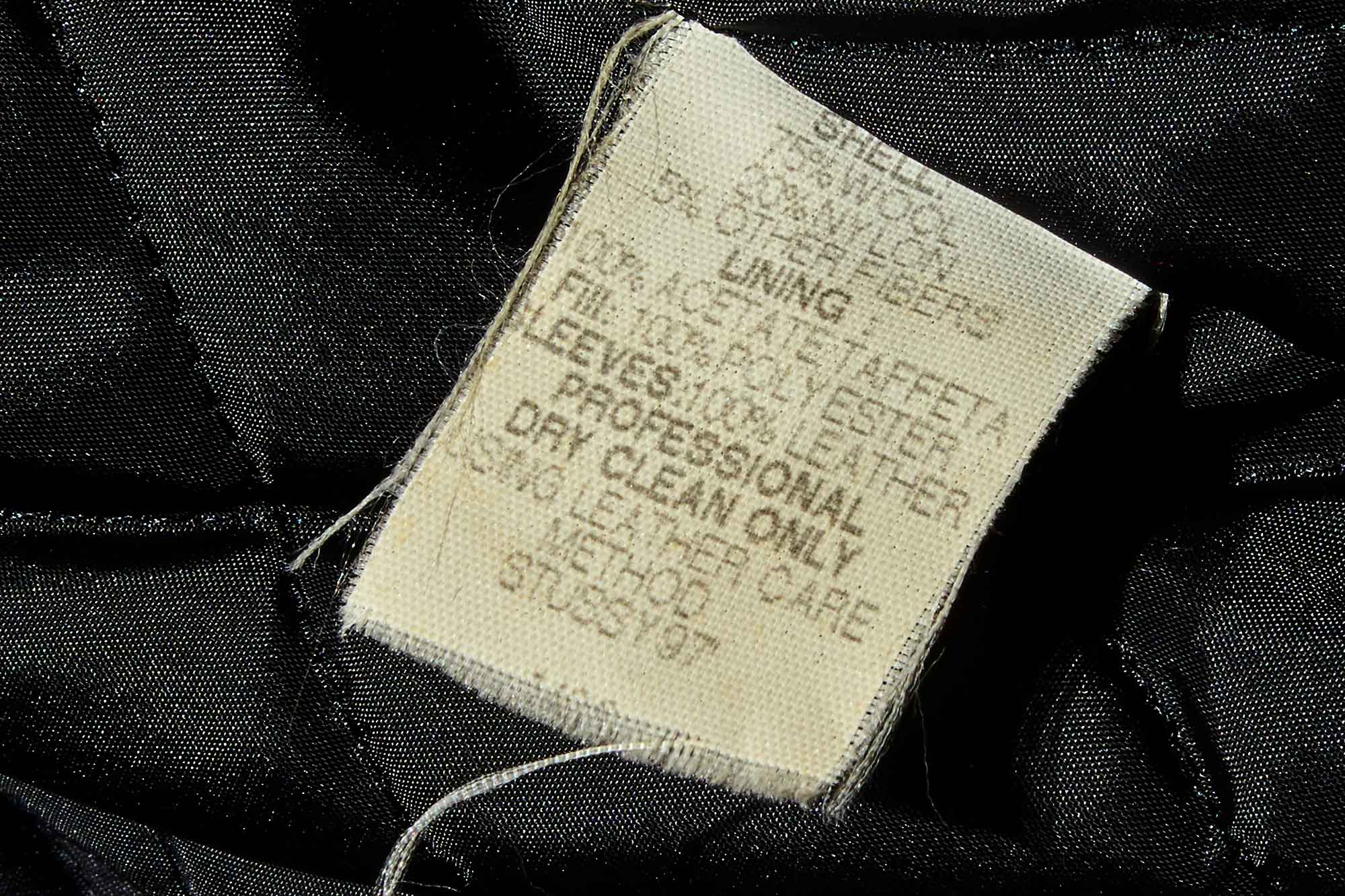
#5 STÜSSY — Street-Era Celebration in Chenille and Limited Editions
STÜSSY brings the stadium jacket into the street era: bold chenille, city narratives, and limited-release mythology. Here the jacket becomes less “school credential” and more “scene passport”—still a badge, just for a different kind of belonging.
Stadium Jacket vs Sukajan: Similar Shape, Different Soul
It’s easy to confuse the stadium jacket with sukajan because both can share a similar outerwear silhouette and both have Japan-made naming. But their meanings diverge. The stadium jacket is rooted in American athletics and institutional recognition; sukajan is rooted in souvenir culture and Japanese motif storytelling. Similar shape, different language.
Why the Stadium Jacket Still Matters
A stadium jacket is a garment with an internal spine: it was built to mean something. In uncertain times, that matters. It carries a reassuring message: you can wear something that already survived decades of cultural change. And perhaps the strongest part is its permission: wear what you love, represent what you choose, and let the jacket become your proof of self rather than a costume for anyone else.