

From Tradition to Trend: Japanese Remake and Upcycled Kimono Fashion
In Japan, fashion has never been merely decorative. It is a language of history, social structure, craftsmanship, and restraint. Among all garments, the kimono stands as the most enduring embodiment of this philosophy—a textile archive worn on the body, encoding regional techniques, seasonal symbolism, and personal narratives through fabric. Yet in modern Japan, the kimono also represents a paradox: revered as cultural treasure, but increasingly absent from daily life.
Japanese remake and upcycled kimono fashion emerges from this tension. Rather than allowing historical garments to stagnate in storage or disappear into obscurity, designers and artisans are reactivating kimono textiles as contemporary clothing—jackets, dresses, shirts, bags, and hybrid silhouettes that move freely between tradition and modernity. This movement is not nostalgic imitation, nor casual recycling. It is a highly deliberate cultural act: preservation through transformation.
In the heart of Japan’s contemporary fashion landscape, a quiet yet profoundly meaningful movement has been steadily gaining momentum. Japanese remake and upcycled kimono fashion represents far more than a stylistic trend—it is a cultural reawakening that reinterprets centuries of textile heritage through the lens of modern design, sustainability, and individuality.
For generations, the kimono stood as one of Japan’s most powerful cultural symbols. Defined by its architectural lines, codified patterns, and deeply embedded seasonal and social meanings, the kimono was never simply clothing. It functioned as a language—communicating status, occasion, region, and even personal philosophy. However, as postwar modernization reshaped everyday life, the kimono gradually receded from daily wear, becoming reserved for ceremonies, formal events, or preserved quietly in family chests.
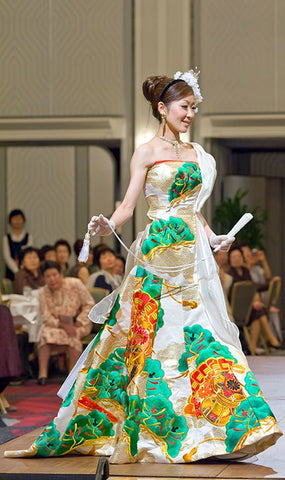
Historically, the kimono was never static. During the Edo period, garments were repeatedly resewn, re-dyed, and reconfigured as family assets passed across generations. The modern concept of “upcycling” aligns closely with pre-industrial Japanese textile ethics, where fabric was precious, repair was expected, and beauty was found in continuation rather than replacement. Today’s remake kimono fashion revives this logic within a contemporary framework shaped by sustainability, global fashion discourse, and post-consumer awareness.

The technical process behind kimono remake is itself a form of textile archaeology. Vintage kimonos—often hand-woven silk, rinzu, chirimen, kasuri, or tsumugi—are carefully dismantled along original seam lines. Artisans assess grain direction, dye stability, motif placement, and fabric fatigue before redesigning each piece. Unlike yardage fabric, kimono panels impose strict dimensional constraints, demanding advanced pattern intelligence and respect for material limits. Every finished garment carries visible traces of its former life.
Rather than allowing these garments to fade into obscurity, a new generation of designers, artisans, and cultural curators has chosen a different path: transformation. Japanese remake and upcycled kimono fashion seeks to extend the life of vintage and unused kimonos by reconstructing them into contemporary garments while honoring their original material integrity. This approach does not erase tradition; it activates it.
The Allure of Kimono Fabric
The allure of kimono fabric lies in its unmatched depth. Unlike modern mass-produced textiles, kimono silks—often hand-dyed, hand-woven, or painted—carry layers of craftsmanship that are no longer economically feasible in today’s industrial systems. Patterns may reference classical poetry, seasonal motifs, or regional aesthetics, while the silk itself often bears the patina of time, lending a softness and character impossible to replicate.

The Art of Transformation
The process of transformation is both technical and philosophical. Artisans carefully dismantle original kimonos, paying close attention to seam placement, pattern alignment, and fabric grain. Panels are reimagined into jackets, dresses, shirts, skirts, bags, and scarves—each piece intentionally designed to highlight the textile’s original narrative.

This approach also reframes luxury. In contrast to mass-produced fashion, remake kimono garments are inherently limited—often one-of-one—defined by textile scarcity rather than branding. Each piece holds temporal depth: the labor of past weavers, the aesthetics of another era, and the contemporary designer’s intervention layered into a single object. Wearing such clothing becomes an act of cultural participation rather than trend consumption.
Sustainable Fashion at Its Core
This methodology aligns naturally with contemporary discussions of sustainability. Long before sustainability became a global fashion concern, kimono culture embodied circular design. Fabrics were reused across generations, garments were altered to fit new wearers, and materials were rarely wasted. Japanese remake fashion revives this ethos, positioning upcycled kimono garments as both environmentally responsible and culturally respectful.
Sustainability is not an added narrative—it is intrinsic. Japan holds millions of unused kimonos, many crafted from high-grade silk no longer economically feasible to reproduce. Remake fashion diverts these materials from waste while reducing reliance on new textile production. More importantly, it restores emotional durability: garments designed to be kept, repaired, and valued across time.
Versatility Meets Tradition
One of the defining strengths of upcycled kimono fashion is versatility. Freed from the rigid formal codes of traditional kimono wear, these garments integrate seamlessly into everyday wardrobes. A haori-inspired jacket may pair effortlessly with denim, while reconstructed silk dresses transition fluidly between casual and formal contexts.

International designers, collectors, and fashion institutions have begun to recognize upcycled kimono garments as wearable cultural artifacts. They appear on global runways, in editorial spreads, and within museum exhibitions dedicated to sustainable design.
Designers integrate kimono textiles into Western silhouettes without erasing their origins, allowing asymmetry, negative space, and visible stitching to remain as signals of authenticity. Celebrities and stylists increasingly gravitate toward these pieces not for spectacle, but for narrative depth—the sense that clothing can speak.
A Glimpse into Japan’s Creative Soul
Beyond fashion, the resurgence of kimono upcycling reveals something deeper about Japan’s creative identity. It reflects a philosophy that values continuity over rupture, adaptation over abandonment. By reshaping tradition rather than discarding it, Japanese remake fashion offers a compelling model for cultural evolution.


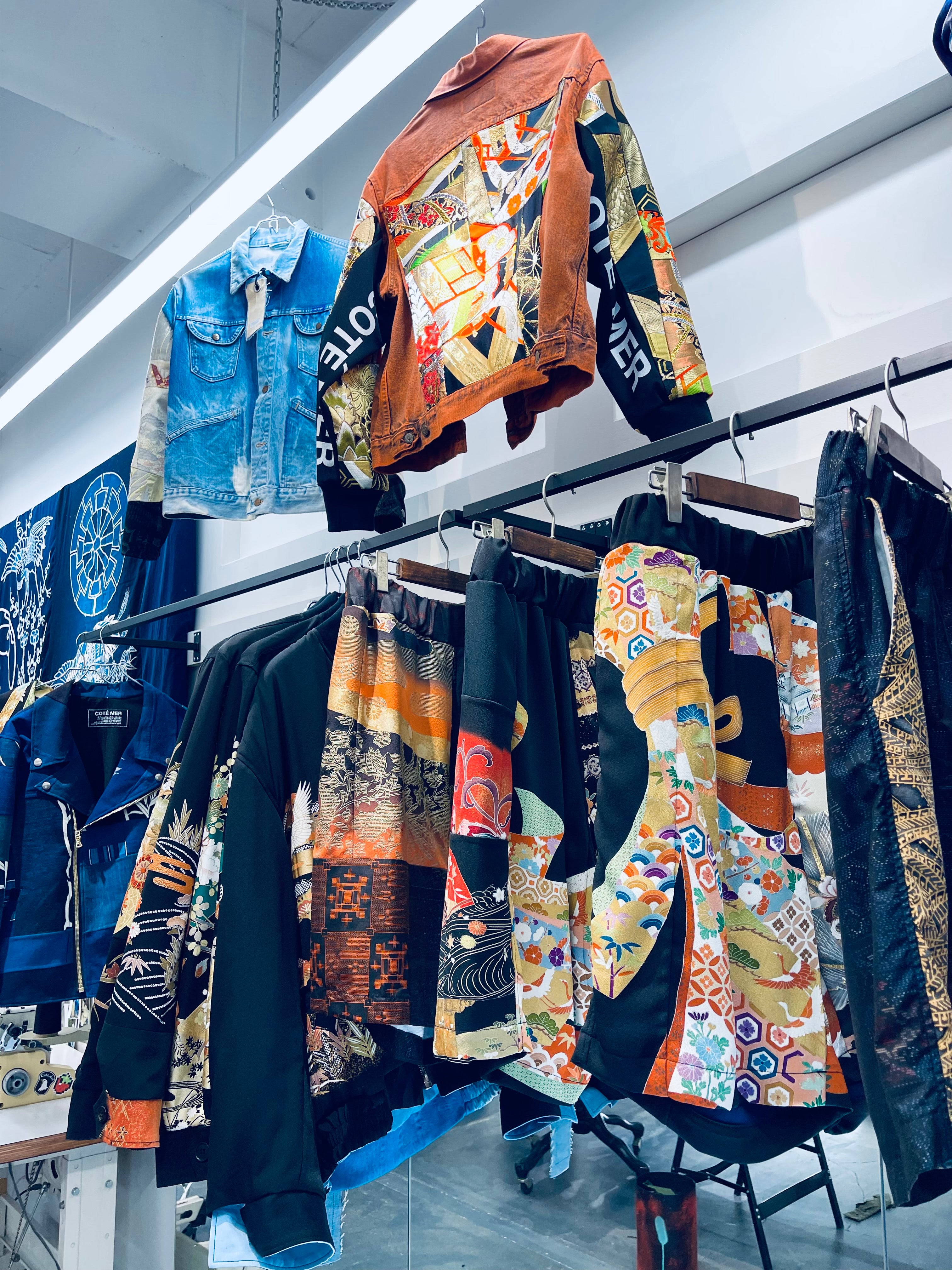
To wear an upcycled kimono garment is to participate in this continuum. It is not merely a style choice, but a statement—one that honors craftsmanship, respects material life, and embraces a slower, more intentional approach to fashion. Each piece becomes a bridge between eras, carrying forward the silent stories woven into its silk while charting a new future on modern streets.